
Whitesnake Turned Bluesy Grit into Arena Fire
Whitesnake’s rise from David Coverdale’s blues-rock vision to full-scale arena force is one of classic rock’s great transformations. With a voice full of grit and soul, and songs that could roar or ache on cue, the band built a catalogue that still sounds huge on the radio.
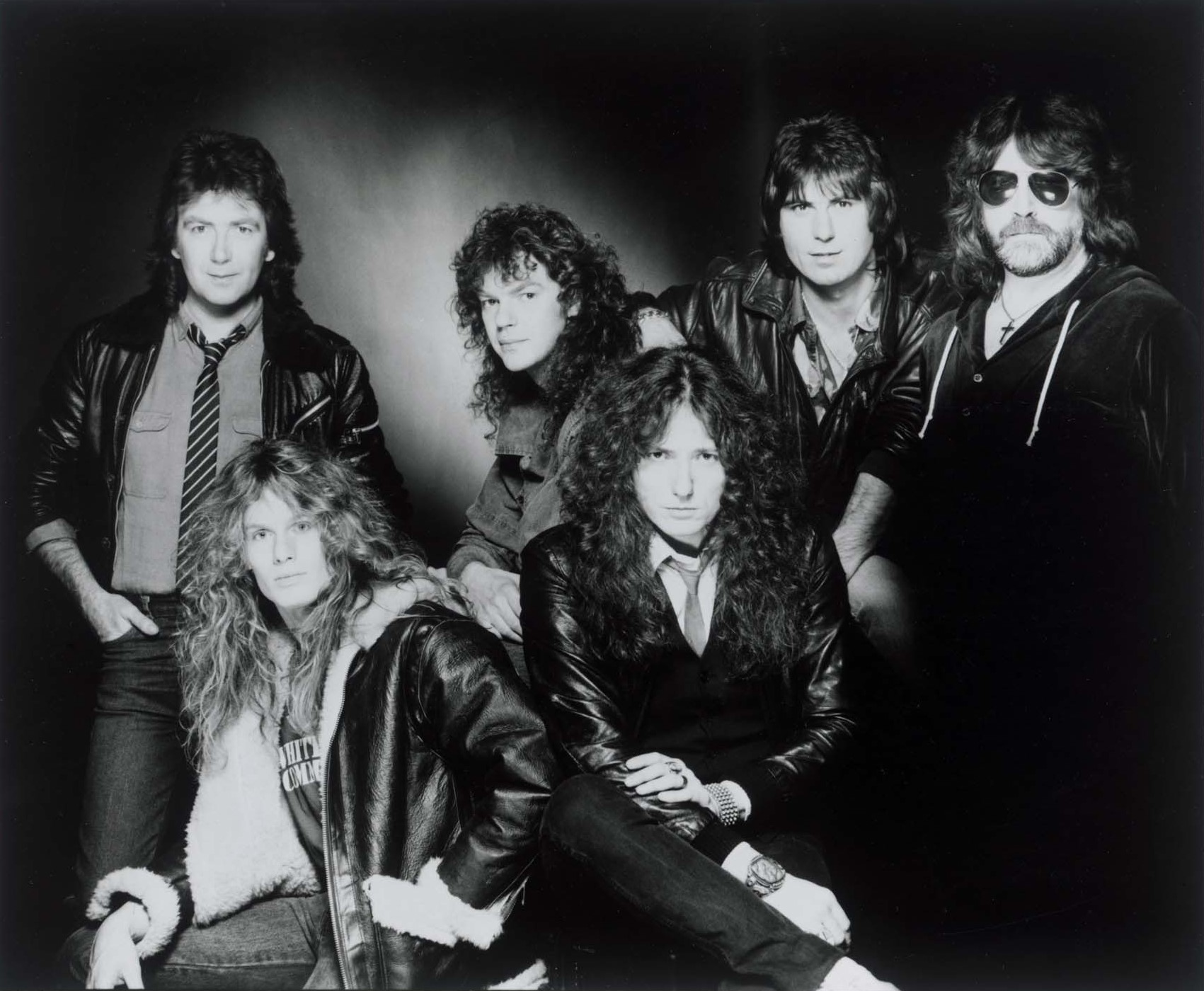
Few bands have reinvented themselves as dramatically as Whitesnake. What began as a hard-touring, blues-rooted outfit led by the unmistakable voice of David Coverdale grew into one of rock’s great arena names, delivering songs that could swagger, smoulder, and explode in the space of a few minutes. For classic hits radio listeners, that range is a big part of the appeal: Whitesnake could sound earthy and soulful one moment, then larger than life the next, with choruses built for turning up the volume in the car.
From Saltburn to centre stage
David Coverdale was born in Saltburn-by-the-Sea, North Yorkshire, England, in 1951, and music arrived early in his life. He grew up with a love of singing and was drawn to the rich voices coming out of blues, soul, and rock records. That mix mattered. Even when Whitesnake became a polished hard rock force in the 1980s, Coverdale’s instincts were never purely metallic. There was always a bluesman’s phrasing in the voice and a deep affection for American rhythm and blues in the band’s foundations.
Before Whitesnake, Coverdale made his name in a way that still feels like rock mythology. In 1973, he answered an audition call and landed the job as lead singer of Deep Purple, stepping into one of the biggest rock bands in the world. It was a huge leap, and he handled it with confidence. During his time with Deep Purple, he sang on albums including Burn, Stormbringer, and Come Taste the Band, showing off a voice that could be powerful, emotional, and surprisingly flexible.
When Deep Purple split in the mid-1970s, Coverdale did not stand still. He released solo work, then formed Whitesnake in 1978. At first, the band felt like a natural extension of his post-Purple musical identity: bluesy hard rock, sharp musicianship, and songs that leaned on groove as much as force. The early line-ups featured serious talent, including guitarists Micky Moody and Bernie Marsden, whose playing helped shape the group’s original character.
The first Whitesnake years had a different flavour
Listeners who only know the giant MTV-era hits can be surprised by early Whitesnake. The late 1970s and early 1980s records had a looser, more lived-in feel, with traces of bar-band warmth and blues club grit. Albums such as Trouble, Lovehunter, Ready an’ Willing, and Come an’ Get It built the band’s reputation, especially in Europe and Japan, where Whitesnake became a major touring attraction.
One of the key breakthrough moments came with “Fool for Your Loving”, first released in 1980. It had the kind of hook that radio loves, but it also carried that muscular, soulful pulse that made Whitesnake stand out from more straightforward hard rock acts. Then came “Ain’t No Love in the Heart of the City”, their dramatic take on the Bobby “Blue” Bland song, which became a live favourite and a powerful showcase for Coverdale’s voice. It was emotional, smoky, and commanding all at once.
Another important song from the early era was “Here I Go Again”, originally released in 1982 on Saints & Sinners. In its first form, it was already memorable: reflective, melodic, and built around a lyric of resilience that would later become one of the most recognisable singalong moments in rock radio.
Whitesnake were gathering momentum, but the biggest chapter was still to come. And it would come with a new look, a new level of production, and a sound scaled up for stadiums.
The album that changed everything
By the middle of the 1980s, Whitesnake had evolved into a more streamlined and explosive band. Personnel changes were frequent, and that has long been part of the Whitesnake story: Coverdale remained the constant figure, while line-ups shifted around him. For some bands, that kind of instability can blur the identity. For Whitesnake, it often sharpened it. Coverdale had a clear vision, and by 1987 that vision met exactly the right moment.
The self-titled album Whitesnake — released in 1987 in North America and often known in Europe as 1987 — was the breakthrough that launched the band into another league. It was sleek, thunderous, and unapologetically big. The guitars roared, the choruses opened wide, and the songs were engineered for maximum impact without losing the band’s blues-rock heart.
That record gave the world the definitive hit versions of “Here I Go Again” and “Fool for Your Loving”, along with towering tracks like “Still of the Night”, “Is This Love”, and “Give Me All Your Love”. Suddenly Whitesnake were everywhere: on radio, on television, in arenas, and in heavy rotation on music video channels.
“Here I Go Again” became the signature anthem. It is one of those songs that feels instantly familiar after only a few notes. The lyric about carrying on alone struck a chord with millions, and the polished 1987 version gave it an even bigger emotional lift. “Is This Love” showed another side of the band, proving they could deliver a power ballad with tenderness as well as grandeur. And “Still of the Night” remains one of the great hard rock epics of its era: moody, dramatic, and full of stop-start tension before it bursts into full attack.
The songs that keep calling listeners back
Every classic hits artist has a handful of songs that seem to leap out of the speakers, no matter how many times you have heard them. Whitesnake have several.
- Here I Go Again – the ultimate reinvention story, a song that started in one era of the band and became a global smash in another.
- Is This Love – elegant, emotional, and one of the defining power ballads of the late 1980s.
- Still of the Night – dramatic hard rock at full scale, with one of the band’s most commanding vocal performances.
- Fool for Your Loving – proof that groove and bite can live in the same song.
- Give Me All Your Love – punchy, melodic, and built for radio.
- Ain’t No Love in the Heart of the City – a reminder of the deep blues and soul streak running through the band’s catalogue.
What makes these songs endure is not just the size of the hooks. It is the balance. Whitesnake could be glossy without sounding empty, emotional without becoming fragile, and heavy without forgetting melody. That combination keeps the music alive for longtime fans and makes it easy for new listeners to discover.
Behind the scenes, there was plenty of drama
Whitesnake’s history is full of stories that add colour to the music. One of the best-known is that “Here I Go Again” was not simply a hit pulled from nowhere in 1987; it was a reworked song from years earlier, polished and reintroduced to a much bigger audience. That gave the band one of rock’s great second chances within a single song.
There is also the visual side of the 1987 era, which became impossible to separate from the band’s fame. The music videos for songs like “Here I Go Again” and “Is This Love” became part of the pop culture fabric of the time. They helped turn Whitesnake into a household name far beyond rock circles.
Then there were the line-up changes, which were frequent enough to become a running theme in the band’s story. Guitar heroes passed through the ranks, and different eras of Whitesnake each developed their own following. For some fans, the early blues-rock years are untouchable. For others, the 1987 era is the definitive version. The interesting thing is that both camps have a point, because Whitesnake really did succeed in two rather different forms.
Coverdale himself has always been central to the intrigue. He brought not only the voice but the personality: theatrical, self-aware, charismatic, and often witty in interviews. He understood rock grandeur, but he also knew how to laugh at the excess around it. That mix helped Whitesnake age better than some of their contemporaries. The band’s music can be huge and dramatic, but there is usually a sense that the people making it know exactly how much fun they are having.
A style built on blues, muscle, and melody
Trying to sum up Whitesnake in one phrase is tricky, because the band changed shape over time. But a few core elements remained consistent.
First, there is the voice. David Coverdale sings with a rich, grainy tone that carries both authority and warmth. He can sound intimate on a ballad and then unleash a full-throated roar when the song demands it. Second, there are the riffs: big, memorable guitar parts that anchor the songs without crushing the melody. Third, there is the blues influence, which never completely disappeared, even when the production became brighter and more modern.
Whitesnake sit at an interesting crossroads in rock history. They connect the blues-rock tradition of the 1970s with the polished hard rock of the 1980s. You can hear echoes of British hard rock roots, American radio ambition, and classic soul phrasing all in the same catalogue. That is one reason the band’s songs fit so naturally on classic hits radio. They bridge styles and decades while still sounding unmistakably like themselves.
Their influence can be heard in countless later hard rock acts that aimed for the same combination of emotional singing, giant choruses, and guitar-driven power. Yet Whitesnake were never just about volume. Even the biggest songs have shape and feel. There is tension, release, seduction, and drama. It is music that knows how to make an entrance.
Why Whitesnake still matter on classic hits radio
For radio listeners, Whitesnake deliver something essential: instant atmosphere. A Whitesnake song can change the energy of a room in seconds. The opening keyboard and guitar lines of “Here I Go Again”, the emotional sweep of “Is This Love”, the prowling menace of “Still of the Night” — each one creates a world straight away.
They also represent a kind of rock craftsmanship that classic hits audiences appreciate. These songs were carefully built, but they never feel clinical. They are full of human push and pull: the ache in Coverdale’s voice, the flash of the guitars, the dramatic rise into a chorus that practically demands to be sung along with. That is gold for radio. It means the songs work whether you are hearing them for the first time in years or for the third time this month.
And then there is nostalgia, of course. Whitesnake carry the glow of a period when rock was bold, visual, and gloriously unafraid of scale. But nostalgia alone does not keep songs alive. The records have to deliver. These do. They still sound confident, emotional, and thrillingly oversized.
For longtime fans, Whitesnake are a reminder of road trips, late-night radio, and the era when a chorus could feel like a horizon opening up. For newer listeners, they are a doorway into a band that managed to evolve without losing its centre. However you first arrived at the music, Whitesnake have a way of making you stay for one more song.
That is the real legacy of Whitesnake: not just the platinum albums or the famous videos, but the ability to fuse heart, swagger, and sheer sonic lift into records that still feel alive. On classic hits radio, they remain exactly what great rock should be — memorable, emotional, and impossible to ignore.