
A Piano in the Dark and a Heartbreak on the Airwaves

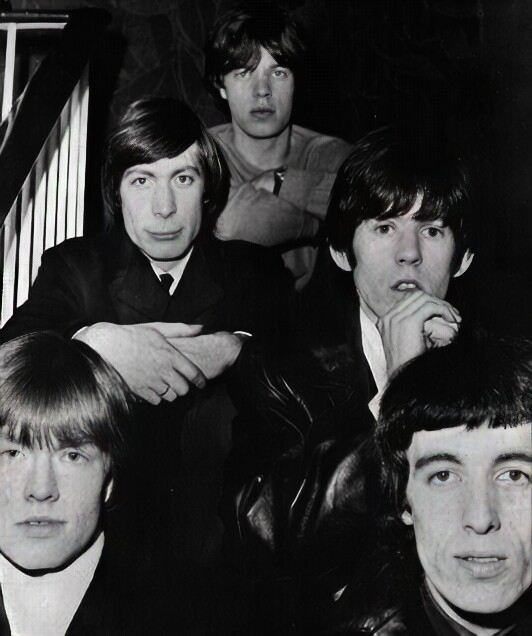
Few Rolling Stones songs arrive with the same hush as “Angie”. Released in 1973, it was a surprise to many listeners: here was the band most often associated with swagger, danger and electric grit stepping into the spotlight with a tender, reflective ballad. Yet that contrast is exactly what helped make the song unforgettable. “Angie” showed that beneath the attitude and headlines, The Rolling Stones could deliver vulnerability with remarkable grace.
How “Angie” Took Shape
A song born in a turbulent period
“Angie” is credited, like most classic Stones material, to the songwriting partnership of Mick Jagger and Keith Richards. The song emerged during a complicated chapter for the band. By the early 1970s, The Rolling Stones were global superstars, but they were also dealing with shifting personal lives, tax exile, changing musical fashions and the usual internal tensions that come with life at the top.
Keith Richards has often been associated most closely with the song’s musical beginnings. He wrote the core of “Angie” during a period when his life was especially unsettled, and that emotional uncertainty seems to hang over every line. Richards later said the song title was not, as many assumed, written about David Bowie’s wife Angela or any single famous “Angie” in the gossip pages. Like many great songs, it invited speculation because it felt so intimate.
Mick Jagger then helped shape the lyric into the finished piece we know today. The result was a breakup song that never turns bitter. Instead, it sounds weary, affectionate and resigned, as though the singer already knows the love affair cannot be saved but still cannot quite let go. That emotional balance is one reason the song has endured.
The mystery of the name
The question of who “Angie” really was became part of the song’s legend almost immediately. Fans and journalists searched for a real-life inspiration, and several names were floated over the years. Richards consistently downplayed the idea that it was a portrait of one specific woman. In fact, the title may have arrived before the lyric itself was fully formed, which is not unusual in rock songwriting. Sometimes a name simply has the right sound, the right rhythm and the right emotional pull.
That uncertainty only added to the song’s appeal. Listeners could hear their own story in it. “Angie” became less about one woman and more about the universal ache of saying goodbye.
Inside the Recording Sessions
Captured for Goats Head Soup
“Angie” was recorded for the Stones’ 1973 album Goats Head Soup, a record made during sessions that took place in Jamaica and later in other studios as the band refined the material. The album itself has a hazy, late-night character, and “Angie” fits that mood beautifully. It feels intimate, almost candlelit, even as it was created by one of the biggest bands in the world.
The track was produced by Jimmy Miller, the key producer behind many of the Stones’ greatest late-1960s and early-1970s recordings. Miller had a gift for grounding the band’s looseness without draining away its personality. On “Angie,” that skill mattered. The performance needed restraint, space and emotional focus rather than raw attack.
The musicians who gave it life
The recording features a beautifully judged ensemble. Mick Jagger delivers one of his most controlled and affecting lead vocals, resisting the temptation to oversell the emotion. Keith Richards provides the song’s acoustic backbone, with the gentle guitar pattern helping to carry the whole piece forward.
One of the most distinctive elements is the elegant piano part by Nicky Hopkins, the celebrated session musician whose touch graced records by The Rolling Stones, The Kinks, The Who and many others. Hopkins had a remarkable ability to add sophistication without ever sounding fussy. On “Angie,” his piano line is central to the song’s atmosphere: wistful, melodic and quietly dramatic.
Charlie Watts plays with admirable understatement, giving the track pulse without overwhelming its fragile mood, while Bill Wyman helps anchor the arrangement. The song also includes subtle string arrangement touches that broaden its emotional reach. Nothing is overdone. Every part seems to understand that the silence between the notes is just as important as the notes themselves.
A ballad with discipline
What is striking about “Angie” is how carefully it is built. The Rolling Stones were masters of ragged excitement, but this song demanded discipline. The acoustic guitar, piano and vocal all sit in a delicate balance. The arrangement rises and falls naturally, almost like a conversation that becomes more emotional as it goes on. That sense of control is one reason the record still sounds fresh decades later.
Chart Success and Public Reception
A major international hit
When “Angie” was released as a single in 1973, it quickly became one of the band’s biggest hits of the decade. It reached number one on the Billboard Hot 100 in the United States, a significant achievement for a song so gentle and introspective. It also performed strongly across Europe and in many other international markets, confirming that the Stones could dominate the charts without relying on a hard-driving rocker.
The success of “Angie” helped strengthen the commercial profile of Goats Head Soup, which also reached number one in major markets. For radio programmers, the song was ideal: emotional, melodic and instantly recognisable. It became one of those records that could stop listeners in their tracks, whether heard through car speakers, a kitchen radio or late-night headphones.
Why audiences connected so strongly
Part of the appeal was simple contrast. People expected danger from The Rolling Stones; instead, “Angie” offered tenderness. But the song also arrived at a moment when rock music was broadening emotionally. Audiences were increasingly open to introspective songwriting, and “Angie” fit that mood while still carrying the band’s unmistakable identity.
Critics and fans did not always agree on every aspect of Goats Head Soup, but “Angie” was widely recognised as a standout. Even listeners who preferred the band at full volume often made room for this one.
Behind the Scenes and Persistent Myths
No, it was not simply a celebrity dedication
One of the most enduring stories around “Angie” is that it must have been written about a famous Angela. That theory survived because it was irresistible. Rock mythology loves a named muse. But the Stones themselves repeatedly suggested the reality was less tidy. The title likely took on a life of its own once the song was released, and the public did the rest.
That gap between fact and legend is very much part of the Rolling Stones story. Their music has always attracted myth, and “Angie” is a fine example of how a private-feeling song can become public property almost overnight.
A softer side in a very loud career
Another fascinating detail is how naturally “Angie” sits alongside the band’s tougher material, even though on paper it looks like an outlier. The Stones had explored ballads before, of course, but “Angie” became one of the clearest examples of their ability to lower the temperature without losing intensity. It is soft, but never slight.
For many radio listeners, it also became an entry point into the band’s catalogue. Someone drawn in by the tenderness of “Angie” might then discover the grit of “Brown Sugar,” the gospel sweep of “You Can’t Always Get What You Want,” or the murky beauty of “Wild Horses.” In that sense, the song helped reveal the full range of what The Rolling Stones could do.
Its Place in the Music of the Era
Where rock was heading in 1973
The early 1970s were a fascinating moment in popular music. The explosive revolution of the 1960s had matured into something more varied and textured. Singer-songwriters were thriving, album-oriented rock was deepening, and even the biggest bands were experimenting with mood, arrangement and confession.
“Angie” belongs to that wider landscape. It sits comfortably beside the era’s introspective classics, yet it still sounds unmistakably like The Rolling Stones. The weariness in the lyric, the tasteful piano, the acoustic framing and the emotional ambiguity all reflect a period when rock music was learning to be more open about fragility.
At the same time, the song never abandons the band’s character. There is still a hint of distance, a little coolness around the edges, which keeps it from becoming sentimental. That balance made it ideal for 1973: emotionally direct, but not naïve.
Legacy of a Classic
Why “Angie” still matters
More than fifty years on, “Angie” remains one of the most beloved songs in the Rolling Stones catalogue. It has been covered by many artists, revisited in compilations, and played for generations of listeners who may know only a handful of Stones songs but almost certainly know this one. Its opening acoustic figure and piano line are enough to bring back a flood of memories.
The song endures because it captures a feeling that does not age: the moment when love is still present, even as a relationship slips away. That is a difficult emotion to write and an even harder one to sing convincingly. “Angie” does both.
The quiet giant in the Stones songbook
In a catalogue full of riffs, rebellion and stadium-sized attitude, “Angie” stands as a quiet giant. It proved that one of rock’s most formidable bands could also be tender, elegant and deeply human. For all the rumours, headlines and mythology surrounding it, the song’s real power lies in something simpler: a melody, a voice, a piano in the dark, and a goodbye that still echoes on the radio.
- Song: “Angie”
- Artist: The Rolling Stones
- Released: 1973
- Album: Goats Head Soup
- Writers: Mick Jagger, Keith Richards
- Producer: Jimmy Miller
- Notable musician: Nicky Hopkins on piano
“Angie” is proof that even the most swaggering rock band can sometimes say the most with a whisper.