A Summer Chart Climb and One Unforgettable Hook
As "Brother Louie" climbed toward the top of the American charts in late summer 1973, listeners were locking into a record that sounded sleek, urgent, and just a little daring. Stories turned a British-written social drama into a number one single with real bite.
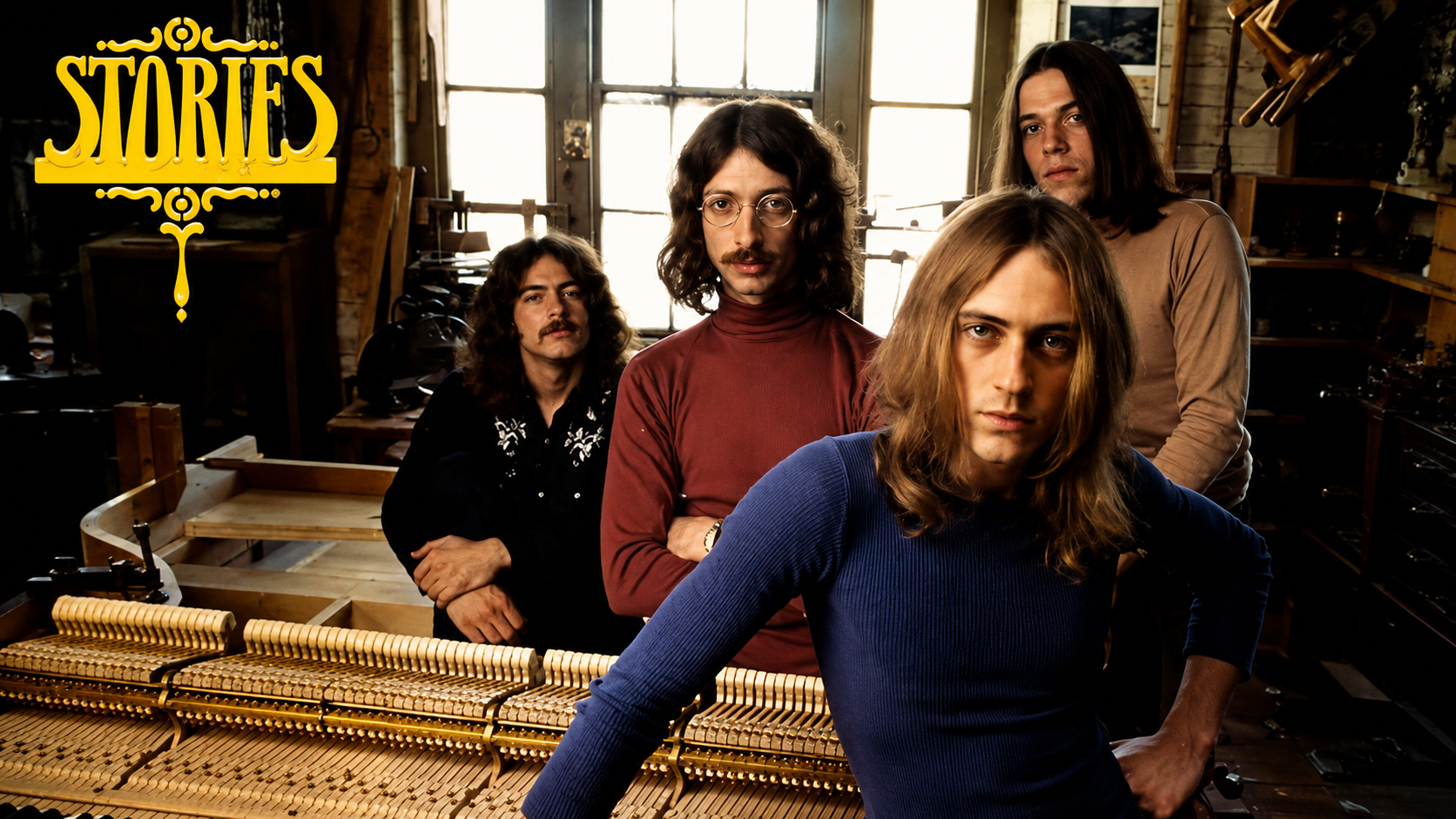
By late summer 1973, radio listeners were hearing something that felt instantly familiar and slightly startling at the same time: a sleek pop record with a soulful groove, a dramatic vocal, and a lyric that touched a social nerve. “Brother Louie” by Stories did not begin as an American original, but in the hands of this New York-based group it became one of the most memorable number one singles of its year.
It is one of those records that captures a very particular early-1970s moment. Pop was opening itself to harder-edged rock, polished studio craft, blue-eyed soul, and more socially aware storytelling all at once. “Brother Louie” sits right in that crossroads, and part of its lasting appeal is that you can hear all those currents moving through it in just a few minutes.
A song that crossed the Atlantic
Written by Errol Brown and Tony Wilson of Hot Chocolate
“Brother Louie” was written by Errol Brown and Tony Wilson of the British group Hot Chocolate. Their original version, released in 1973, was already a striking record. Its lyric dealt with an interracial romance and the family disapproval surrounding it, with the title character standing at the centre of a tense emotional situation. That subject matter gave the song a weight that went beyond ordinary pop romance.
At a time when mainstream pop often preferred broad, universal love songs, “Brother Louie” addressed prejudice directly but accessibly. It did not do so with a lecture. Instead, it told a story, and that storytelling quality made it powerful on radio. Listeners could feel the conflict in the lyric even before they had fully absorbed every line.
Stories heard a hit in it
Stories were led by keyboard player and singer Michael Brown, already known for his work with The Left Banke, the baroque-pop group behind “Walk Away Renée” and “Pretty Ballerina.” Stories had a more muscular, contemporary sound than Brown’s earlier band, but his melodic instincts were still there. When Stories took on “Brother Louie,” they did not simply copy Hot Chocolate. They reshaped it into a punchier American radio single, with a tougher rhythm section and a more dramatic vocal attack.
That was a common and fascinating feature of the era: songs could travel quickly between countries and styles. A British soul-pop composition could become an American pop-rock smash within months. In the early 1970s, radio formats were flexible enough for that kind of leap, and “Brother Louie” is a textbook example.
Inside the Stories version
Michael Brown, Ian Lloyd, and the band chemistry
The key figures in Stories were Michael Brown and lead vocalist Ian Lloyd. Brown was the principal musical architect in the group, while Lloyd brought the voice that made “Brother Louie” explode from the speakers. His performance is one of the record’s great strengths: urgent, soulful, and just rough enough around the edges to sell the tension in the lyric.
The band also included Bryan Madey, Kenneth Bichel, and Steve Love, musicians who helped give Stories a fuller, radio-ready sound. On “Brother Louie,” that meant a tight groove, crisp arrangement, and a sense of momentum that keeps building from verse to chorus.
Produced for maximum radio impact
The Stories recording was produced by Kenny Kerner and Richie Wise, a production team with a sharp ear for commercial rock records. Their work helped turn the song into a compact, high-impact single. They understood that the emotional contrast inside “Brother Louie” needed to be matched by sonic contrast: restrained verses, a strong rhythmic pulse, and a chorus that opens up and lands hard.
One of the pleasures of the record is how polished it sounds without losing its bite. The arrangement is clean, but it is not soft. The piano and rhythm section drive the track forward, while the vocal is placed right at the front, where the drama belongs. That balance between finesse and force was one of the signatures of successful early-1970s pop production.
A notable behind-the-scenes wrinkle
One of the most often repeated stories around the record involves Ian Lloyd’s health during the period when the single was taking off. As “Brother Louie” climbed the charts, Lloyd reportedly struggled with illness that affected live appearances and promotion. That gave the song an unusual career path: a major hit that became even bigger on radio than through the kind of relentless personal promotion usually expected of a breakout act.
It is a reminder that hit records sometimes develop a life of their own. Once radio programmers and listeners embraced “Brother Louie,” the single’s momentum became difficult to stop.
When the charts opened up
A number one hit in the United States
Stories’ version of “Brother Louie” became a major commercial success, reaching number one on the Billboard Hot 100 in the United States in 1973. That alone would secure its place in pop history, but the achievement becomes even more impressive when you consider the competition of the period. The early 1970s charts were crowded with singer-songwriters, glam rock, soul, hard rock, and highly polished pop. For Stories to rise above that mix meant the record connected broadly and quickly.
The single also performed strongly in Canada and gained international attention, even if its greatest chart triumph came in America. It was the kind of hit that felt at home on several kinds of stations: Top 40, pop-leaning rock radio, and even playlists that welcomed soul-influenced crossover records.
Why listeners responded
Commercially, the record had several advantages:
- An instantly memorable chorus that listeners could latch onto after one spin
- A topical lyric that gave the song emotional gravity
- A strong lead vocal with both pop clarity and rock intensity
- A concise arrangement built for radio repetition
Those elements made it more than a novelty or a one-week curiosity. “Brother Louie” had the kind of hook that sells records, but it also had enough substance to stay in people’s minds.
More than a hit single
A song with social resonance
Part of the song’s legacy comes from its subject matter. In 1973, a lyric about interracial love facing opposition still carried real cultural charge. “Brother Louie” was not the first pop song to touch on race, of course, but it brought the issue into the mainstream in a way that was accessible, emotional, and commercially viable.
That matters because pop music often reaches people before politics does. A three-minute single can slip into everyday life through the car radio, the kitchen speaker, or the family living room, and once it is there, it can quietly challenge assumptions. “Brother Louie” did exactly that.
The song’s long afterlife
The title “Brother Louie” has remained visible across decades, though sometimes in forms that create confusion. Later generations may know the name from other versions and reinterpretations, including the 1980s hit by Modern Talking, which is an entirely different song sharing the same title. But for classic hits listeners, the Stories record remains the one with the sharp emotional edge and that unmistakable 1973 radio energy.
It also continues to appear in oldies programming and retrospectives of the era because it captures so many of the things people love about early-1970s pop: strong songwriting, character in the vocals, and production that feels handcrafted rather than overprocessed.
How it fits the wider 1973 picture
Pop, rock, and soul were blending freely
If you want one record that explains how open the musical landscape was in 1973, “Brother Louie” is a good candidate. It is not pure rock. It is not pure soul. It is not bubblegum pop, though it certainly has a pop hook. Instead, it lives in the overlap between genres, which is exactly where many of the era’s most durable hits were born.
This was a period when artists and producers were increasingly confident about mixing styles. You could hear gospel feeling in rock vocals, orchestral touches in pop, funk rhythms in mainstream singles, and singer-songwriter intimacy alongside glam theatrics. Stories brought some of that blend into “Brother Louie” and gave it a New York polish.
Michael Brown’s unlikely route to a chart-topper
There is also something especially intriguing about Michael Brown’s presence in the story. He had emerged from the more ornate, chamber-pop world of The Left Banke, a group celebrated for elegance and melancholy. To then help steer a gritty, socially charged number one hit like “Brother Louie” shows how adaptable talented musicians had to be in the 1970s. The decade rewarded versatility.
That adaptability is part of what makes the record feel so alive. It is not locked into one scene or one formula. It sounds like musicians responding to the moment in real time.
Why Brother Louie still turns heads
Some records survive because of nostalgia alone. “Brother Louie” survives because it still works. The groove grabs you, the chorus lands, and the lyric gives the song a tension that keeps it from floating away as mere retro charm. It is catchy, yes, but it also has stakes.
For classic hits fans, that is a winning combination. You get the thrill of a great early-1970s radio single, but you also get a reminder that pop music can carry real social meaning without losing its commercial spark. Stories took a powerful song from Errol Brown and Tony Wilson, reshaped it with confidence, and delivered a record that could fill the room from the first line.
That is the magic of “Brother Louie”: a chart hit with a conscience, dressed in one of the most irresistible hooks of 1973.