The Department Stores We Miss the Most
Before online shopping, department stores were where memories were made. From Sears and Woolworth's to Marshall Field's and Kmart, take a nostalgic trip back to the stores that defined generations of American families.
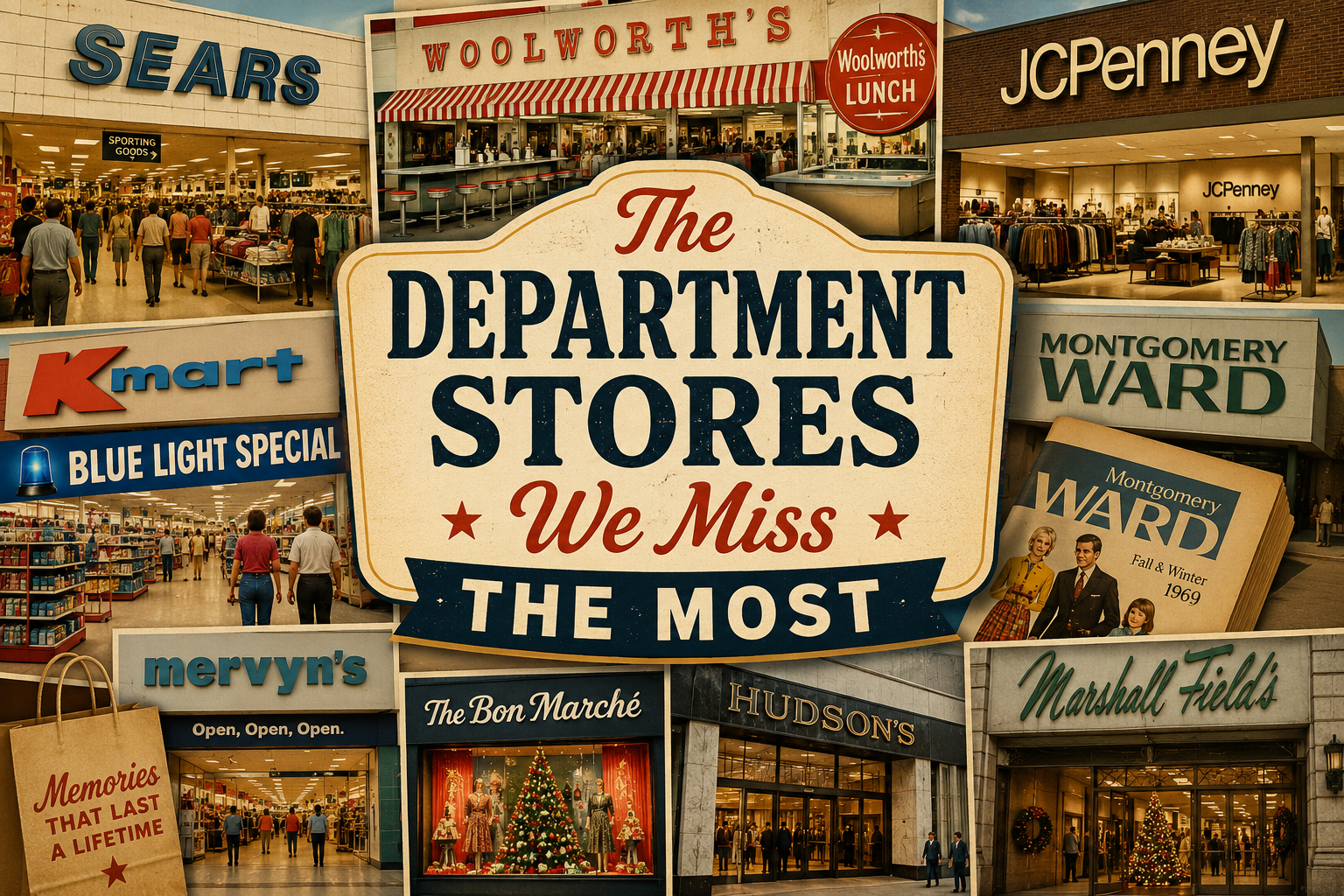
Before online shopping, one-click checkouts and next-day delivery, department stores were much more than places to buy things. They were where families spent Saturday afternoons, teenagers hung out with friends, and children dreamed about Christmas while flipping through thick catalogs.
A trip to the department store often meant browsing every floor, stopping for lunch, riding the escalators just for fun, and leaving with far more than you planned to buy.
Many of these beloved stores are gone today, but the memories they created are still very much alive.
Here are some of the department stores we miss the most.
1. Sears
For generations of Americans, Sears was more than a department store—it was a way of life.
Families bought everything there, from refrigerators and washing machines to bicycles, school clothes, tools and televisions. The Sears Wish Book became required reading every holiday season, with children circling toys and dreaming about Christmas morning.
Walking into Sears meant knowing you’d probably find whatever you were looking for.
Today, it’s hard to imagine American shopping without Sears at its center.
2. JCPenney
JCPenney was where many families shopped for back-to-school clothes, church outfits and holiday gifts.
Its photo studios captured countless family portraits that still hang on living room walls today. During Christmas, the stores transformed into magical places filled with decorations, toys and excited children waiting to visit Santa.
It wasn’t flashy—but it was dependable, and that’s exactly why people loved it.
3. Montgomery Ward
Before Amazon, there was Montgomery Ward.
Its famous mail-order catalog brought department store shopping to families across America, especially those living in rural communities.
Walking into one of its stores felt like stepping into a giant showroom where almost anything was possible.
Although the company disappeared from shopping malls years ago, its catalogs remain treasured pieces of Americana.
4. Woolworth’s
Few stores capture nostalgia quite like Woolworth’s.
It wasn’t just a place to shop—it was a place to gather.
Its famous lunch counters served burgers, sandwiches, milkshakes and slices of pie that became part of many childhood memories. Parents could browse while kids admired the toy section or picked out candy.
For many Americans, a visit wasn’t complete without stopping for lunch.
5. Kmart
Blue Light Special!
Just hearing those words instantly transports many people back to the 1970s and 1980s.
Kmart made discount shopping exciting. Families wandered wide aisles filled with toys, sporting goods, clothing and electronics while hoping to stumble across one of the famous flashing blue-light deals.
It wasn’t unusual to leave with things you never planned to buy—but somehow couldn’t resist.
6. Mervyn’s
For many families in the western United States, Mervyn’s was a shopping tradition.
Known for affordable fashion and friendly service, it became a favorite stop for school shopping and holiday gifts.
Its memorable slogan, “Open, Open, Open,” is still remembered by shoppers decades later.
When the chain closed in 2008, many communities felt they had lost an old friend.
7. The Bon Marché
Long before upscale department stores became commonplace, The Bon Marché served generations of shoppers throughout the Pacific Northwest.
Its elegant holiday window displays, downtown flagship stores and annual Christmas traditions became cherished family experiences.
For many children, visiting downtown during the holidays wasn’t complete without stopping at The Bon.
8. Hudson’s
If you grew up in Michigan, chances are Hudson’s was part of your life.
Its downtown Detroit flagship store was once one of the largest department stores in the world, and shopping there felt like a special occasion.
Families dressed up for visits, rode the elevators between floors and spent hours exploring everything from fashion to furniture.
For many Detroit-area residents, Hudson’s remains one of the city’s most treasured memories.
9. Marshall Field’s
Few department stores inspired as much loyalty as Marshall Field’s.
Chicago families made annual pilgrimages to see its spectacular Christmas windows and the famous Walnut Room, where holiday meals became lifelong traditions.
Shopping there always felt elegant, whether you were buying a winter coat or simply admiring the displays.
Many shoppers still say, “It will always be Marshall Field’s.”
10. Ames
For many small towns across America, Ames was the neighborhood department store.
It offered affordable prices, friendly employees and everything from toys to household goods.
It wasn’t the biggest retailer, but it became part of everyday life in hundreds of communities.
When Ames disappeared, many towns lost more than a store—they lost a familiar gathering place.
More Than Just Stores
Looking back, we don’t simply miss these department stores because of what they sold.
We miss the excitement of family shopping trips. We miss riding the escalators, wandering through the toy department, browsing the record section, eating at the lunch counter and carrying home those familiar shopping bags.
Shopping wasn’t something we rushed through. It was part of life.
While today’s online shopping is certainly faster, it can never replace the memories made during a Saturday afternoon spent exploring our favorite department store.
Which department store do you miss the most? Let us know in the comments—we’d love to hear your memories.