Nora Prentiss (1947): The Film Noir Where One Bad Decision Changes Everything
Step back into the shadowy world of 1940s Hollywood with Nora Prentiss (1947), a beautifully atmospheric film noir starring Ann Sheridan. Nightclubs, rain-soaked streets, forbidden romance and one desperate decision make this forgotten Warner Bros. classic a wonderful trip back to the golden age of late-night movies.
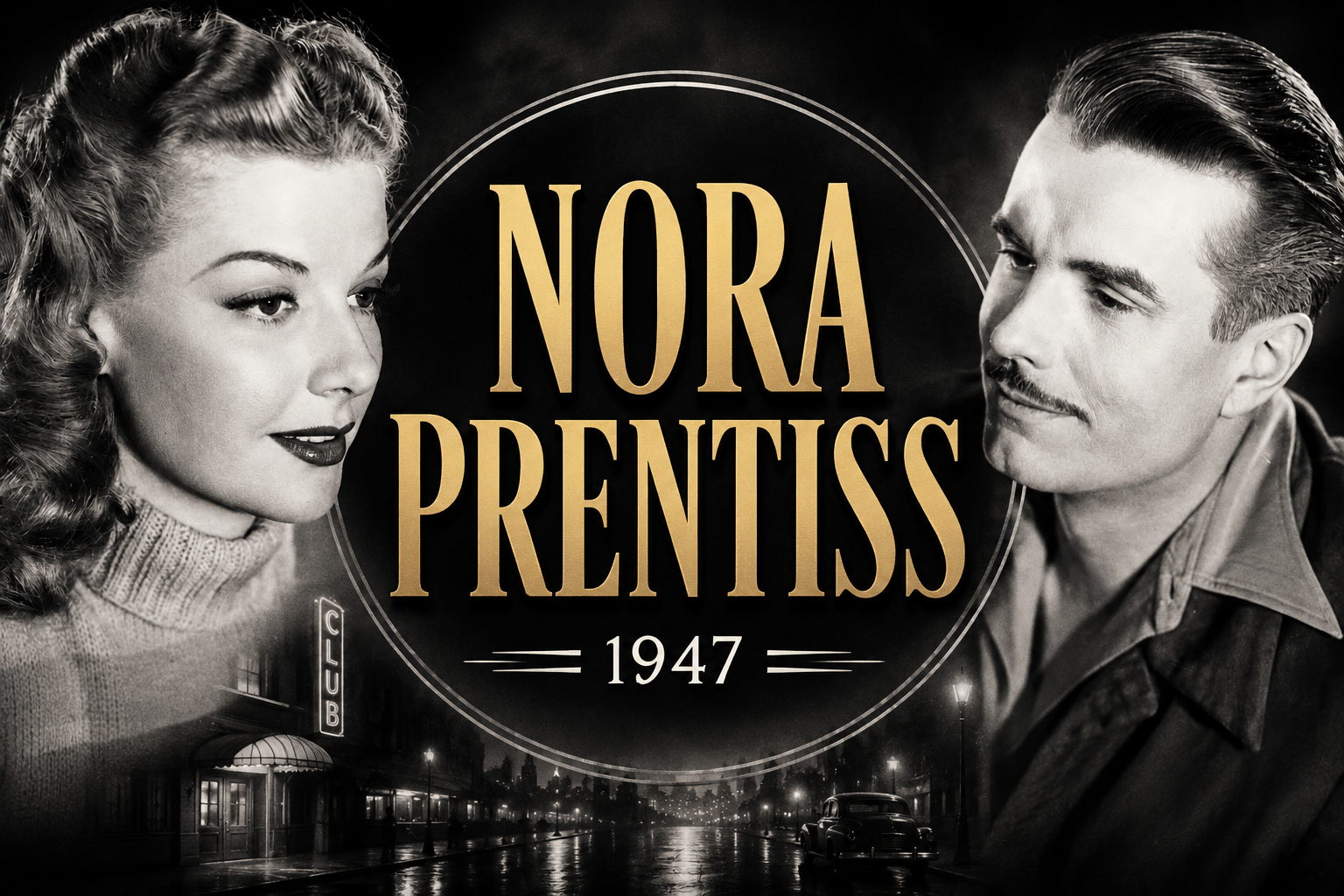
Film noir is filled with doomed men and dangerous decisions, but some of its best stories begin with surprisingly ordinary people. That is the case with Nora Prentiss, the 1947 Warner Bros. film noir directed by Vincent Sherman and starring Ann Sheridan and Kent Smith. What begins as a forbidden romance between a married doctor and a nightclub singer gradually becomes a dark story of deception, jealousy and a man who discovers that escaping his old life is far more difficult than he imagined.
A Doctor Looking for Something More
Dr. Richard Talbot, played by Kent Smith, seems to have everything a respectable man could want. He has a successful medical practice in San Francisco, a comfortable home, children and a wife, Lucy, played by Rosemary DeCamp. Yet Richard has grown restless with the routine of his life and marriage.
His predictable world changes when Nora Prentiss, a nightclub singer played by Ann Sheridan, comes to his office after being slightly injured in a traffic accident. Richard treats her, and their innocent meeting soon becomes something more. He begins visiting the nightclub where Nora performs, and before long he is living two separate lives—one with his family and another with Nora.
The situation might sound like the setup for a typical femme-fatale story, but Nora Prentiss takes a more interesting direction.
Nora Isn’t Really the Villain
Nora has all the outward characteristics of a classic noir femme fatale. She is glamorous, independent and part of the nighttime world of clubs, music and cocktails. Yet she is not a calculating woman deliberately trying to destroy Richard’s life.
In fact, Richard is largely responsible for what happens to him. He wants to be with Nora but cannot bring himself to honestly confront his wife and accept the consequences. Instead, he keeps looking for an easier way out, believing that somehow he can begin a new life without properly ending the old one.
Ann Sheridan makes Nora surprisingly sympathetic. Beneath the glamour is a woman who often understands the reality of their situation better than Richard does.
The Opportunity to Disappear
Richard’s problem takes an extraordinary turn when a patient unexpectedly dies in his office. Faced with a situation that could provide the escape he has been searching for, Richard makes a desperate decision: he creates circumstances that will make authorities believe Dr. Richard Talbot has died in an automobile accident.
To Richard, it appears to solve everything. His family will believe he is dead, he will never have to admit the truth about his affair, and he can leave San Francisco with Nora and begin again.
It is the kind of plan that can only end badly in film noir.
Richard and Nora head to New York, where he assumes another identity. Instead of finding freedom, however, Richard discovers that his new life is even more restrictive than the one he abandoned. He cannot openly practice medicine, cannot safely contact his children and must constantly worry that someone will discover who he really is.
The Trap Begins to Close
As the pressure grows, Richard becomes increasingly jealous and paranoid. Nora returns to the nightclub world, and her former employer Phil Dinardo, played by Robert Alda, becomes a particular source of suspicion. The respectable doctor we met at the beginning of the film gradually disappears as fear and desperation begin controlling his decisions.
This transformation is what makes Nora Prentiss so effective. Richard does not begin the story as a criminal or a reckless man. His downfall develops one decision at a time, with each lie requiring another lie to protect it.
Eventually, the film arrives at a wonderfully cruel piece of noir irony. Richard has gone to extraordinary lengths to convince the world that Richard Talbot is dead, only to find himself in circumstances where proving that he actually is Richard Talbot could become desperately important.
The identity he worked so hard to erase may be the only thing capable of saving him.
A Beautifully Shadowy Film Noir
The film’s atmosphere is greatly enhanced by the cinematography of James Wong Howe, one of Hollywood’s greatest black-and-white cinematographers. As Richard’s situation becomes darker, so does the world around him. Nightclubs, hotel rooms, nighttime streets and shadow-filled interiors gradually replace the comfortable surroundings of his former life.
The visual style perfectly reflects Richard’s psychological decline. The new life that once seemed exciting and liberating becomes increasingly claustrophobic, making the audience feel that the walls are slowly closing around him.
Ann Sheridan is equally important to the film’s appeal. Rather than playing Nora as a cold seductress, Sheridan gives her warmth and vulnerability. She may be the woman who inspires Richard to imagine another life, but she is never simply the cause of his destruction.
A Noir Worth Rediscovering
Nora Prentiss may not be remembered as widely today as films such as Double Indemnity, The Maltese Falcon or Out of the Past, but it contains many of the qualities that make classic film noir so addictive: forbidden romance, secret identities, jealousy, nighttime city streets and the terrible feeling that one bad decision has made the next one almost inevitable.
What makes the film especially interesting is that Nora isn’t truly the dangerous person in the story. Richard’s downfall comes from his belief that he can escape his responsibilities without confronting them. He wants another life, but he also wants to avoid paying the price of leaving the first one behind.
More than seven decades later, Nora Prentiss remains a wonderfully atmospheric example of 1940s film noir, with a strong Ann Sheridan performance, beautiful black-and-white photography and one of the genre’s favorite lessons: sometimes the most dangerous trap is the one you build yourself.