Take on Me — the sketchbook leap that conquered pop
A-ha’s “Take on Me” was more than a catchy 1985 hit — it was a hard-won pop breakthrough built through rewrites, daring vocals and a video that changed MTV forever. Here’s the story behind the song that still makes the speakers glow.
A song that seemed to jump off the page
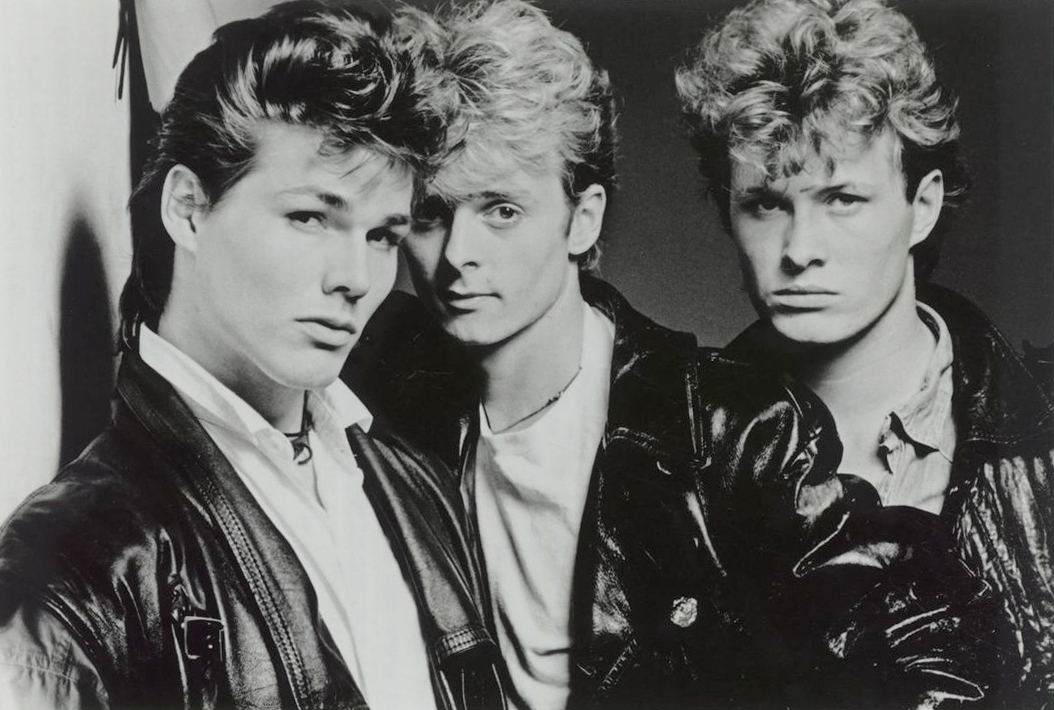
Few records capture the fizzy optimism of mid-1980s pop quite like “Take on Me”. The moment that bright synth riff flickers into life, it feels as if someone has switched on neon lights in your memory. Released by Norwegian trio A-ha in 1985, the song became far more than a hit single. It was a perfect storm of melody, technology, visual imagination and sheer persistence.
What makes the story especially satisfying is that “Take on Me” was not an overnight miracle. It took multiple versions, a few false starts, and a great deal of determination before the world heard the song in the form we now know. Behind that effortless pop sparkle was a long road of rewrites, studio experiments and one of the most iconic videos ever made.
Where it began
From Norway to London
A-ha formed around three musicians: Morten Harket, whose soaring voice became the band’s signature; Magne Furuholmen, keyboard player and songwriter; and Pål Waaktaar, guitarist and principal writer. Before A-ha, Waaktaar and Furuholmen had played together in a Norwegian band called Bridges. The musical seed of “Take on Me” actually reaches back to that earlier period.
An early instrumental idea by Waaktaar and Furuholmen was known as “The Juicy Fruit Song”, a title that sounds almost comically casual compared with the polished pop classic it would become. Even in that rough form, the central keyboard hook was already there. That riff, playful and urgent at the same time, was the spark they knew they had to keep.
When the trio relocated to London in search of a breakthrough, they brought the song with them. Like many young bands in the early 1980s, they were chasing a place in a British pop world dominated by synths, sharp fashion, inventive videos and radio-ready choruses. London was not an easy victory lap. They struggled financially, lived modestly, and spent long stretches trying to turn strong ideas into records that labels could not ignore.
Finding the right shape
“Take on Me” did not spring fully formed from the speakers. It went through several recordings before the definitive version emerged. Early takes had the bones of the song, but not yet the snap, lift and confidence that would make it irresistible. The band and their collaborators kept returning to it, sharpening the arrangement and rethinking the production.
The songwriting is credited to Pål Waaktaar, Magne Furuholmen and Morten Harket. Waaktaar and Furuholmen provided the musical framework, while Harket helped shape the vocal approach and song structure. His contribution was crucial: that high, ringing vocal line gave the track its daring, almost acrobatic personality. The chorus does not merely arrive; it launches.
In the studio
The producers who helped crack it
Two names are especially important in the recording history of “Take on Me”: Tony Mansfield and Alan Tarney. Mansfield, known for his work in synth-pop and for his band New Musik, produced an early version of the song. It had a cleaner, more electronic feel, but despite the quality of the material, it did not become the breakthrough the band wanted.
The game-changing version came with producer Alan Tarney, a respected studio craftsman with a gift for polished pop production. Tarney helped the group create the version that balanced all the right elements: crisp drum-machine momentum, gleaming synthesizers, punchy guitar accents and enough space for Harket’s extraordinary vocal to dominate when needed.
That vocal, of course, is one of the record’s great talking points. Harket’s performance climbs to a famously high note in the chorus, a moment that still makes singers grin nervously when they attempt it. He brought both precision and emotion, which prevented the song from sounding merely technical or flashy. It feels youthful, urgent and romantic.
Building an 80s pop machine
Musically, “Take on Me” sits right at the crossroads of several 1980s trends. It has the sleekness of synth-pop, the melodic directness of classic pop songwriting, and just enough rock energy to keep it from floating away. The arrangement is deceptively clever.
- The synth riff gives the song its instantly recognisable identity.
- The rhythm track keeps everything driving forward with tightly controlled energy.
- The guitar parts add texture and edge.
- Harket’s vocal provides the emotional release, especially in the chorus.
That blend helped the song reach listeners across different musical camps. Fans of electronic pop loved its modern sheen, while mainstream radio audiences responded to its undeniable tune. It was sophisticated enough for the era’s style-conscious pop scene but catchy enough for anyone with a car radio.
It took more than one try
A slow start before liftoff
One of the most charming parts of the “Take on Me” story is that it was not an immediate smash. The song was first released in 1984 in an earlier version, and while it attracted some attention, it did not explode. A re-recorded version followed, but even then, the path to success was not straightforward.
What changed everything was the combination of the refined recording and an unforgettable music video. Once those two elements clicked together, the song became impossible to resist. Radio gave it room, television gave it a face, and audiences did the rest.
Chart domination
By late 1985, “Take on Me” had become a major international hit. In the United States, it climbed to number one on the Billboard Hot 100. It also topped charts in several other countries and became a major success across Europe, including the UK, where A-ha established themselves as more than a one-video novelty.
Commercially, the single was a triumph. It sold in huge numbers, helped drive sales of the album Hunting High and Low, and introduced A-ha to a worldwide audience. For many listeners, “Take on Me” was their first encounter with Norwegian pop on such a grand scale. That alone gave it a special place in music history.
Sometimes a hit record arrives like a thunderclap. “Take on Me” arrived more like a paper airplane that kept circling back until it finally caught the perfect current.
The video that changed everything
Pencil lines, romance and MTV magic
It is impossible to talk about “Take on Me” without talking about the video. Directed by Steve Barron, the clip used a striking blend of live action and pencil-sketch animation, created through a technique called rotoscoping. The result was unlike anything most viewers had seen on mainstream music television.
The story of a young woman drawn into a comic-book world gave the song a dreamlike, adventurous quality. Suddenly, “Take on Me” was not just a tune; it was a visual event. On MTV, where image mattered enormously, the video helped catapult the song into another league.
The production was painstaking. Artists drew over live-action footage frame by frame, creating that famous half-real, half-illustrated look. It took months of work, and the finished piece won multiple awards and became one of the defining videos of the decade.
Why it mattered so much in 1985
In the mid-1980s, a brilliant video could transform a song’s fate. MTV was not merely promoting records; it was helping define pop stardom itself. A-ha understood, or quickly learned, that visual identity could be as important as the single mix. “Take on Me” landed at exactly the right cultural moment, when audiences were hungry for songs that looked as exciting as they sounded.
The video also gave the band an aura of sophistication and modernity. It was romantic, stylish and technically ambitious, all qualities that fit the era’s appetite for pop as a full audiovisual experience.
Behind-the-scenes gems
The high note that became legend
Morten Harket’s vocal performance has inspired admiration for decades, especially that famously high falsetto leap. It became one of those moments singers test themselves against, usually with mixed results at parties and karaoke nights. Yet what makes it memorable is not just the pitch. It is the confidence. Harket sings it as though there were never any doubt he would get there.
A-ha were more hands-on than some assumed
Because “Take on Me” is so polished, some listeners have mistakenly filed it under the category of producer-built 1980s pop. In truth, A-ha were deeply involved in the writing and shaping of their material. The song’s long evolution proves that this was a band with ideas, patience and a strong sense of what they wanted.
Persistence was part of the magic
Perhaps the best anecdote of all is simply that the band refused to give up on the song. Plenty of artists have one version of a single fail and move on. A-ha kept tinkering, refining and re-presenting “Take on Me” until it connected. That persistence is woven into the record’s legacy. It sounds buoyant and effortless, but it was earned.
Its place in the wider 1980s picture
A perfect fit for the era
“Take on Me” belongs to a rich period when pop music embraced technology without abandoning melody. The mid-1980s were filled with synthesizers, drum machines and studio experimentation, but the songs that lasted were the ones with strong hooks and emotional pull. A-ha had both.
The track sits comfortably alongside the work of acts such as Duran Duran, Tears for Fears and Pet Shop Boys, yet it still feels distinct. There is a Scandinavian clarity to it, a bright precision, and an emotional openness that helped it stand out in a crowded field.
Legacy that never really faded
Decades later, “Take on Me” remains a permanent fixture of classic hits radio, film soundtracks, television syncs and nostalgic playlists. It has been covered, parodied, celebrated and rediscovered by new generations. Few songs manage to be both a time capsule and a living thing, but this one does.
Its legacy rests on several pillars: a world-class pop hook, a fearless vocal, a groundbreaking video and a story of perseverance. Above all, it still gives listeners a rush. That opening riff can fill a room with instant recognition, and for three and a half minutes, 1985 feels gloriously close again.
Some songs define an era. “Take on Me” does something even better: it keeps inviting the era back in, one bright synth line at a time.