Bewitched still sparks the question: Jeannie or Samantha?
Two magical sitcoms, two irresistible moods.
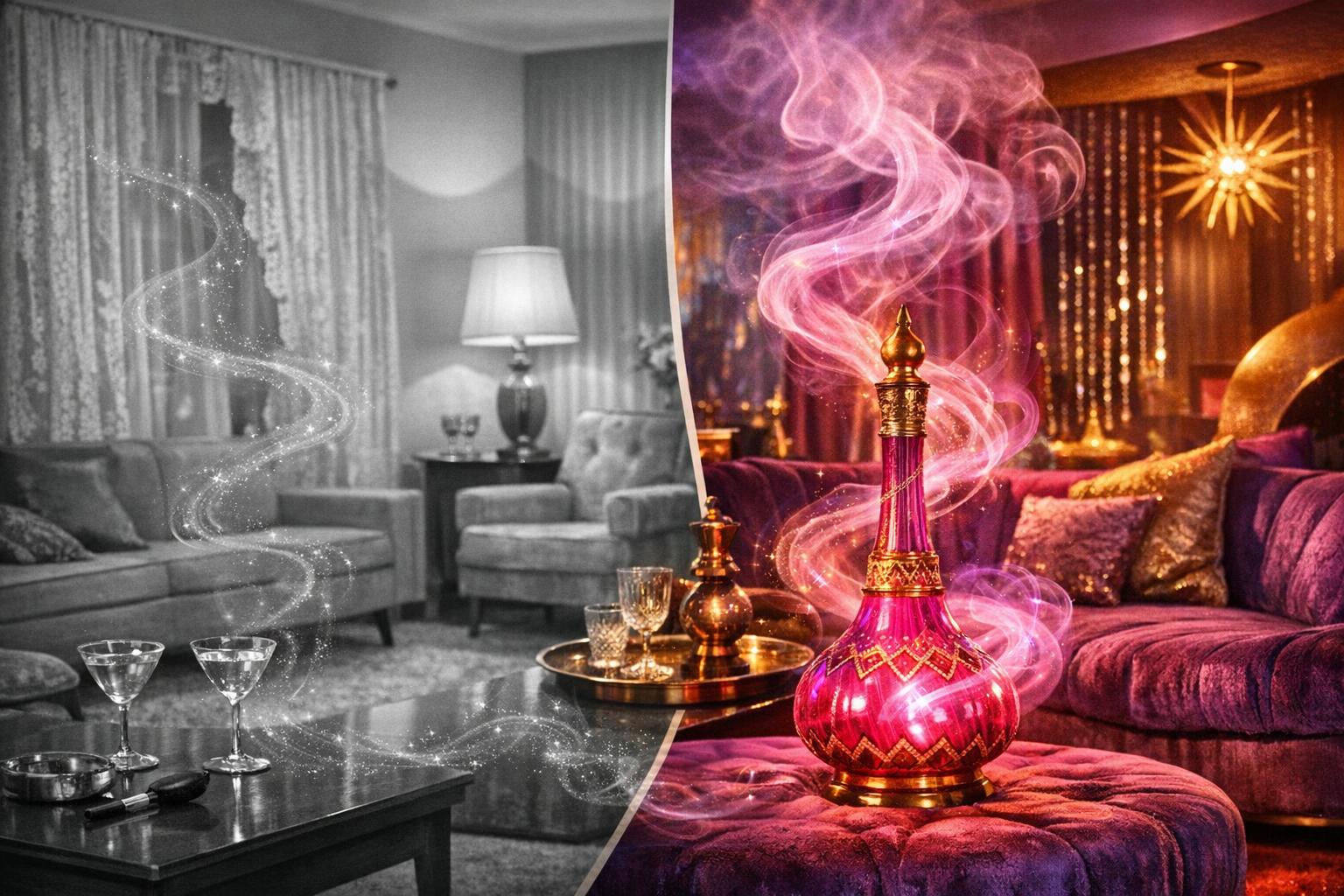
Few television matchups inspire quite as much affectionate debate as Bewitched versus I Dream of Jeannie. Put those two shows on the air back to back and you can almost hear the living room reactions: one viewer charmed by Samantha Stephens twitching her nose and trying to keep suburban life under control, another delighted by Jeannie folding the rules of reality around Major Nelson with a blink and a smile.
What makes the comparison so much fun is that both series arrived in the same colourful era of 1960s television, both mixed fantasy with domestic comedy, and both gave audiences an unforgettable magical woman at the centre of the story. But they cast very different spells. One felt like polished suburban satire with a mischievous wink; the other floated in on a cloud of playful chaos, romance and space-age fantasy.
So rather than declare a champion, let us spin the dial back and enjoy what each series did best. This is less a verdict than a friendly on-air debate, the kind that keeps going long after the record has faded out.
Two magical sitcoms, two very different flavours
Bewitched premiered in 1964 and quickly became one of television’s most distinctive comedies. At its heart was Samantha, a witch who marries mortal ad man Darrin Stephens and tries to live an ordinary suburban life. Of course, ordinary never lasts long when relatives can appear in puffs of smoke, spells can derail dinner parties, and nosy neighbours are always just one curtain twitch away from seeing something strange.
I Dream of Jeannie arrived the following year, in 1965, with a breezier, more overtly fantastical setup. Astronaut Tony Nelson discovers Jeannie in a bottle on a deserted island, and before long she is living nearby, causing heavenly mayhem while trying to please the man she adores. Where Bewitched often played like a supernatural twist on married life and office politics, Jeannie leaned into wish-fulfilment, secret identities and the comic possibilities of a genie who could do anything except blend in quietly.
That contrast is a big part of why the debate never grows old. They may sit on the same shelf in television history, but they are not identical shows in different costumes. They are cousins, not twins.
The charm of Samantha Stephens
There is something timeless about Bewitched. Maybe it is the crisp black-and-white look of the early seasons, maybe it is the suburban setting, or maybe it is Elizabeth Montgomery’s performance, which remains the show’s secret ingredient. She played Samantha with warmth, intelligence and just enough sparkle to make her magical powers feel both glamorous and relatable.
Samantha was not simply waving a wand for laughs. Much of the comedy came from her effort to balance two worlds: the enchanted one she came from and the ordinary one she had chosen. That gave the series a surprisingly sharp comic engine. Every time Darrin wanted a normal dinner with a client or a peaceful evening at home, the audience knew supernatural relatives were about to turn the plan upside down.
And then there was Agnes Moorehead as Endora, one of the grand scene-stealers of 1960s television. Elegant, cutting and gloriously unimpressed with mortal life, she gave Bewitched a theatrical charge whenever she swept into a room. Endora did not just disapprove of Darrin; she made disapproval an art form.
Behind the scenes, the series also reflected the polish of classic network comedy at its peak. The writing often used fantasy to poke fun at conformity, gender expectations and suburban manners. Underneath the light touch, Bewitched could be slyly observant.
Why radio listeners still love it
If you grew up with classic hits on the radio and classic sitcom reruns on the television, Bewitched has that same dependable pleasure as hearing a favourite song come around again. It is stylish, familiar and full of personality. The theme tune alone is enough to transport many viewers straight back to a particular sofa, a particular evening, a particular family routine.
Jeannie brings the sparkle
If Bewitched was built on clever tension between normal life and magical interference, I Dream of Jeannie often played with a looser, more buoyant energy. Barbara Eden made Jeannie irresistible not just because she was magical, but because she was curious, affectionate, impulsive and often hilariously literal. She could grant wishes, bend space and time, and still be baffled by the simplest social custom.
The show’s setup also gave it a distinctly mid-1960s flavour. This was the era of the space race, after all, and placing a genie alongside an astronaut gave the series a playful blend of ancient fantasy and modern ambition. There was something delightfully of-its-time about watching military order and scientific seriousness collide with pink smoke and magical mischief.
Larry Hagman, as Tony Nelson, served as the perfect straight man. His exasperation was essential to the comedy, especially when Jeannie’s attempts to help only made things more complicated. And around them, characters like Dr. Bellows added another layer of comic pressure, forever suspicious that something impossible was happening just out of sight.
I Dream of Jeannie may not always have had the satirical bite of Bewitched, but it had an airy charm all its own. It was bright, romantic and often wonderfully silly in the best possible way.
A different kind of fantasy
What Jeannie offered was less about fitting magic into ordinary life and more about letting fantasy burst through the walls. The tone was broader, the colours brighter, and the comic situations often more openly absurd. For some viewers, that is exactly the appeal. It feels like a sunny afternoon show, impossible to resist once it starts rolling.
Behind the scenes, the rivalry writes itself
Part of the long-running comparison comes from timing. Bewitched arrived first and established that audiences were ready for a fantasy sitcom led by a magical woman navigating everyday America. When I Dream of Jeannie followed, viewers naturally lined them up side by side. The industry certainly noticed the overlap.
But the behind-the-scenes story is a reminder that television success is rarely as simple as imitation. These shows developed their own identities because of casting, writing and tone. Elizabeth Montgomery and Barbara Eden were not offering variations on the same performance. Montgomery’s Samantha was poised and dryly amused; Eden’s Jeannie was wide-eyed, spirited and emotionally direct.
The supporting players mattered too:
- Bewitched thrived on family friction, especially with Endora and the magical relatives.
- I Dream of Jeannie built much of its comedy around secrecy, authority figures and Tony’s impossible task of keeping order.
- One show looked toward suburbia and social expectations; the other leaned into fantasy, romance and comic confusion.
That is why the debate remains lively instead of easy. People are not just choosing between two magical heroines. They are choosing between two comic rhythms, two worlds and two moods.
So which one was better?
That depends on what you value when the opening credits begin.
If you lean toward Bewitched…
You may prefer sharper writing, a more grounded setting and the comic tension of trying to keep the impossible hidden inside a very recognisable world. You might also love the show’s elegant visual style and the way Samantha often seemed like the smartest person in every room.
If Jeannie is your pick…
You may be drawn to a lighter, more playful tone, stronger romantic fantasy and a sense that absolutely anything could happen in the next scene. You might simply enjoy a show that embraces whimsy with both arms and never apologises for it.
And of course, many classic television fans refuse to choose at all. They want Samantha’s wit and Jeannie’s sparkle, Endora’s grand entrances and Dr. Bellows’ bewildered reactions. That may be the wisest answer of all.
Some debates are better when they stay open. Like favourite songs on an old jukebox, the joy is in going back, listening again and seeing which one fits your mood today.
The lasting magic
What is striking all these years later is how alive both series still feel in popular memory. Their theme music, visual style and central performances remain instantly recognisable. More importantly, both shows understood a truth that every great entertainer knows: audiences return to personality. Samantha and Jeannie were not just gimmicks with magical powers. They were vivid characters with charm, comic timing and a point of view.
That is why this television face-off still has energy. It is not just nostalgia talking. It is appreciation for two series that each found a clever way to bottle magic and beam it into people’s homes week after week.
So here is the question to settle in your own living room: when the evening winds down and you are ready for a little classic TV comfort, do you reach for the nose twitch or the blink?
We are not calling the winner here. In the best radio tradition, we are leaving the final vote to the audience.