Rendezvous with Yesterday — television time travel at full steam
Big ideas, full conviction, and a date with disaster make this one of 1960s television’s most entertaining pilots.
Some television episodes do not simply begin; they sweep you up like a whistle in the distance and pull you straight onto the platform. Rendezvous with Yesterday, the opening episode of The Time Tunnel, does exactly that. First broadcast in 1966, it launches Irwin Allen’s ambitious science-fiction adventure with flashing consoles, rising panic, and one of history’s most famous destinations: the RMS Titanic.
For viewers then, it was a dazzling invitation to imagine what television could do. For viewers now, it is a wonderfully energetic mix of Cold War futurism, high-stakes melodrama, and old-fashioned adventure. Seen today, the episode still has that irresistible quality classic hits fans know so well: it captures a moment when entertainment aimed big, wore its heart on its sleeve, and delivered spectacle with complete sincerity.
A pilot episode with real momentum
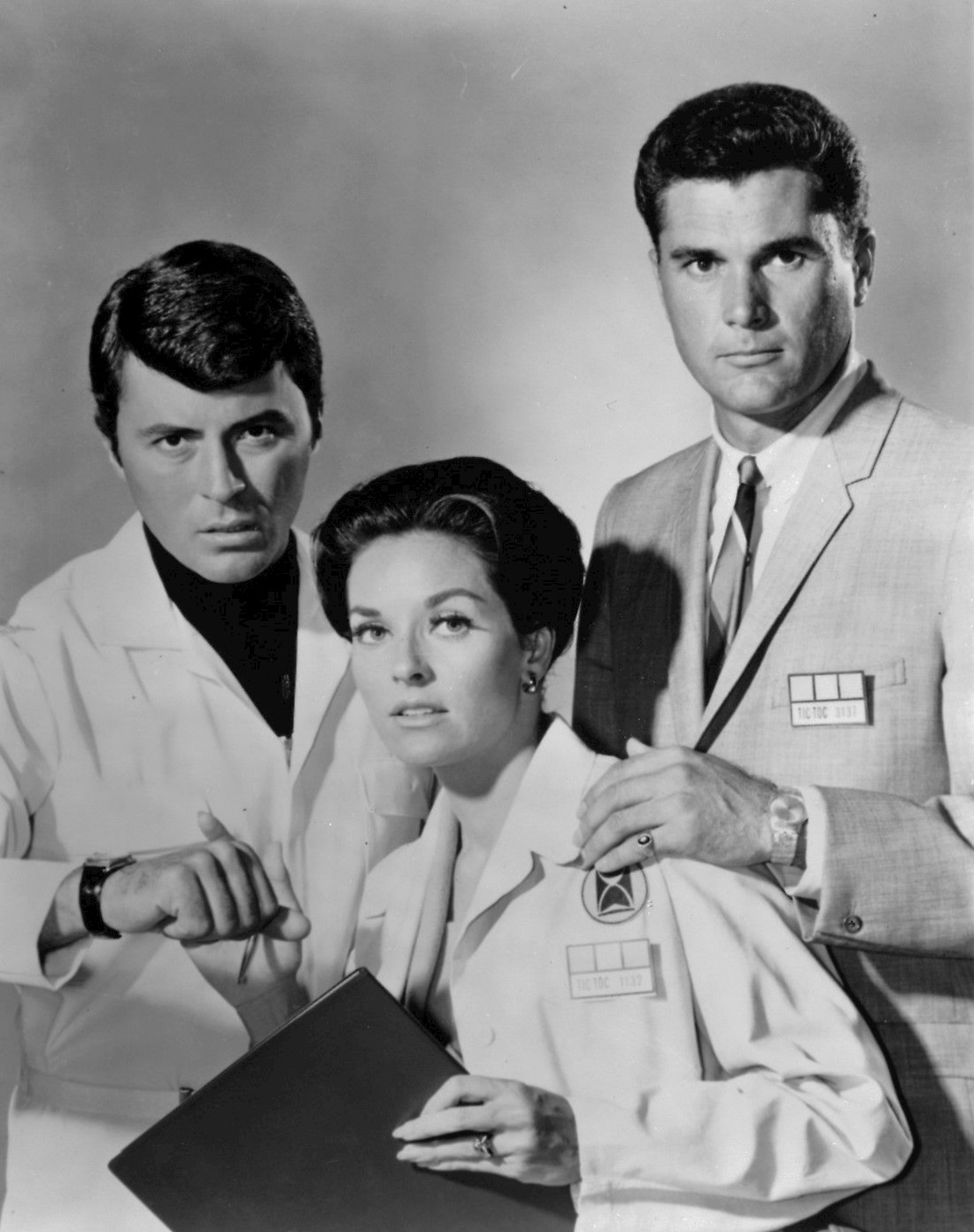
The Time Tunnel introduces us to Project Tic-Toc, a secret government experiment buried deep in the Arizona desert. The goal is staggering: to send human beings through time. Scientists Tony Newman and Doug Phillips are at the centre of the storm, and before long, a crisis pushes Tony into the experimental tunnel ahead of schedule. In trying to rescue him, Doug follows, and suddenly the pair are no longer in a laboratory of polished metal and blinking lights. They are aboard the Titanic on 14 April 1912.
That is a superb hook, and the episode knows it. There is very little hanging around. The story moves with the brisk confidence of a hit single that gets to the chorus early. One moment we are in a highly secretive underground complex, all nerves and authority figures; the next, we are in Edwardian luxury, with the terrible knowledge of what lies ahead.
That contrast is one of the episode’s great pleasures. Rendezvous with Yesterday gives us two kinds of period charm at once: the 1912 world recreated on screen, and the unmistakable 1960s vision of the future. The result is a television hour that feels doubly nostalgic. It is not just about travelling through time; it has become a time capsule itself.
The Titanic setting gives the story its emotional pull
Time-travel stories often depend on a strong destination, and the Titanic remains one of the most instantly gripping in popular culture. Everyone knows the broad outline. That shared knowledge creates tension before a line is spoken. As Tony and Doug try to navigate the ship, warn people, and avoid changing history beyond repair, the audience is already leaning forward.
What makes the episode especially effective is that it does not treat the Titanic merely as a backdrop. It uses the ship as a stage for moral urgency. What would you do if you knew disaster was coming and no one believed you? That question gives the episode its human pulse beneath all the machinery and spectacle.
There is also something very old-school and satisfying about the drama. The dialogue is direct, the stakes are clear, and the peril is never coy. It is storytelling in bold strokes, and that suits the material beautifully. Like a great three-minute record, it understands the power of clean emotional lines.
A look back at the episode
The cast sells the impossible
James Darren as Tony Newman and Robert Colbert as Doug Phillips do exactly what adventure leads need to do: they make the outlandish premise feel grounded by playing it straight. Darren gives Tony a nervous intelligence and emotional immediacy, while Colbert brings Doug a sturdier, problem-solving calm. Together they create a partnership that is easy to root for, especially once the episode throws them into impossible circumstances.
Back in the control room, the supporting cast helps give the series its larger shape. Whit Bissell, John Zaremba, and Lee Meriwether all contribute to that lively command-centre atmosphere where science, politics, and panic collide. Those scenes are essential because they give the episode a second engine. While Tony and Doug scramble through history, the team in 1968 is desperately trying to understand where they are and how to bring them back.
That structure became one of the show’s signatures, and in this first episode it already works well. It keeps the pace lively and allows the story to cut between historical danger and futuristic suspense. It is a clever rhythm, almost musical in the way it alternates pressure and release.
Behind the scenes, this was television thinking big
Part of the fun of revisiting Rendezvous with Yesterday is appreciating just how ambitious it was for network television in the mid-1960s. The Time Tunnel came from producer Irwin Allen, a master of grand concepts and visual excitement. He had already made his mark with series such as Voyage to the Bottom of the Sea and Lost in Space, and he brought that same flair for scale to this project.
The pilot reportedly carried a very large budget for the time, and you can see where the money went. The Time Tunnel set itself is a marvellous piece of design: a huge spiralling corridor of light and machinery that looks both futuristic and theatrical. It is exactly the kind of set that sticks in the memory. Even if you have not seen the episode in years, chances are you can still picture it.
The production also made smart use of existing film material to enhance the Titanic sequences, blending newly shot scenes with footage in a way that helped create a broader sense of scale. Today, viewers are often very aware of visual effects, but there is a special charm in seeing how television once created wonder through ingenuity, editing, lighting, and performance.
And then there is the music. The score does a tremendous amount of heavy lifting, pushing the suspense, sharpening the danger, and adding that extra dramatic flourish that 1960s adventure television did so well. It never apologises for being exciting. It wants your pulse to rise, and it succeeds.
Why it still feels so entertaining
Modern audiences sometimes use the word camp too quickly when looking back at vintage science fiction. Certainly, there are moments here that feel heightened by contemporary standards. But that is not a weakness. In fact, it is part of the episode’s appeal. Rendezvous with Yesterday plays its premise with total conviction, and that sincerity gives it staying power.
There is also a pleasing generosity to the storytelling. The episode gives you ideas, jeopardy, romance, history, technology, and spectacle, all in one package. It does not ration its pleasures. It comes at you with the confidence of prime-time entertainment built for a broad audience, and there is something refreshing about that.
A few standout pleasures for classic television fans
- The Time Tunnel set remains one of the great visual hooks in 1960s television science fiction.
- The Titanic premise gives the pilot instant dramatic weight and emotional urgency.
- The split between past and present keeps the episode moving and adds variety to every act.
- The performances are earnest in the best possible way, helping the fantasy feel real.
- The atmosphere captures that exciting era when television was eager to dream on a large scale.
The final verdict
Rendezvous with Yesterday is a terrific opening chapter: fast, imaginative, and full of the kind of wide-eyed ambition that makes vintage television so rewarding to revisit. It may not chase realism in the modern sense, but it offers something just as valuable: momentum, personality, and a real sense of wonder.
For fans of classic science fiction, it is an essential pilot. For anyone who loves the texture of 1960s television, it is a delight. And for those of us who enjoy revisiting entertainment history the way we revisit beloved songs, it has that same familiar magic. You can hear the era in it, feel the optimism in it, and admire the craftsmanship that went into making a weekly television series feel like an event.
Classic Gold verdict: a lively, nostalgic adventure that still knows how to sweep an audience away.
If you have not stepped into The Time Tunnel for a while, this episode is a fine place to start. The lights flash, the music swells, the clock turns backward, and suddenly television history feels thrillingly alive again.