Blue Lights, Brass Themes, and Late-Night TV
From the rumpled genius of Columbo to the neon pulse of Miami Vice, America's classic crime shows of the 1970s and 1980s still look and sound irresistible. Here is why they remain such a joyful part of retro culture, and how to bring a little of that detective-era magic into your own home.
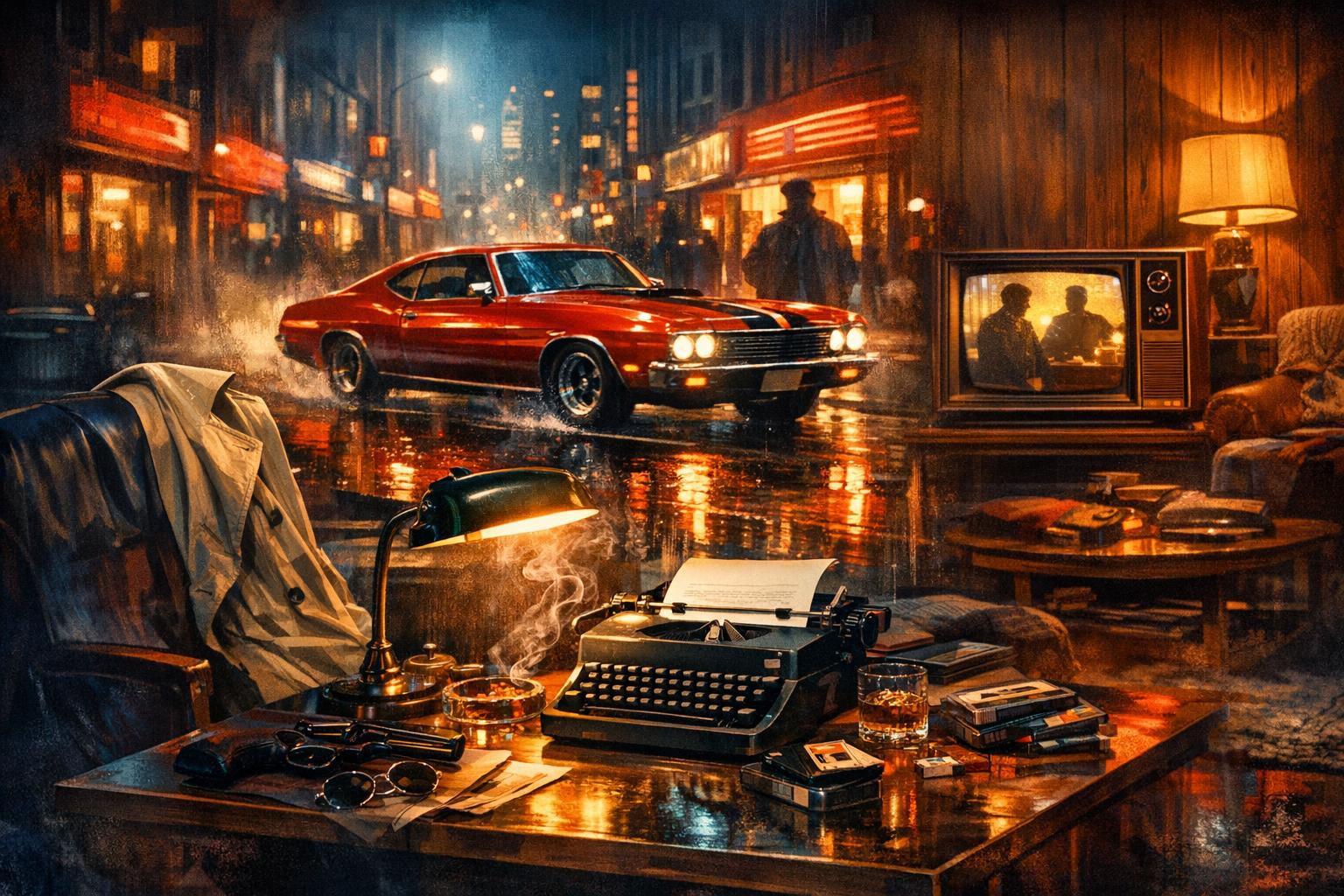
There is something wonderfully comforting about the crime shows that filled American television in the 1970s and 1980s. Before streaming menus and endless scrolling, these were the programmes people planned their evenings around: detectives in rumpled trench coats, patrol cars gliding through neon streets, typewriters clacking in busy precincts, and theme tunes so catchy they could sit proudly beside the biggest radio hits of the day.
For many of us, these shows are more than old television. They are a doorway into a whole retro lifestyle mood: sharp tailoring, smoky city skylines, wood-panelled living rooms, chrome lamps, cassette decks, and the unmistakable sound of brass-heavy opening themes pouring from the family TV set. If classic hits radio gives you the music of the era, these crime dramas give you the pictures, the pace, and the personality.
The shows that defined crime TV in 1970s and 1980s America
American crime television in the 1970s and 1980s had style to spare. It could be gritty, glamorous, funny, or tough-minded, sometimes all within the same hour. A few titles still stand tall today, not just because they were popular, but because they shaped what crime TV would become.
- Kojak brought us Telly Savalas as the bald, sharp-witted New York detective with a lollipop and a famous catchphrase. The series had urban grit, but also real charisma.
- Columbo, while beginning earlier, remained a giant presence in this period. Peter Falk’s crumpled raincoat and deceptively gentle manner made him one of television’s most beloved sleuths. The joy was not who did it, but watching Columbo quietly unravel the case.
- Starsky & Hutch turned police work into high-octane cool, with fast cars, street action, and a friendship at its centre. The red Ford Gran Torino became a star in its own right.
- Charlie’s Angels mixed detective stories with fashion, glamour, and pop culture sparkle. It became a phenomenon far beyond the crime genre.
- Hill Street Blues changed the game in the 1980s with a more layered, realistic style. It showed the messy human side of police work and influenced countless dramas that followed.
- Magnum, P.I. gave crime television a sun-soaked twist. Tom Selleck’s moustache, Hawaiian shirts, and Ferrari made it one of the most visually memorable shows of the decade.
- Miami Vice arrived like a pop song with a badge. Sleek, stylish, and driven by contemporary music, it made television look cinematic and cool in a whole new way.
- Murder, She Wrote proved that crime solving did not need car chases to hold an audience. Angela Lansbury’s Jessica Fletcher brought warmth, intelligence, and a touch of cosy mystery to the genre.
Each of these shows had its own rhythm, but together they painted a picture of American television at its most distinctive. They were not afraid of strong characters, memorable wardrobes, or a theme tune that grabbed you in the first few seconds.
When television crime came dressed for the part
Part of the pleasure of revisiting these series is simply looking at them. The 1970s and 1980s were rich in visual identity. Crime shows reflected the wider culture in ways that now feel irresistibly nostalgic.
In the 1970s, the look was earthy yet urban: flared trousers, leather jackets, wide lapels, mustard and brown interiors, big sedans, and city streets that looked lived-in rather than polished. By the 1980s, the palette changed. Suddenly it was pastel jackets, mirrored buildings, designer sunglasses, digital watches, and the glow of nightlife. Watching Miami Vice now is like stepping into a music video where every frame has been carefully arranged.
Design lovers often return to these shows for exactly that reason. A detective’s apartment, a captain’s office, or a seaside mansion can say as much about the era as a museum exhibition. The desk phones, the tape recorders, the old police radios, the cars with bench seats and chrome trim, even the fonts in the opening credits all carry that unmistakable retro appeal.
These programmes did not just tell stories. They sold a mood, and decades later, that mood still has power.
Why retro crime TV still feels so good today
Modern audiences love retro aesthetics for many reasons, and crime shows from this period hit several of them at once. First, there is the comfort of structure. Most episodes have a beginning, middle, and end. You meet the characters, follow the clues, and get a resolution. In a busy world, that can feel wonderfully satisfying.
Then there is the craftsmanship. Without heavy reliance on digital effects, these shows leaned on script, performance, atmosphere, and music. A well-timed glance from Columbo or a moody synthesizer cue in Miami Vice could do more than a dozen flashy edits.
There is also a growing affection for analogue life. Younger viewers who never used a rotary phone or waited all week for the next episode often find these details charming. Older viewers, meanwhile, reconnect with the rituals of the time: gathering in the living room, hearing the TV warm up, and perhaps catching a favourite theme right after a hit song on the radio.
That connection between television and music is especially strong. Many of these shows understood the emotional power of a great soundtrack. Miami Vice famously used pop and rock songs in bold, dramatic ways. Elsewhere, brass, funk basslines, disco grooves, and synthesizers gave crime series a pulse that still sounds thrilling. If you love classic hits, these shows often feel like close cousins.
The music link that makes it perfect for Classic Gold listeners
Listen closely and you can hear the decades in these programmes. The 1970s brought funk, soul, jazz touches, and bold orchestral flourishes. The 1980s leaned into synthesizers, electronic drums, and glossy production. Crime shows did not just borrow from popular music trends; they helped spread them into homes every week.
That is one reason these series pair so naturally with a classic hits state of mind. Think about the emotional lift of hearing a familiar opening theme. It works almost like a favourite single on the radio. One note and you are back in a particular room, a particular season, maybe even a particular chair in front of the television.
I know people who can remember exactly when they first saw Starsky & Hutch tearing across the screen, or the first time they heard the sleek, dramatic sound of Miami Vice. One friend still laughs about trying to dress like Magnum one summer, convinced that a patterned shirt and a confident walk would somehow make everyday errands feel more glamorous. Another remembers her parents never missing Murder, She Wrote, with tea on the table and the volume turned up just a little for the theme.
That is the beauty of nostalgia at its best. It is not only about the programme itself. It is about where it takes you.
How to bring that retro detective spirit into modern life
If these classic crime shows have you in the mood for a little vintage flair, there are easy ways to enjoy the aesthetic without turning your home into a television set.
Start with a watchlist
Mix styles and decades for the full experience. Try a line-up like this:
- For charm and cleverness: Columbo, Murder, She Wrote
- For street-level 1970s cool: Kojak, Starsky & Hutch
- For richer ensemble drama: Hill Street Blues
- For pure 1980s style: Magnum, P.I., Miami Vice
Build a crime-night playlist
Pair your viewing with music from the same years. A mix of soul, funk, soft rock, and synth-pop sets the scene beautifully. Think of artists and bands that coloured the era: Hall & Oates, Blondie, Phil Collins, Diana Ross, The Doobie Brothers, Tina Turner, and plenty of smooth late-night instrumentals.
Add small retro touches at home
You do not need a full makeover. A vintage-style lamp, a record player, framed retro posters, or a glass bowl of wrapped sweets can instantly create that old-school TV-night mood. Warm lighting helps too. These shows were made for evenings.
Have fun with fashion
A leather jacket, aviator sunglasses, a patterned shirt, or a softly tailored blazer can nod to the era without becoming costume. The key is confidence. Those classic TV detectives wore their looks as if they had somewhere important to be.
Make it social
Invite friends over for a retro viewing night. Pick an episode or two, serve simple snacks, and let the conversation wander from favourite theme tunes to old cars, hairstyles, and television memories. It is a lovely reminder that nostalgia is often best shared.
More than old shows, these are time capsules
The best American crime TV of the 1970s and 1980s still entertains because it offers more than mystery. It gives us atmosphere, personality, and a vivid sense of time. These series captured the changing face of America, the evolving language of television, and the close relationship between image, music, and mood.
So if you are in the mood for something nostalgic, upbeat, and full of character, step back into those blue-lit streets and sun-drenched avenues. Put on a classic hits station, pour your favourite evening drink, and press play on a detective from another decade. Chances are, the theme alone will have you smiling before the first clue appears.
And just like a great song on the radio, the very best of these shows never really goes out of style.