Chicago turned insomnia into ignition with 25 or 6 to 4
At roughly twenty-five or twenty-six minutes before four, Robert Lamm was still awake, still writing, and staring at the clock when one of rock’s most intriguing titles fell into place. What followed was a charging Chicago classic powered by brass, bite, and one unforgettable guitar riff.
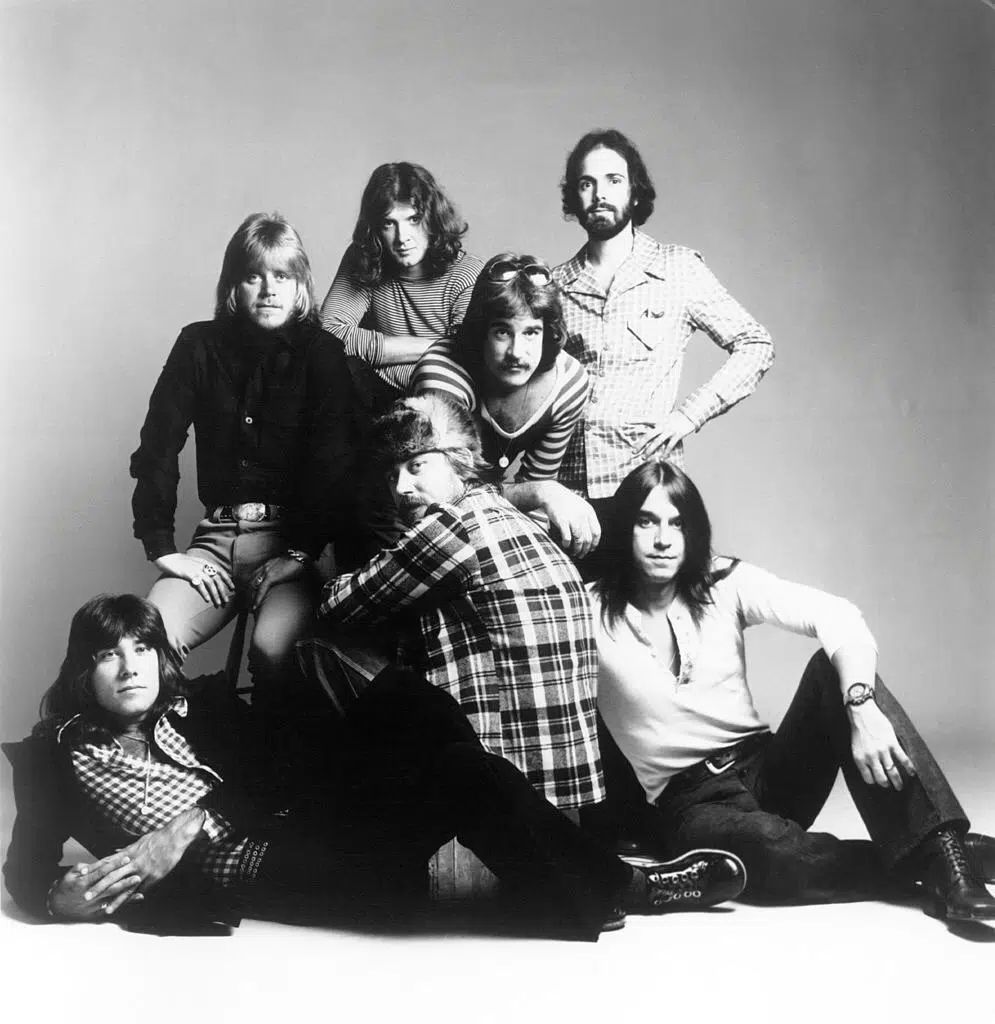
Few songs announce themselves quite like “25 or 6 to 4”. A stabbing guitar riff, bright brass, a rhythm section that feels permanently in motion, and then that famously cryptic title hanging in the air like a late-night riddle. For radio listeners, it has long been one of those records that seems to arrive already in full stride. Behind that energy, though, is a wonderfully human story: a songwriter awake in the small hours, a band determined to stretch rock music into bigger shapes, and a recording that captured Chicago at the moment their ambition met the mainstream.
A song title born from the clock
Robert Lamm’s late-night spark
The title has puzzled listeners for decades, but its origin is much simpler than many myths suggest. Robert Lamm, Chicago’s keyboard player and one of the group’s key songwriters, wrote the song in the early morning while trying to finish lyrics. He was looking at the time and describing it in a slightly offbeat way: it was either twenty-five or twenty-six minutes to four o’clock. That phrase became the title.
That plain, almost accidental detail suits the song beautifully. “25 or 6 to 4” is really about the act of writing itself: the loneliness of being awake while the rest of the world sleeps, the pressure to come up with something meaningful, the strange blur between exhaustion and inspiration. Its lyrics are impressionistic rather than narrative, but that is part of their charm. They feel like thoughts caught in motion, which is exactly what they were.
Why the mystery helped
Because the title sounded enigmatic, listeners projected all kinds of meanings onto it. Some assumed it referred to drugs; others thought it was code for something political or deeply symbolic. In truth, the mystery came from the wording, not from hidden intent. That misunderstanding may actually have helped the song’s aura. Rock music at the end of the 1960s was full of records that invited decoding, and “25 or 6 to 4” fit the mood perfectly even though its central image was wonderfully ordinary: a songwriter glancing at the clock.
Chicago at full charge in the studio
A band built bigger than a standard rock lineup
By the time “25 or 6 to 4” reached the public in 1970 on Chicago II, the group had already set itself apart. Originally known as the Chicago Transit Authority, the band fused rock, jazz, soul, and brass arrangements into something muscular and expansive. This was not a group content to stay in neat categories. Their records could be melodic and radio-friendly, but they also had the adventurous spirit of a band that wanted to push at the edges.
The classic lineup was central to the magic. Alongside Lamm were Terry Kath on guitar, Peter Cetera on bass and vocals, Danny Seraphine on drums, and the formidable horn section of Lee Loughnane on trumpet, James Pankow on trombone, and Walter Parazaider on woodwinds. Each player mattered. Chicago did not simply add horns on top of a rock band; the horns were part of the engine.
James William Guercio and the Chicago sound
The producer most closely associated with the band’s early breakthrough was James William Guercio. He helped shape Chicago’s records into something both ambitious and accessible, preserving the group’s complexity while making sure the songs hit with force. That balance was crucial on “25 or 6 to 4.” The arrangement is dense, but it never feels cluttered. Every element has room to bite.
Guercio understood that Chicago’s challenge was not just recording a song but capturing a large ensemble without losing urgency. On this track, the brass punches with precision, the rhythm section drives hard, and the whole thing feels live-wire tight rather than overly polished.
Terry Kath’s guitar steals the spotlight
If one performance defines the record’s electricity, it is Terry Kath’s guitar work. His opening riff is one of classic rock’s great calling cards: lean, aggressive, and instantly memorable. Then comes the solo, which remains one of the song’s most celebrated moments. Kath played with a raw, expressive power that impressed fellow musicians deeply; even Jimi Hendrix is often said to have admired him.
What makes Kath’s playing on “25 or 6 to 4” so thrilling is the contrast it creates with the horns. Rather than competing, guitar and brass seem to challenge each other in the best possible way, giving the song a restless, charging momentum. It is a perfect example of Chicago’s identity in sound.
The musicians who made it move
Rhythm, brass, and a voice that could cut through
Although Lamm wrote the song, Peter Cetera handled the lead vocal on the hit recording, giving it a bright, urgent edge. His voice slices through the arrangement without softening it, which was no small feat with so much happening around him. Danny Seraphine’s drumming provides the pulse that keeps the track hurtling forward, while Lamm’s keyboard work helps glue together the song’s harmonic shape.
Then there is the horn section, absolutely essential to the record’s identity. James Pankow, Lee Loughnane, and Walter Parazaider gave Chicago a sonic signature that few bands could match. On “25 or 6 to 4,” the brass does not merely decorate the chorus or answer the vocal. It drives, accents, and amplifies the drama at every turn.
A song from 1966, a hit for 1970
The user note frames the song with 1966, and that date points to something interesting about Chicago’s roots. The band itself came together in the second half of the 1960s, in a period when rock groups were becoming more adventurous and arrangements were growing more sophisticated. “25 or 6 to 4” belongs emotionally to that late-1960s creative surge, even though it became a major commercial force in 1970. In that sense, it bridges two moments: the experimental confidence of the late 1960s and the arena-ready power of early-1970s rock radio.
From album cut to major hit
Chart performance and public response
Released as a single from Chicago II, “25 or 6 to 4” became one of the band’s signature successes. In the United States, it reached No. 4 on the Billboard Hot 100, a strong showing that confirmed Chicago were far more than a critics’ curiosity or an album-band phenomenon. They could make long-form, ambitious records and still deliver singles that connected instantly with a mass audience.
The song also performed well internationally and became a staple of FM and AM radio alike. That mattered in an era when radio formats could be sharply divided. “25 or 6 to 4” had enough punch for rock listeners, enough melodic shape for pop audiences, and enough musical sophistication to satisfy people who wanted something richer than a simple three-chord single.
Why it landed so strongly
Part of the record’s commercial appeal lies in its contrasts. It sounds technically accomplished without feeling cerebral. It has a cryptic title, yet an unforgettable hook. It features a brass section, but it rocks hard. For listeners in 1970, that combination felt exciting rather than confusing. Chicago offered something expansive at a time when popular music was widening its horizons.
Behind the scenes and on the road
A live favourite with room to stretch
One reason “25 or 6 to 4” endured is that it was built to thrive onstage. In concert, the band could extend the instrumental passages, let Kath dig even deeper into the soloing, and turn the song into a showcase for the full ensemble. It became a natural centrepiece because it carried both discipline and danger: the arrangement was tight, but the performance always felt capable of catching fire.
That live strength also helped cement the song in fans’ memories. Many classic singles are beloved as recordings; this one became equally famous as a performance piece. It gave audiences the full Chicago experience in one package.
The title myths never quite disappeared
Even after Robert Lamm explained the meaning, listeners kept returning to their own theories about the title. That says something important about the era. Late-1960s and early-1970s rock encouraged close listening, debate, and a little mythology. Fans wanted songs to contain secret doors. “25 or 6 to 4” did not need hidden meanings to survive, but it certainly benefited from the aura of one.
Its place in the wider musical moment
When rock got bigger, bolder, and more adventurous
To understand the song’s legacy, it helps to hear it in the context of its time. Rock music around the turn of the 1970s was expanding in every direction. Bands were borrowing from jazz, classical music, soul, and rhythm and blues. Albums were becoming major artistic statements. Instrumental prowess mattered. So did individuality in arrangement.
Chicago stood at a fascinating crossroads in that landscape. They were not a pure jazz-rock outfit, not a straightforward pop group, and not a heavy rock band in the conventional sense. “25 or 6 to 4” captures that in-between identity brilliantly. It has the punch of hard rock, the structure of sophisticated pop, and the ensemble thinking of jazz-influenced music. That blend helped open doors for other horn-driven rock acts and proved that mainstream success did not require playing it safe.
Legacy on radio and beyond
Today, “25 or 6 to 4” remains one of Chicago’s defining records, and for good reason. It survives not simply because it was a hit, but because it still feels alive. The riff still grabs attention. The horns still sound exhilarating. The title still invites a smile. And the whole performance still carries that unmistakable feeling of musicians pushing together toward something larger than any one part.
For classic hits radio, it is the kind of song that instantly changes the temperature of a room. It brings motion with it. More than half a century later, it still sounds like possibility: a band with big ideas, a songwriter staring at the clock, and a few unforgettable minutes that turned insomnia into one of rock’s great wake-up calls.
- Songwriter: Robert Lamm
- Producer: James William Guercio
- Lead vocal: Peter Cetera
- Standout instrumental feature: Terry Kath’s guitar riff and solo
- US chart peak: No. 4 on the Billboard Hot 100
- Signature element: The fusion of rock drive and brass power