Do You Agree With Our 10 Defining TV Shows of the 1960s?
Ten shows, countless memories, and we want to know if you agree with our 1960s TV top 10.
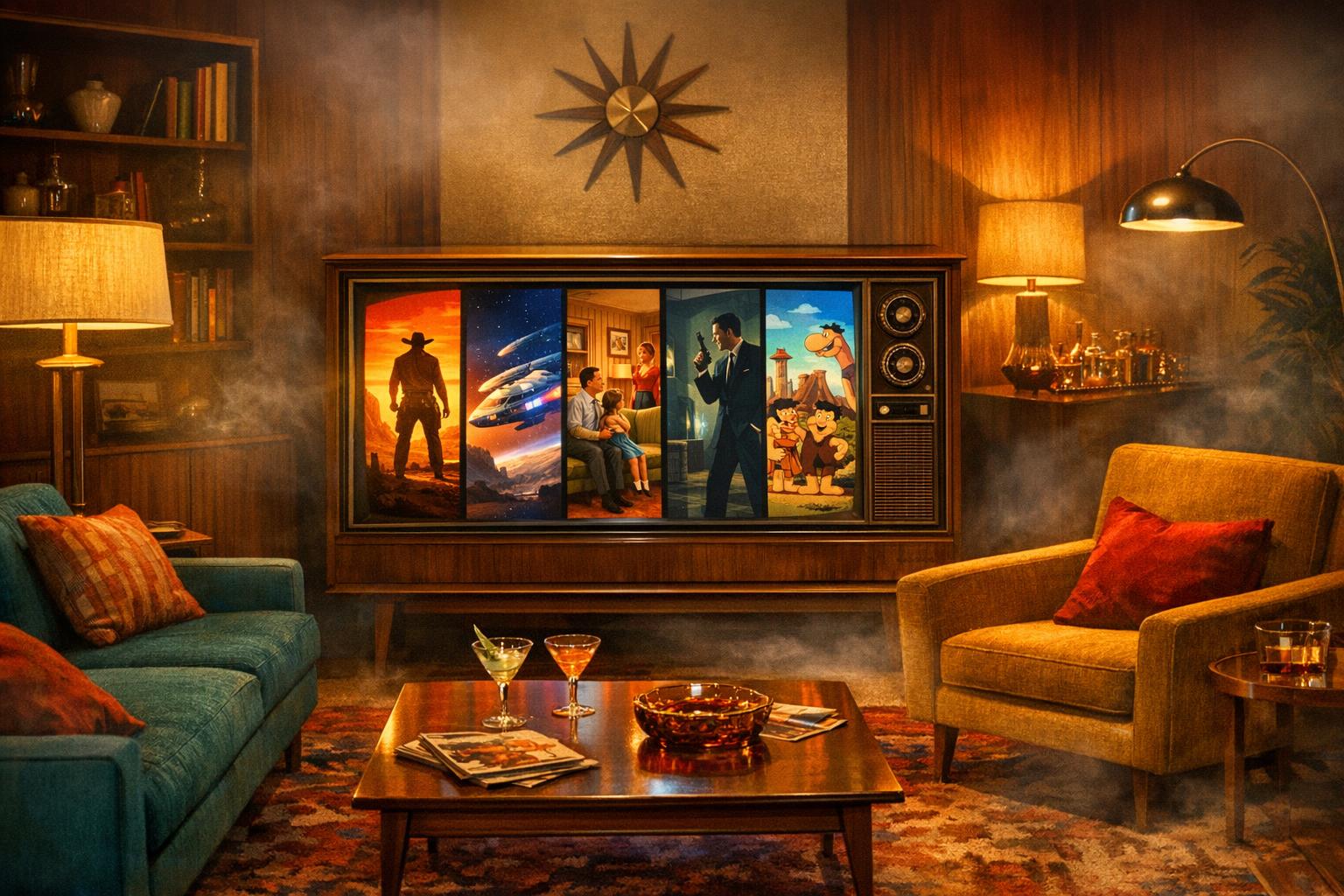
The 1960s changed television at a remarkable pace. One evening you could be watching a dusty frontier showdown, and the next you were stepping aboard a starship, laughing in a suburban living room, or peeking into the lives of secret agents and animated families. It was a decade when TV grew bolder, brighter, and more imaginative, giving audiences characters and catchphrases that still echo today.
For many viewers, these were not just popular programmes. They were weekly rituals: the opening theme, the familiar faces, the cliffhangers discussed the next day. With that warm glow of nostalgia in mind, here is our upbeat Classic Gold countdown of ten television shows that truly helped define the 1960s.
10. Bonanza
If you wanted a western with scale, heart, and a title tune that practically galloped out of the screen, Bonanza delivered. Set around the Cartwright family and their sprawling Ponderosa ranch, it brought a more emotional, family-centred approach to the western format.
One reason it mattered so much was timing. Bonanza became one of the first major series to benefit hugely from colour television. Those wide-open landscapes, bright costumes, and sweeping outdoor scenes made it a perfect showcase for the newer sets appearing in homes. Behind the scenes, NBC knew exactly what it had: a handsome, dependable hit that looked spectacular in colour.
It was rugged, but it also had warmth. That mix helped it become one of the era’s most enduring television institutions.
9. The Flintstones
Long before prime-time animation became common, The Flintstones proved cartoons were not just for children on Saturday mornings. This Stone Age suburban comedy, with Fred, Wilma, Barney, and Betty, took the rhythms of modern family life and gave them a prehistoric twist.
The genius was in the details. Household gadgets were powered by birds, mammoths, and dinosaurs, yet the stories felt instantly familiar: work troubles, neighbourly rivalries, domestic mishaps, and dreams of easy living. It was clever, playful television with a sharp comic eye.
There was also a strong connection to the sitcom tradition of the time. Viewers recognised the structure, but the visual gags made it feel fresh. That combination turned Yabba-Dabba-Doo into one of the decade’s most recognisable television cries.
8. The Andy Griffith Show
Not every defining 1960s series relied on action or spectacle. The Andy Griffith Show won audiences over with charm, gentle humour, and the easy pace of small-town life in Mayberry.
At the centre was Andy Taylor, a sheriff who solved problems with patience rather than force, surrounded by memorable characters including the wonderfully excitable Barney Fife. Don Knotts, in particular, became one of the great comic scene-stealers of the era, turning nervous energy into an art form.
What made the show so beloved was its calm confidence. It never had to shout. In a decade full of social change and cultural noise, Mayberry offered viewers something comforting: a place where kindness, community, and a little homespun wisdom still mattered.
7. Bewitched
A twitch of the nose, a flash of magic, and television had one of its most delightful fantasy comedies. Bewitched took the classic sitcom setup of married life and sprinkled it with enchantment, as Samantha tried to live a normal suburban existence despite being a witch with extraordinary powers.
Elizabeth Montgomery gave the role sparkle and warmth, balancing elegance, comic timing, and just enough mischief. Much of the fun came from the contrast between everyday domestic life and the magical chaos bubbling just beneath the surface.
Behind the scenes, the series also reflected the decade’s fascination with fantasy and escapism. But it worked because the emotional core was recognisable. However magical the setup, the arguments, misunderstandings, and family pressures felt very human.
6. Mission: Impossible
Few television programmes announced themselves with more style than Mission: Impossible. That famous theme, the burning fuse, the recorded message that would self-destruct in seconds: it was cool, tense, and utterly distinctive.
This was a series that treated viewers with respect, asking them to keep up with intricate plots, disguises, and elaborate deceptions. Instead of relying purely on chases and gunfire, it built suspense through planning and precision. Watching the team assemble a scheme was half the thrill.
It also captured the espionage mood of the 1960s beautifully. Audiences were fascinated by secrets, technology, and international intrigue, and Mission: Impossible turned all of that into sleek, intelligent entertainment.
5. The Dick Van Dyke Show
Some sitcoms make you smile. The Dick Van Dyke Show still makes people laugh out loud. With its blend of home life and television-writer workplace comedy, it was smart, energetic, and wonderfully performed.
Dick Van Dyke brought physical comedy, warmth, and easy charm to Rob Petrie, while Mary Tyler Moore, as Laura, added grace and wit in a role that helped redefine the sitcom wife as someone stylish, funny, and fully present in the story. Together, they gave the show a sparkle that never felt forced.
There was also a lovely backstage flavour to it. The writing-room scenes, inspired in part by creator Carl Reiner’s own television experience, offered audiences a peek behind the curtain at how comedy gets made. That extra layer gave the series a sophistication that helped set it apart.
4. Gunsmoke
If one western towered over television for sheer staying power, it was Gunsmoke. Set in Dodge City, with James Arness as Marshal Matt Dillon, it brought a tougher, more adult tone to the frontier than many of its contemporaries.
What made Gunsmoke so important was its depth. This was not simply a show about heroes and villains in black and white terms. It often dealt with moral ambiguity, loneliness, justice, and the harsh realities of frontier life. That gave it dramatic weight and helped elevate the television western.
It also became a fixture of American homes for years, the kind of dependable weekly drama that families built routines around. In the 1960s, that sort of consistency mattered. The characters felt less like passing stars and more like familiar visitors.
3. The Twilight Zone
Open the right door in 1960s television, and you might find yourself in The Twilight Zone. Rod Serling’s landmark anthology series turned science fiction, fantasy, horror, and social commentary into something unforgettable.
Its brilliance lay in how much it could do in a short running time. One week it delivered eerie psychological suspense, the next a haunting moral parable, the next a twist ending that left audiences staring at the screen in disbelief. Serling’s introductions alone were enough to send a little shiver through the room.
Behind the scenes, the anthology format also allowed extraordinary creative freedom. Writers could be daring, actors could take unusual roles, and directors could experiment with tone and style. The result was television that felt literary, cinematic, and deeply original.
2. I Dream of Jeannie
Bright, playful, and impossible to confuse with anything else, I Dream of Jeannie was pure 1960s television charm. The setup was irresistible: an astronaut discovers a genie, and ordinary life is instantly turned upside down.
Barbara Eden’s performance gave the series its magic. She made Jeannie lovable, mischievous, and endlessly watchable, while the show’s blend of fantasy, romance, and light comedy gave it broad appeal. It was colourful, fast-moving, and full of visual fun.
There is also something wonderfully revealing about its era. The space age was in full swing, and television eagerly reflected that fascination. Here, the cosmic mood of the decade met sitcom fantasy, creating a show that felt both of its time and timelessly entertaining.
1. Star Trek
At the top of our list is Star Trek, a series that looked beyond the decade and imagined the future with boldness, intelligence, and heart. Its original run in the 1960s was not long by television standards, but its cultural impact has been enormous.
What made it defining was not just the starships, phasers, and alien worlds. It was the spirit of exploration. Captain Kirk, Mr Spock, Dr McCoy, and the crew of the Enterprise carried viewers into stories about conflict, curiosity, prejudice, diplomacy, and hope. Beneath the science fiction surface, the show often had serious ideas on its mind.
Behind the scenes, creator Gene Roddenberry pushed for a vision of the future that felt inclusive and aspirational. That gave Star Trek a sense of purpose as well as adventure. It invited audiences to dream bigger, and that is one reason it still shines so brightly.
Why These Shows Still Matter
Part of the joy of looking back at 1960s television is realising just how many formats were thriving at once.
- Westerns brought scale, drama, and moral conflict.
- Sitcoms delivered warmth, wit, and instantly recognisable family life.
- Science fiction and fantasy opened the door to bigger ideas and bigger imagination.
- Spy dramas gave the decade a stylish edge.
- Anthologies proved television could be daring and thought-provoking.
These programmes did more than attract ratings. They helped shape how television sounded, looked, and felt. Their theme tunes, performances, and visual styles became part of everyday culture, remembered long after the final credits rolled.
Your Turn
Would your top 10 look the same?
That is the fun of a list like this. Maybe you would move Gunsmoke higher. Maybe Bewitched is your number one. Maybe you would make room for The Beverly Hillbillies, Get Smart, Batman, or Gilligan’s Island.
However you rank them, one thing is certain: 1960s television had range, personality, and a sense of adventure that still feels special. These were shows that gathered people around the set and turned an ordinary evening into an event. And for anyone who loves classic entertainment, that is a beautiful memory worth revisiting.