Remembering Don Rickles: Comedy’s Sharpest Tongue and Warmest Soul
Here's what made Don Rickles impossible to turn off when he appeared on television: the speed, the sting, and the grin that let everyone in on the joke. Behind the famous put-downs was a master showman who could light up any room.
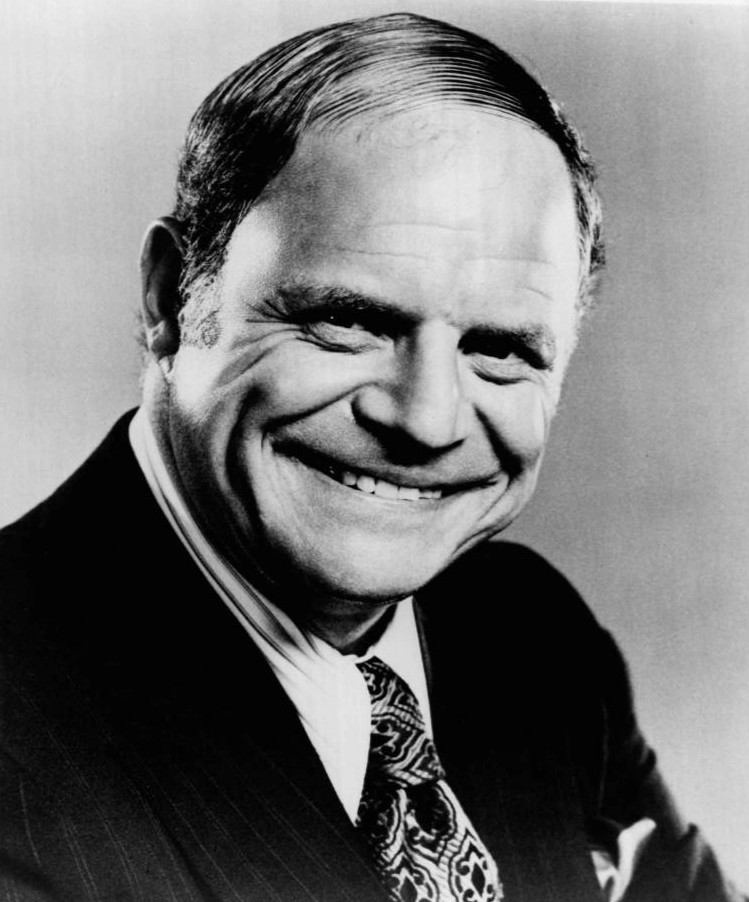
Some performers walk on stage and tell jokes. Don Rickles walked on stage and changed the temperature of the room. With that sharp voice, that quicksilver timing, and those mock-insult volleys that somehow made audiences feel included rather than attacked, he became one of the most distinctive entertainers of the television era. For radio listeners who grew up hearing his name spoken with a grin, Rickles was more than a comedian. He was an event.
What made him special was not simply that he was fearless. Plenty of comedians are fearless. Rickles had something rarer: warmth hidden inside the mischief. He could sting, then wink, and in that split second the whole room understood the game. That balance turned him into a nightclub sensation, a television favourite, and one of the great late-night guests of all time.
The insult comic with a golden touch
Born in Queens, New York, in 1926, Donald Jay Rickles did not set out with a neat, polished persona already in place. He studied acting, served in the US Navy during the Second World War, and spent years trying to break into show business. Like so many future stars, he learned the hard way that the glamorous version of entertainment usually comes after a long stretch of uncertainty.
Early on, Rickles aimed to be a dramatic actor. But while appearing in clubs and dealing with noisy audiences, he discovered that his quickest weapon was his tongue. If someone in the crowd interrupted, Rickles fired back. The room laughed. A style was born almost by accident, but it took remarkable instinct to shape it into an art form.
His act became famous for its mock attacks on everyone in sight: the well-dressed couple near the front, the tough-looking man at the back, the celebrities in the room, even himself. Yet the secret was always rhythm. Rickles knew how far to go, when to pull back, and how to make the target part of the fun. In lesser hands, insult comedy can feel harsh. In his, it felt like a high-wire routine performed with a smile.
A nightclub force
By the late 1950s and early 1960s, Rickles was becoming a major attraction in Las Vegas and beyond. This was the golden age of supper clubs and showroom entertainment, when a performer had to command a room full of clinking glasses, conversations, and big expectations. Rickles did not merely command those rooms. He conquered them.
There is something wonderfully old-school about imagining that scene: cigarette smoke curling above the tables, a spotlight snapping on, and Rickles stepping into it with total confidence. He did not rely on props or gimmicks. His instrument was the room itself. Every face, every reaction, every tiny shift in energy could become part of the act.
That live electricity helped build his legend. People talked about seeing Don Rickles the way music fans talk about seeing a great band in its prime. You could describe the jokes, but the real thrill was in the atmosphere: the speed, the danger, the laughter arriving in waves.
Frank Sinatra opens a door
One of the most famous stories in Rickles lore involves Frank Sinatra. At a club appearance, Rickles spotted Sinatra in the audience and did what many performers would never dare do: he went after him. Instead of taking offence, Sinatra loved it. That approval mattered enormously. In entertainment circles, Sinatra’s support was a powerful stamp of credibility, and it helped raise Rickles’ profile in a very big way.
It also told the industry something important. Rickles’ act was not about cruelty. If someone as commanding as Sinatra could enjoy being part of the joke, then audiences understood they were watching a comedian who knew exactly what he was doing. The act was bold, but it was built on charm and control.
That connection opened doors in Las Vegas, on television, and among the era’s biggest stars. Soon Rickles was not just a club comic with a dangerous edge. He was a must-book guest, the kind of personality who could liven up any programme simply by taking a seat.
The king of the couch
If you want to understand Don Rickles, watch him on talk shows. This was one of his natural habitats. He could turn a standard celebrity interview into a comic free-for-all, sparring with hosts, teasing fellow guests, and tossing out lines that felt spontaneous because they often were.
His appearances with Johnny Carson became the stuff of legend. Carson, no easy man to surprise, clearly delighted in Rickles’ unpredictability. Their chemistry was part combat, part affection, and entirely entertaining. Rickles also lit up programmes hosted by Merv Griffin, Mike Douglas, and later David Letterman and others who understood that once he got going, the best move was often to let him fly.
For viewers at home, that was the magic. You never quite knew what he would say next, but you knew the room would be alive. In an age when television variety still had a touch of danger, Rickles brought that spark every time.
More than the one-liners
Because his comic persona was so strong, it is easy to forget how versatile he was. Rickles acted in films and on television, often bringing a surprising steadiness to dramatic or straight roles. He appeared in Run Silent, Run Deep early in his screen career and later found memorable parts in projects that used his intensity in different ways.
Then came an entirely new generation of fans. To millions, Don Rickles was the voice of Mr. Potato Head in Pixar’s Toy Story films. It was a perfect late-career twist. That familiar bite was still there, but now it came wrapped in family entertainment. Children laughed at the character’s bluster while adults smiled at the unmistakable Rickles flavour behind it.
That second life in popular culture says a great deal about his staying power. He was never frozen in one era. Even people who had never seen him in a Las Vegas showroom or on a 1960s talk show could recognise the comic personality instantly.
Behind the scenes, beloved by his peers
For all the on-stage mock warfare, stories from fellow entertainers often circle back to one point: Don Rickles was deeply liked. Comics admired his nerve. Singers and actors loved having him around because he could puncture formality in seconds. He brought energy backstage just as he did under the spotlight.
That is one reason his friendships in show business lasted so long. Bob Newhart was a close friend. So was Johnny Carson. Rickles could roast people mercilessly in public, then show genuine loyalty in private. The contrast only added to his appeal. The man behind the act was thoughtful, devoted to family, and famously respectful of the craft.
There is a lovely lesson in that. The sharpest comics often understand human feelings better than anyone. Rickles had to. His timing depended on reading people perfectly. He knew when to push, when to soften, and when a quick smile would tell the audience they were all in safe hands.
Why Don Rickles still matters
Comedy changes with every generation, and some acts remain rooted in their own time. But Don Rickles still feels alive because his real subject was never just insult. It was connection. He made performance feel immediate. He made celebrity seem less distant. He made the audience part of the show.
On a classic hits station, we often celebrate artists who could do that very thing in song: reach through the speaker and make you feel as if the room had suddenly brightened. Rickles achieved a similar effect with words. He had punch, style, and a rhythm all his own.
- He was fearless enough to take on anyone in the room.
- He was precise enough to make the joke land without losing the crowd.
- He was warm enough to leave people laughing with him, not nursing a bruise.
That combination is why his clips remain so replayable. Even now, you can put one on and feel the old charge: the audience leaning in, the comic pouncing, the laughter building before the line has even fully landed.
Don Rickles belonged to a glorious age of entertainment, but he never feels dusty or distant. He feels switched on. Fast. Bright. A little dangerous. In other words, exactly the kind of performer you cannot turn away from once he has the microphone.
Some stars chase laughs. Don Rickles chased the moment right before the laugh, when the whole room held its breath.
And then, of course, he blew the roof off.