Saturday Morning in 1971 — three channels, a bowl of cereal, and pure TV magic
Three networks turned Saturday morning into the happiest battle on television.
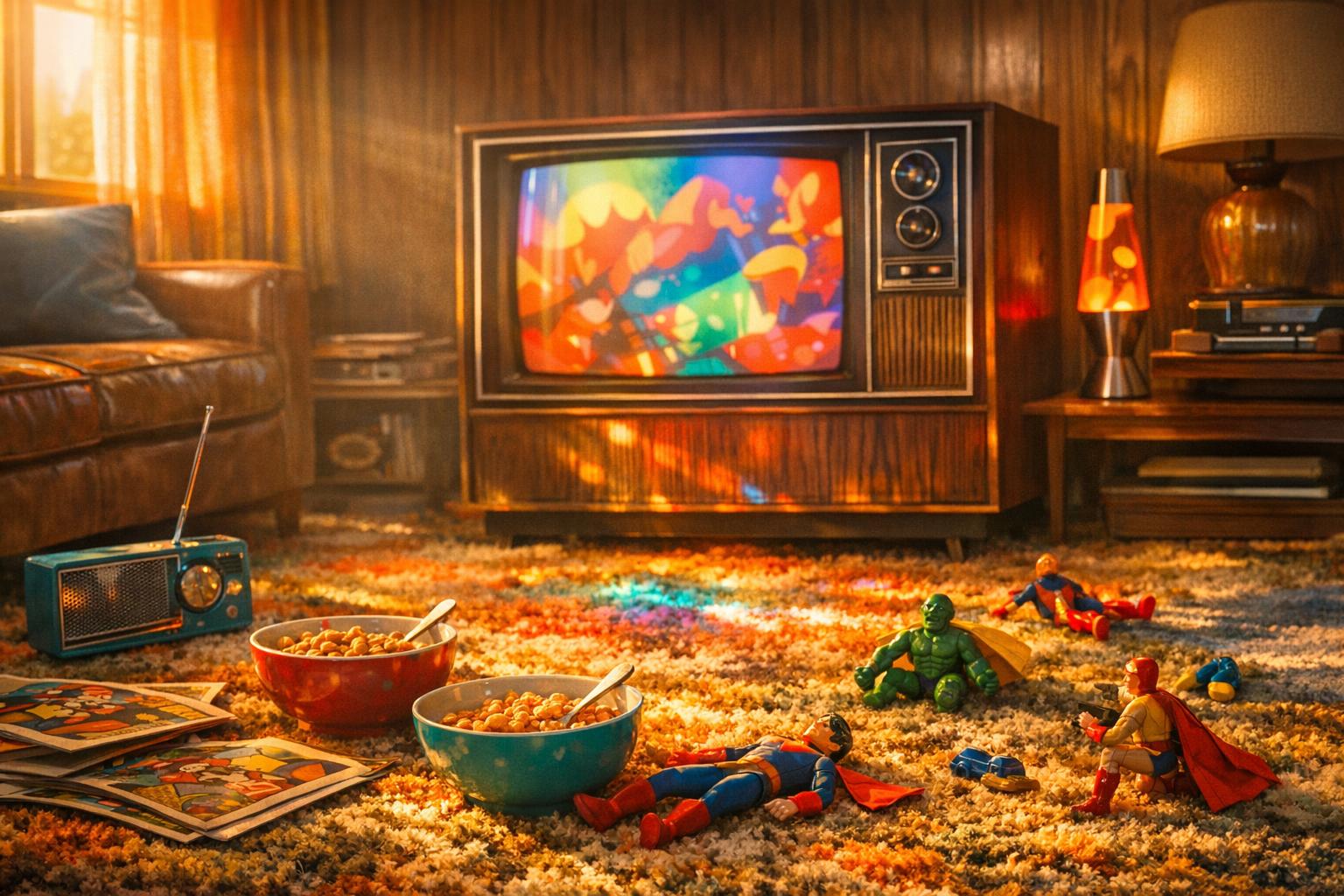
There was a special kind of excitement built into Saturday mornings in 1971. The week belonged to school, homework, and early bedtimes. But Saturday? That was a bright little kingdom of cartoons, comedy, pop music, superheroes, and just enough weirdness to make it unforgettable. All across the United States, children parked themselves in front of the television with cereal bowls balanced on their knees, ready to see what ABC, CBS, and NBC had lined up.
It is worth noting that local stations sometimes shifted times, and schedules could vary by market. But the broad picture is clear: each network had its own personality, and each one was trying to win the most important audience in the house that morning.
Let us take a warm, nostalgic spin through the 1971 Saturday morning line-up on American television.
ABC brought the pop energy
ABC’s Saturday morning identity in this period felt young, musical, and playful. It leaned into pop culture, teen-friendly humour, and animated acts that seemed only a step away from the Top 40 radio dial.
ABC Saturday morning line-up in 1971
- 8:00 – Super Friends (note: this debuted later in 1973; earlier 1971 slots were reruns or rotating programming)
- 8:30 – The Jackson 5ive
- 9:00 – The Harlem Globetrotters
- 9:30 – The Pebbles and Bamm-Bamm Show
- 10:00 – Archie’s TV Funnies / TV Funhouse
- 10:30 – Sabrina the Teenage Witch (Filmation version)
- 11:00 – Josie and the Pussycats
- 11:30 – The Funky Phantom
If you wanted a line-up that felt like a transistor radio crossed with a comic book rack, ABC was hard to beat. The Jackson 5ive gave one of the biggest musical acts in America a cartoon life of its own, turning chart stars into animated adventurers. Josie and the Pussycats kept that beat going with guitars, go-go style, and mystery-laced fun.
Then there was The Harlem Globetrotters, which brought sports celebrity into the cartoon world with a bounce all its own. Add Sabrina the Teenage Witch and The Funky Phantom, and you had a line-up that mixed cool, comedy, and a touch of spooky fun. ABC really did have that music-plus-teen-vibe identity, and it gave the network a distinctive flavour.
CBS leaned on familiar favourites
CBS came into Saturday morning with a powerful hand: major animation names, comedy that already had a loyal audience, and mystery-adventure shows that kept children coming back week after week.
CBS Saturday morning line-up in 1971
- 8:00 – The Bugs Bunny Show
- 9:00 – Scooby-Doo, Where Are You!
- 9:30 – Josie and the Pussycats (reruns or variant runs)
- 10:00 – The New Adventures of Batman
- 10:30 – The Amazing Chan and the Chan Clan
- 11:00 – The Harlem Globetrotters (appearing across networks in different runs)
- 11:30 – Fat Albert and the Cosby Kids
There is a strong case that CBS had the most formidable line-up of the three. The Bugs Bunny Show was already a giant. Bugs, Daffy, Elmer, and company had a timeless comic rhythm that worked just as well on Saturday morning television as it had in cinemas. Those shorts were fast, funny, and endlessly rewatchable.
Then came Scooby-Doo, Where Are You!, which by 1971 had become one of the defining Saturday morning experiences. That opening theme, the spooky chases, the masked villains, the comic panic from Shaggy and Scooby — it was a formula, yes, but a wonderfully reliable one. For many viewers, that hour alone made CBS must-see television.
The New Adventures of Batman added superhero appeal, while The Amazing Chan and the Chan Clan delivered mystery with a family-band twist. Fat Albert and the Cosby Kids brought something a little different too: urban humour, heart, and a memorable voice. CBS knew how to balance comfort food television with newer ideas.
In simple terms: if ABC felt hip and playful, CBS felt dependable, star-powered, and packed with proven favourites.
NBC mixed cartoons with live-action fantasy
NBC took a slightly different route. Its schedule blended animated favourites with live-action series, especially the colourful, surreal world of Sid and Marty Krofft productions. That gave the network a style all its own.
NBC Saturday morning line-up in 1971
- 8:00 – The Pink Panther Show
- 8:30 – Underdog
- 9:00 – The Banana Splits Adventure Hour
- 10:00 – The Pebbles and Bamm-Bamm Show (in some markets)
- 10:30 – Help!… It’s the Hair Bear Bunch!
- 11:00 – Lidsville
- 11:30 – The Bugaloos
The Pink Panther Show opened the day with style. Cool, sly, and visually sharp, it had a different comic tempo from the louder cartoon chaos elsewhere. Underdog followed with superhero parody charm, still a favourite with children who liked their heroes brave but a little goofy.
The Banana Splits Adventure Hour was one of those programmes that could only have happened in that era: part costumed pop act, part comedy show, part variety package. It was bright, noisy, cheerful, and a little surreal. In other words, perfect Saturday morning material.
Then NBC moved further into its dreamlike territory with Lidsville and The Bugaloos. These live-action fantasy shows were pure Krofft imagination — oversized sets, vivid costumes, and stories that felt like they had drifted in from a child’s dream after too much sugar. Help!… It’s the Hair Bear Bunch! kept the cartoon side lively with Hanna-Barbera comedy.
That mixture made NBC stand out. It was not just cartoons; it was a whole colourful universe.
What made 1971 feel so special?
Part of the magic was the sheer variety. In just one morning, a child in 1971 could move from classic theatrical comedy to mystery capers, from pop-star cartoons to superheroes, from talking animals to psychedelic live-action fantasy. The networks were not offering one flavour of entertainment. They were offering a buffet.
Another part was the ritual itself. Saturday morning television was not background viewing. It was an event. You got up early. You negotiated with siblings over the channel. You memorised the order of the shows. You knew which theme songs signalled time for another bowl of cereal and which one meant the morning was almost over.
And of course, these programmes reflected the era around them. Pop music was everywhere, so cartoons borrowed the energy of bands and teen idols. Superheroes were becoming bigger television attractions. Comedy and mystery were safe bets. And the late-1960s burst of colour and imagination still lingered in the design of many shows, especially on NBC.
Which network won the morning?
That depends on what you wanted.
- ABC was the place for music, teen style, and playful pop culture.
- CBS was the heavyweight, with Bugs Bunny and Scooby-Doo giving it enormous appeal.
- NBC offered the most unusual mix, thanks to its blend of cartoons and Krofft fantasy shows.
If you ask many nostalgic viewers, CBS may have had the strongest all-round hand. But that is the beauty of remembering 1971: every network had something distinctive, and every child probably had a favourite stretch of the morning they still remember with a smile.
A final rewind
Looking back now, the 1971 Saturday morning line-up feels like a perfect little time capsule. It captures an era when television for children was bold, catchy, funny, and gloriously unafraid to be strange. It was a world of theme songs, bright colours, cliffhangers, laugh tracks, and animated heroes who only had to get you from breakfast to lunchtime.
For a few hours each weekend, ABC, CBS, and NBC turned the living room into a tiny theatre of wonder. And for anyone who was there, those opening credits still play like old favourite records.