The Romantics Never Did Anything Halfway
Most casual fans know two giant songs; what they miss is the tough Detroit band behind the sharp suits, big hooks, and one of classic radio’s most reliable jolts of energy.
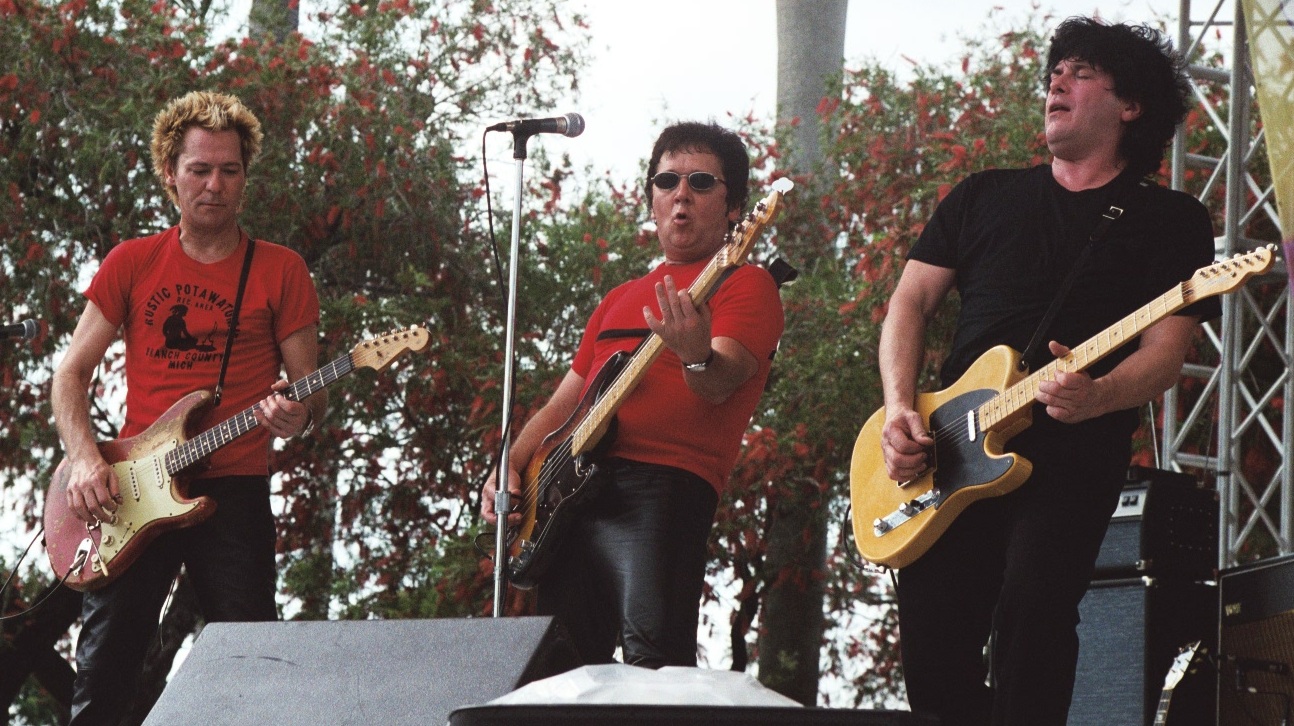
Plenty of bands have a hit single. Fewer have a signature look, a garage-born attitude, and a pair of songs so instantly recognisable that the opening seconds can light up a car radio decades later. The Romantics were one of those groups. With their sharp suits, matching red leather outfits, British Invasion haircuts, and Detroit-bred energy, they arrived looking like a pop fantasy and sounding like a band that had spent years learning how to make a room move.
For classic hits listeners, The Romantics are more than a quick burst of nostalgia. They are a reminder of a moment when power pop, new wave, garage rock, and straight-ahead American determination all collided in the best possible way. Their records had hooks big enough for pop radio, guitars tough enough for rock stations, and choruses built for singing along with the windows down.
Detroit roots, British influences, and a band with a plan
The Romantics formed in Detroit, Michigan, in the late 1970s, and that matters. Detroit has always produced musicians with grit in the grooves. This is a city with deep musical history: Motown polish, hard rock muscle, and a working-band mentality that rewards stamina as much as style. The original line-up brought together vocalist, rhythm guitarist, and songwriter Wally Palmar, lead guitarist and songwriter Mike Skill, bassist Rich Cole, and drummer Jimmy Marinos.
Like many young bands of their era, they were inspired by the records that made them want to pick up instruments in the first place. You can hear the echo of the British Invasion in their music, especially bands like The Beatles, The Kinks, and The Who, but also the punch of 1960s garage rock and the lean urgency of late-1970s new wave. They loved melody, but they also loved attack. That combination became their calling card.
The name The Romantics came with a wink. They looked stylish and sang catchy songs, but there was always something scrappy and streetwise about them. They were not a soft-focus pop act. They were a real band, forged in clubs, where songs had to win over a crowd quickly or disappear.
One of the group’s early smart moves was embracing a strong visual identity. Matching outfits can be a risky idea in rock music, but for The Romantics it worked. It gave them a memorable image in the age of television music shows and, soon enough, MTV. More importantly, it matched the music: tight, bright, and sharply delivered.
The breakthrough that put them on every radio dial
Their self-titled debut album arrived in 1980, and with it came the song that introduced them to a huge audience: What I Like About You. It was not their biggest chart hit at the time, which is one of those wonderful little twists in pop history, but it became their most enduring anthem. Powered by handclaps, a harmonica blast, a charging beat, and a chorus that practically demands participation, it felt like a party exploding out of the speakers.
Jimmy Marinos handled lead vocals on the track, giving it a raw, playful edge that helped separate it from more polished power-pop records of the period. The song captured something timeless: excitement, flirtation, and the sheer joy of being young and loud. That is part of the reason it has lasted so well on radio, in films, in commercials, and at sporting events. It sounds like fun because it is fun.
Still, the story of The Romantics does not stop with one immortal single. They kept working, recording, and refining their sound through the early 1980s, building a catalogue that was stronger and broader than casual listeners sometimes realise. Albums like National Breakout and In Heat showed a band growing more confident, more polished, and more capable of balancing pop hooks with a tougher rock edge.
Then came the real commercial breakthrough: Talking in Your Sleep in 1983. If What I Like About You was the band kicking down the door, Talking in Your Sleep was them proving they could own the room. The song climbed high on the charts and became their biggest mainstream hit, driven by a sleek groove, shimmering keyboards, tense guitar lines, and a vocal performance from Wally Palmar that mixed mystery with irresistible melody.
It was a perfect record for its moment. The early 1980s loved atmosphere, rhythm, and a little after-dark intrigue, and Talking in Your Sleep delivered all three without losing the band’s underlying rock spirit. It was catchy, but not lightweight. Stylish, but not cold. That balance helped it cross formats and audiences.
The songs that built their reputation
Ask a casual fan about The Romantics and you will almost certainly hear two titles first: What I Like About You and Talking in Your Sleep. Fair enough. Those songs have earned their place. But the band’s story gets richer when you dig a little deeper.
One in a Million is a favourite among listeners who enjoy the more polished side of the band’s early-1980s sound. It has a bright, urgent arrangement and a chorus that shows how naturally The Romantics could deliver radio-friendly pop without losing their edge.
Rock You Up leaned into a harder, more muscular style and gave the band another strong chart moment. By then, they had become experts at threading the needle between new wave sheen and rock-and-roll punch.
Then there are the album tracks and fan favourites that reveal the group’s depth. The Romantics were not just chasing singles. They understood sequencing, mood, and the value of a song that could punch above its chart position in a live set. That is one reason longtime fans often talk about them as a proper band rather than a nostalgia footnote.
- What I Like About You – the forever anthem, bursting with youthful energy
- Talking in Your Sleep – sleek, moody, and irresistibly catchy
- One in a Million – polished power pop with a racing heartbeat
- Rock You Up – a tougher, bigger-sounding radio rocker
If you want to explore more, a useful starting point on YouTube is this search for The Romantics official videos.
More than power pop: the sound that made them stand out
Trying to place The Romantics in just one genre does not quite work, and that is part of their appeal. They are often described as power pop, and that is certainly true in terms of their gift for hooks, harmonies, and concise songwriting. But there is also garage rock in their attack, new wave in their style and production choices, and classic rock in the way they drive a rhythm section.
Their music often worked by contrast. Sweet melodies met sharp guitars. Clean arrangements hid a lot of muscle underneath. Their best songs felt carefully constructed without ever sounding overthought. Even when production became more polished in the MTV era, they still played with the urgency of a club band trying to win the last set of the night.
Wally Palmar’s voice was central to that identity. He could sound cool, urgent, teasing, or full-throttle depending on the song. Jimmy Marinos brought his own character too, especially on What I Like About You, giving the group a slightly broader personality than many bands built around a single frontman image. Mike Skill’s guitar work, meanwhile, helped define the band’s blend of melody and bite.
The Romantics understood a simple truth: if the chorus is strong enough and the beat is alive enough, a song can live for generations.
That is exactly what happened. Their records still sound immediate because they were built on fundamentals that never go out of style: rhythm, chemistry, and hooks you can remember after one play.
Behind the scenes: lineup changes, legal tangles, and lasting resilience
Like many bands with a long road behind them, The Romantics also had their share of challenges. Line-up changes affected the group over time, and there were business complications too, including legal disputes that slowed momentum at points when the band might otherwise have capitalised more fully on their success.
Those stories may not be as glamorous as hit singles, but they tell you something important about the band: they endured. The music business can be especially hard on groups that sit between categories. Too pop for some rock purists, too rock for some pop gatekeepers, bands like The Romantics often have to fight harder for their place in history. Yet their songs kept travelling, kept connecting, and kept finding new audiences.
There is also a lesser-known irony in their legacy. What I Like About You became so culturally omnipresent over time that many people assume it was their biggest chart smash. In reality, Talking in Your Sleep was the larger chart hit in the United States. That contrast says a lot about how pop culture works. Sometimes the song that becomes immortal is not the one that seemed biggest in the moment.
Another charming detail is how visual presentation helped tell their story. In an era when image mattered, The Romantics used fashion not as a gimmick but as a frame for the music. The red leather look and coordinated styling made them instantly recognisable, but the songs were always sturdy enough to outlast the image.
Why they still matter on classic hits radio
For classic hits radio, The Romantics are ideal. Their songs arrive fast, make an impression immediately, and leave listeners feeling energised. There is no wasted motion in their best records. Within seconds, you know where you are, and it is usually somewhere fun.
They also represent an important bridge in popular music. The Romantics connect the guitar sparkle of the 1960s, the stripped-down urgency of punk and new wave, and the big-radio confidence of the 1980s. That makes them a natural fit in a classic hits environment where playlists often thrive on variety. A Romantics song can sit comfortably next to The Cars, Cheap Trick, Blondie, or Billy Idol and still sound completely itself.
For listeners who lived through the era, the appeal is obvious: these songs bring back movement, colour, and youthful excitement. For younger listeners discovering them through radio, streaming, or film and television placements, the attraction is just as strong. The hooks are immediate. The attitude is inviting. The energy feels real.
And perhaps that is the key to their staying power. The Romantics never sounded like they were trying to manufacture coolness. They sounded like they meant it. There is a difference, and audiences can hear it.
A band built for the long echo
The Romantics may not always be the first name mentioned in every conversation about great American bands of the early 1980s, but once their songs start playing, the reaction is instant. Recognition. A grin. Maybe a drumbeat on the steering wheel. Maybe a chorus sung a little too loudly. That is not a minor achievement. That is the mark of music that has truly lasted.
They gave radio some of its most durable bursts of joy and cool. They balanced style with substance, pop instincts with rock drive, and commercial appeal with genuine band chemistry. Behind the famous choruses was a Detroit group that worked hard, played sharp, and understood exactly how to make a record jump out of the speakers.
So when The Romantics come on today, what you are hearing is not just a memory of the early 1980s. You are hearing a band that knew how to turn excitement into sound. Decades later, that still feels like a very good idea.