Moonlight, Hooks, Hit
By the time it climbed into the UK Top 20 in 1979, Dollar's teasing question had already become one of those choruses radio listeners could not shake. Wrapped in polished production and a touch of glamour, Who Were You With in the Moonlight turned a clever lyric into a breakthrough hit.
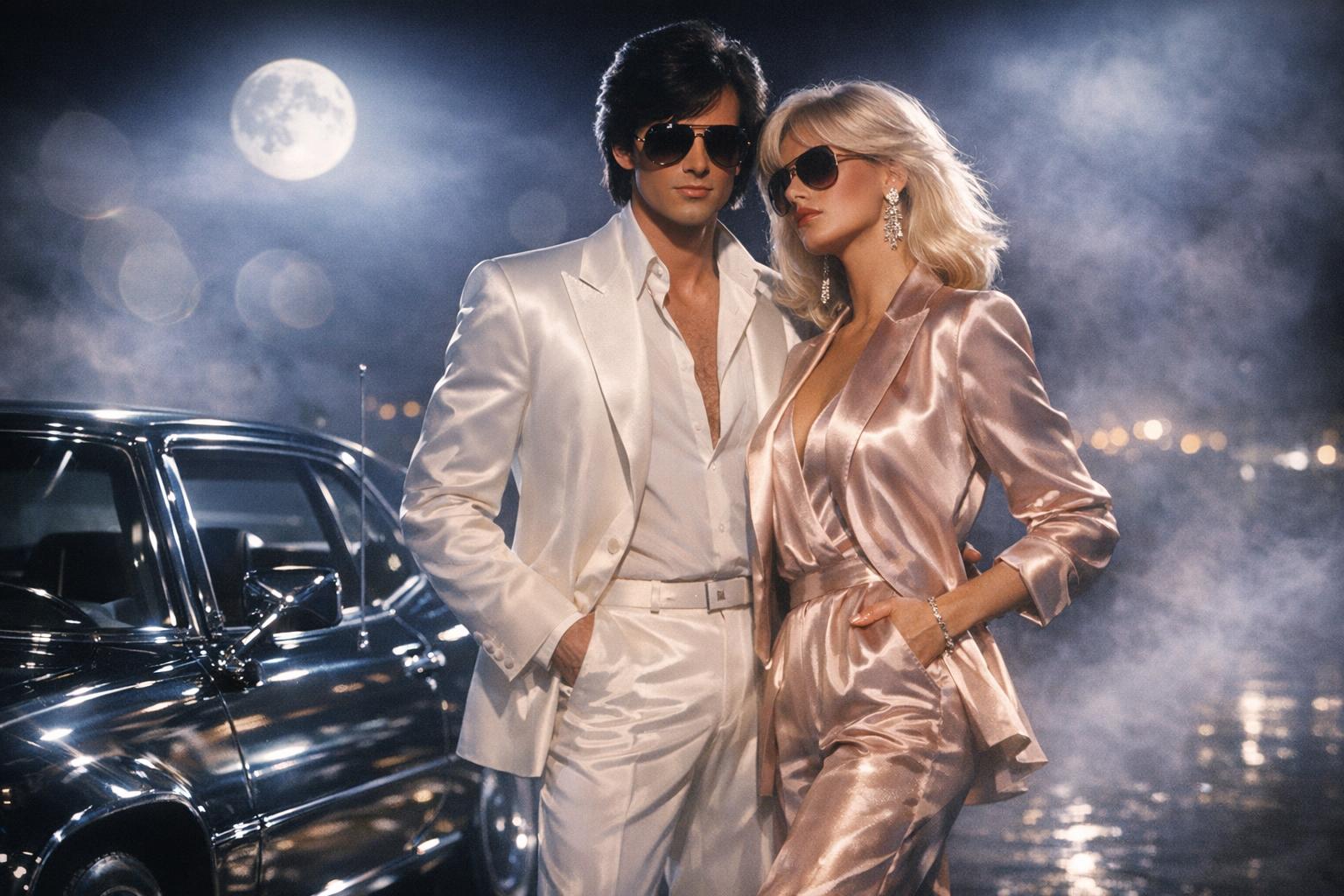
There is something instantly irresistible about Who Were You With in the Moonlight. It arrives with a bright, teasing question, wraps it in glossy late-1970s pop, and then refuses to leave your head. For Dollar, it was the song that truly announced them to a mass audience in 1979: stylish, romantic, slightly dramatic, and made for radio.
At a time when pop was changing shape almost by the month, this single found a sweet spot between the polished drama of ABBA, the sparkle of Eurovision-era melody writing, and the clean commercial instincts of British chart pop. It sounded modern, but it also felt classic from the moment it hit the airwaves.
For listeners who remember hearing it spill out of kitchen radios, car speakers, or Saturday television music shows, the record still carries that particular glow of its era: glamorous, melodic, and just mysterious enough to make you lean in for one more play.
For a video search, try this YouTube search.
A new duo with instant chemistry
Dollar was formed around the pairing of David Van Day and Therese Bazar, two performers who already knew something about the machinery of pop success. Both had been members of Guys ‘n’ Dolls, the mixed vocal group that enjoyed chart action in the 1970s. By the time they emerged as Dollar, they brought more than good looks and strong harmonies; they brought experience.
That mattered. Dollar did not arrive as a rough, untested act. They were presented with polish from the outset, and Who Were You With in the Moonlight became the perfect vehicle for that image. It played to their strengths as a male-female vocal pairing: flirtation, contrast, and a touch of emotional intrigue.
The name Dollar itself suggested glamour and modernity, and the music followed through. In 1979, pop audiences were highly responsive to acts that looked sleek and sounded expensive. Dollar understood that language early.
How the song was written
A question that sold the whole record
Some songs succeed because of a grand emotional statement. Others win because they ask exactly the right question. Who were you with in the moonlight? is a superb pop title because it contains a little story all by itself. It hints at jealousy, romance, suspicion, memory, and fantasy in a single line. Before the melody has fully settled in, the listener is already involved.
The song was written by Ben Findon, Mike Myers, and Bob Puzey, a songwriting team with a sharp instinct for commercial pop. Findon in particular would become a major behind-the-scenes figure in British pop, known for helping shape records that were catchy, cleanly structured, and built for radio replay.
That craft is all over this single. The writing is economical but vivid. The verses set up the emotional puzzle, while the chorus lands with exactly the kind of lift needed to make the title unforgettable. It is a song built on precision: memorable hook, clear emotional angle, no wasted movement.
Built for late-1970s pop radio
The late 1970s were full of contrasts. Disco was still powerful, punk had shaken the industry, and mainstream pop was becoming more image-conscious and international. Songwriters who could deliver melodic certainty in that climate were invaluable. Who Were You With in the Moonlight belongs to that tradition of expertly assembled singles that could sit comfortably beside chart pop, light disco, and Eurovision-friendly melodicism.
It also had a distinctly European feel, which helped it travel well. The tune is polished and dramatic without becoming heavy, and that balance was one of the reasons the song connected so quickly.
In the studio
Ben Findon’s polished production touch
As producer as well as co-writer, Ben Findon played a central role in shaping the record’s sound. His approach favoured clarity, strong rhythmic definition, layered vocals, and arrangements that felt luxurious without becoming cluttered. On Who Were You With in the Moonlight, that meant a record with movement and sheen: crisp drums, bright keyboards, tightly controlled backing vocals, and a sense of momentum that carries the song from first line to final chorus.
Findon knew how to make a single feel larger than its running time. The production gives Dollar a cinematic frame, but it never overwhelms the duo themselves. Van Day and Bazar remain at the centre, their voices playing off each other in a way that gives the song its personality.
The voices that made it click
David Van Day brought a confident, direct pop vocal style, while Therese Bazar added brightness and poise. Together they created a conversational tension that suited the lyric beautifully. This was not just two singers sharing a melody; it was a performance built around interplay.
One of the pleasures of the record is how controlled it feels. Nothing is accidental. The phrasing, the blend, the dramatic pauses before the hook: all of it suggests careful studio discipline. That was part of Dollar’s appeal. They sounded stylish because they were styled sonically as carefully as they were visually.
Detailed session-by-session musician line-ups are not widely documented in the same way as some rock recordings from the period, but the record clearly reflects the work of skilled studio players operating in the highly professional London pop environment of the late 1970s. This was an era when arrangers, engineers, and session musicians could turn a strong song into something radio-gold, and that studio craftsmanship is audible throughout.
Chart success and commercial reception
A major breakthrough in 1979
Who Were You With in the Moonlight became Dollar’s commercial breakthrough, reaching number 14 on the UK Singles Chart in 1979. That may sound modest beside the biggest chart-toppers of the era, but in practical terms it was a major arrival. A Top 20 hit meant airplay, television exposure, public recognition, and momentum.
Just as importantly, it established Dollar as more than a one-off novelty or side project. The single gave them chart credibility and laid the groundwork for the run of hits that followed in the early 1980s. In other words, this was the record that opened the door.
Why audiences responded
The song’s commercial appeal was broad. It had enough sparkle for younger pop fans, enough melodic sophistication for adult listeners, and enough emotional intrigue to stand out among more straightforward love songs. It sounded glamorous without feeling distant.
Radio loved records like this because they worked instantly. There was no need to explain them. Within seconds, the title and chorus had done their job. That kind of immediate accessibility was one of the great currencies of the singles market in 1979.
Behind the scenes and memorable details
A title with built-in drama
One reason the song has lasted is simple: people remember the title. It feels almost like the opening line of a film scene. You can imagine the moonlight, the question, the raised eyebrow. Great pop often depends on one unforgettable phrase, and Dollar had one here.
That kind of lyrical hook also made the song ideal for television performance. In the late 1970s, visual presentation mattered enormously. A duo like Dollar could sell a song through style, expression, and staging as much as through the record itself. The glamorous image and the dramatic title worked together beautifully.
The first clear statement of the Dollar formula
Looking back, the single feels like an early blueprint for what Dollar would become known for: immaculate pop, high-gloss presentation, strong choruses, and just enough romantic tension to keep things interesting. Later hits would refine that formula, but this record introduced it in a very appealing form.
There is also a certain innocence to the sound that makes it especially charming now. Even with its sophistication, it belongs to a moment when mainstream pop still loved melody without apology. It invites you to sing along, dress up a little, and enjoy the drama.
Where it sits in the story of its era
Between disco shimmer and 1980s pop sheen
Part of what makes Who Were You With in the Moonlight so interesting is where it sits historically. In 1979, chart music was in transition. Disco was still glittering across the airwaves, but the cleaner, more synthetic textures of the 1980s were starting to appear. Dollar’s single catches that exact moment.
It still has the warmth and melodic fullness of 1970s studio pop, yet it points toward the more streamlined, image-led chart sound that would define the early years of the next decade. You can hear the bridge between eras in it.
A cousin to European pop sophistication
The song also belongs to a wider family of late-1970s European-influenced pop records: elegant, melodic, carefully arranged, and designed to cross borders. It shares some DNA with the polished craftsmanship that made acts like ABBA so powerful internationally, even though Dollar had their own identity.
That connection helped the song feel larger than a local chart entry. It was part of a broader movement toward sleek, exportable pop that looked good on television and sounded even better on radio.
Legacy under the moonlight
Today, Who Were You With in the Moonlight remains one of Dollar’s defining early recordings and one of those late-1970s singles that can instantly transport listeners back to a more glamorous corner of pop history. It may not always be the first title mentioned in broad surveys of the decade, but among classic pop fans it has real staying power.
Its legacy rests on several things:
- It launched Dollar as chart contenders
- It showcased the songwriting and production skills of Ben Findon and his team
- It captured a changing moment in pop with style and precision
- It remains a wonderfully catchy radio record
Most of all, it endures because it still feels good to hear. That matters. Plenty of songs are historically important; fewer are still genuinely enjoyable after decades of changing tastes. Who Were You With in the Moonlight keeps its charm because it never forgets the first duty of a pop single: to delight.
A great record does not just ask a question. It makes you want to hear the question again.
And that is exactly what Dollar achieved in 1979. Under soft studio gloss and a perfectly turned hook, they delivered a record full of romance, intrigue, and chart-ready confidence. For three and a half minutes, the moonlight never fades.