How Jim Croce Made Every Song Feel Personal
A Jim Croce record still feels like a friend settling in to tell you a story. In just a few short years, he moved from coffeehouses and working jobs to creating some of the most loved and enduring songs in classic hits radio.
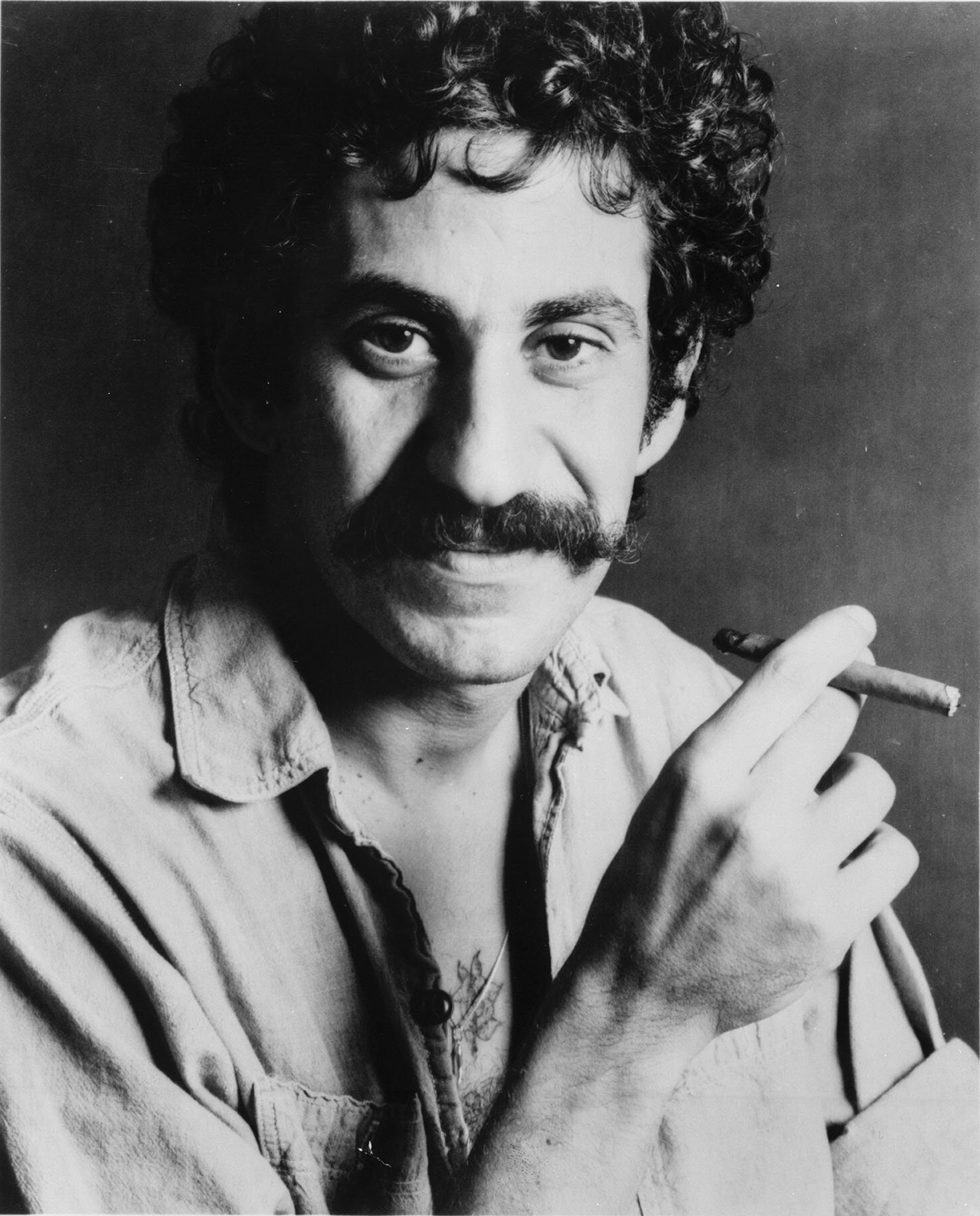
Some singers sound as if they are performing for a crowd. Jim Croce often sounded as if he had pulled up a chair at the kitchen table, loosened his tie, and decided to tell you a story. That gift made him one of the most distinctive voices of the early 1970s: warm but unsentimental, funny without being lightweight, and capable of turning everyday people into unforgettable characters in just a few lines. For classic hits radio listeners, his records still arrive with that same easy charm. They feel lived-in, human, and instantly familiar.
From South Philadelphia to the coffeehouse circuit
Jim Croce was born on January 10, 1943, in South Philadelphia, Pennsylvania, into an Italian-American family where music was part of the atmosphere. He learned music early, first through accordion lessons, though like many young players he eventually found his own way toward the guitar and songwriting. That shift mattered. The accordion may have given him discipline, but the guitar gave him freedom: freedom to travel light, to play anywhere, and to turn observations into songs.
He attended Villanova University, where music became more than a pastime. College gave him audiences, fellow musicians, and a wider sense of American folk, blues, country, and rock traditions. He played campus gigs and local venues, absorbing the storytelling approach of folk music and the directness of roots music. Those influences stayed with him. Even when his songs became radio staples, they never lost that feeling of being shaped by real rooms, real roads, and real people.
One of the most important people in his early life was Ingrid Jacobson, who became his wife and an important musical partner. The two performed together, and in the late 1960s they recorded an album, Jim & Ingrid Croce. It did not make them stars, but it captured a young artist still finding his voice. In those years Croce also worked a long list of ordinary jobs, including driving trucks, construction work, and other tough day-to-day labour. Far from distracting him, those experiences gave him material. He met bartenders, drifters, dreamers, hustlers, and working people of every kind, and later they would walk straight into his songs.
The long road before the breakthrough
There is something especially appealing about Jim Croce’s rise because it was not instant. He was talented, but success took time. After some early recording opportunities, he stepped back from the music business for a while, discouraged by how difficult it was to make a living. Yet he kept writing. That persistence is part of the Jim Croce story listeners still respond to today: he was not manufactured, and he was not rushed. He sounded like a man who had something to say because he had actually lived a little first.
A turning point came when he teamed up with guitarist Maury Muehleisen. Their musical partnership was crucial. Muehleisen’s intricate, graceful guitar work added sparkle and shape to Croce’s songs, helping frame that conversational voice in a way that was both intimate and radio-friendly. It is hard to imagine the classic Jim Croce sound without that combination: Croce’s grounded storytelling and Muehleisen’s elegant playing moving together so naturally.
By the early 1970s, things finally began to click. Croce signed with ABC Records, and in 1972 he released You Don’t Mess Around with Jim. That album changed everything. It introduced a wider audience to his sharp character sketches, melodic ease, and relaxed but unmistakable voice. Suddenly, here was a songwriter who could make a comic warning song, a tender love song, and a wistful ballad all sound equally convincing.
The songs that made his name
If Jim Croce had written only one or two memorable songs, he would still be fondly remembered. The remarkable thing is how many he left behind in such a short time.
You Don’t Mess Around with Jim was one of the first big statements. It had humour, swagger, and a storyteller’s eye for detail. The song feels almost cinematic, dropping listeners into a world of pool halls, reputations, and hard-earned lessons. It was playful, but also precise, and it announced Croce as a writer who could build a whole scene in under three minutes.
Operator (That’s Not the Way It Feels) revealed another side of him. Gentle, rueful, and beautifully observed, it remains one of the most affecting breakup songs ever put on record. The brilliance of it lies in the setup: a man speaking to a telephone operator, trying to sound casual while quietly falling apart. It is a small drama, but Croce makes it feel enormous. Many songwriters aim for emotional honesty; Croce made it sound effortless.
Time in a Bottle became perhaps his most famous song, and with good reason. Written for Ingrid after learning they were expecting a child, it carries a tenderness that never tips into sentimentality. The melody drifts gently, but the lyric holds a universal ache: the wish to slow time, hold on to love, and keep precious moments from slipping away. After Croce’s death, the song took on an even deeper emotional resonance, and listeners have heard that poignancy ever since.
Bad, Bad Leroy Brown showed his gift for larger-than-life characters. It is funny, catchy, and packed with vivid lines, the kind of song that feels tailor-made for radio because the story hooks you immediately. It became a number one hit and remains one of his signature recordings, proof that narrative songs could still dominate the charts in the 1970s.
Then there are songs that longtime fans treasure just as deeply: I Got a Name, with its open-road optimism; Photographs and Memories, wistful and reflective; I’ll Have to Say I Love You in a Song, tender and direct; and Workin’ at the Car Wash Blues, which captures frustration and humour in equal measure. Across these recordings, Croce showed a rare range. He could make you laugh, wince, smile, and grow quiet, sometimes all within the same album side.
A songwriter with a novelist’s eye
What made Jim Croce special was not simply that he wrote hits. It was how he wrote them. He had a novelist’s eye for character and a comedian’s sense of timing. He noticed the little things: a phrase, a posture, a boast, a heartbreak disguised as a casual conversation. His songs are full of people you feel you have met somewhere before.
Musically, he sat at a crossroads that suited classic hits radio perfectly. There was folk in his storytelling, country in his plainspoken honesty, pop in his melodic hooks, blues in his phrasing, and a touch of singer-songwriter introspection that defined the era. Yet he never sounded trapped by genre labels. His records move easily between moods and styles because his personality holds them together.
That personality mattered. Croce’s voice was not flashy, but it was deeply expressive. He sang with clarity and warmth, and he understood that understatement can be more powerful than vocal acrobatics. On the radio, that quality still stands out. In a crowded hour of music, a Jim Croce song often feels like a friendly voice cutting through the noise.
“You can make things happen if you just keep believing in yourself.”
That optimistic spirit, often associated with Croce’s outlook and work ethic, fits the shape of his career. He kept going, kept writing, and when the moment came, he was ready.
Behind the scenes: the people, the places, the details
One of the most interesting things about Jim Croce is how much of his songwriting drew from life offstage. Before fame arrived, he had spent years meeting the kinds of characters many pop stars never encounter so closely. He once said that many of his songs came from real people and situations he had known. That helps explain why even his humorous songs feel grounded rather than cartoonish.
Maury Muehleisen deserves special attention in that story. Croce was the face and voice audiences knew, but Muehleisen’s musicianship was central to the records. Their interplay gave songs like Time in a Bottle and Operator much of their delicacy and texture. It was a partnership that elevated both men, and listeners can still hear that chemistry in every carefully picked phrase.
There is also a bittersweet fact at the heart of Croce’s career: his greatest commercial success came just as his life was cut short. On September 20, 1973, Jim Croce died in a plane crash in Louisiana at only 30 years old, along with Muehleisen and others traveling with the tour. The loss was devastating. It froze his story at the very moment his audience was growing larger and his craft was reaching a new peak.
Yet what followed says a great deal about the strength of his work. His songs did not fade after the headlines. They deepened. Time in a Bottle reached number one after his death. Albums such as Life and Times and the posthumous I Got a Name confirmed that he was far more than a passing chart success. He had built a catalogue with staying power.
Why his music still belongs on classic hits radio
Jim Croce matters to classic hits radio listeners because his songs offer something timeless: recognisable human experience. Love, regret, humour, pride, memory, longing, resilience — these are not tied to one decade. His recordings may carry the acoustic textures of the early 1970s, but the emotions inside them are universal.
He also brings variety to the radio dial. A Croce song can change the atmosphere in the best way. Bad, Bad Leroy Brown adds a grin and a bounce. Operator brings a reflective hush. I Got a Name opens the window and lets in some sky. That range is one reason programmers and listeners continue to value him. He is familiar, but never one-note.
For many listeners, his music is tied to memory. Perhaps it recalls a family road trip, a parent singing along, a late-night request show, or a quiet moment when a lyric suddenly landed with more force than before. Classic hits radio thrives on that connection between song and life, and Croce’s catalogue is full of those moments.
There is another reason he endures: sincerity. In an age when so much can feel polished to perfection, Jim Croce still sounds refreshingly real. He was witty, but not cynical. Emotional, but not showy. Crafty as a songwriter, yet never distant from the listener. That balance is rare.
A legacy measured in songs, not years
Jim Croce’s recording career at the top was brief, but his impact has been lasting. He helped keep story songs alive in mainstream popular music. He proved that gentleness could coexist with commercial success, that humour could sit comfortably beside heartbreak, and that ordinary lives could produce extraordinary songs.
His influence can be heard in generations of singer-songwriters who value character, clarity, and emotional truth over gimmickry. And his records continue to welcome new listeners because they never feel sealed off in the past. They still breathe.
If you want to explore more, you can find additional clips and performances here: Jim Croce official video search on YouTube.
For classic hits radio, Jim Croce remains more than a familiar name in the playlist. He is the storyteller who could make a barroom tough guy, a lonely caller, a dreamer on the move, and a man in love all feel equally worth hearing. Decades later, that is still a remarkable trick. Put on one of his songs, and within seconds it feels less like a performance than a conversation you are glad to be part of.