No Time — the hit that caught The Guess Who in full flight
Why does "No Time" still sound so good on classic hits radio? Because The Guess Who packed urgency, melody, and a band-on-fire performance into one of the sharpest rock singles of its moment.
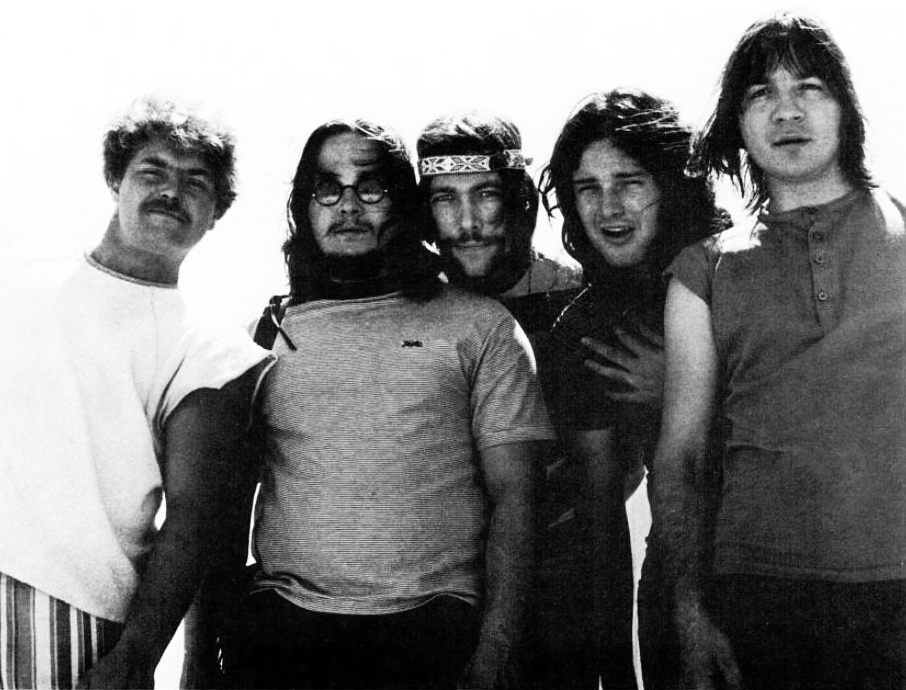
Why does “No Time” still leap out of the radio after all these years? Partly because it sounds urgent from the very first beat, but also because it arrived at a moment when The Guess Who were transforming from a successful Canadian band into an international rock force. Released in 1969 and then re-recorded for wider release in 1970, the song carried the snap, confidence, and melodic muscle that made the group one of the defining hitmakers of the era.
For listeners, it is one of those records that seems to move on instinct: a sharp guitar figure, a commanding vocal from Burton Cummings, and a groove that wastes no motion. Behind that direct impact, though, is a richer story involving a hard-working touring band, a crucial songwriting partnership, and a producer who helped shape a bigger, more polished sound without sanding away the band’s edge.
Built fast, played tight
The writers at the centre of it
“No Time” was written by Burton Cummings and Randy Bachman, the creative engine behind many of The Guess Who’s biggest songs. Their partnership worked because the two brought different strengths. Cummings had a powerful, expressive voice and a gift for memorable melodies and phrasing. Bachman brought a guitarist’s sense of structure and riff-driven momentum. Together, they could write songs that were catchy enough for pop radio but sturdy enough to stand up in the rock world.
That balance is all over “No Time.” The lyric is blunt and immediate: a brush-off song with attitude, but not one that gets bogged down in detail. Its power comes from economy. The title itself is practically a hook before the band even starts playing. In an era full of increasingly elaborate studio experiments, there was something refreshing about a song that made its point so cleanly.
An early version before the big breakthrough
One of the most interesting parts of the song’s history is that there were effectively two important versions. The first appeared on the 1969 album Canned Wheat. That recording already had the bones of a hit, and fans who know the band’s catalogue often enjoy hearing how raw and driving that earlier take feels.
But after the explosive success of “American Woman”, The Guess Who and their team recognised that “No Time” deserved a second life. So the band re-recorded it in a tighter, more radio-focused form for the 1970 album American Woman. That is the version most listeners know today. It is a fascinating example of a group hearing commercial potential in its own material and refining it without losing personality.
The people in the room
Jack Richardson’s guiding hand
No story about The Guess Who in this period is complete without Jack Richardson, the producer who played a major role in their rise. Richardson had a sharp ear for arrangement and a clear sense of how to present the band on record. He helped give their recordings scale and punch while preserving the sense that this was a real band playing together, not a studio construction assembled piece by piece.
That mattered on “No Time.” The record feels disciplined, but never stiff. The opening has drama, the rhythm section stays locked in, and the vocal sits right at the front where it can deliver the song’s attitude. Richardson understood that The Guess Who’s strength was not just songwriting; it was the chemistry between players.
The musicians who gave it muscle
The classic lineup around this era featured:
- Burton Cummings – lead vocals, keyboards
- Randy Bachman – guitar, backing vocals
- Jim Kale – bass
- Garry Peterson – drums
Each player contributes something essential to the record’s feel. Cummings sings with a mix of command and impatience that perfectly suits the lyric. Bachman’s guitar gives the song its bite and motion. Kale’s bass keeps everything grounded, while Peterson’s drumming pushes the track forward with crisp, no-nonsense energy.
That combination was a large part of what made The Guess Who so effective at the turn of the decade. They could sound polished enough for AM radio, yet still carry the force of a touring rock band. “No Time” captures that balance beautifully.
How the single became a major hit
Chart performance
Commercially, “No Time” was a serious success. The re-recorded single climbed to No. 5 on the Billboard Hot 100 in the United States, confirming that The Guess Who were not a one-hit wonder after “American Woman.” It also performed strongly in Canada, where the band were already national stars, and it became one more key title in a run of transatlantic hits.
That chart showing mattered because the competition in 1970 was fierce. Rock music was broadening rapidly, with hard rock, singer-songwriters, psychedelic leftovers, soul, and bubblegum pop all crowding the airwaves. For “No Time” to cut through that mix, it had to be instantly recognisable. It was.
Why radio loved it
Programmers could hear the appeal immediately. The song had:
- a memorable title and chorus
- a strong opening that grabbed attention fast
- a lean running time by the standards of the day
- enough rock punch to sound current, but enough melody to work across formats
That is one reason it remains such a comfortable fit on classic hits radio. It is energetic without being overblown, tough without being heavy, and familiar without feeling worn out.
Behind the scenes and little details fans love
A song reborn at exactly the right moment
There is always something appealing about songs that get a second chance. “No Time” is one of those records. Its journey from album cut to major single says a great deal about The Guess Who’s instincts. They knew they had something strong, and rather than simply moving on, they reshaped it for a wider audience. That kind of decision can define a career.
It also reflects how bands worked in that period. Albums and singles were often treated as related but separate opportunities. A song did not have to stay frozen in one form. If a group had grown as players, or if the market had changed, they might revisit and improve a track. The Guess Who did exactly that.
The confidence of a band on the rise
Another appealing detail is where the band stood in its own story. Around this time, The Guess Who were no longer simply hoping for a breakthrough; they were trying to prove they could sustain one. That can be heard in the performance. “No Time” does not sound tentative. It sounds like musicians who know they belong in the conversation with the biggest rock acts of the day.
“No Time” feels like a band hitting the accelerator and discovering it has even more power left.
A perfect fit for its era
Rock music was getting sharper
By the end of the 1960s, popular music had changed dramatically. The innocence of early-decade pop had given way to something tougher, more self-assured, and often more guitar-driven. Yet the most successful records still needed hooks. That is where The Guess Who excelled.
“No Time” sits right in that sweet spot between late-1960s pop craftsmanship and early-1970s rock authority. It has the directness of a hit single, but also the drive of album-oriented rock. In that sense, it belongs to the same broad moment that produced records by bands who were learning how to be heavier, tighter, and more rhythmically forceful without sacrificing melody.
A Canadian band with international reach
The song also forms part of a larger story about Canadian artists making a stronger international impact. The Guess Who were among the first Canadian rock bands to achieve sustained chart success in the United States, and that gave them a special place in music history. They helped open the door for later acts by showing that a band from Winnipeg could stand shoulder to shoulder with the biggest names in North American rock.
That success was not based on novelty. It was based on records like “No Time” that simply sounded undeniable.
Legacy on the radio and beyond
Why it lasts
The legacy of “No Time” rests on more than chart numbers. It endures because it captures a band at a creative peak, and because it still communicates instantly. Even listeners hearing it for the first time tend to understand it within seconds. That is the mark of an enduring single.
On classic hits radio, it works beautifully because it brings several pleasures at once: nostalgia for longtime fans, a strong beat for casual listeners, and enough personality to stand out among other familiar titles. It is not merely a period piece. It remains alive in the way all great radio records do, by sounding present every time it comes on.
A key chapter in The Guess Who story
For The Guess Who, “No Time” is an essential chapter. It helped confirm that the success surrounding American Woman was part of a genuine hot streak, not a lucky moment. It showcased the Cummings-Bachman songwriting team at full strength and highlighted the value of Jack Richardson’s production vision. Most of all, it gave the band another song that listeners could claim as their own.
And that may be the nicest thing to say about it. Decades later, “No Time” still feels less like an artifact and more like a companion on the airwaves: brisk, bold, and impossible to ignore for long.