Seven Minutes of Fire
The organ swirls, the beat slips in, and suddenly a seven-minute journey feels like a hit single waiting to happen. “Light My Fire” was more than The Doors’ breakthrough — it was a flashpoint for a changing pop world.
A spark in a rehearsal room
Few songs announce a band’s arrival quite like “Light My Fire”. It begins with one of rock’s most recognisable keyboard figures, opens the door to a cool, hypnotic groove, and then lets The Doors stretch out into something part pop single, part jazz excursion, part late-night spell. More than half a century on, it still feels alive.
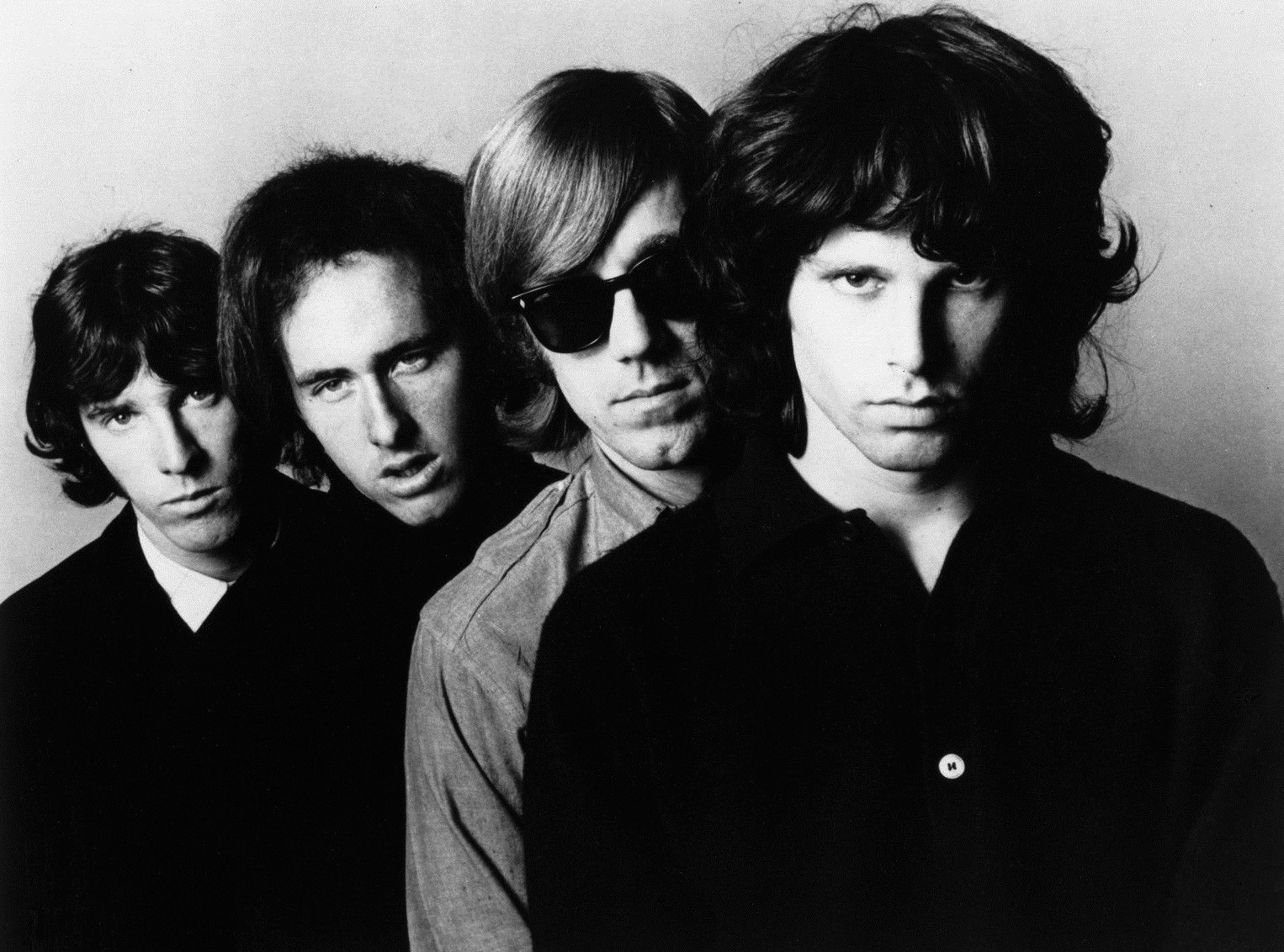
The song emerged in 1966, when The Doors were sharpening their identity in Los Angeles clubs, especially the Whisky a Go Go on the Sunset Strip. The group had formed around four distinct personalities: Jim Morrison, the magnetic vocalist and lyricist; Ray Manzarek, whose keyboard work gave the band its swirling signature sound; Robby Krieger, a guitarist with flamenco, blues and jazz influences; and John Densmore, a drummer with a deep feel for swing and dynamics.
Although Morrison often receives the spotlight in the popular imagination, “Light My Fire” was very much a group creation. The core musical idea came from Robby Krieger, who has said he wrote it after Morrison encouraged the band members to bring in songs of their own. Krieger, inspired in part by the structure and mood of songs he admired, arrived with the central lyric and chord sequence. Morrison contributed and shaped some of the words, including the now immortal line, “Come on baby, light my fire.” Then the rest of the band did what The Doors did so well: they transformed a strong song into a complete sonic world.
How four musicians turned a sketch into a classic
Krieger’s original idea was only the beginning. Ray Manzarek devised the famous opening keyboard part, a bright, Bach-inspired flourish that immediately catches the ear. It is one of those intros that tells you, within seconds, exactly who you are listening to. John Densmore helped shape the rhythm with a supple, Latin-tinged feel, giving the track movement without ever making it heavy. Morrison, meanwhile, delivered the vocal with a teasing mixture of invitation, coolness and danger.
That balance was crucial. “Light My Fire” is seductive, but it is also precise. The band’s arrangement gave everyone room to shine while keeping the song tightly focused. Even at full stretch, it never loses the pulse that draws the listener in.
Inside the studio
The version most fans know was recorded for The Doors, the band’s debut album, released in early 1967. The sessions were produced by Paul A. Rothchild, with engineering by Bruce Botnick, both of whom played major roles in shaping The Doors on record. Rothchild had a strong sense of structure and drama; Botnick brought clarity and atmosphere to the sound. Together, they helped capture a band that was already thrilling audiences live but needed that electricity translated to vinyl.
One important practical detail shaped the recording: The Doors did not have a full-time bass player in the standard line-up. On stage, Manzarek often handled bass parts with a keyboard bass. In the studio, however, session musician Larry Knechtel contributed bass on “Light My Fire,” helping anchor the track while leaving the keyboards and guitar free to roam.
The long version and the hit single
The album cut runs just over seven minutes, and that length is central to its legend. After the vocal sections, the band launches into an extended instrumental passage led by Manzarek and Krieger. It feels exploratory without becoming indulgent, drawing from jazz improvisation and the band’s live chemistry. In an era when pop singles were usually far shorter, this was a bold statement.
For radio, though, a shorter version was necessary. The single edit trimmed away much of the instrumental middle, bringing the track down to a more broadcast-friendly length of under three minutes. That shorter version helped the song explode commercially, but the full album version remained essential for listeners who wanted the complete Doors experience.
There is an interesting tension there, and it says a lot about the era. “Light My Fire” worked as a concise pop hit, yet its full form belonged to the growing album culture of the late 1960s, when rock audiences were becoming more open to longer, more adventurous recordings.
Climbing the charts
Commercially, “Light My Fire” was the breakthrough The Doors needed. Released as a single in 1967, it rose to number one on the Billboard Hot 100 in the United States, where it stayed at the top for three weeks. It became the band’s signature hit and introduced them to a mass audience far beyond the Los Angeles club scene.
The song also performed strongly internationally and helped drive sales of the debut album. For a young band with a dark, unconventional image, that success was remarkable. The Doors were not a neat fit with the polished pop acts of the day, yet “Light My Fire” crossed over because it had both edge and immediacy. You could dance to it, get lost in it, or simply be struck by that unforgettable opening.
Television, controversy and a bigger audience
One of the most famous episodes in the song’s history came with The Doors’ appearance on The Ed Sullivan Show. The programme’s staff reportedly asked Morrison to change the lyric “girl, we couldn’t get much higher”, fearing it might be interpreted as a drug reference. Morrison agreed during rehearsal, but when the cameras rolled, he sang the original line anyway. It became one of the defining stories of the band’s rebellious image.
Whether seen as defiance, instinct, or a refusal to dilute the song, the moment added to the mythology around both Morrison and “Light My Fire.” It also showed how rock music in 1967 was beginning to push against television standards, social expectations and the boundaries of mainstream entertainment.
Why it mattered in 1967
To understand the lasting power of “Light My Fire,” it helps to hear it in the context of its time. The mid-to-late 1960s were a period of rapid change in popular music. Bands were expanding the possibilities of what a rock song could be. Folk-rock, psychedelia, blues revival, soul and experimental studio techniques were all reshaping the landscape.
The Doors stood slightly apart from many of their contemporaries. They had no bass player in the traditional sense, no obvious interest in matching the cheerful optimism of some pop acts, and a sound that mixed poetry, cabaret, blues, jazz and acid-era atmosphere. “Light My Fire” captured that unusual blend perfectly. It was psychedelic enough for the moment, but it was also grounded in strong melody and musicianship.
The organ solo and guitar improvisation reflected a wider shift toward instrumental freedom in rock. Audiences were becoming more receptive to songs that took their time. At the same moment, AM radio still demanded brevity and hooks. “Light My Fire” somehow satisfied both worlds.
The people behind the flame
Robby Krieger’s crucial role
One of the most refreshing things about the song’s history is the way it highlights Robby Krieger’s contribution. While Morrison’s charisma often dominates the Doors story, “Light My Fire” reminds us that this was a band of strong creative voices. Krieger not only helped write a major hit; he also brought a distinctive musical sensibility that separated The Doors from other groups of the period.
Ray Manzarek’s keyboard signature
Manzarek’s opening line is one of the great scene-setters in rock. It is elegant, urgent and instantly memorable. His extended solo in the album version also reveals the jazz-informed side of The Doors, giving the track a sophistication that helped it stand out in 1967.
John Densmore, Paul Rothchild and Bruce Botnick
Densmore’s drumming often gets less attention than the song’s vocal and keyboard hooks, but his feel is essential. He keeps the performance moving with finesse rather than force. Producer Paul A. Rothchild ensured the song’s drama came across on record, while Bruce Botnick’s engineering preserved the spaciousness and detail that let each instrument breathe.
Legacy that never cools
“Light My Fire” quickly became more than a hit single. It turned into a cultural marker, a song that seems to carry the heat of 1967 inside it. It has been played on classic rock radio for decades, covered by numerous artists, and revisited in films, documentaries and retrospectives about the era.
One especially notable cover came from José Feliciano, whose slower, Latin-flavoured version became a major hit in its own right. That alone says something important about the strength of the songwriting: beneath The Doors’ dramatic arrangement was a composition sturdy enough to survive complete reinvention.
The song’s influence can also be heard in the way later rock bands approached the single format. It proved that a track could be mysterious, sensual and musically adventurous while still reaching a huge audience. For many listeners, it was a doorway into album-oriented rock and the idea that popular music could be both immediate and expansive.
Some songs belong to a season. “Light My Fire” belongs to an atmosphere.
A few memorable facts for the record shelf
- It was The Doors’ first number one hit in the United States and remains one of their defining recordings.
- Robby Krieger wrote the basic song, making it one of the clearest examples of The Doors as a collaborative unit rather than a one-man show.
- The album version runs over seven minutes, while the hit single was heavily edited for radio play.
- Larry Knechtel played bass on the studio recording, reflecting the band’s unusual instrumental setup.
- The Ed Sullivan Show performance helped cement the band’s reputation for refusing to play by the rules.
Still glowing on the radio
There is a reason “Light My Fire” still sounds so good coming through the speakers. It captures a band at exactly the right moment: hungry, inventive, slightly dangerous and completely sure of its own identity. It has the compact power of a pop classic and the open-road spirit of something much larger.
Put it on today and the effect is immediate. The keyboard figure lands, Morrison leans into the microphone, and suddenly you are back in that thrilling late-1960s moment when rock music seemed to be discovering new colours by the week. Some records age into history. “Light My Fire” still burns in the present.