Terror at cruising altitude
What keeps this episode in heavy rotation with classic TV fans is not just the monster on the wing. It is the sharp, compact storytelling, the live-wire William Shatner performance and the handmade suspense that still crackles decades later.
Some television episodes fade into the background of memory. Nightmare at 20,000 Feet does the exact opposite. More than sixty years after it first aired on The Twilight Zone, this tight, nerve-jangling half hour still lands with the force of a late-night radio hit you know by heart but somehow feel all over again every time it comes on.
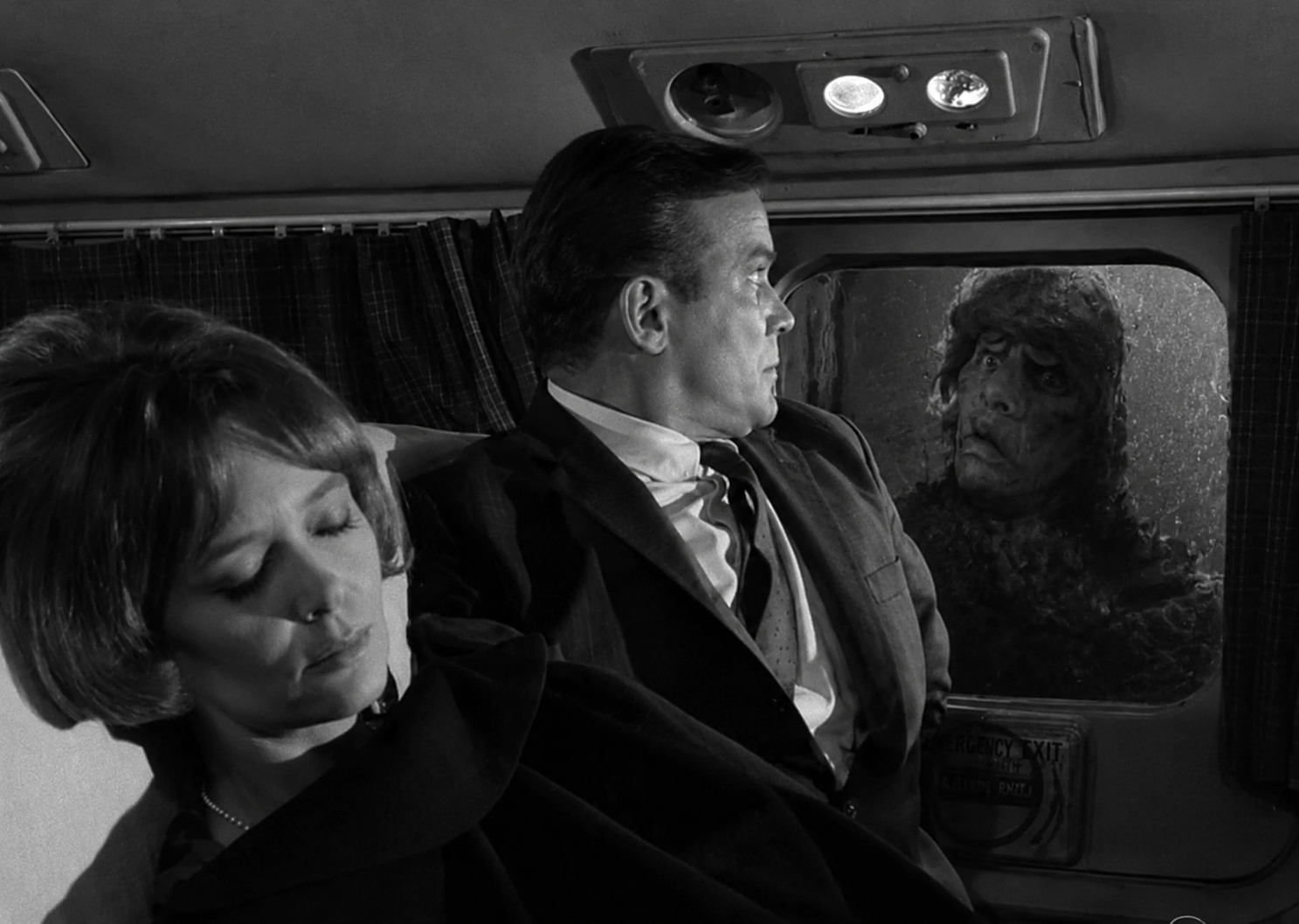
Originally broadcast in 1963, the episode stars a brilliantly wound-up William Shatner as Bob Wilson, a man already recovering from a nervous breakdown who boards a flight with his wife, only to spot something impossible outside the window: a grotesque figure moving along the wing of the aircraft. Is there really a creature tearing at the engine in the storm, or is Bob losing his grip on reality? That is the deliciously cruel question Rod Serling and company keep turning over, scene by scene, until the story reaches its unforgettable final image.
For fans of classic television, this is one of those golden pieces of storytelling that reminds you how much atmosphere, suspense and character can be packed into a short running time. No wasted motion, no flashy distractions, just expert craft and a premise so strong it practically hums.
A cabin full of nerves
What makes the episode so effective is how ordinary the setting feels. Air travel is familiar, routine, almost dull by design. You buckle in, glance out the window, listen to the engine drone and trust the machine to do its work. Nightmare at 20,000 Feet takes that everyday ritual and slips one terrible idea into it: what if the danger is right there in plain sight, just beyond the glass, and nobody believes you?
That simple setup is pure radio-drama magic translated to television. The repetition of Bob looking, seeing the figure, panicking, then finding the wing empty when others check could have become mechanical in lesser hands. Instead, each cycle tightens the screws. The storm grows harsher, Bob grows more desperate, and the audience is trapped in the same uncertainty. We become fellow passengers in his fear.
There is also something wonderfully intimate about the episode. Most of the action unfolds in a cramped cabin set, which turns the story into a pressure cooker. The close quarters matter. There is nowhere to run, nowhere to hide and, perhaps worst of all, no way to prove what Bob sees before the creature vanishes again into the rain and darkness.
William Shatner turns anxiety into electricity
Long before Star Trek made him a household name around the world, William Shatner delivered one of the most memorable performances of his early career here. It is a performance built on rhythm: darting eyes, forced calm, sudden bursts of alarm, then the exhausting effort to sound reasonable when everyone around him thinks he is unravelling.
Shatner had exactly the right intensity for this material. He does not play Bob as a standard hero. He is vulnerable, embarrassed, frightened and increasingly isolated. That gives the episode its pulse. We are not watching a fearless man battle a monster. We are watching someone struggle to hold himself together while reality seems to split open in front of him.
There is even a touch of poignancy beneath the panic. Bob knows his recent mental health crisis has already placed him under a cloud of doubt. Every plea he makes is weakened by his own history. That emotional wrinkle gives the script more depth than a simple creature feature. The monster on the wing is terrifying, yes, but so is the possibility of not being believed when you are telling the truth.
The famous gremlin on the wing
Let us talk about that creature. By modern standards, the design is a little theatrical, even slightly shaggy. But that is part of the charm. In black and white, lit by flashes of storm and glimpsed through wet glass, the gremlin becomes less a detailed monster and more a jolting visual idea. It is a shape where no shape should be, a face in the impossible place, a nightmare made visible.
That is why the effect still works. The creature is not frightening because it looks realistic in a modern special-effects sense. It is frightening because it appears in a space we instinctively read as forbidden and vulnerable: the wing of a plane in flight. The image is so strong that it has outlived every technical limitation around it.
Rod Serling and the art of the quick shock
Rod Serling, adapting Richard Matheson’s story, understood something that the best hit records and the best television episodes have in common: get to the hook, then keep finding fresh ways to play it. Nightmare at 20,000 Feet wastes almost no time. The premise arrives quickly, the conflict is crystal clear, and every scene either deepens Bob’s distress or sharpens the central mystery.
Serling’s narration, as always, gives the story that unmistakable Twilight Zone polish. His voice frames the episode with cool authority, like a master of ceremonies inviting you into a polished little chamber of fear. He never oversells it. He simply opens the door and lets the idea do its work.
Matheson, meanwhile, brought his trademark gift for taking an everyday fear and turning it one notch further. He was a specialist in stories that feel uncomfortably close to home, and this episode may be one of the clearest examples of that talent. It is horror built from vulnerability and doubt, rather than grand spectacle.
Behind the scenes in stormy skies
Part of the nostalgic pleasure of revisiting this episode is admiring the craftsmanship of early 1960s television production. The airplane cabin, the storm effects, the wing set and the creature all had to sell the illusion on a modest schedule and budget. There is a kind of honest ingenuity in that work that still feels endearing today.
Director Richard Donner, years before he became famous for major Hollywood films, keeps the pace taut and the camera alert. He knows exactly when to stay close on Shatner’s face and when to cut to the wing for maximum impact. The visual strategy is simple but smart: give us just enough of the creature to make us uneasy, then pull us back into Bob’s perspective.
The episode also benefits from the era’s television discipline. At around 25 minutes without commercials, there is no room for drift. Every beat counts. That economy gives the story a snap that many longer modern thrillers would envy.
- Original air date: October 11, 1963
- Series: The Twilight Zone
- Starring: William Shatner as Bob Wilson
- Writer: Richard Matheson, adapted by Rod Serling from Matheson’s story
- Director: Richard Donner
What most viewers remember — and what they sometimes miss
Most people remember the image of the gremlin clawing at the wing, and rightly so. It is one of television’s all-time great shock images. But there is another reason the episode endures: it is really a story about perception, trust and the loneliness of private fear.
That emotional layer is what keeps it from becoming a novelty piece. We are not only waiting to see whether the monster is real. We are also watching a marriage under strain, a man trying not to relapse into panic, and a room full of strangers deciding whether to treat him with sympathy or suspicion. Those human tensions make the fantasy element bite harder.
There is also a sly little irony in the ending. Bob is vindicated, but in the worst possible way. The proof arrives too late to restore his dignity in the moment. That dark twist is classic Twilight Zone: truth revealed, comfort denied.
A classic that still plays beautifully
If classic hits radio is built on songs that never lose their power to spark a feeling, then Nightmare at 20,000 Feet belongs in the television equivalent of that hall of fame. It is lean, memorable, expertly performed and anchored by one image so strong it entered popular culture for good.
Watching it now, you can enjoy it on several levels at once. It works as a suspense story. It works as a showcase for a young William Shatner. It works as a reminder of how imaginative television could be with limited resources and a great script. And it works as a warm piece of nostalgia from an era when black-and-white drama could still make audiences grip the armrest.
That is a lovely thing to celebrate. Some classics survive because they are important. Others survive because they are simply irresistible. This episode is both.
Final boarding call
Rewatching Nightmare at 20,000 Feet feels a little like hearing a timeless single come through the speakers: the structure is tight, the hook is immediate and the mood never lets go. It is spooky without being cynical, polished without feeling overproduced, and just eccentric enough to stay lodged in the imagination.
So if you have not visited this flight in a while, consider this your invitation to fasten your seatbelt and take another look out the window. Just do not be surprised if you hesitate before booking the aisle seat next time.