The Family Restaurants Everyone Remembered in the 1970s
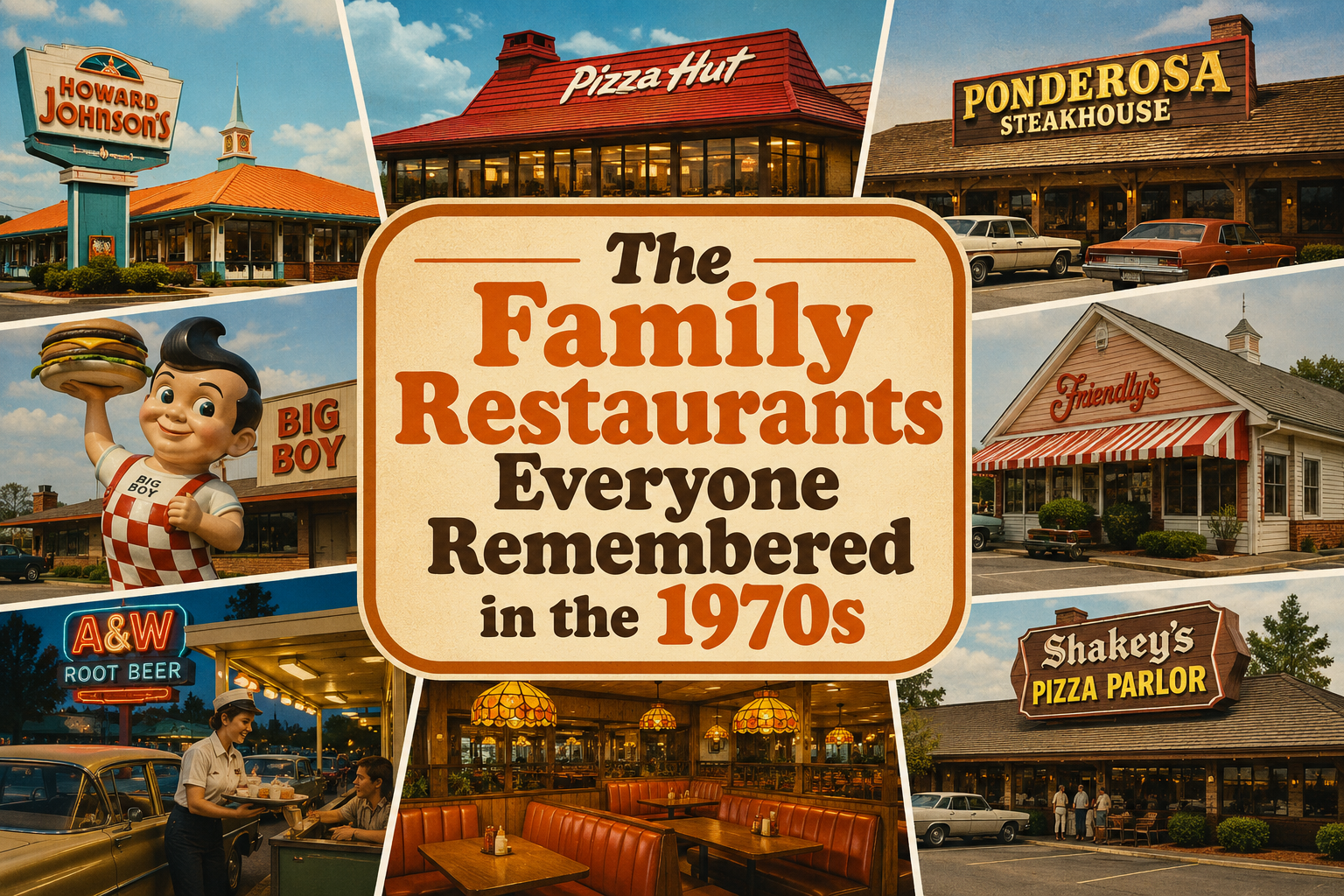
There was something special about hearing, “We’re going out to eat tonight” in the 1970s. From Howard Johnson’s and Pizza Hut to Ponderosa, Friendly’s, Big Boy and A&W, these family restaurants were more than places to grab a meal—they were part of road trips, birthdays, Friday nights and childhood memories.
There was something special about hearing the words “We’re going out to eat tonight” in the 1970s.
Eating at a restaurant wasn’t necessarily the casual, everyday decision it can be today. For many families, it was an occasion. Everyone piled into the station wagon, the kids argued over where they were going to sit, and somewhere along the way came the most important question of the evening: Where are we eating?
Maybe it was pizza under a big red roof. Maybe it was a steak dinner at Ponderosa. Perhaps the family was traveling and that familiar orange Howard Johnson’s roof appeared along the highway.
These weren’t fancy restaurants. That was precisely the point.
They were comfortable, affordable places where families celebrated birthdays, stopped during road trips, ate after shopping, or simply enjoyed the rare treat of having someone else cook dinner.
And if you grew up during the 1970s, there’s a good chance at least a few of these names will bring back some memories.
Howard Johnson’s
Long before interstate exits became crowded with nearly identical collections of fast-food restaurants, there was Howard Johnson’s.
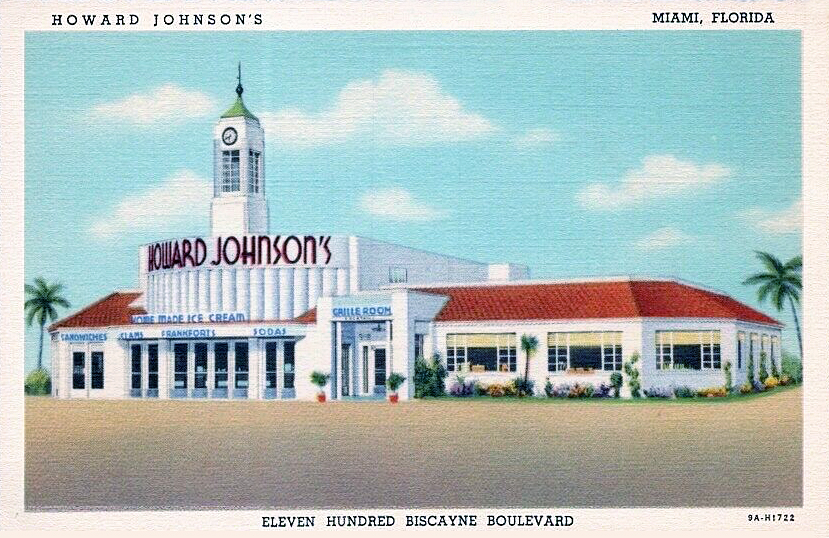
Its distinctive orange roof became a reassuring sight for families traveling America’s highways. At its peak, Howard Johnson’s had more than 1,000 restaurants, making it one of the most recognizable restaurant chains in the country.
The menu was designed for just about everyone. There were hamburgers, fried clams, sandwiches, chicken, hot dogs and plenty of traditional American comfort food.
But children knew what really mattered.
Ice cream.
Howard Johnson’s famously advertised 28 flavors, turning dessert into one of the highlights of stopping there.
For countless families, Howard Johnson’s became intertwined with memories of summer vacations and long road trips. Seeing that orange roof through the windshield meant everyone could stretch their legs, get something to eat and perhaps convince Mom and Dad that ice cream was absolutely necessary before getting back on the highway.
Pizza Hut
Today we tend to think of pizza as something that arrives at the front door.
In the 1970s, going to Pizza Hut could be the evening’s entertainment.
You knew the building before you even saw the sign. That enormous red roof was unmistakable.
Inside were dark dining rooms, red vinyl booths, hanging lamps and the smell of pizza coming from the kitchen. Families ordered whole pizzas and waited together at the table while pitchers of soda were passed around.
There was no app telling you your pizza was ready.
You simply sat there and talked.
For kids, watching that hot pizza finally arrive at the table on its metal pan was part of the experience.
Pizza Hut wasn’t simply selling pizza during this era. It helped turn pizza night into a family tradition.
Ponderosa Steakhouse
Few restaurants captured the 1970s family steakhouse experience quite like Ponderosa.
The name itself borrowed a little Wild West atmosphere from television’s Bonanza, and the restaurants offered something that appealed enormously to middle-class families: the chance to have a steak dinner without paying upscale steakhouse prices.
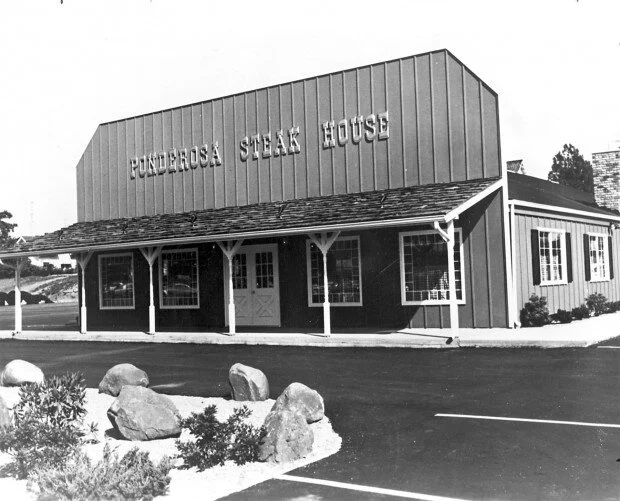
You would often order before sitting down, take your tray and find a table.
Steak, baked potatoes, chopped steak, chicken and other straightforward meals filled the menu.
Later, the salad bar became an attraction of its own.
There was something wonderfully uncomplicated about Ponderosa. It wasn’t trying to be elegant. It was somewhere Mom, Dad and the kids could have a filling dinner without turning the evening into a major expense.
Bonanza Steakhouse
If Ponderosa wasn’t your family’s steakhouse, perhaps Bonanza was.
The similarities weren’t accidental. Both chains embraced Western themes and affordable steak dinners, and both became familiar sights across America during the era.
Walking into Bonanza meant steaks, baked potatoes, burgers, chicken and plenty of food served without much ceremony.
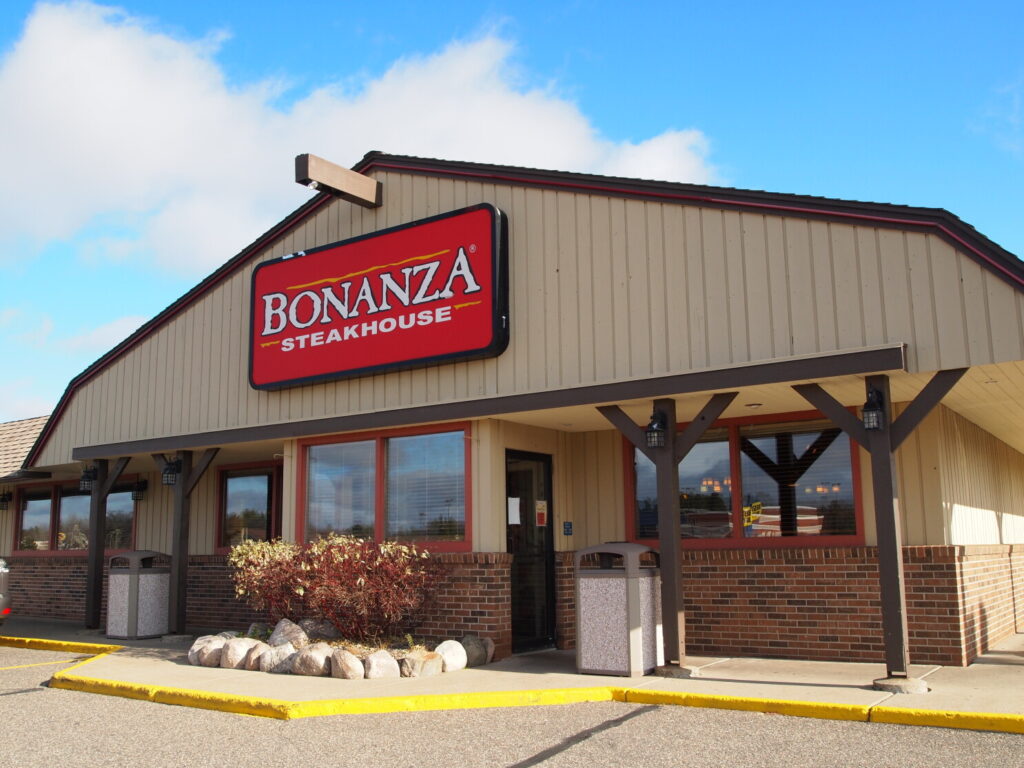
And that was exactly what families wanted.
For children, even the Western atmosphere made dinner seem a little more exciting. For parents, it was an affordable alternative to a traditional steakhouse.
Ponderosa or Bonanza?
For some families, that could become a surprisingly serious debate.
Shakey’s Pizza Parlor
Before modern pizza chains standardized almost everything about the experience, Shakey’s Pizza Parlor had personality.
Lots of it.
Shakey’s restaurants often tried to recreate the atmosphere of an old-fashioned neighborhood pizza parlor. Depending on the location and era, you might encounter long communal tables, old-time décor, arcade games or even live music.
Pizza was obviously the attraction, but Shakey’s understood something important: families weren’t only coming for dinner.
They were coming for an evening out.
Parents could relax while children watched pizzas being made or explored the restaurant. Birthday parties became especially memorable there.
It was noisy, casual and fun—the kind of restaurant where nobody expected children to sit silently through dinner.
Big Boy
Then there was that statue.
You could recognize a Big Boy restaurant before you ever stepped through the door thanks to the smiling, pompadour-haired mascot holding his enormous hamburger.
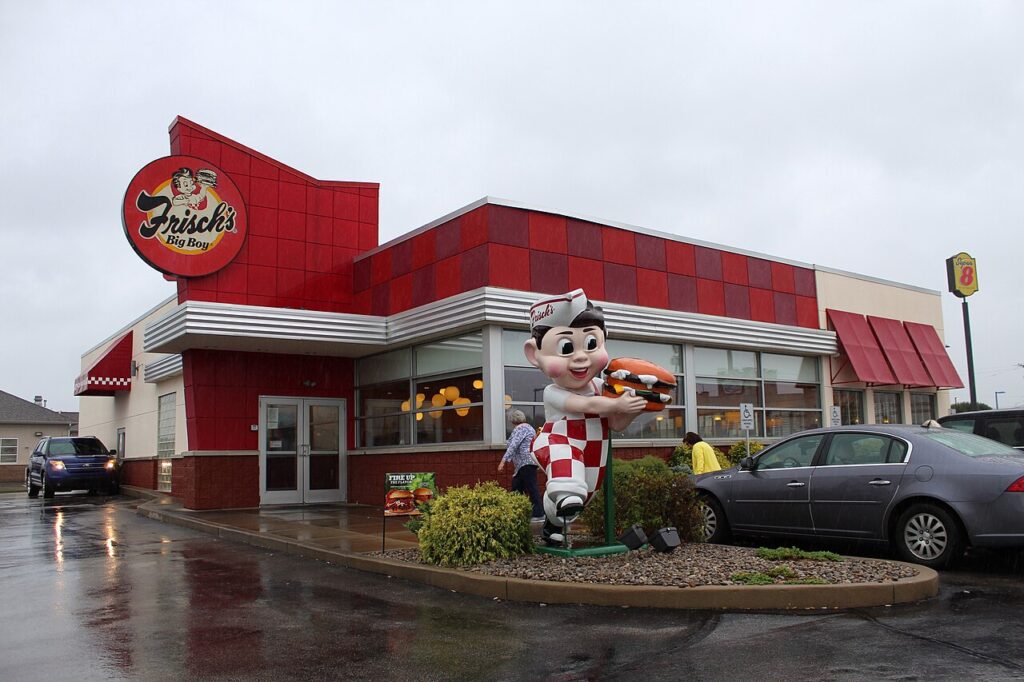
Depending on where you lived, the restaurant itself might have been called Bob’s Big Boy, Frisch’s, Elias Brothers, Shoney’s or another regional name associated with the Big Boy system.
But the Big Boy hamburger remained the star.
With its double-decker construction, it was the kind of burger children stared at wondering how they were supposed to eat it.
Big Boy restaurants occupied that comfortable territory between a diner and a family restaurant. You could get burgers and fries, but there were also breakfasts, sandwiches, dinners and desserts.
And naturally, many children wanted to visit the statue before leaving.
Friendly’s
For families in the Northeast especially, Friendly’s was practically an institution.
The menu had burgers, sandwiches, fries and familiar family-restaurant standards, but everybody knew where the evening was eventually heading.
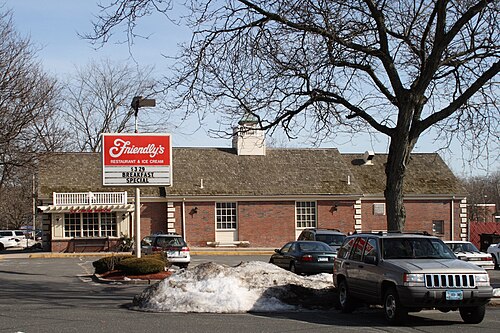
Dessert.
Friendly’s built much of its identity around ice cream, and for children that made dinner feel like something you simply had to endure before reaching the important part.
Sundaes arrived covered with whipped cream and toppings. Milkshakes came in tall glasses. Banana splits looked enormous when you were eight years old.
A trip to Friendly’s could happen after shopping, after a movie, following a Little League game or simply because somebody decided everyone deserved ice cream.
Sometimes you didn’t even need dinner.
A&W
Few restaurant memories feel more distinctly American than pulling into an A&W and ordering a frosty mug of root beer.
A&W’s history stretched back decades before the 1970s, but its drive-in restaurants remained an important part of the roadside dining landscape.
Depending on the location, families could eat in their cars or head inside. Burgers, hot dogs, fries and other drive-in standards filled the menu.
But the root beer was the attraction.
It arrived ice cold, traditionally served in those heavy glass mugs that somehow made it taste better.
For kids sitting in the back seat on a warm summer evening, an A&W stop could feel like a miniature vacation.
Denny’s
Denny’s offered something slightly different.
It was always there.
Breakfast for dinner? Fine.
Hamburgers late at night? No problem.
Coffee after a long drive? Come on in.
By the 1970s, Denny’s was expanding rapidly across the country and becoming one of America’s most familiar coffee-shop-style family restaurants.
Its appeal wasn’t novelty. It was reliability.
Families traveling unfamiliar roads could see the Denny’s sign and know approximately what awaited them inside: booths, coffee, pancakes, eggs, burgers, sandwiches and uncomplicated American food.
Sometimes familiarity was exactly what travelers wanted.
Sambo’s
One of the biggest restaurant chains of the 1970s is also one that has largely disappeared from popular memory.
Sambo’s expanded dramatically during the decade, eventually operating more than 1,000 restaurants.
Families went there for pancakes, breakfast dishes, burgers and traditional coffee-shop fare.
But the chain’s name and imagery became increasingly controversial because of associations with racist stereotypes. The company attempted to address the controversy, while financial difficulties and rapid expansion also contributed to its decline.
By the early 1980s, the enormous restaurant empire was unraveling.
Remembering the restaurants of the past doesn’t require pretending every part of that past deserves celebration. Sambo’s was undeniably part of America’s 1970s restaurant landscape, and its rise and disappearance also illustrate how dramatically American culture was changing.
Steak and Ale
For slightly more sophisticated family dinners, there was Steak and Ale.
Walking inside felt different from the brightly lit coffee shops and casual pizza parlors.
The dining rooms were deliberately dark, with wood paneling, high-backed booths and décor designed to evoke an old English inn. Even though Steak and Ale was a chain, dinner there could feel surprisingly upscale.
Steaks were naturally the centerpiece, and the restaurant became famous for helping popularize the salad bar.
For many families, Steak and Ale was where you went when dinner was just a little more important—a birthday, anniversary, graduation or celebration.
As a child, you might not have understood why the restaurant was so dark.
You just knew this wasn’t an ordinary hamburger night.
Arthur Treacher’s Fish & Chips
There was also a time when Arthur Treacher’s Fish & Chips seemed destined to become as familiar as America’s biggest hamburger chains.
Named after British actor Arthur Treacher, the restaurants brought British-style fish and chips into the American fast-food world.
The concept was simple: battered fish, fries and other seafood served quickly and affordably.
During the 1970s the chain expanded dramatically, with hundreds of locations across the country.
For families accustomed to hamburgers and fried chicken, Arthur Treacher’s offered something just different enough to make dinner interesting.
Its familiar red-and-blue signs eventually became much harder to find, but anyone who remembers the chain’s glory years probably remembers that unmistakable smell of fried fish the moment the door opened.
When Going Out to Dinner Felt Like Going Somewhere
Perhaps what we miss isn’t really the food.
Memory has a funny way of improving hamburgers, pizza and ice cream.
What we remember is everything surrounding them.
We remember climbing into the back seat of the family car.
We remember waiting for a table while our parents talked to the hostess.
We remember coloring on paper placemats with tiny boxes of crayons. We remember staring through the glass at the salad bar, feeding quarters into tabletop games, fighting with our siblings over who got the last slice of pizza and asking whether we could order dessert.
We remember restaurants filled with wood paneling, stained-glass lamps, vinyl booths and carpeting in colors that probably haven’t been manufactured since 1983.
And we remember something else.
Going out to eat felt like going somewhere.
There were fewer restaurant meals, fewer deliveries and certainly no smartphone waiting on the table to occupy everyone until the food arrived.
You sat together.
You talked.
You watched the waitress approaching from across the dining room carrying your dinner and hoped that one of those plates was yours.
Some of the restaurants we remember are gone. Others survive but look very different from the places we knew.
Yet mention Howard Johnson’s orange roof, a Pizza Hut red roof, a Ponderosa salad bar, a Friendly’s sundae or an icy mug of A&W root beer to someone who grew up during the era, and watch what happens.
For just a moment, they’re not thinking about a restaurant.
They’re remembering a Friday night in the 1970s when Mom and Dad said the words every kid wanted to hear:
“Get in the car. We’re going out to eat.”