Private Eyes Never Blink
Here's what made "Private Eyes" such a thrill in 1981: a razor-sharp hook, a playful sense of drama, and Hall & Oates hitting the pop bullseye at exactly the right moment. This is the story behind the song's writing, recording, chart run and lasting snap.
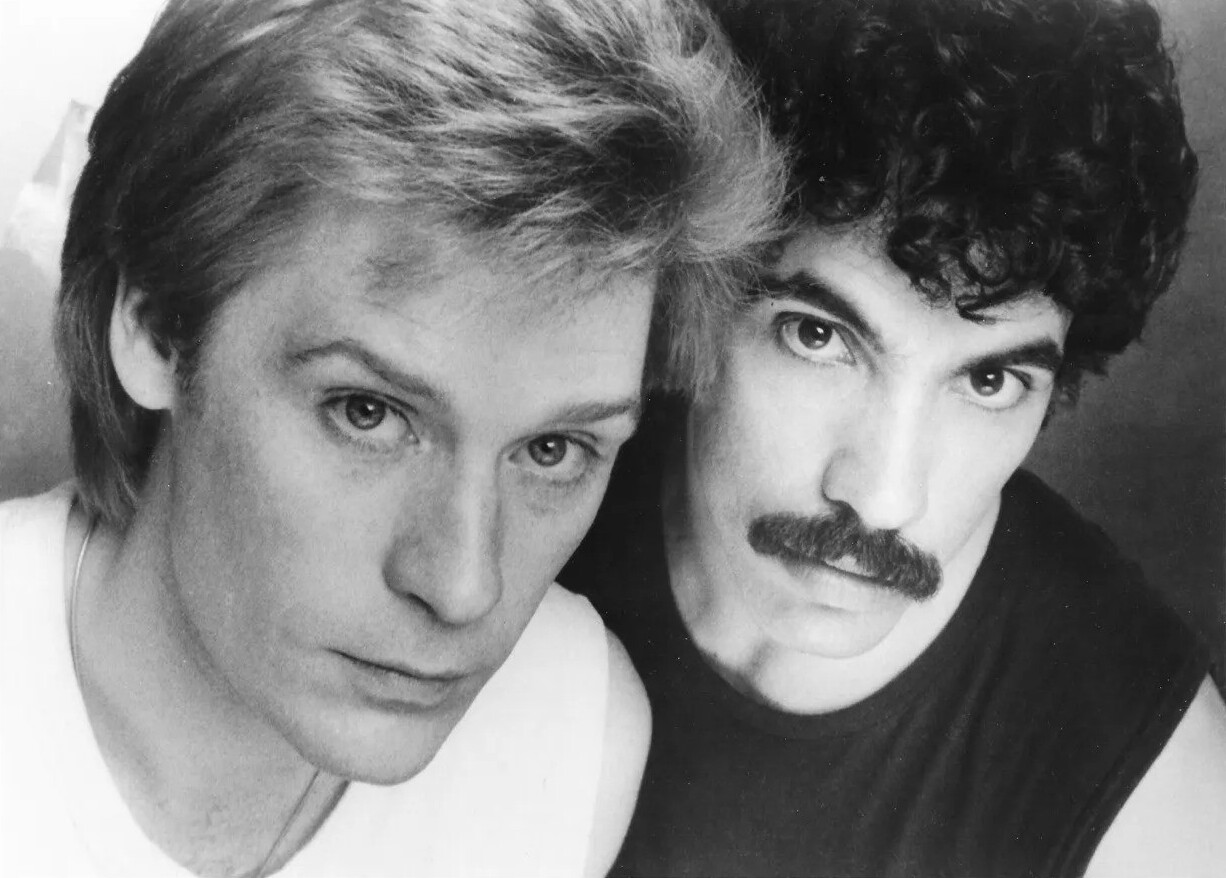
There is something instantly addictive about “Private Eyes”. Before the verse even settles in, that clipped handclap rhythm and watchful title hook create a little burst of drama. It sounds playful, suspicious, stylish and radio-ready all at once — which helps explain why Hall & Oates turned it into one of the defining pop singles of 1981.
By the time the song arrived, Daryl Hall and John Oates were already seasoned hitmakers, but Private Eyes captured them at a particularly sharp moment. They had fully grown into their blend of blue-eyed soul, pop craftsmanship, rock energy and urban polish. The result was a record that felt sleek enough for the early 1980s, while still carrying the melodic strength and groove instincts they had built in the previous decade.
A hook with a wink
“Private Eyes” was written by Daryl Hall, Janna Allen, Sara Allen and Warren Pash, a songwriting team that helped shape several Hall & Oates classics from this period. The song did not begin as a heavy, moody tale of surveillance. Instead, it grew out of a catchy, chant-like idea that balanced tension with fun. That is part of its magic: the lyric suggests suspicion and observation, but the performance practically invites you to clap along.
Sara Allen, a key creative partner in Hall & Oates’ world, was especially important to the duo’s lyrical identity during these years. Along with her sister Janna Allen and songwriter Warren Pash, she helped bring a conversational sharpness to the song. Daryl Hall supplied the musical drive and vocal personality that made the whole thing leap from the speakers.
The famous “clap clap” section became one of the record’s signature features. It gave the song a built-in audience participation moment, the kind of detail that makes a single feel larger than life on the radio. It is easy to imagine listeners hearing it once and instantly knowing exactly when to join in the next time.
From idea to finished lyric
The lyric plays with romantic mistrust in a way that feels theatrical rather than bitter. “Private eyes, they’re watching you” is half warning, half tease. That ambiguity helped the song travel widely. It could sound like a lover’s accusation, a playful detective fantasy, or simply a brilliantly dramatic pop refrain.
That blend of emotional tension and accessibility was one of Hall & Oates’ great strengths. They knew how to take a feeling people recognized — doubt, attraction, suspicion, excitement — and wrap it in a chorus so immediate that it felt universal.
Building the record in the studio
“Private Eyes” was recorded for the album Private Eyes, released in 1981. Hall & Oates produced the track with longtime collaborator Neil Kernon, whose engineering and production work helped give the duo’s early-1980s recordings their crisp, modern finish. The sound is tight and controlled, but it never loses its human spark.
That balance mattered. Pop production was changing quickly at the dawn of the 1980s. Records were becoming cleaner, punchier and more rhythm-focused. Hall & Oates adapted beautifully. They did not abandon soul or rock; they refined them. On “Private Eyes,” every element feels placed for maximum effect: the dry percussion, the firm backbeat, the compact guitar parts, the keyboard textures, and Hall’s vocal, which shifts effortlessly between cool restraint and emphatic attack.
The musicians behind the groove
Hall & Oates worked with a strong circle of players during this era, and the band feel on “Private Eyes” is crucial to its success. While Daryl Hall and John Oates were the stars and creative center, their recordings were elevated by experienced session musicians and touring players who understood groove, space and precision.
- Daryl Hall – lead vocals, co-writer, co-producer
- John Oates – guitar, vocals, arrangement support
- Sara Allen – co-writer
- Janna Allen – co-writer
- Warren Pash – co-writer
- Neil Kernon – co-producer, engineering influence
One of the joys of the track is how disciplined it is. Nothing rambles. Nothing overstays its welcome. The arrangement is built like a hit single in the best sense: direct, memorable, and full of tiny details that reward repeat plays.
“Private Eyes” sounds effortless on the radio, but that kind of effortless usually comes from careful construction.
A chart-topper at exactly the right moment
Commercially, “Private Eyes” was a major success. Released as the lead single from the album of the same name, it climbed to number one on the Billboard Hot 100 in the United States in late 1981. It also performed strongly across other radio and sales charts, confirming that Hall & Oates were not simply surviving the changing pop landscape — they were leading part of it.
The album Private Eyes itself was a strong seller, and the title track helped drive its momentum. Just as importantly, the single reinforced the duo’s remarkable run in the early 1980s, a period that also included hits like “Kiss on My List,” “I Can’t Go for That (No Can Do),” “Maneater” and “Say It Isn’t So.” Few acts were as consistently present on radio during that stretch.
Why radio loved it
Programmers had plenty to work with. The song was concise, instantly recognizable, rhythmically sharp and easy for audiences to remember after one spin. It fit comfortably across pop radio while also carrying enough soul and rock attitude to appeal beyond a narrow format lane.
That crossover quality was one of Hall & Oates’ secret weapons. They could sound polished without being cold, catchy without being flimsy, and contemporary without chasing trends too obviously. “Private Eyes” is a textbook example of that balance.
The early 1980s in three minutes
If you want a song that captures the transition into the early 1980s, “Private Eyes” makes a strong case for itself. It carries traces of late-1970s sophistication, but its attack is pure 1981: leaner, punchier, more visual, more immediate. This was the era when pop was becoming increasingly shaped by image, rhythm and concise hooks, and Hall & Oates were perfectly positioned for it.
The duo had roots in soul, singer-songwriter craft and rock, but they were also alert to what modern pop needed. “Private Eyes” reflects a wider moment when artists were blending genres with confidence. New wave was rising, post-disco production was influencing mainstream hits, and radio was rewarding songs that could feel stylish without sacrificing melody.
In that sense, Hall & Oates were ideal bridge figures. They connected the warmth of 1970s songwriting to the sharper edges of 1980s pop. “Private Eyes” does not sound trapped between eras; it sounds like it belongs to both.
Behind the scenes and little details fans still love
The handclaps became part of the legend
Ask almost anyone what they remember first about “Private Eyes,” and there is a good chance they will answer with the handclaps. That tiny rhythmic break turned into a pop-cultural calling card. It is one of those simple ideas that feels obvious only after someone gets it exactly right.
Moments like that matter in hit records. They create ritual. They invite participation. They turn a song from something you hear into something you do.
A title that did some heavy lifting
There is also something wonderfully efficient about the title itself. “Private Eyes” is short, cinematic and slightly mischievous. It instantly suggests a scene. That kind of title helps a record stand out in memory, on the radio and in conversation. It feels like a mini movie before the first verse begins.
Hall’s vocal sells the attitude
Daryl Hall’s lead vocal deserves special attention. He never overplays the lyric. Instead, he delivers it with just enough cool authority to make the song believable, then pushes harder when the chorus lands. That control is part of what keeps the track from tipping into novelty. The concept is fun, but the vocal gives it style.
Legacy that still snaps to attention
More than four decades later, “Private Eyes” remains one of Hall & Oates’ most durable recordings. It still turns up on classic hits radio, party playlists, film and television references, and nostalgic retrospectives about the golden age of early MTV-era pop. Even for listeners who do not know every detail of the duo’s career, the chorus is instantly familiar.
Its legacy also rests on how well it represents Hall & Oates at their commercial peak. Some songs become hits because they are attached to a moment; others last because they distill an artist’s strengths into one unforgettable package. “Private Eyes” does both.
It showcases:
- strong pop songwriting
- smart studio craftsmanship
- rhythmic precision
- a memorable vocal performance
- a chorus built for mass singalong appeal
That is why the record still feels alive. It does not survive on nostalgia alone. It survives because it is expertly made and deeply enjoyable.
Why it still feels so good on the radio
Some songs age into museum pieces. “Private Eyes” has not. It still feels active, alert and a little mischievous. Maybe that is because its central tension — wanting to know what someone is really up to — never goes out of date. Maybe it is the beat, which still has that neat, spring-loaded snap. Or maybe it is simply the thrill of hearing a band and songwriting team hit a bullseye.
For Hall & Oates, “Private Eyes” was more than a chart success. It was proof that sophisticated pop could still be playful, that precision did not have to mean sterility, and that a great hook could carry a whole world of attitude inside it.
And every time those claps arrive, the song does what the best classic hits always do: it pulls you in immediately, makes you smile, and dares you not to join along.