Why V and The X-Files Still Thrill
The studio glow is low, the television hums, and suddenly the room belongs to aliens, agents and unanswered questions. V and The X-Files turned suspense into an event in two very different ways, and both still know how to keep viewers hooked.
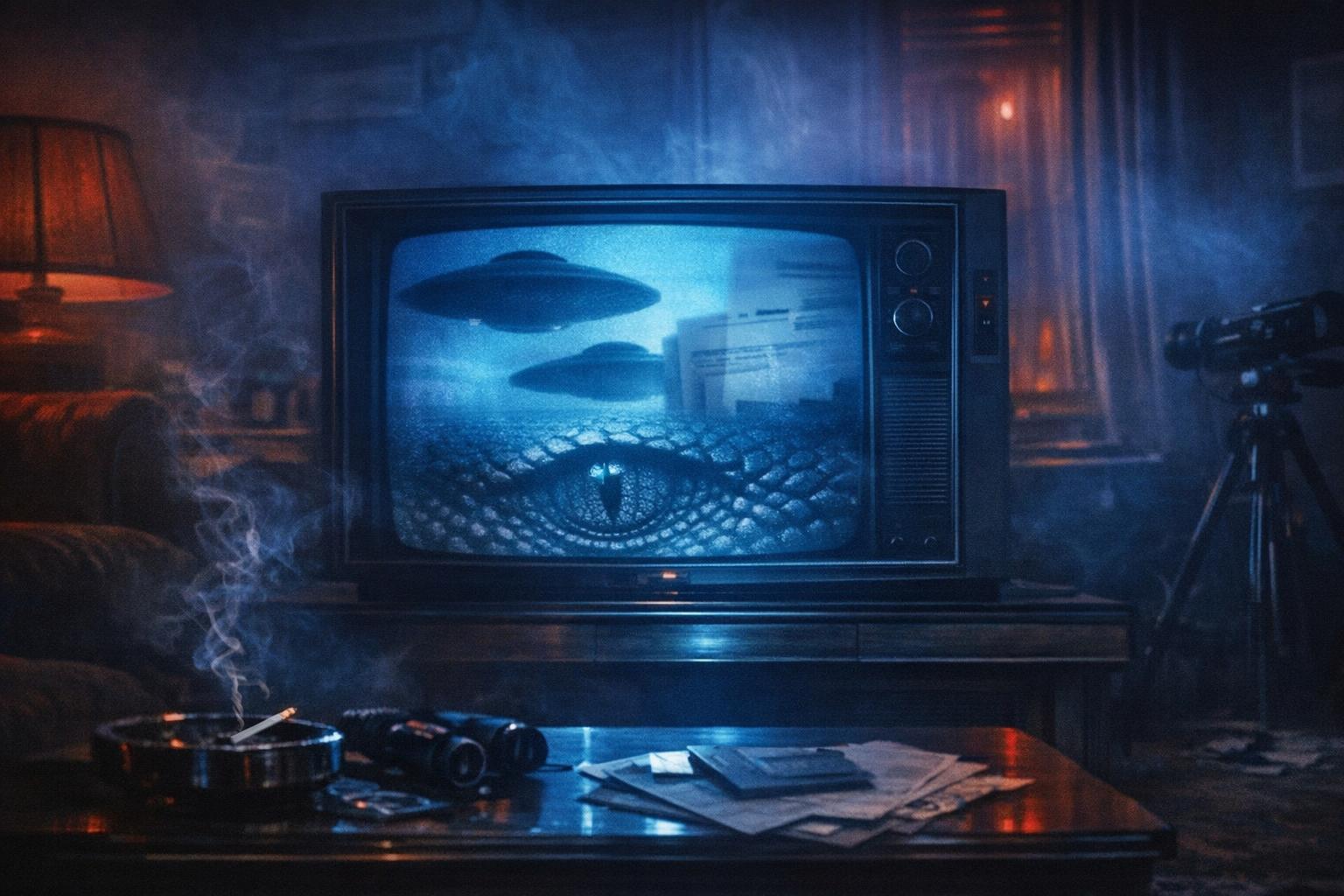
Picture the glow of a living room television in the evening, the kind of light that turned an ordinary sofa into front-row seating for something mysterious. For many viewers, V and The X-Files delivered exactly that feeling: the delicious sense that the world on screen was just a little stranger than the one outside the window.
They came from different television moments and told very different kinds of stories, yet both series found a way to grip audiences with paranoia, suspense and a sly sense of fun. One arrived with reptilian visitors smiling for the cameras. The other gave us two FBI agents chasing shadows, signals and secrets. Put them side by side, and you get a fascinating look at how television learned to make conspiracy feel thrilling.
Two shows, two flavours of fear
V, first seen in 1983 before continuing as a 1984 series, was bold, glossy and instantly attention-grabbing. Its premise was irresistible: apparently friendly aliens arrive on Earth, promising peace and progress, while hiding a far darker agenda beneath those calm smiles and immaculate uniforms. It was science fiction with a dramatic streak, and it knew how to put on a show.
The X-Files, which debuted a decade later in 1993, played a cooler, moodier tune. Instead of giant public spectacle, it thrived on whispers in corridors, lonely roads at night and files that should not exist. Fox Mulder and Dana Scully did not just investigate strange cases; they invited viewers into a world where every official answer felt slightly incomplete.
That is one of the great pleasures in comparing them. V is the big, dramatic anthem. The X-Files is the late-night slow burn. Both are unforgettable, but they get under your skin in different ways.
What made V such a television event?
The power of a huge idea
There was nothing timid about V. It arrived with the kind of concept that practically demanded conversation the next morning. Giant alien motherships hovering over major cities? Visitors offering medical advances and technological gifts? A resistance movement forming as the truth begins to emerge? This was television built to make people lean forward.
The series also had a sharp political pulse beneath the science fiction surface. Creator Kenneth Johnson famously shaped it as an allegory about fascism and the way authoritarian movements can dress themselves in charm, spectacle and reassuring language. That gave V extra weight. Beneath the lasers and spaceships was a cautionary tale about propaganda, collaboration and courage.
Memorable images that never faded
Ask fans what they remember and the answers usually come quickly. Diana’s icy confidence. The red uniforms. The shock of discovering what the Visitors really looked like. The now-legendary image of alien appetite revealed in a way that was impossible to forget. V understood the value of television moments that landed with a gasp.
It also benefited from a cast who knew exactly how to sell heightened drama. Jane Badler’s Diana remains one of science fiction television’s great villains, all poise and menace. Marc Singer, Faye Grant and Michael Ironside brought urgency and conviction to the resistance story, helping the series feel exciting even when its ideas were larger than life.
Behind the scenes, ambition was everything
Part of the nostalgic charm of V is seeing just how much ambition was packed into network television at the time. This was an era when event mini-series could become genuine cultural occasions. Special effects had to work without the digital safety net modern productions enjoy, so design, editing and practical trickery had to do a lot of heavy lifting.
That resourcefulness is part of the fun. The ships, costumes, makeup and action scenes all carry the handmade energy of a production team determined to make something enormous with the tools available. There is a certain magic in that. Viewers were not just watching a story unfold; they were seeing television stretch itself to meet a giant idea.
How The X-Files changed the mystery game
A quieter style, a deeper chill
If V announced itself with a flourish, The X-Files slipped in like a signal picked up after midnight. Its genius was atmosphere. Dimly lit offices, rain-slick streets, humming fluorescent lights and forests that seemed to swallow sound whole gave the series a texture all its own. It did not need a giant mothership in every frame. It only needed a suggestion that something was wrong.
Chris Carter’s series became a phenomenon because it trusted mood as much as plot. The famous tagline, The truth is out there, was not just a slogan. It was a mission statement. The show knew audiences enjoyed uncertainty. It let mysteries linger, let clues conflict and let tension breathe.
Mulder and Scully were the engine
At the heart of it all was one of television’s great partnerships. David Duchovny’s Mulder was driven, intuitive and gloriously open to the unbelievable. Gillian Anderson’s Scully was precise, intelligent and sceptical without ever being cold. Together, they gave The X-Files its rhythm.
That balance was the secret sauce. Mulder pushed toward possibility; Scully anchored the story in logic. Their conversations turned even the strangest cases into something relatable because they mirrored the audience’s own debate: do we believe this, or do we not? It is difficult to overstate how much that chemistry mattered. Without it, the show might have been merely clever. With it, it became addictive.
The craft behind the paranoia
Behind the scenes, The X-Files developed a reputation for exacting production and cinematic style. Shot largely in Vancouver in its early years, the series made brilliant use of fog, shadow and natural landscapes. That setting gave it a damp, eerie beauty that fans still associate with its golden era.
Writers and directors also found room to experiment. One week the show could deliver government conspiracy; the next, it could offer a creepy creature feature, a dark comedy or an almost lyrical ghost story. That variety kept it fresh and helped it become a habit for viewers. You never quite knew what would be waiting when the theme music began.
V vs The X-Files: where they really differ
Although both series deal in secrecy and suspicion, they play to different strengths.
- V thrives on public spectacle, resistance drama and big symbolic imagery.
- The X-Files excels at intimate tension, procedural mystery and lingering ambiguity.
- V often asks how ordinary people respond when power shows its face.
- The X-Files asks what happens when power hides behind files, codes and closed doors.
That contrast makes the comparison so enjoyable. V is direct and theatrical. The X-Files is elusive and atmospheric. One gives you a rallying cry. The other gives you a question mark.
V wants you to spot the threat in plain sight. The X-Files wants you to wonder whether the threat was ever visible at all.
Which one left the bigger legacy?
In pure pop-culture reach over the long haul, The X-Files probably casts the larger shadow. It influenced a generation of genre television, sharpened the language of TV conspiracy thrillers and turned Mulder and Scully into enduring icons. Its mix of mythology episodes and stand-alone stories became a model many later shows borrowed from.
But V deserves enormous credit for proving that science fiction on television could be grand, political and emotionally charged at the same time. It had the confidence to go large, and audiences responded. Even now, its central imagery remains potent, and its themes still feel relevant whenever charm and authority start looking a little too polished.
In another sense, both shows won. They each captured the anxieties of their era and transformed them into compelling entertainment. V channelled fears about propaganda and control. The X-Files tapped into mistrust of institutions and the uneasy feeling that official stories never tell the whole tale.
The nostalgic joy of revisiting both
There is something especially satisfying about returning to these series now. You can appreciate the practical effects, the set design, the performances and the storytelling choices in a fresh way. You can also feel the pulse of the eras that produced them. V has that event-television confidence, broad and dramatic. The X-Files carries the cool, clever mood of 1990s genre storytelling at its best.
For viewers who love behind-the-scenes craft, both are rewarding. One shows how television could create a giant invasion epic through ingenuity and nerve. The other reveals how lighting, sound, writing and chemistry could turn quiet scenes into unforgettable suspense.
And perhaps that is why they still matter. They remind us that long before every mystery was explained online within minutes, television could make us sit still, stare at the screen and wonder what was really going on. That feeling never gets old.
So, V or The X-Files? The honest answer is that it depends on your mood. If you want bold science fiction with dramatic flair, V is ready to land. If you want eerie intrigue and a slow-building shiver, open the file marked X. Either way, you are in excellent company for the evening.