Tears for Fears in the MTV era glow
A shimmer of synthesizer, a sharp suit, and a chorus big enough to fill the room: Tears for Fears still know how to make a classic hits moment. From the introspective chill of their early 1980s breakthrough to the widescreen confidence of their mid-decade peak and beyond, their evolution gave radio some of its most enduring songs.
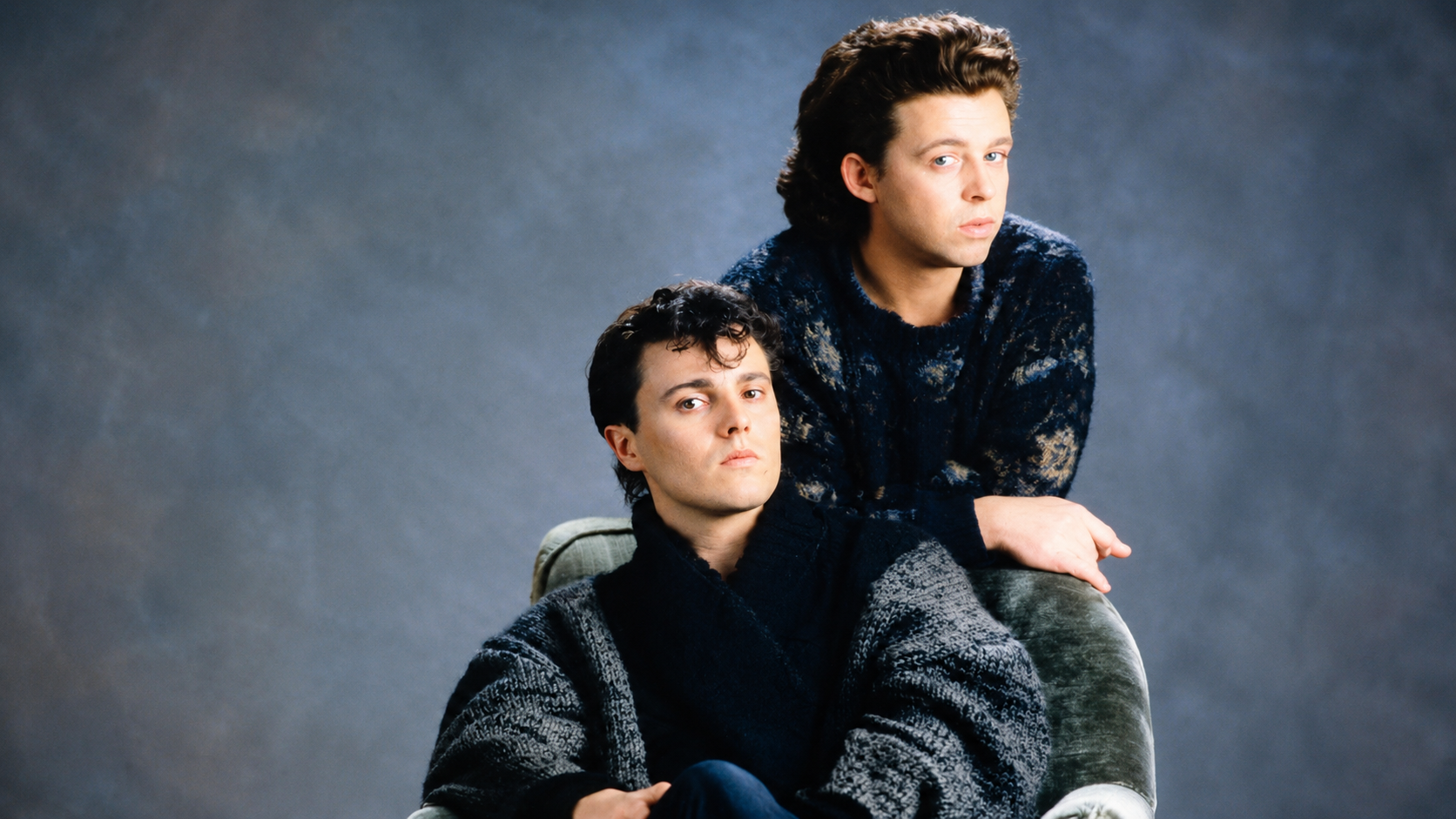
Some bands arrive with a look, a sound, and a moment so perfectly matched that they seem to define an age. Tears for Fears did exactly that, but their story runs deeper than sharp suits, striking videos, and giant choruses. At the heart of the group were two musicians from Bath in England, Roland Orzabal and Curt Smith, who turned personal upheaval, psychological ideas, and an instinct for unforgettable melody into one of the most distinctive catalogues of the 1980s.
For classic hits radio listeners, that catalogue still feels alive. The songs are polished without being cold, emotional without becoming heavy, and big enough to fill a car, a kitchen, or a dance floor. Whether it is the restless pulse of Mad World, the release of Everybody Wants to Rule the World, or the towering drama of Shout, Tears for Fears built records that still sound like events.
Two boys from Bath, one remarkable partnership
Roland Orzabal and Curt Smith both grew up in Bath and met as teenagers. Their early lives were not especially easy, and that matters when you listen closely to Tears for Fears. The band name itself came from primal therapy, the psychological approach associated with Arthur Janov, whose ideas about childhood pain and emotional release fascinated Orzabal in particular. This was not just an interesting label for a pop group. It pointed directly to the themes that would shape their early songs: fear, isolation, memory, tension, and the hope of breaking through all of it.
Before Tears for Fears, the pair played in the mod-influenced band Graduate. That experience gave them a grounding in performance, recording, and the mechanics of being in a working group, even if major success did not arrive there. More importantly, it helped clarify what they wanted next. They were listening widely, absorbing post-punk, new wave, synth-pop, soul, and progressive pop, and they began to imagine a band that could combine emotional depth with chart-ready hooks.
That balance became their special gift. Orzabal brought intense songwriting drive and a love of ambitious arrangements. Smith brought a cool, soulful vocal presence that could make even uneasy lyrics sound inviting. Together, they had contrast, and contrast is often where the spark lives.
The first breakthrough came wrapped in unease
Tears for Fears emerged in the early 1980s with songs that stood apart from the brighter side of synth-pop. Their early singles carried tension in the rhythm and shadow in the words. Mad World, sung by Curt Smith, was a breakthrough because it sounded intimate and detached at the same time, like someone reporting private thoughts under fluorescent light. It became a major hit and immediately established the group as something more thoughtful than a passing chart act.
Then came Change and Pale Shelter, songs that deepened the picture. Pale Shelter in particular has that classic Tears for Fears combination: crisp production, emotional ache, and a chorus that opens like a door. Their debut album, The Hurting, connected strongly with listeners because it was honest about vulnerability while still delivering memorable pop structure.
It is one of the most intriguing debut statements of the decade. Many bands spend years trying to discover their emotional identity. Tears for Fears arrived with theirs almost fully formed.
Tears for Fears had an unusual early strength: they made introspective songs feel enormous, as if private emotions belonged on a public stage.
When the world caught up: Songs from the Big Chair
If The Hurting introduced the band, Songs from the Big Chair turned them into international stars. Released in 1985, the album widened everything: the sound, the confidence, the emotional range, and the audience. It was not simply bigger for the sake of being bigger. It sounded like a band discovering how to project its ideas in widescreen.
Shout was one of the key moments. Built on pounding rhythm and a chant-like hook, it transformed psychological release into arena-sized pop. It is forceful, memorable, and impossible to confuse with anything else on the radio. Then came Everybody Wants to Rule the World, which remains one of the most beloved records of the era. Smooth on the surface but quietly uneasy underneath, it turns political and personal tension into something breezy enough to sing along with and rich enough to keep discovering decades later.
Head over Heels added romance, sweep, and elegance, showing another side of the band’s writing. By this point, Tears for Fears were not just chart regulars. They were shaping the sound and image of mid-1980s pop itself, especially in the television age, when a great song could be amplified by a memorable video and a magnetic screen presence.
For many listeners, this was the golden Tears for Fears run: songs with brains, heart, and hooks strong enough to survive every format change that radio has seen since.
The songs that still stop listeners in their tracks
Ask a room full of classic hits fans for their favourite Tears for Fears song and you will likely get several different answers, which says a lot about the depth of the catalogue. A few titles, though, have a special place in radio history.
- Mad World – spare, haunting, and emotionally direct, this was the early statement that made people pay attention.
- Pale Shelter – a beautifully crafted blend of rhythm, atmosphere, and longing.
- Shout – a giant release-valve of a record, built for turning up loud.
- Everybody Wants to Rule the World – sleek, intelligent, and endlessly replayable, one of the defining songs of the 1980s.
- Head over Heels – graceful and dramatic, with one of the band’s most loved melodies.
- Sowing the Seeds of Love – a later triumph, colourful and expansive, showing just how adventurous the band could be.
- Woman in Chains – soulful, cinematic, and emotionally rich, proof that Tears for Fears could slow the pace without losing impact.
Those songs endure because they work on multiple levels. You can enjoy them for the beat, the chorus, the vocal performance, or the production sheen. Stay with them longer, and there is always more under the surface.
More than synth-pop: the craft behind the sound
It is easy to place Tears for Fears under the broad banner of 1980s synth-pop, but that label only tells part of the story. Yes, they used synthesizers brilliantly, and they understood how to make modern studio textures gleam. But they were never limited by one style. Their music also drew from rock, soul, new wave, art-pop, and even psychedelic influences.
One of their great strengths was arrangement. They knew when to let a song breathe and when to make it surge. Listen to the guitar shimmer in Everybody Wants to Rule the World, the percussive insistence of Shout, or the lush detail of Woman in Chains. There is always careful architecture at work.
Vocally, the contrast between Orzabal and Smith gave the group unusual flexibility. Smith’s voice often brought calm, melancholy, and elegance. Orzabal could deliver intensity, bite, and theatrical lift. That duality helped the band avoid repetition. Even when the production style was unmistakably theirs, the emotional centre could shift from song to song.
Another reason the records have lasted is that the lyrics respect the listener. Tears for Fears did not write in slogans alone. Their songs often leave room for interpretation, which means people can grow into them over time. A song first loved for its melody at age 16 can reveal a different truth at 40 or 60.
Studio ambition, big emotions, and a few fascinating turns
After the massive success of Songs from the Big Chair, the pressure on Tears for Fears was enormous. Their follow-up, The Seeds of Love, took years to complete and became famous for its elaborate production. But the wait produced remarkable music. Sowing the Seeds of Love arrived like a burst of colour, full of rich harmonies and adventurous detail, while Woman in Chains brought a stately emotional power that remains one of the band’s most admired recordings.
There were also changes behind the scenes. As happens with many long-running partnerships, the relationship between Orzabal and Smith went through difficult periods. Smith left in the early 1990s, and Orzabal continued the band in a new form for a time. Yet one of the most heartening chapters in the Tears for Fears story is the reunion. When Orzabal and Smith came back together, it felt meaningful to fans not just because of nostalgia, but because the chemistry was real. The blend that had defined the band was back in the room.
A lesser-known point about Tears for Fears is how seriously they took songwriting as craft. These were not artists content to repeat a formula. Even at their commercial peak, they were pushing for records with depth, detail, and emotional credibility. That ambition is part of why musicians across genres continue to admire them.
And then there is the visual side. In the MTV era, Tears for Fears understood that image mattered, but they rarely felt superficial. Their videos helped carry the mood of the songs: stylish, dramatic, and often slightly mysterious.
Their influence is everywhere, even when you do not notice it
The influence of Tears for Fears stretches far beyond their original chart run. Later artists have borrowed their mix of emotional openness and pop precision, while producers still study the way their records create scale without becoming cluttered. Their songs have been covered, sampled, reinterpreted, and rediscovered by younger audiences through film, television, streaming, and live performance.
What is striking is how adaptable the material is. Strip the songs back and they still work. Dress them in modern production and they still hold their shape. That is usually the sign of strong writing at the core.
They also helped expand what mainstream pop could talk about. Long before it was common for chart acts to speak openly about mental and emotional strain, Tears for Fears were building songs around those themes. They did it with sensitivity, but also with confidence. They trusted listeners to meet them there.
Why classic hits radio listeners still connect so strongly
There is a special thrill in hearing Tears for Fears on the radio. Perhaps it is the opening drum pattern, the sweep of a synthesizer, or that first unmistakable vocal line. Whatever the entry point, the songs create atmosphere immediately. They can brighten a drive, sharpen a memory, or pull a listener straight back to a particular summer, room, or face.
That is one reason they matter so much to classic hits radio today. The records are nostalgic, certainly, but they are not trapped in nostalgia. They still sound crafted, alive, and emotionally relevant. In a radio mix, they bring sophistication without losing accessibility. They appeal to listeners who love melody, production, storytelling, and the grand scale of 1980s pop done properly.
There is also something reassuring about their durability. Decades pass, formats change, and listening habits evolve, yet Everybody Wants to Rule the World still glides in with effortless cool, Shout still lands with force, and Mad World still stops time for a moment. That is not just popularity. That is permanence.
Tears for Fears remain one of those rare bands whose songs can fill a stadium, soundtrack a memory, and whisper something personal all at once. For radio listeners who grew up with them, they are a cherished part of the musical landscape. For newer listeners, they are a reminder that pop can be intelligent, emotional, and thrilling in the same breath.