1973 lit up the radio dial
From Stevie Wonder and Marvin Gaye to Elton John and Roberta Flack, 1973 delivered a dazzling run of hits. Here is a nostalgic look at the songs, albums, trends, and behind-the-scenes stories that made it such a remarkable year in music.
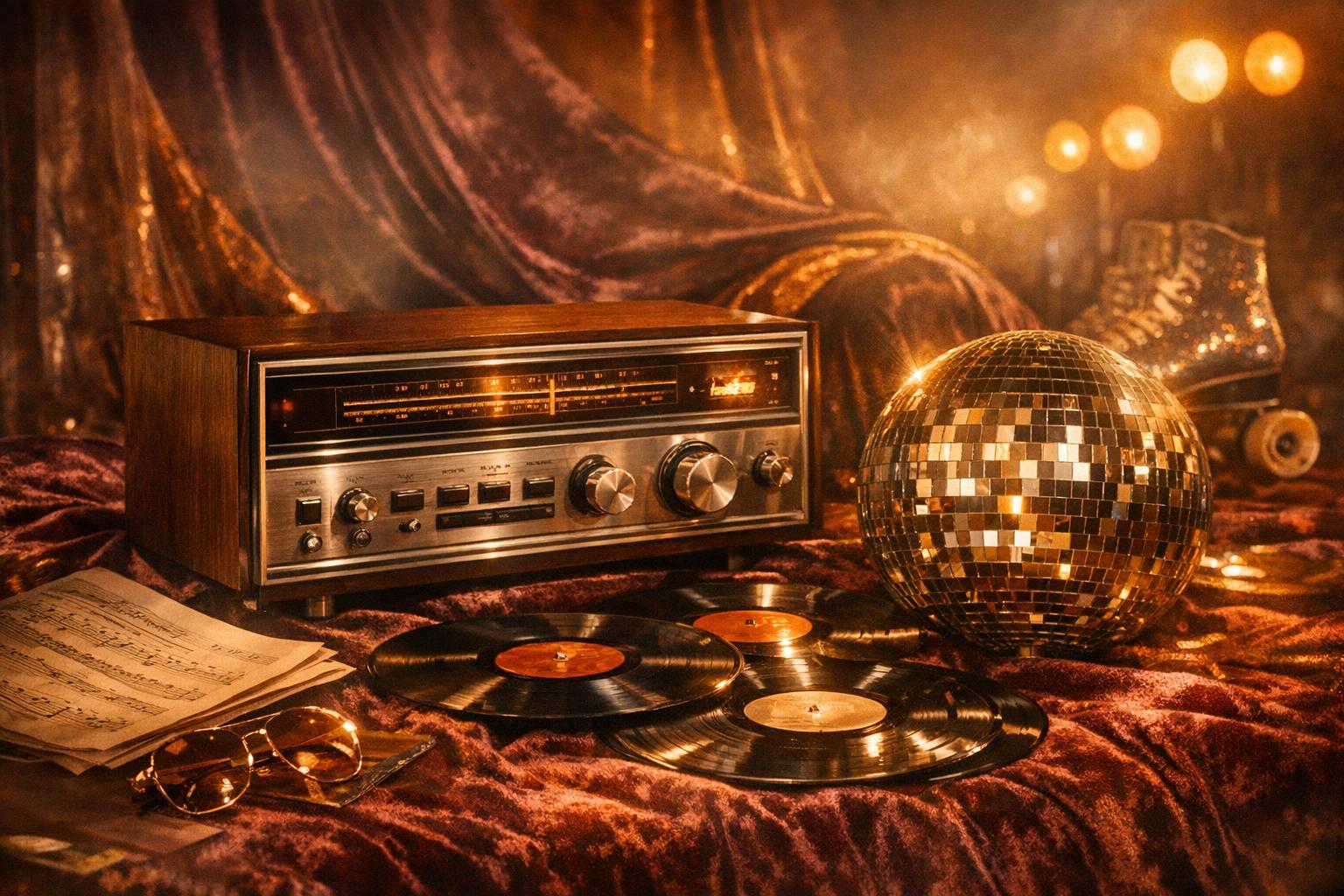
There are some years that feel as if they are still glowing somewhere in the speakers, and 1973 is one of them. It was a year when glam sparkled, soul deepened, singer-songwriters spoke straight to the heart, and rock grew bigger, bolder, and more ambitious. On car radios, in living rooms, at roller rinks, and on dance floors, the songs of 1973 seemed to arrive with personality to spare.
Behind the scenes, music was changing quickly. The optimism of the 1960s had matured into something richer and more complicated. Artists were experimenting with image, production, and storytelling. Albums were becoming grand statements, but the hit single still ruled the airwaves. And what a run of singles it was.
The songs everyone seemed to know
Here is a grouped look at some of the biggest and best-loved hits of 1973, each one carrying a different flavour of the year.
1. Tie a Yellow Ribbon Round the Ole Oak Tree — Dawn featuring Tony Orlando
One of the year’s defining songs, this cheerful, story-driven hit was impossible to escape in 1973. Its singalong chorus and emotional hook made it a natural radio favourite. There is something wonderfully direct about it: a homecoming tale wrapped in bright, easy pop.
2. Killing Me Softly with His Song — Roberta Flack
Roberta Flack turned quiet intensity into a chart-topping art form. Killing Me Softly with His Song is tender, intimate, and beautifully controlled, proving that a song did not need to shout to dominate the year. It became one of 1973’s most elegant records and remains timeless.
3. Let’s Get It On — Marvin Gaye
Sensual, warm, and effortlessly cool, Marvin Gaye’s classic brought soul music to a new peak of sophistication. The groove is unhurried, the vocal magnetic, and the atmosphere unforgettable. It was a huge hit, but it also felt like a statement from an artist in complete command of his sound.
4. Crocodile Rock — Elton John
Elton John had a remarkable run in the early 1970s, and this joyful throwback was one of his biggest crowd-pleasers. With its playful energy and nod to 1950s rock and roll, Crocodile Rock sounded like a party in progress. It showed how nostalgia itself was already becoming part of pop music.
5. Bad, Bad Leroy Brown — Jim Croce
Jim Croce’s storytelling gift was front and centre here. Funny, catchy, and packed with character, the song introduced listeners to one of pop’s great larger-than-life troublemakers. Croce made it all look easy, but that easy charm was a special skill.
6. Midnight Train to Georgia — Gladys Knight & the Pips
Few records from 1973 carry as much heart as this one. Gladys Knight’s voice is full of longing and strength, while the Pips provide one of the finest supporting performances in soul. It is cinematic in the best sense, like a whole life story unfolding in just a few minutes.
7. Superstition — Stevie Wonder
Stevie Wonder was entering one of the most astonishing creative periods in popular music, and Superstition is pure electricity. Driven by that instantly recognisable clavinet riff, it fused funk, soul, and pop into something thrillingly modern. Even now, it sounds alive the moment it begins.
8. You’re So Vain — Carly Simon
Sharp, stylish, and deliciously mysterious, Carly Simon’s hit became part great pop song, part cultural guessing game. Who was it really about? The speculation helped, of course, but the song would have lasted anyway thanks to its confidence and bite.
9. Smoke on the Water — Deep Purple
Not every major song of 1973 was soft-focus or radio-polished. Deep Purple brought hard rock crashing into the mainstream with one of the most famous guitar riffs ever recorded. The lyrics, telling the true story of a fire at a Frank Zappa concert venue in Switzerland, gave it extra legend.
10. Goodbye Yellow Brick Road — Elton John
Though not the most explosive single of the year, this song captured the richer, more reflective side of 1973. Melodic, wistful, and beautifully arranged, it came from one of the era’s great albums and showed just how expansive mainstream pop had become.
11. Angie — The Rolling Stones
The Stones proved they could still stop listeners in their tracks with a ballad. Angie is tender and melancholic, driven by acoustic textures and a vocal full of vulnerability. It remains one of the band’s most beloved softer moments.
12. The Most Beautiful Girl — Charlie Rich
Country music made a strong mark on the pop charts in 1973, and Charlie Rich led the way with this smooth, emotional crossover hit. It reflected a growing openness between country and mainstream pop audiences.
The world around the music
What made 1973 so exciting was not just the strength of the songs, but the sheer variety. This was a year when glam rock strutted with glitter and attitude, soul reached new emotional and political depth, progressive rock expanded the possibilities of the album, and singer-songwriters continued to bring intimacy to the charts.
On television, artists were becoming more visually distinctive. Image mattered, and performers understood the power of a memorable look as much as a memorable chorus. David Bowie, in particular, helped redefine what a pop star could be: theatrical, shape-shifting, and artful all at once. Even listeners who never bought a Bowie record could feel his influence in the air.
At the same time, radio remained wonderfully broad. A listener might hear Roberta Flack, then Deep Purple, then Tony Orlando and Dawn, then Stevie Wonder, all within the same stretch of programming. That mix is one reason 1973 is remembered so fondly. It was not a narrow year. It was a year of open doors.
The major trends shaping 1973
Glam got bigger
Glam rock was impossible to ignore. Artists such as David Bowie, T. Rex, Roxy Music, and Sweet brought drama, fashion, and swagger to the scene. The songs were catchy, but the presentation was just as important. Pop became more theatrical, and audiences loved it.
Soul and funk found fresh confidence
Stevie Wonder, Marvin Gaye, and Gladys Knight & the Pips helped make 1973 a landmark year for soul. Funk rhythms were becoming more prominent, production was growing more adventurous, and artists were blending sensuality, social awareness, and musical sophistication in new ways.
The album era was in full bloom
While hit singles still dominated radio, 1973 was also a golden year for albums. Listeners were increasingly sitting down with full records, absorbing artwork, sequencing, lyrics, and larger themes. This was not just background music anymore. Albums were becoming worlds to step into.
Country crossed over
Country music had long had a loyal audience, but in 1973 its crossover appeal was especially visible. Charlie Rich and others found success well beyond country radio, helping widen the mainstream sound of the year.
Rock split into many directions
Hard rock, progressive rock, roots rock, and polished piano-led pop all thrived at once. That is part of what makes 1973 so fascinating in hindsight: rock music was not one thing. It was a whole collection of voices and ambitions.
Albums that defined the year
If the singles made 1973 sparkle, the albums gave it depth. Several releases from that year are now considered among the greatest ever made.
- The Dark Side of the Moon — Pink Floyd
A landmark in progressive rock, this album combined philosophical themes, studio innovation, and seamless flow. It became one of the most enduring records in music history. - Goodbye Yellow Brick Road — Elton John
A sprawling, melodic triumph packed with hits and hidden gems. It captured Elton John and lyricist Bernie Taupin at a creative peak. - Innervisions — Stevie Wonder
Bold, inventive, and deeply human, this album showed Stevie Wonder operating on an extraordinary level as writer, performer, and producer. - Let’s Get It On — Marvin Gaye
Sensual on the surface but emotionally layered underneath, it remains one of soul music’s key albums. - Band on the Run — Paul McCartney and Wings
Released late in the year, this album helped restore McCartney’s critical standing and became one of his most celebrated post-Beatles works. - Aladdin Sane — David Bowie
A vivid, glamorous, slightly unhinged record that captured Bowie’s restless creativity and star power. - Quadrophenia — The Who
Ambitious and dramatic, this double album proved rock could still think big without losing emotional force.
Why 1973 matters in music history
In many ways, 1973 sits at a perfect crossroads. It still had the broad mainstream reach of earlier pop eras, when huge songs could unite millions of listeners at once. But it also had the artistic ambition that would define the 1970s at their best. Commercial success and creative risk were not opposites that year. They often travelled together.
It was also a bridge between worlds. The polished studio craft of the early 1970s was flourishing, while the seeds of future movements were being planted. Funk would grow stronger. Disco was waiting just around the corner. Punk, though still a few years away, would eventually react against some of the grandness of the period. That makes 1973 especially interesting: it is both a high point and a turning point.
For many artists, it was a year of confidence. They were not simply chasing hits. They were building identities, stretching genres, and trusting audiences to come along. Looking back, you can hear a music industry still centred on singles, but increasingly willing to let artists dream on a larger scale.
Fun facts from the 1973 music scene
- Roberta Flack’s big ballad had an unusual spark: Killing Me Softly with His Song was inspired by singer Lori Lieberman’s reaction to seeing Don McLean perform live.
- Stevie Wonder’s hot streak was astonishing: by 1973 he was in the middle of one of popular music’s greatest runs, creating albums that were both commercially successful and artistically fearless.
- Smoke on the Water tells a real story: the song refers to the fire at the Montreux Casino in Switzerland during a Frank Zappa and the Mothers of Invention concert.
- Elton John was everywhere: few artists owned the early 1970s charts quite like Elton, and 1973 only strengthened that reputation.
- The Dark Side of the Moon became a marathon chart performer: its chart life would become the stuff of legend, lasting far beyond its original release year.
- The mystery around You’re So Vain became part of the hit: Carly Simon’s teasing secrecy turned a smart pop song into an enduring talking point.
One unforgettable year on the air
What makes 1973 so special is not just that it produced famous songs. Plenty of years did that. It is the texture of the year that lingers: the warmth of soul, the flash of glam, the muscle of rock, the intimacy of singer-songwriters, the sense that radio could surprise you at any moment.
Listen back now and you can still feel that excitement. A record like Superstition sounds as fresh as ever. Midnight Train to Georgia still tugs at the heart. Crocodile Rock still throws open the doors to the party. And somewhere in that mix, 1973 keeps doing what the best music years always do: it reminds us how thrilling it is when great songs arrive one after another, each with its own story, each ready to light up the room.