Silly Love Songs on the Turntable
Paul McCartney turned criticism into pure gold with Wings’ 1976 smash Silly Love Songs. Here is the story of how a playful rebuttal became one of the decade’s biggest and most enduring pop singles.
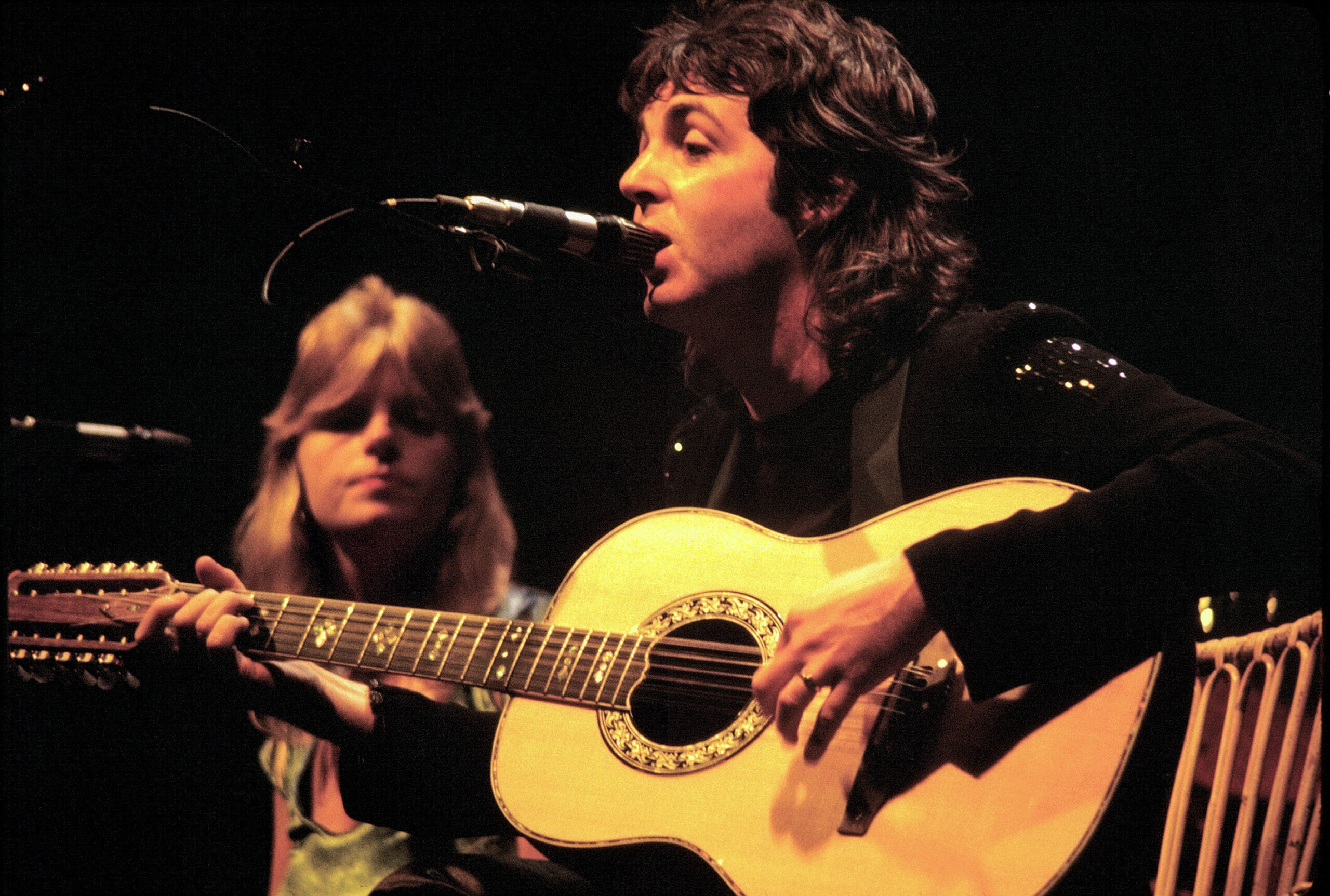
By the spring of 1976, Paul McCartney had heard the criticism often enough to turn it into a hook. Some reviewers had spent years accusing him of writing lightweight romantic tunes, especially after The Beatles. Instead of arguing back in interviews, he did something far more effective: he wrote Silly Love Songs, a record so bright, melodic and irresistibly well-crafted that it answered the complaint while climbing to the top of the charts.
Released by Wings on the album Wings at the Speed of Sound, the song became one of the defining pop singles of the mid-1970s. It is playful, self-aware and deeply musical, with a buoyant groove that still sounds alive on the radio. Beneath its easy charm lies a clever piece of songwriting and a fascinating chapter in McCartney’s post-Beatles story.
The spark behind the song
A reply wrapped in a love song
The central idea came from Paul McCartney’s awareness that he was being dismissed in some corners of the music press as a writer of sentimental material. Rather than deny it, he leaned into it. The lyric opens with a direct wink: “You’d think that people would have had enough of silly love songs.” It is both a question and a challenge. If people really were tired of love songs, why did they keep responding to them?
McCartney’s answer was simple and surprisingly sincere: because love remains a universal subject. He was not mocking romance; he was defending it. At a time when rock could sometimes present seriousness as a badge of artistic value, Silly Love Songs made the case that joy, affection and emotional openness had every right to exist in pop music.
Paul and Linda at the writing table
The song is credited to Paul McCartney and Linda McCartney, reflecting the creative partnership they maintained throughout Wings. Linda’s role in Wings has often been unfairly reduced over the years, but she was a visible and important part of the group’s identity, especially in harmony arrangements and the warm, communal feel of the band. On Silly Love Songs, that spirit matters. The chorus feels like a shared statement rather than a solitary one.
The lyric also carried a personal dimension. Paul and Linda’s relationship was central to his life and work in the 1970s, and the song’s emotional conviction comes from that grounding. It is clever, yes, but it is not cynical. That is one reason it has lasted.
Inside the recording sessions
Wings in a polished, confident phase
Silly Love Songs was recorded during the sessions for Wings at the Speed of Sound, an album that presented Wings less as Paul’s backing group and more as a functioning band with multiple vocalists and personalities. By this point, Wings had weathered line-up changes and hard touring, and they were a tighter unit than in the group’s early years.
The song was produced by Paul McCartney, working with the engineering team that helped shape the glossy, radio-friendly sound of the record. The recording has a clean, spacious mix, but it never feels sterile. There is movement everywhere: bass lines weaving in and out, layered vocals lifting the chorus, and a rhythm section that gives the track a light dance-floor pulse.
The musicians who gave it lift
The core Wings line-up on the record included Paul McCartney on vocals and bass, Linda McCartney on keyboards and vocals, Denny Laine on guitar and vocals, Jimmy McCulloch on guitar, and Joe English on drums. Each player helped create the record’s easy confidence.
Paul’s bass performance is one of the song’s secret engines. In fact, it is not much of a secret anymore among musicians, because the bass line has become one of the most admired in his entire catalogue. It is melodic, busy and elastic, almost acting like a second lead instrument. While the vocal keeps the tune grounded and singable, the bass dances underneath with real invention.
Joe English’s drumming deserves attention too. He gives the track a crisp, controlled groove that helps bridge pop and disco-era rhythm without tipping too far into either camp. The backing vocals, meanwhile, are crucial to the song’s identity. They create that soaring, circular feel in the chorus, as if the tune is lifting itself higher with every repetition.
Built for radio, crafted with care
One of the pleasures of Silly Love Songs is how effortless it sounds. That can disguise how carefully it was assembled. The arrangement balances several moving parts at once: a prominent bass line, layered harmonies, tight drumming, guitar accents and a melody that remains immediately accessible. McCartney had always had a gift for making complexity feel natural, and this track is a textbook example.
There is also a subtle toughness to the record. For all its sweetness, it is not flimsy. The groove is firm, the ensemble playing is disciplined, and the hook is delivered with complete confidence. It smiles, but it does not apologise.
From release to runaway success
A giant hit in 1976
Commercially, Silly Love Songs was enormous. In the United States, it reached number one on the Billboard Hot 100, where it stayed for multiple weeks, and it became one of the year’s biggest singles. It also performed strongly internationally, confirming that McCartney remained one of the most reliable hitmakers of the decade.
Its success was especially striking because the song was, in effect, a response to criticism. Instead of retreating from his pop instincts, McCartney doubled down on them and was rewarded with a record-buying public that clearly had not had enough of love songs after all.
Critics versus listeners
The contrast between critical scepticism and public enthusiasm is part of the song’s story. Some reviewers in the 1970s still measured McCartney against the enormous shadow of The Beatles and expected a different kind of artistic statement. But ordinary listeners heard something else: a joyous, expertly made single with a huge chorus and a groove that felt fresh for its moment.
That gap between elite opinion and popular affection is almost built into the track’s meaning. Silly Love Songs became a rare hit that was also an argument about what pop music could be.
The wider musical picture of the mid-1970s
Where pop craft met dance-floor rhythm
The mid-1970s were a fascinating moment in popular music. Glam had shaken things up, singer-songwriters were still strong, soul and R&B were evolving rapidly, and disco was beginning to reshape the sound of mainstream radio. Silly Love Songs sits right in the middle of that changing landscape.
It has the melodic polish of classic McCartney pop, but it also carries a rhythmic sleekness that connected with the era’s growing appetite for groove-based records. The pulsing beat and fluid bass line gave it a modern feel in 1976, helping it sit comfortably beside contemporary hits without losing McCartney’s signature tunefulness.
Wings stepping out of the Beatles shadow
By this stage, Wings were no longer simply viewed as McCartney’s post-Beatles experiment. They had become a major touring and recording act in their own right. Songs like Band on the Run, Listen to What the Man Said and Silly Love Songs showed that McCartney was building a second great songbook after The Beatles, even if it took some critics longer to admit it.
Silly Love Songs helped define that phase. It captured Wings at their most accessible and most assured, with enough polish for pop radio and enough musical detail to reward repeat listening.
Behind the scenes and memorable details
A title with a grin
One of the best anecdotes about the song is also the most obvious: McCartney essentially took an insult and turned it into a chart-topper. There is something delightfully mischievous about that. Instead of sounding wounded, he sounds amused. The title itself is disarming. It invites the listener in with a shrug, then delivers a masterclass in arrangement.
The bass line musicians still talk about
Ask bass players about Silly Love Songs, and many will light up. McCartney’s playing on the track has become one of those performances that listeners can enjoy casually while musicians study it more closely. It is lyrical and rhythmic at once, busy without being cluttered. In another songwriter’s hands, a bass part that active might dominate the record. Here, it enhances the song’s buoyancy.
A communal Wings feel
Another appealing detail is how much the record sounds like a group enjoying itself. Wings could sometimes be discussed entirely through the lens of Paul McCartney’s fame, but this track really benefits from the sense of a band locked into a shared feel. The harmonies, the groove and the polished ensemble playing all contribute to its warmth.
Why it still plays so well today
A pop defence that became a classic
Nearly fifty years on, Silly Love Songs still feels fresh because its central idea remains timeless. Love songs never really go out of fashion; they simply change clothes from one generation to the next. McCartney understood that instinctively. He also understood that craft matters. A universal theme becomes unforgettable only when it is matched by melody, rhythm and personality.
This song has all three in abundance. It is witty without being smug, romantic without becoming syrupy, and sophisticated without losing its easy charm. That balance is difficult to achieve, which is why so few songs that sound this effortless are actually this good.
Its place in the Wings legacy
Today, Silly Love Songs stands as one of Wings’ signature recordings and one of the clearest examples of Paul McCartney’s resilience as a songwriter. Faced with criticism, he responded not with bitterness but with melody. The result was a record that filled dance floors, car radios and living rooms, and one that still sends a little spark through the speakers when that opening groove begins.
For listeners who grew up with it, the song carries the glow of a warm radio memory. For newer audiences, it remains a lesson in how to make pop music feel light on its feet and rich in detail. Call it silly if you like. The record has been having the last laugh since 1976.
“I love you” may be one of the oldest phrases in popular music, but in the hands of Wings, it became a clever comeback, a chart giant and a lasting reminder that joy can be every bit as powerful as seriousness.