Beyond the Stars — why 60s and 70s sci-fi still feels thrilling
From the elegance of 2001 to the pulse-quickening thrill of Alien, the sci-fi films of the 60s and 70s still dazzle with style, music, and imagination. Here is why their retro-futurist charm continues to inspire modern fashion, design, and nostalgic movie nights.
There is something wonderfully irresistible about the science fiction films of the 1960s and 1970s. Long before computer-generated worlds became the norm, these movies built entire futures with bold set design, practical effects, daring ideas, and unforgettable music. They were strange, stylish, sometimes unsettling, and often surprisingly beautiful. For many of us, they also bring back memories of late-night television, cinema double bills, vinyl records spinning nearby, and a world fascinated by moon landings, space age furniture, and the promise of tomorrow.
Revisiting the best sci-fi films of the 60s and 70s is not just about the movies themselves. It is about stepping back into an era when the future looked sleek, mysterious, and full of possibility. It is also about seeing how that era still shapes the way we dress, decorate our homes, listen to music, and dream about technology today.
When the future came dressed in silver and chrome
The 1960s and 70s were a golden age for cinematic science fiction because the culture was already looking skyward. The space race was unfolding in real time, television brought astronauts into living rooms, and design everywhere embraced clean lines, bold geometry, plastics, metallic finishes, and a sense of modern adventure.
That mood poured straight into cinema. 2001: A Space Odyssey turned space travel into high art, with its pristine interiors, eerie silence, and classical score creating one of the most unforgettable experiences in film history. Barbarella gave sci-fi a playful, fashion-forward twist, full of outrageous costumes and psychedelic colour. Planet of the Apes mixed spectacle with social commentary, while Solaris and The Andromeda Strain brought a cooler, more thoughtful kind of tension.
Then came the 1970s, and the genre widened even further. Star Wars burst onto screens with pure excitement and mythic energy, while Close Encounters of the Third Kind made alien contact feel spiritual and awe-inspiring. Alien changed the game by fusing sci-fi with horror, all industrial corridors, flashing lights, and nerve-shredding suspense. Even films like Logan’s Run and Silent Running offered futuristic worlds that were stylish on the surface but carried deeper anxieties underneath.
These films reflected their times beautifully. The 60s often imagined the future as elegant, mysterious, and cerebral. The 70s added grit, paranoia, environmental concern, and a more lived-in visual style. Together, they created a rich cinematic universe that still feels fresh.
Why these films still cast such a spell
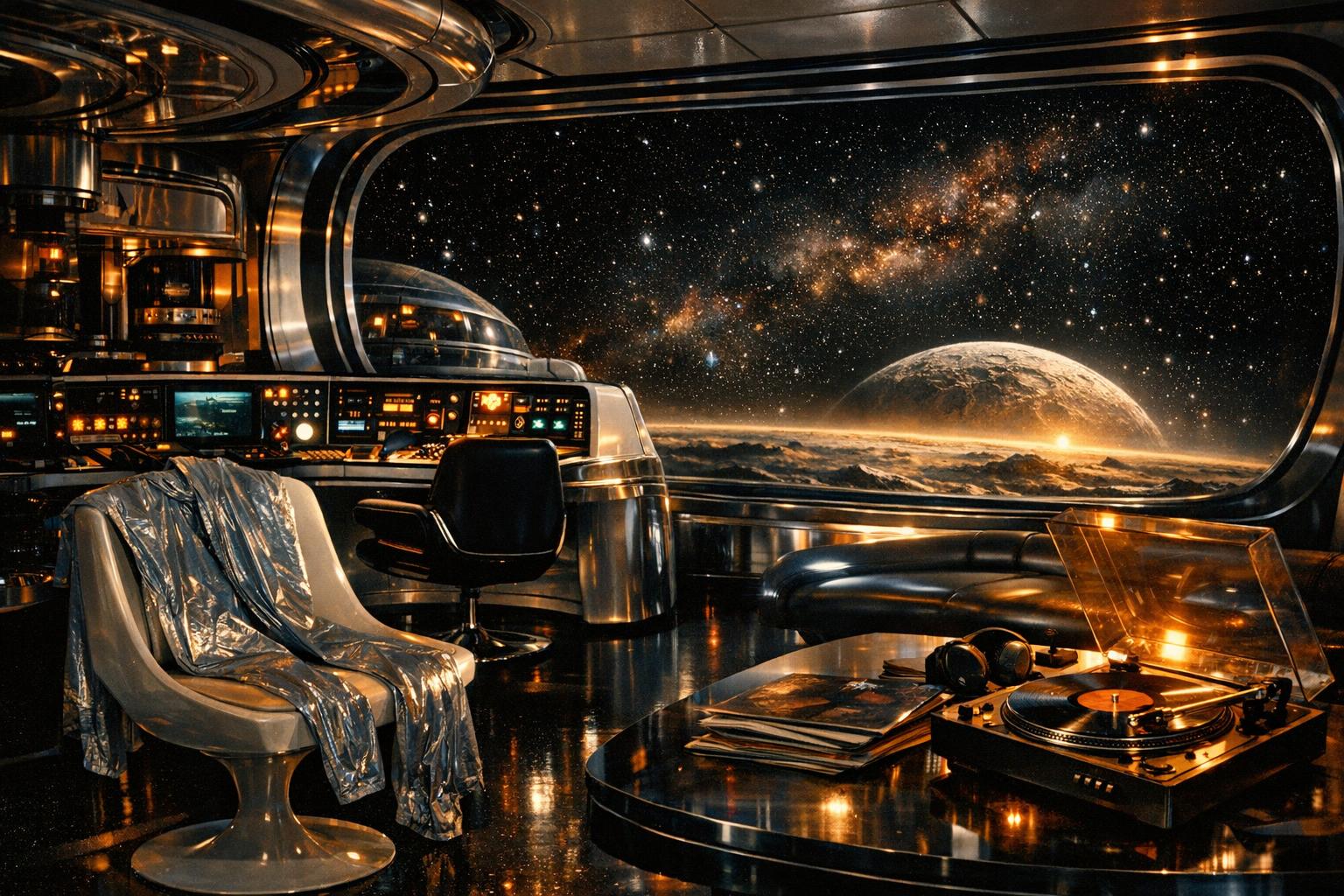
Part of the appeal is simple: they look fantastic. The retro-futurist aesthetic of these decades has become timeless. Think glowing control panels, curved white furniture, jumpsuits, giant computers with blinking lights, and spacecraft interiors built from switches, dials, and imagination. There is a tactile quality to it all that modern audiences still love.
Practical effects play a huge role here. When you watch the model work in Star Wars, the haunting visuals of 2001, or the physical production design of Alien, you can feel the craftsmanship. These worlds were built, lit, and photographed with extraordinary care. They may not be polished in the digital sense, but that is exactly why they remain so engaging. They feel real enough to touch.
There is also the music. For readers of the Classic Gold blog, this is where nostalgia really starts to glow. The era’s science fiction films often used music in bold, unforgettable ways. 2001 famously paired space imagery with Strauss, turning docking spacecraft into a cosmic ballet. Star Wars gave us John Williams at full power, creating themes that became part of everyday culture almost overnight. Close Encounters built an entire emotional language around a simple musical phrase. These scores did not just accompany the films; they became part of the memory of the time.
And perhaps that is the deeper reason people keep returning to these movies: they are not only about the future. They are about the hopes and fears of the people who made them. Watching them now is like opening a stylish time capsule from an age that believed tomorrow could be dazzling, dangerous, and transformative all at once.
A retro revival that goes far beyond the cinema screen
It is no accident that retro aesthetics are thriving again. The colours, textures, and shapes of the 60s and 70s are back in fashion, interior design, and even consumer technology. Record players sit proudly in modern homes. Mid-century furniture is once again coveted. Lamps look like they belong on a spaceship. Trainers, sunglasses, and jackets borrow heavily from the silhouettes of the era.
Sci-fi films from these decades fit perfectly into that revival because they captured the dreamiest, boldest version of retro style. Watching Barbarella feels like flipping through a fashion editorial from another galaxy. Logan’s Run is full of interiors that now look like design inspiration boards. Even the tougher industrial look of Alien has had a huge influence on modern gaming, fashion photography, and futuristic product design.
Music nostalgia runs alongside all of this. Put on David Bowie, Electric Light Orchestra, Donna Summer, Kraftwerk, or Pink Floyd before a retro sci-fi movie night, and the mood arrives instantly. There is a shared language between the music and the films of the time: exploration, experimentation, glamour, and a fascination with machines. The synthesiser alone feels like a bridge between the pop charts and the cosmos.
Many people love retro aesthetics today because they offer something modern life often lacks: character. The future imagined in these films was imperfect, but it was imaginative. Buttons clicked. Screens glowed. Rooms had personality. Even the technology seemed theatrical. In an age of minimalist black rectangles and invisible software, there is real charm in a spaceship dashboard that looks like a recording studio crossed with a pinball machine.
Personal favourites, shared memories, and pop culture magic
Ask almost anyone of a certain generation about classic sci-fi, and you will often get a story rather than just a list. Someone remembers seeing Star Wars for the first time and feeling as if the cinema had lifted off. Someone else recalls staying up far too late to catch Planet of the Apes on television, then talking about that ending for days. Another person remembers being equally fascinated and frightened by Alien, peeking through their fingers but never looking away for long.
That is part of the magic. These films were events. They sparked playground conversations, inspired bedroom posters, and sent children searching for toy spaceships and glowing plastic helmets. They also shaped pop culture in ways that still echo today. Without these films, so much of modern science fiction television, music videos, fashion shoots, and album artwork would look completely different.
Even the phrases and images have lasted. The monolith from 2001, the ape on horseback from Planet of the Apes, the glowing mothership from Close Encounters, the sleek terror of the xenomorph in Alien, the opening crawl of Star Wars—they remain instantly recognisable, even to people who have not seen the films in years.
Classic picks worth revisiting: 2001: A Space Odyssey, Planet of the Apes, Barbarella, Solaris, The Andromeda Strain, Silent Running, Logan’s Run, Close Encounters of the Third Kind, Star Wars, and Alien.
How to bring a little retro sci-fi into your own life
The joy of this era is that you do not need a spaceship budget to enjoy it. A little imagination goes a long way.
- Host a retro sci-fi movie night. Pick two contrasting films, perhaps 2001 for elegance and Alien for suspense, and build the evening around them. Dim lighting, a lava lamp, and a great playlist can transform the room.
- Create a music set to match the mood. Try Bowie, ELO, Jean-Michel Jarre, Kraftwerk, or classic orchestral film themes. The right soundtrack makes the whole evening feel cinematic before the opening credits even roll.
- Add a few design touches at home. Look for chrome accents, curved lamps, geometric prints, smoked glass, or a bold orange or silver cushion. A small nod to space age style can brighten a room beautifully.
- Dress for the occasion. A sharp bomber jacket, oversized sunglasses, metallic accessories, or a vintage band T-shirt can give a subtle retro-futurist feel without becoming costume.
- Explore the stories behind the films. Half the fun is learning how these movies were made. The practical effects, model work, and production design are often as fascinating as the films themselves.
- Watch with different generations. These films are wonderful conversation starters. Older viewers bring memories of the era, while younger viewers often notice just how imaginative and stylish the films still are.
The future they imagined still lights up the present
The best sci-fi movies of the 60s and 70s endure because they offered more than spectacle. They gave us atmosphere, ambition, and style. They reflected a world captivated by progress, while also questioning where that progress might lead. They were philosophical, playful, glamorous, eerie, and sometimes gloriously strange.
Most of all, they remind us that nostalgia is not only about looking back. It is also about reconnecting with a sense of wonder. These films invite us to believe, just for a couple of hours, that the future can still be mysterious and exciting. Add a classic record on the turntable, settle in for a night of retro cinema, and suddenly the stars do not feel quite so far away.