Do We Secretly Miss Life Before Smartphones?
From mixtapes and missed calls to vinyl, vintage fashion, and slower living, the pre-smartphone era still holds a special glow. Here is why that world feels so appealing today, and how to bring a little of its magic back into modern life.
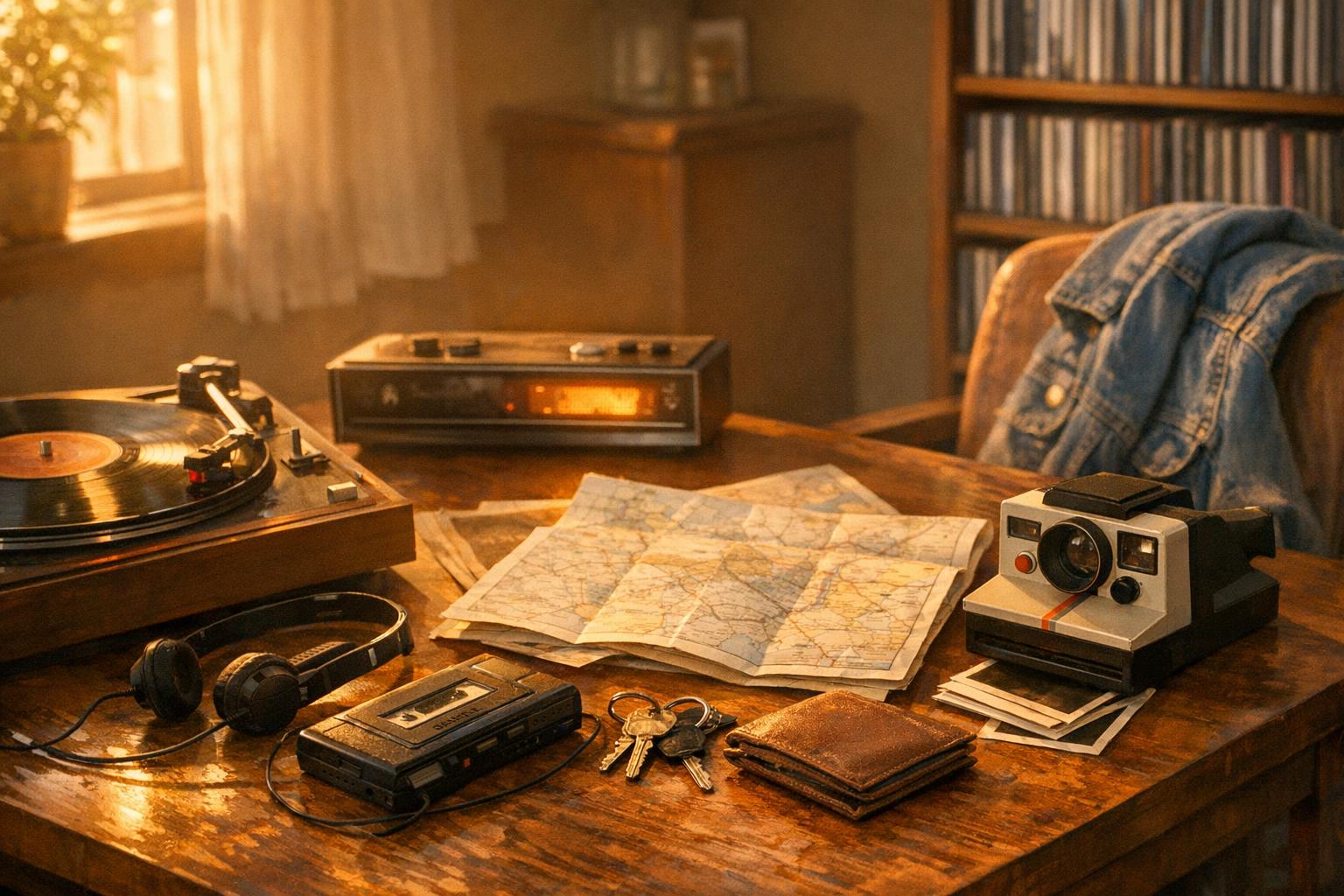
There was a time when leaving the house meant taking your keys, your wallet, and perhaps a paper map folded so many times it never quite went back together properly. If you wanted to meet a friend, you agreed on a place and a time, then simply trusted that both of you would show up. If you liked a song on the radio, you listened closely, waited for the presenter to say the title, or dashed to the cassette deck and hit record a second too late.
For many of us, that world still feels wonderfully familiar. And lately, it feels fashionable again too. From instant cameras and vinyl records to flip phones, denim jackets, and living rooms filled with warm wood tones, the pre-smartphone era has returned as more than a passing trend. It has become a kind of cultural comfort food: tactile, colourful, a little slower, and full of personality.
So why do we miss life before smartphones? It is not because everything was easier. It was not. But it was different in ways that now feel refreshing, even a little magical.
When life felt less connected but more present
Before smartphones, daily life had more gaps in it. Waiting was real. Boredom appeared now and then. A train journey might mean staring out of the window, reading a paperback, or replaying the same Walkman cassette until you knew every drum fill by heart. Those empty spaces often became the moments where imagination, observation, and conversation stepped in.
There was also a lovely sense of commitment to everyday plans. You could not send a quick message saying, “Running five minutes late,” from every street corner. If you arranged to meet someone outside a cinema at 7:30, you were there at 7:30. There was something reassuring about that. Plans felt more solid, and people often felt more fully there once they arrived.
Even music listening had a different rhythm. Radio was not just background noise; it was an event. You waited for the Top 40 countdown, called in requests, and discovered songs because a trusted voice on air introduced them. A favourite track might live in your memory for weeks before you finally found it in a record shop. That anticipation gave music a special weight.
Part of what we miss is not just the technology itself, but the pace of life that came with it.
Why retro style feels so appealing now
The revival of pre-smartphone culture is everywhere, and it makes perfect sense. Retro aesthetics offer something digital life often lacks: texture. Think of the satisfying click of a cassette case, the glow of a bedside clock radio, the bold graphics on old concert posters, or the cheerful clutter of a shelf lined with CDs. These things are physical, expressive, and unmistakably human.
Fashion has embraced that spirit wholeheartedly. High-waisted jeans, vintage trainers, oversized shirts, leather jackets, and bright windbreakers all carry the easy confidence of the 1980s, 1990s, and early 2000s. Home design has followed suit with record players, chrome details, patterned rugs, analogue clocks, and furniture that looks as though it belongs in a music video from another era.
Then there is the technology itself. Polaroid cameras, wired headphones, old gaming consoles, and even basic mobile phones have become desirable again. Not because they outperform modern gadgets, but because they do one thing well and ask less of us. A camera takes photos. A radio plays music. A home phone rings in the hallway and everyone wonders who it might be. There is charm in that simplicity.
Music nostalgia plays a huge part too. Put on a classic hit and suddenly an entire time period springs to life. One opening synth line can bring back school discos, summer drives, family barbecues, or the thrill of taping songs off the radio. Classic music does not just remind us what we listened to; it reminds us who we were.
The joy of not documenting everything
One of the strangest changes smartphones brought was the idea that every moment could be captured, posted, shared, and reviewed almost instantly. Before that, experiences often existed more privately. You went to a concert and watched the stage, not a sea of raised screens. Holiday photos came back from the chemist a week later, and half of them were blurry, badly framed, or unexpectedly brilliant.
That unpredictability was part of the fun. Memories lived in stories as much as in images. A night out became something you retold, laughing over the details that grew better with every version. A holiday souvenir was a postcard, a key ring, or a sun-faded photograph in an album, not a folder of 600 nearly identical pictures.
There is a reason younger generations are drawn to this now. In a world of constant visibility, mystery feels luxurious. Imperfection looks stylish. Things with grain, static, scratches, and faded colours feel more real because they are not polished to perfection.
Pop culture moments we still carry with us
Life before smartphones was packed with rituals that now feel almost cinematic. Calling a friend’s house and nervously speaking to their parent first. Waiting all week for the next episode of a television show instead of streaming it in one sitting. Reading album liner notes from start to finish. Arguing over directions on a road trip. Rewinding a VHS tape before returning it.
And of course, music was at the centre of so much of it. There were boom boxes in bedrooms, car stereos blasting singalong choruses, and mixtapes assembled with care and heartbreak. A mixtape was never just a collection of songs. It was a message. Sometimes it said, “This is who I am.” Sometimes it said, “I really like you.” Sometimes it said, “Please notice track six.”
Ask almost anyone of a certain age and they will have a story. Perhaps it is waiting by the radio with a finger hovering over the record button. Perhaps it is buying a single with saved-up pocket money. Perhaps it is hearing a song in a shop, then spending weeks trying to figure out who sang it. Those little quests made music feel earned, and somehow more precious.
How to bring a little pre-smartphone magic back
The good news is that you do not need to give up modern life to enjoy some of that older charm. In fact, a few small changes can bring back the best parts of it.
- Create phone-free pockets of time. Try an evening walk without your phone, or leave it in another room during dinner. Even an hour of quiet can feel surprisingly freeing.
- Listen to music more intentionally. Put on a full album from start to finish. Tune into live radio. Make a playlist with a theme, like a modern-day mixtape.
- Use something analogue. Print photos, write postcards, keep a paper diary, or wear a watch instead of checking the time on your phone.
- Bring retro style into your space. A record player, vintage lamp, old gig poster, or colourful radio can instantly add warmth and personality.
- Plan old-fashioned social time. Invite friends over for a board game night, a classic film evening, or a shared album-listening session.
- Try a digital-light weekend. Keep the essentials, but skip the endless scrolling. Read, cook, browse a market, or go driving with classic hits on the radio.
These are not grand lifestyle overhauls. They are simple reminders that life can still be rich when it is not constantly interrupted.
What we really miss
When people say they miss life before smartphones, they are rarely asking for payphones, delayed replies, or getting lost on unfamiliar roads. What they are really missing is a feeling: the feeling of being where they were, with fewer distractions pulling at their attention.
They miss the build-up before things happened. The excitement of waiting for a favourite song. The surprise of an unexpected call. The pleasure of browsing a record shop with no algorithm telling you what to like next. They miss objects with weight, moments with edges, and memories that were not instantly flattened into content.
That is why the era keeps coming back in fashion, design, music, and everyday habits. It reminds us that convenience is not the same as joy. Sometimes joy is slower. Sometimes it crackles a little. Sometimes it arrives through a radio speaker on a sunny afternoon and stays with you for years.
And perhaps that is the real reason we miss life before smartphones. It was not perfect, but it asked us to pay attention. To the song on the airwaves. To the friend across the table. To the world outside the window. And that, like any truly great classic hit, never goes out of style.