Saturday Morning Magic
One line everyone still shouts is enough to send people back to cereal-box mornings, glowing TV sets, and theme tunes as catchy as anything on the radio. The best 1960s cartoons did more than entertain — they captured the bright, playful spirit of an era people still love to revisit.
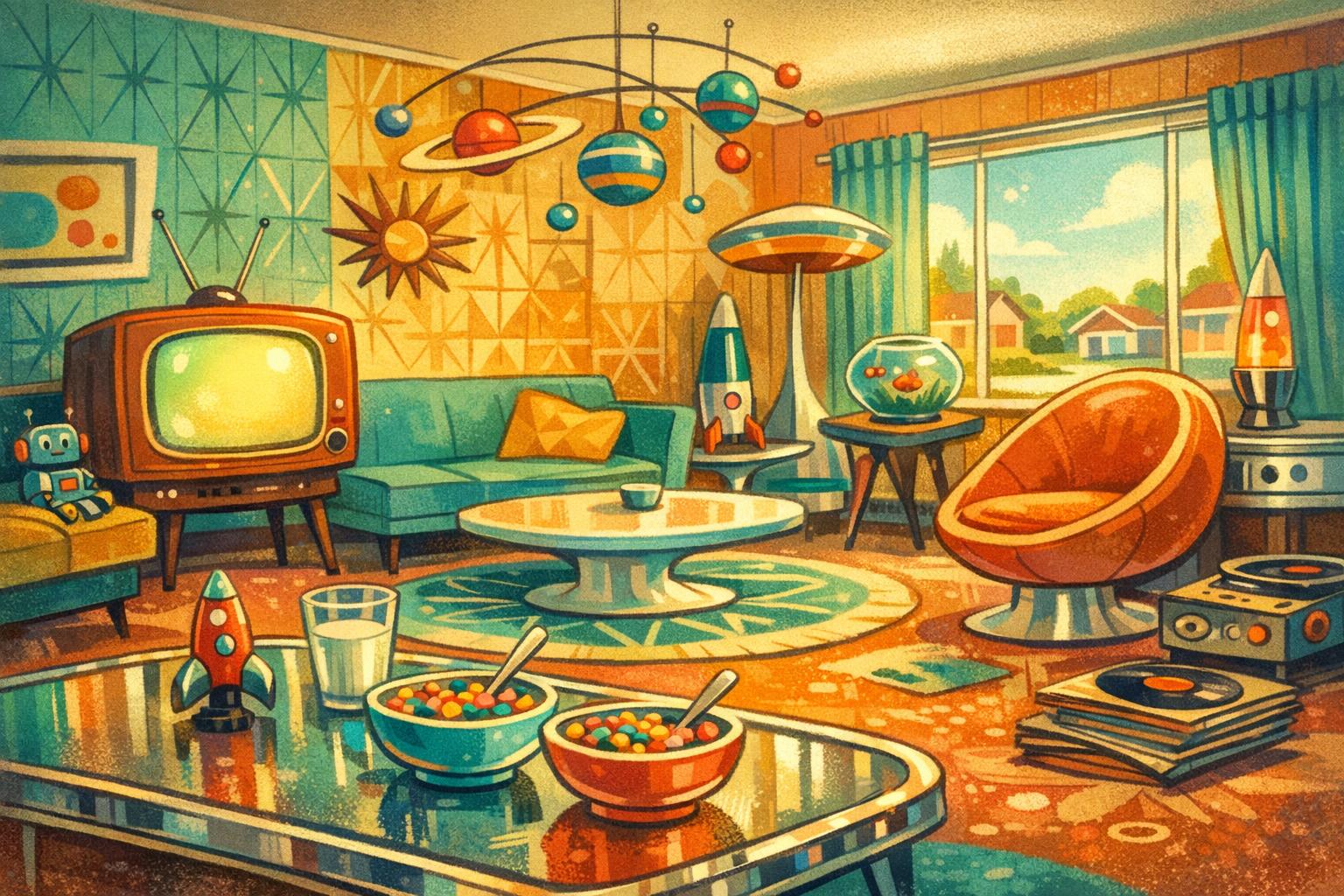
One of the happiest ways to revisit 1960s America is through its cartoons. Switch on almost any classic animation from that decade and you can feel the whole era flicker back to life: bright kitchen colours, space-age furniture, chrome-trimmed diners, catchy theme songs, and that irresistible sense that the future was going to be fun. For many people, these shows were more than television entertainment. They were part of family ritual, cereal bowls on laps, living rooms full of laughter, and jingles that somehow stayed in the memory as firmly as the biggest radio hits.
The 1960s were a remarkable moment for animation in the United States. Television had become the centre of home life, and studios learned how to create memorable characters with bold designs, snappy writing, and music that could hook you in within seconds. Today, those cartoons still charm audiences not just because they are funny, but because they capture a whole retro lifestyle that people continue to adore.
Why 1960s cartoons still feel so alive
There is something wonderfully unmistakable about the look of a 1960s cartoon. The colours are sunny and confident. The homes are filled with mid-century style: low furniture, geometric patterns, sleek lamps, and futuristic gadgets that now feel delightfully imaginative. Even when a show was set in the Stone Age or in outer space, it often reflected the same design spirit seen in real American homes, cars, advertising, and fashion.
Music played a huge role too. These programmes arrived in the same decade that gave radio listeners surf rock, Motown, British Invasion hits, garage bands, and glossy pop harmonies. Cartoon theme tunes were often mini pop records in their own right, written to be instantly memorable. You can hear the era’s love of rhythm, brass, vocal hooks, and playful arrangement all over them.
That helps explain why retro aesthetics remain so popular now. People are drawn to the optimism of the period, the clean visual lines, and the sense of personality in every object. In a digital age, there is comfort in hand-drawn animation, practical design, and entertainment that feels warm rather than rushed. A 1960s cartoon can be like hearing a beloved old single on the radio: familiar, vivid, and able to transport you in a heartbeat.
10 of the best cartoons of the 1960s in the USA
1. The Flintstones
If ever a cartoon captured suburban American life with a comic twist, this was it. The Flintstones took the rhythms of modern family living and placed them in a prehistoric town full of stone cars, dinosaur appliances, and wonderfully silly visual jokes. Fred and Wilma, Barney and Betty, felt like neighbours you knew.
What makes the show endure is its clever balance of satire and affection. It gently poked fun at consumer culture, family routines, and television habits, while giving audiences a setting that looked unlike anything else on screen. The theme song alone is enough to make generations smile.
2. The Jetsons
Where The Flintstones looked back with a wink, The Jetsons looked forward with sparkling optimism. Flying cars, moving walkways, robot helpers, and video calls made the future seem stylish and cheerful. Today, some of its predictions feel surprisingly close to everyday life, which only adds to its charm.
Visually, it is a feast of space-age design. Rounded buildings, bright colours, and sleek gadgets made it a perfect cartoon expression of 1960s fascination with technology and the Space Age.
3. Scooby-Doo, Where Are You!
Late in the decade came one of television’s most lovable mystery machines. Scooby-Doo, Where Are You! mixed spooky fun, teenage cool, and comic timing in a way that has barely aged. The gang’s road-trip energy, pop-art backgrounds, and chase sequences set to lively music gave the show a rhythm that felt fresh and playful.
And of course, Scooby himself became an instant icon: nervous, hungry, and impossible not to love.
4. Top Cat
Smooth-talking and always scheming, Top Cat brought urban wit to Saturday mornings. Set in a stylised New York alley, the show had a jazzy confidence that matched the decade’s affection for cool characters and smart dialogue. Benny the Ball, Officer Dibble, and the rest of the gang gave it a rich comic ensemble.
There is a breezy sophistication to Top Cat that still feels appealing, like a swing-era tune drifting out of a city window.
5. Jonny Quest
Adventure had a sharper edge with Jonny Quest. This was animation with danger, mystery, and globe-trotting excitement. It drew on the era’s appetite for spy stories, science fiction, and exotic locations, making it feel like a cartoon cousin to the action films and television dramas of the day.
Its dramatic music and stylish visuals gave it a cinematic quality that set it apart from many of its contemporaries.
6. Wacky Races
Pure comic chaos on wheels. Wacky Races delivered one of the great line-ups in cartoon history, with each racer bringing a distinct visual joke and personality. Dick Dastardly and Muttley, forever plotting and forever failing, were especially memorable.
The show’s appeal lies in its speed, imagination, and sheer sense of fun. Every vehicle looked like a toy box dream, and every race felt like a parade of 1960s cartoon invention.
7. The Adventures of Rocky and Bullwinkle and Friends
This series offered something special for both children and adults. Rocky and Bullwinkle were funny enough on the surface, but the writing was packed with wordplay, satire, and sly cultural references. It was smart without losing its warmth.
That combination helped it stand out in a crowded television landscape. The show proved animation could be witty, layered, and wonderfully odd all at once.
8. Space Ghost
Before later generations rediscovered him in a very different form, Space Ghost was a straight-faced hero of the cosmic age. The original series leaned into the decade’s fascination with outer space, heroic adventure, and futuristic imagery.
Watching it now is like opening a time capsule from the years when rockets, astronauts, and moon missions captured the public imagination every day.
9. Magilla Gorilla
There is a lovely innocence to Magilla Gorilla. The premise is simple, but that is part of its charm. The oversized, gentle gorilla in a bow tie felt perfectly suited to the broad, bright comedy style of 1960s television animation.
Its humour was family-friendly, visual, and easygoing, the kind of show that made a living room feel lighter.
10. Underdog
With his cape, earnest voice, and comic-book spirit, Underdog became one of the decade’s most distinctive animated heroes. The series blended superhero parody with genuine affection for adventure storytelling, and it had a catchy, singable quality that made it memorable well beyond the screen.
Like many great cartoons of the era, it understood the power of a strong character and a strong tune.
Cartoons, clothes, consoles, and chrome
Part of the joy of revisiting these shows is spotting the wider culture around them. The 1960s were rich in visual identity. American homes embraced bold wallpaper, pastel appliances, and furniture that looked sculpted rather than simply built. Fashion moved from neat early-sixties silhouettes to brighter, freer looks later in the decade. Record players, transistor radios, and family television sets became central objects of domestic life.
Cartoons reflected all of that. Even the simplest backgrounds often carried the influence of modern design. The music mirrored what listeners heard on the radio: upbeat rhythms, bold intros, and melodies built to stick. If you love classic hits, these shows feel like close cousins to the records of the day. They were catchy, stylish, and made to be shared.
I still hear people talk about the thrill of hearing a cartoon theme song and being instantly back in childhood. It is the same feeling many listeners get when an old favourite comes on the radio in the car. Suddenly you are not just remembering a show or a song. You are remembering the room, the people, the smell of breakfast, the colour of the curtains, the whole scene.
Why retro style keeps winning hearts
Retro style is not only about looking backward. It is about finding joy in design that feels human, expressive, and a little playful. The clean lines of mid-century interiors, the bold typography of old advertising, and the hand-crafted charm of classic animation all offer a refreshing contrast to today’s slick perfection.
There is also a social side to nostalgia. Watching an old cartoon with children or grandchildren can become a lovely shared experience. The jokes may be simple, but the connection is real. These shows invite conversation: Did people really think the future would look like that? Was every theme song this catchy? Why were cartoon pets always so memorable?
Great nostalgia does not trap us in the past. It lets us carry the best feelings of it into the present.
Easy ways to bring cartoon-era nostalgia into modern life
If these classics make you want to add a little 1960s sparkle to your everyday routine, there are plenty of easy ways to do it.
- Create a retro viewing night: Pick two or three classic cartoons, serve popcorn in bright bowls, and put together a playlist of 1960s hits for before and after the show.
- Add mid-century touches at home: A geometric cushion, a starburst clock, or a vintage-style lamp can bring that cartoon-era design mood into a room without a full makeover.
- Try a cheerful colour palette: Turquoise, mustard, coral, and avocado green can instantly evoke the period in small, stylish ways.
- Collect the music too: Many cartoon themes and incidental scores from the era are wonderfully arranged. Pair them with classic pop, surf instrumentals, or early soul for a nostalgic listening session.
- Share the memories: Ask friends or family which cartoon character they loved most. You will often get a story along with the answer.
A happier time, still playing in our minds
The best 1960s cartoons in the USA were colourful, musical, and full of personality. They gave viewers futuristic dreams, prehistoric laughs, mystery, adventure, and characters who still feel alive decades later. More than that, they preserved the mood of an era when design was bold, entertainment was communal, and a theme tune could become part of family folklore.
That is why they still matter. They are not just relics. They are little animated postcards from a bright, inventive America, and they continue to delight anyone who loves retro culture, classic music, and the simple pleasure of a good laugh. Put one on, and you may find the room feels lighter straight away.