
One Soft Evening — the easy magic of a 1976 classic
The acoustic guitar shimmers, the phone-call lyric slips in, and suddenly it is a summer evening in 1976. "I'd Really Love to See You Tonight" turned a casual invitation into one of soft rock's most enduring moments.
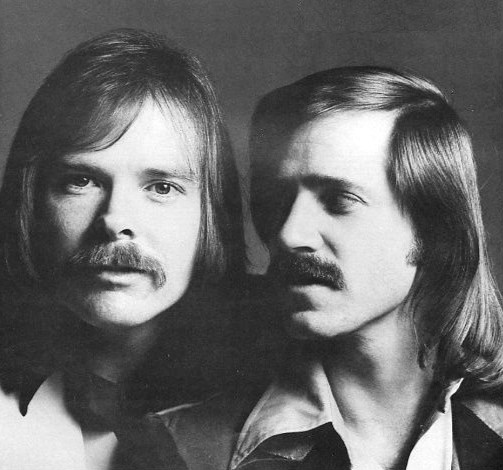
There are songs that arrive with a bang, and then there are songs that seem to drift in through an open window. “I’d Really Love to See You Tonight” belongs firmly in that second group. Released in 1976 by England Dan & John Ford Coley, it became one of those records that radio listeners instantly recognise by feel as much as by sound: gentle acoustic guitar, warm harmonies, and a lyric that turns a casual late-night call into something unforgettable.
What makes the song so enduring is its balance. It is romantic without being overblown, breezy without feeling slight, and polished without losing its human touch. Nearly fifty years on, it still captures a very specific mood: the glow of evening, the uncertainty of young love, and the easy-going sophistication that defined a large part of mid-1970s pop.
A song that sounded like a conversation
The writer behind the hit
Although closely associated with England Dan & John Ford Coley, “I’d Really Love to See You Tonight” was written by Parker McGee, a gifted songwriter whose work fit perfectly into the mellow, melodic lane that flourished in the decade. McGee had a knack for writing songs that sounded natural, almost offhand, while being carefully structured underneath.
That is one of the clever secrets of this record. The lyric feels disarmingly simple. It does not promise forever, and it does not lean on grand declarations. In fact, one of its most memorable lines is almost comically modest: “I’m not talking about moving in”. That plainspoken quality is exactly what gives the song its charm. It sounds like real speech shaped into melody.
McGee reportedly wrote the song with that conversational intimacy intact, and the duo understood immediately how much power there was in not overselling it. Instead of turning it into a dramatic ballad, they let it breathe.
Why it fit England Dan & John Ford Coley so well
By the time the song came their way, England Dan Seals and John Ford Coley had already been building a reputation for smooth, melodic soft rock with strong harmonies. The pair, both from Texas, had a musical chemistry that made them ideal interpreters of material like this. Dan Seals brought a silky, relaxed lead vocal, while Coley added instrumental texture and vocal support that helped create the duo’s unmistakable sound.
They were especially good at songs that felt intimate rather than theatrical. That quality made them perfect for a record built on understatement. The performance never pushes too hard. Instead, it invites the listener in.
Inside the studio
A polished production with a light touch
The song was produced by Kyle Lehning, who played a major role in shaping England Dan & John Ford Coley’s recordings during their most successful period. Lehning had an ear for clarity and atmosphere, and on this track he created a setting that feels soft-edged but precise. Nothing is crowded. Every instrument has room, every vocal line lands cleanly, and the arrangement supports the lyric rather than overpowering it.
That was no small achievement in 1976, when popular music could be densely layered or heavily orchestrated. Lehning chose restraint. The result is one of the reasons the record has aged so gracefully. It sounds unmistakably of its time, yet not trapped by the production fashions of the era.
The musicians and arrangement
The recording leans on the ingredients that made so much mid-70s adult pop and soft rock so appealing:
- Acoustic guitar providing the song’s gentle pulse
- Electric piano and soft keyboard textures adding warmth
- Subtle rhythm section work keeping the record moving without calling attention to itself
- Close harmonies giving the chorus its glow
As with many Los Angeles-influenced pop productions of the time, the magic lies less in flashy solos than in ensemble feel. Session players and studio professionals helped give the song its polished, radio-ready finish, even if the record’s personality remained rooted in the duo’s easy vocal blend.
One of the most appealing things about the arrangement is how it mirrors the lyric. The song does not rush, so the band does not rush. It unfolds with the same calm confidence as someone placing an evening phone call and hoping for the right answer.
“Hello, yeah it’s been a while…” may be one of the most instantly scene-setting openings of the decade.
That opening line drops the listener straight into the moment. No dramatic setup, no poetic fog, just a voice on the line. It is almost cinematic in its simplicity.
Climbing the charts
A major pop breakthrough
When “I’d Really Love to See You Tonight” was released in the summer of 1976, it connected quickly with radio audiences. In the United States, it reached No. 2 on the Billboard Hot 100, held out of the top spot but still becoming the duo’s biggest mainstream pop hit. It also performed strongly on the Easy Listening chart, where its mellow sophistication made it a natural fit.
The single was a commercial turning point for England Dan & John Ford Coley. While they would go on to have other well-loved hits, this was the record that truly established them with a mass audience. It crossed between pop radio and adult contemporary programming with ease, giving them broad appeal at a time when radio formats were becoming more defined.
Why listeners responded
Part of the song’s success came from timing. In 1976, the charts were wonderfully crowded: disco was rising, singer-songwriters remained strong, soul was evolving, and soft rock was becoming one of the dominant sounds on FM and AM radio alike. This song landed in exactly the right place. It was modern and polished, but also accessible and emotionally direct.
Listeners could hear a little of the California soft-rock sheen that was in the air, yet the record never felt anonymous. Its lyric was too specific for that, and the duo’s delivery gave it personality. It felt like a private little story somehow broadcast to millions.
The sound of its moment
Soft rock at its peak
To understand the song’s place in music history, it helps to hear it as part of a larger mid-1970s movement. This was an era when melody, vocal blend, and tasteful studio craft carried enormous weight. Artists such as Seals and Crofts, America, Hall & Oates in their smoother moments, and various West Coast-adjacent acts were making records that valued atmosphere as much as hooks.
“I’d Really Love to See You Tonight” sits comfortably in that world, but it also stands out because of its emotional scale. It is not about heartbreak in the epic sense, and it is not a declaration of eternal devotion. It is about possibility. That smaller emotional canvas made it feel fresh.
There is also something distinctly 1970s about its emotional honesty. The song is careful, casual, and slightly guarded. It does not pretend certainty. That restraint made it feel grown-up, which was a key ingredient in the era’s best soft rock.
Radio gold by design
This was the kind of track that thrived on radio because it created atmosphere within seconds. A listener did not need to know the artist or album. The opening guitar and vocal did the work immediately. On an evening drive, through a bedroom radio speaker, or on a car stereo at low volume, it felt companionable.
That radio friendliness helped turn the song into a long-term favourite. It was not just a hit in the moment; it became part of the fabric of classic pop programming for decades afterward.
Stories, quirks and memorable details
The famous misunderstood lyric
One of the song’s most talked-about details is the line “I’m not talking about moving in”. For some listeners, it has always landed as unexpectedly funny in the middle of such a romantic record. But that is part of what makes the lyric memorable. It cuts through sentimentality with a touch of realism.
Rather than weakening the mood, it strengthens it. The song becomes believable because the speaker is not making impossible promises. He is simply asking for a meeting, and that modesty gives the record its distinctive personality.
A song that felt effortless, but was carefully built
Like many great soft-rock records, this one can sound so natural that it risks being underestimated. In truth, songs this relaxed are often the hardest to make. If the vocal is too polished, the intimacy disappears. If the arrangement is too sparse, the record feels empty. If it is too lush, the lyric loses its conversational spark.
England Dan & John Ford Coley, Parker McGee, and Kyle Lehning found the balance beautifully. That is why the song still sounds easy in the best sense: not lazy, but graceful.
Why it still matters
An enduring legacy on radio and beyond
Decades later, “I’d Really Love to See You Tonight” remains the signature song for England Dan & John Ford Coley in the minds of many listeners. It continues to appear on classic hits, soft rock, and yacht rock-adjacent playlists, and it has never really left radio’s memory. Its afterlife has been strengthened by compilation albums, nostalgic programming, and the simple fact that it still sounds good when it comes on unexpectedly.
The song also helped define the duo’s legacy. Dan Seals would later find major success in country music, while John Ford Coley remained closely linked to the soft-rock era that made the pair famous. But this recording remains their shared calling card: elegant, inviting, and instantly recognisable.
The lasting appeal of understatement
Perhaps the real legacy of the song is that it reminds us how powerful understatement can be. In a pop world often drawn to extremes, this record wins by sounding human. It does not shout. It smiles. It does not demand attention. It earns affection.
That may be why it still feels so good to hear today. It captures a mood that never goes out of style: the hopeful pause before an evening begins, the quiet thrill of reaching out, and the possibility that a simple invitation might change everything.
Some songs explode out of the speakers. “I’d Really Love to See You Tonight” simply glows. And sometimes, that is even better.