Why Ace Still Sounds Effortless
Why we still play this is simple: Ace made sophistication sound easy. Beyond How Long, there is a terrific band story here, full of seasoned musicians, sly songwriting, and a groove that still feels irresistible on the radio.
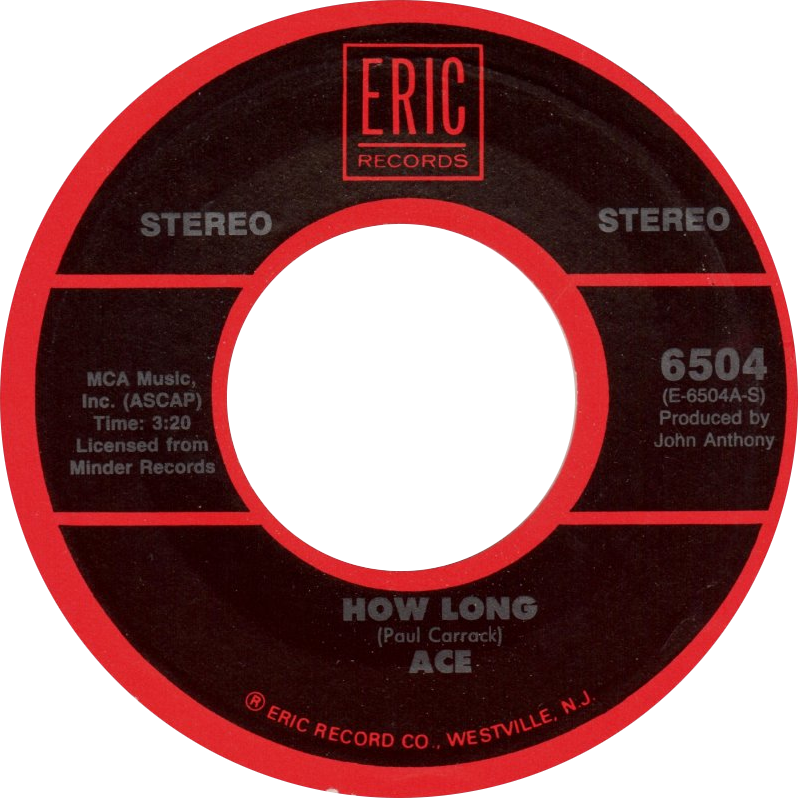
Some records do not need to shout to last. They just slip onto the airwaves, settle into the room, and suddenly everybody is singing along. That is the magic of Ace, the British band best known for the wonderfully laid-back 1974 hit How Long. For many listeners, that song is the doorway in. But spend a little more time with Ace, and you find a group of superb musicians, sharp songwriters, and one of the most quietly influential sounds of the mid-1970s.
There is something especially satisfying about revisiting Ace on classic hits radio. Their music feels easygoing without being slight, polished without losing its human touch. Behind the relaxed groove was a band full of seasoned players who had already spent years learning the craft the hard way, in clubs, on the road, and in the company of other ambitious musicians.
Where Ace began
Ace came together in London in the early 1970s, but the roots of the band stretched across the busy British pub-rock scene, a movement that prized strong songs, tight playing, and a direct connection with live audiences. Before Ace took shape, several of its members had already built up serious experience in groups that never quite became household names but mattered enormously to the musicians who heard them.
The central figure was singer, songwriter, and guitarist Paul Carrack, whose soulful voice would become the band’s calling card. Born in Sheffield, Carrack grew up in a musical environment and developed an early feel for melody, rhythm, and emotional phrasing. He was one of those artists who seemed to understand instinctively that a song does not need vocal acrobatics to move people. Sometimes a conversational line, sung with the right amount of ache, is far more powerful.
Before Ace, Carrack had played with the band Warm Dust and then with Roxy Music-connected circles and other working groups on the scene. He was not arriving as a manufactured frontman. He had done the miles, learned the discipline, and sharpened his songwriting in real time. That mattered.
The other key members of Ace included Alan King on vocals and guitar, Terry “Tex” Comer on bass, Fran Byrne on drums, and Phil Harris on guitar. Together, they formed a band with deep musical chemistry. They were not chasing glamour. They were chasing feel.
That pub-rock background shaped Ace in important ways. Their songs had groove, but they also had restraint. Their arrangements sounded lived-in rather than overworked. You can hear the influence of American soul, rhythm and blues, and country-rock in their records, but Ace never sounded like imitators. They took those ingredients and turned them into something breezy, elegant, and unmistakably their own.
The breakthrough that changed everything
Every great radio band seems to have that one moment when everything clicks. For Ace, it came with How Long, released in 1974 on their debut album Five-A-Side. It is one of those songs that listeners often think they know instantly, even if they cannot immediately name the band. The bass line glides in, the groove settles, and Carrack’s vocal does the rest.
How Long became a major international hit, reaching the Top 20 in both the United Kingdom and the United States, and climbing especially high on American charts. That transatlantic success gave Ace a profile many pub-rock bands never achieved. Suddenly, this understated group of musicians had produced one of the defining soft-rock grooves of the decade.
One of the most enduring stories about the song is also one of the most misunderstood. Many listeners assumed How Long was about romantic betrayal. In fact, it was reportedly inspired by a band dispute involving a bass player who had been moonlighting with another group. That little behind-the-scenes detail gives the lyric an extra twist. What sounds like a wounded love song is, in essence, a sharply observed piece of band business dressed up in irresistible melody.
“How long has this been going on?” became one of those lines that lived a double life: intimate enough to feel personal, broad enough to belong to everyone.
That is part of what made the song such a classic. It worked on several levels at once. Casual listeners could simply enjoy the tune. More attentive fans could appreciate the craftsmanship underneath. Musicians, meanwhile, heard a masterclass in economy: no wasted notes, no clutter, just groove, balance, and taste.
Beyond the big hit
Of course, one challenge for any band with a signature song is convincing the world there is more to hear. In Ace’s case, there absolutely was. Their debut album Five-A-Side remains a rewarding listen, full of supple musicianship and thoughtful songwriting. Tracks such as Sniffin’ About and Rock & Roll Runaway showed that the group had depth beyond the obvious single.
Ace followed with more albums, including Time for Another in 1975 and No Strings in 1977. While they never matched the towering chart impact of How Long, those records developed the band’s sound in appealing ways. There was more polish, more confidence, and still that same easy command of rhythm and melody.
For fans who dig a little deeper, this is where Ace becomes especially rewarding. They were not a novelty built around one lucky tune. They were a proper musicians’ band, capable of subtle arrangements and emotionally intelligent songs. Their catalogue captures a moment when rock, soul, and pop could mingle naturally without anyone feeling the need to force a label onto it.
There is also a pleasing irony in Ace’s story: while the band itself had a relatively short chart life, several of its members, especially Paul Carrack, went on to have long and distinguished careers. Carrack, in particular, would become one of popular music’s most recognisable voices, even if many listeners did not always know his name straight away.
Paul Carrack’s voice at the centre
If Ace had a secret weapon, it was Paul Carrack’s voice. Warm, unhurried, soulful, and entirely believable, it gave the band a personality that set them apart. He did not oversing. He did not perform emotion as if trying to prove something. He simply inhabited songs with remarkable naturalness.
That quality would serve him well long after Ace. Carrack later sang with Squeeze on Tempted, with Mike + The Mechanics on hits including The Living Years and Over My Shoulder, and built a respected solo career of his own. Looking back, Ace now feels like the first major chapter in a much bigger story.
For classic hits listeners, that adds another layer of pleasure. When How Long comes on the radio, you are not just hearing a one-off success. You are hearing the early flowering of one of popular music’s great blue-eyed soul voices, a singer who would quietly turn up in hit after hit across the following decades.
The songs people remember most
There is no question that How Long is the centrepiece of the Ace legacy. It remains their most famous and beloved recording by far, and for good reason. It is smooth without becoming sleepy, catchy without trying too hard, and emotionally ambiguous in a way that keeps listeners coming back.
Still, the band’s appeal is not limited to that one track. Fans of the group often point to a broader set of songs that reveal their range and their knack for understated hooks.
- How Long – the immortal hit, built on a silky groove and one of the most memorable choruses of the 1970s
- Sniffin’ About – a fine example of the band’s relaxed but precise musicianship
- Rock & Roll Runaway – a track that shows their melodic instincts and road-tested confidence
- No Future in Your Eyes – a reminder that Ace could bring tenderness and wistfulness without sounding heavy-handed
- Time Ain’t Long – another glimpse of the band’s blend of soul, pop, and rootsy rock textures
These songs may not all be staples of mainstream radio, but they help explain why Ace still inspires affection among collectors, musicians, and listeners who enjoy exploring just beyond the biggest hits.
The style that made Ace stand out
Ace arrived at a fascinating moment in popular music. The early 1970s had room for many different sounds at once: glam spectacle, singer-songwriter intimacy, heavy rock, funk, country-rock, and sophisticated pop. Ace found a lane of their own by combining several of those elements into something light on its feet.
Their music drew from soul, soft rock, pub rock, and blue-eyed R&B. But labels only tell part of the story. What really defined Ace was their touch. They knew when not to overplay. They left air in the arrangements. Their rhythm section understood groove as something that should invite you in, not overwhelm you.
That is one reason How Long still sounds fresh. It does not feel trapped in a production trend. There are no gimmicks fighting for attention. Instead, you hear balance: bass, drums, guitars, keys, and voice all working together with enviable calm.
In a way, Ace anticipated the appeal of many later adult-pop and yacht-rock favourites, even if they came from a rougher, more pub-based tradition. Their music had sophistication, but it also had roots. That combination has aged beautifully.
Lesser-known facts and backstage colour
One of the most enjoyable things about Ace is that their story is full of the kind of details music fans love. For one thing, the band’s name was short, simple, and memorable, but their musicianship was anything but plain. They were admired by fellow players because they made difficult things sound effortless.
Another interesting point is that Ace’s success in the United States was especially significant. Many British bands found it hard to crack America unless they came with a huge image or a hard-driving rock sound. Ace did it with subtlety. That says a lot about the universal pull of a well-crafted song.
And then there is the afterlife of How Long. Over the years, it has been covered, sampled, referenced, and rediscovered by new generations. It often pops up in films, television, playlists, and radio formats that value timeless songwriting. Songs survive because they adapt to new settings, and How Long has done that with ease.
Perhaps the most charming lesser-known truth is this: because the lyric feels so personal, many people still assume they know exactly what it is about. But that uncertainty is part of the fun. The best songs leave room for listeners to bring their own stories, and Ace gave us one of those rare records that feels both specific and universal.
Why Ace still matters on classic hits radio
Classic hits radio thrives on songs that create an instant mood, stir a memory, and reward repeat listening. Ace fits that beautifully. How Long has the kind of opening that makes listeners turn the volume up a little. It is familiar, but never worn out. Cool, but never cold. Smooth, but with enough emotional tension to keep it interesting.
There is also something deeply radio-friendly about Ace’s scale. Not every classic artist needs a giant mythology. Some matter because they captured a feeling perfectly. Ace did exactly that. Their best work reminds us that the 1970s were not only about bombast and spectacle. They were also about finesse, groove, and songs that trusted the listener.
For longtime fans, hearing Ace again can bring back car journeys, late-night radio, summer evenings, and that unmistakable sense of a song becoming part of everyday life. For younger listeners discovering them for the first time, the appeal is just as strong: here is a band that sounds classy, confident, and refreshingly unforced.
And that may be the key to their legacy. Ace never sounded as if they were trying too hard to be remembered. They simply made music with skill, taste, and heart. Decades later, that restraint feels like a strength.
A lasting glow
In the crowded history of classic hits, Ace occupies a special place. They may not have had the longest run at the top, but they gave us one of the era’s most enduring singles and a body of work that still rewards anyone willing to listen beyond the headline track. Their blend of soulfulness, craftsmanship, and easy confidence remains enormously appealing.
Most of all, Ace reminds us that sometimes the coolest records are the ones that never strain for effect. They just arrive, lock into the groove, and stay there for decades.
That is why we still play them. And why, every time How Long drifts out of the speakers, it feels less like a relic and more like an old friend dropping by with perfect timing.