Detroit, a Wedding Ring, and Three Minutes of Heartbreak
As the single climbed the charts in 1970, listeners were singing along to a bright, elegant chorus before fully realising just how bruised the story was. Freda Payne’s Band of Gold turned a wedding ring into one of pop-soul’s most unforgettable symbols of heartbreak.
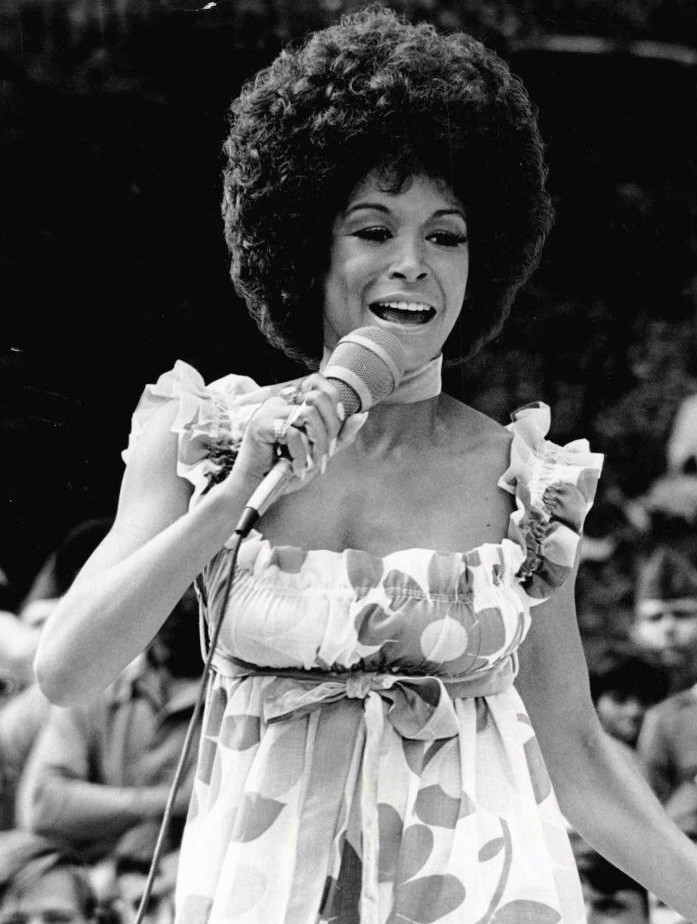
There is something unforgettable about the opening pull of Band of Gold. Before Freda Payne fully steps into the story, the record already feels charged with emotion: bright, urgent, elegant, and just a little mysterious. Released in 1970, it became one of those songs that seemed to leap out of the radio speaker and stay there, its polished groove carrying a tale far more troubled than its gleaming arrangement first suggests.
For Classic Gold listeners, Band of Gold is one of those records that captures a fascinating moment in popular music. Soul was stretching in new directions, pop was becoming more sophisticated, and producers were learning how to package deep feeling inside crisp, radio-friendly singles. Freda Payne landed right in the middle of that moment with a performance that was poised, wounded, and unforgettable.
A song with a sting in its smile
On the surface, Band of Gold sounds almost celebratory. The title itself suggests romance, commitment, and ceremony. But then the lyric turns sharply: here is a bride left emotionally stranded on her wedding night, holding the symbol of marriage while the marriage itself seems to have failed before it has even begun.
That tension is part of what made the song so compelling. It had the bounce and sparkle of a hit single, but the subject matter was unusually daring for mainstream radio. There is heartbreak in it, certainly, but also confusion, embarrassment, and a kind of public loneliness. The song tells a very adult story in a compact, highly memorable way.
Who wrote it?
Band of Gold was written by the celebrated songwriting team of Holland-Dozier-Holland, specifically credited to Eddie Holland, Brian Holland, Lamont Dozier, and collaborator Ron Dunbar. By 1970, Holland-Dozier-Holland were already giants of modern popular music thanks to their extraordinary run at Motown, where they had helped shape hits for the Supremes, the Four Tops, and Martha and the Vandellas.
After leaving Motown, they launched their own ventures, including the Invictus and Hot Wax labels. Those labels became a new outlet for the team’s gift for marrying pop precision with soul feeling. Band of Gold was one of the clearest examples of how powerful that formula still was outside the Motown system.
The lyric’s central idea was bold enough to spark conversation immediately. For many listeners, the implication was that the bride’s husband could not consummate the marriage, though the song leaves just enough unsaid to keep the drama hanging in the air. That ambiguity gave the record an extra charge. People heard it, sang along, and then often paused to think, wait a moment, what exactly is this song saying?
How Freda Payne made it her own
Great songs need the right voice, and Freda Payne brought exactly that. Born in Detroit, she had a rich musical background that included jazz, theatre, and sophisticated vocal pop. She was not simply a singer with a big note; she was a stylist, someone who understood how to shape a line and suggest emotion without overplaying it.
That mattered enormously on Band of Gold. The song needed vulnerability, but also control. Payne delivers both. Her vocal moves from disbelief to ache to quiet insistence, and she does it with a smoothness that makes the performance feel natural rather than theatrical. She sounds hurt, but never helpless. That balance gave the record much of its staying power.
The production team behind the hit
The record was produced within the Holland-Dozier-Holland orbit for the Hot Wax label, with the team carefully constructing a sound that felt current, polished, and radio-ready. Their productions often had a distinctive snap: firm rhythm, bright melodic hooks, and arrangements that kept the drama moving without crowding the singer.
Band of Gold is a masterclass in that approach. Listen closely and you can hear how every element serves the story:
- The rhythm section keeps the song driving forward, almost in contrast to the emotional paralysis in the lyric.
- The strings and backing textures add elegance, giving the record a sheen that helped it cross from soul audiences to pop listeners.
- The backing vocals act almost like emotional echoes, reinforcing the lead without overwhelming it.
- The arrangement builds tension beautifully, allowing Payne’s voice to remain the focal point.
Like many Detroit-connected productions of the period, the record benefited from a deep bench of expert studio musicians. While session credits from that era were not always documented in the way modern listeners might expect, the playing reflects the discipline and finesse of top-tier professionals who knew exactly how to make a single feel alive in under three minutes.
A notable behind-the-scenes twist
One of the most intriguing stories around Band of Gold is that Freda Payne herself was not especially enthusiastic about the song at first. She reportedly had reservations about the material, particularly its unusual and slightly risky subject matter. It is easy to understand why. In 1970, this was not a routine lyric for a mainstream female vocalist to deliver.
Yet that hesitation may have helped the final performance. Payne approached the song with seriousness rather than gimmickry. Instead of leaning into shock value, she treated it as an emotional story, which is exactly why it still works. The record never feels like a novelty. It feels human.
Climbing the charts in 1970
Once released, Band of Gold moved quickly from strong single to major international hit. It became Freda Payne’s signature recording and one of the defining releases from the Hot Wax label.
Commercially, the song performed impressively on both sides of the Atlantic. In the United States, it reached No. 3 on the Billboard Hot 100 and also made a strong showing on the soul chart. In the United Kingdom, it went all the way to No. 1, where its mixture of emotional drama and crisp production clearly struck a chord with a huge audience.
That chart success tells an important story. Band of Gold was not confined to one musical lane. It appealed to soul fans, pop listeners, and radio programmers looking for something both stylish and memorable. It had enough sophistication for adult audiences and enough hook for younger listeners. That crossover strength was one of the great prizes in 1970, and this record achieved it brilliantly.
Why radio loved it
Programmers could hear immediately that the song had all the ingredients of a hit:
- A striking title
- An instantly memorable chorus
- A strong central vocal
- A production that sounded modern and clean
- A lyric intriguing enough to spark conversation
That final point mattered more than ever. Radio has always loved records that make listeners lean in. Band of Gold did exactly that.
A perfect fit for a changing musical era
The year 1970 was a fascinating hinge point in popular music. The classic 1960s hit-factory model was evolving, but its craftsmanship had not disappeared. At the same time, soul music was broadening into more personal, more dramatic, and sometimes more socially aware territory. Pop records were becoming richer in arrangement and bolder in theme.
Band of Gold sits beautifully in that transition. It carries the discipline of 1960s songwriting craft, especially in its structure and melodic economy, but it also points toward the more emotionally layered storytelling that would become increasingly common in the 1970s.
It also reflects Detroit’s enormous influence on the era. Even outside the formal Motown machine, the city’s musical DNA was everywhere: sharp rhythm patterns, elegant orchestration, and songs built to connect instantly. Holland-Dozier-Holland understood that language better than almost anyone, and Freda Payne delivered it with class.
Legacy, covers, and lasting fascination
More than half a century later, Band of Gold still stands out because it refuses to be only one thing. It is a pop hit, a soul record, a miniature drama, and a conversation piece all at once. That combination has helped it endure.
The song has been revisited and covered by other artists over the years, proof of its durable structure and emotional pull. But the Freda Payne version remains definitive. Her recording has the right blend of polish and ache, with just enough restraint to make the heartbreak feel believable.
Why it still resonates
Part of the song’s legacy lies in its unusual perspective. Popular music has always been full of love songs and breakup songs, but Band of Gold occupies a more awkward, more revealing emotional space. It captures disappointment at the very moment where joy was supposed to begin. That is a striking idea in any era.
It also remains a wonderful example of how much storytelling can be packed into a hit single. In just a few minutes, the song gives us character, setting, conflict, and emotional aftermath. That is songwriting craft of a very high order.
“Now that you’re gone, all that’s left is a band of gold…”
That line still lands because it reduces a whole broken promise to one small object. A ring becomes a symbol not of union, but of absence. It is simple, vivid, and devastating.
The record that gave Freda Payne her signature moment
Freda Payne had a wider career than one hit, but Band of Gold became the performance with which she will always be most closely associated. That is not a limitation; it is a testament to how completely she inhabited the song. Many singers record hits. Fewer become inseparable from them.
For listeners today, the pleasure of Band of Gold is twofold. First, it is simply a terrific record: catchy, elegant, emotionally direct. Second, it opens a window onto a rich musical moment when brilliant songwriters, expert producers, and distinctive vocalists could still create something that felt crafted by hand yet destined for mass radio.
That is why the song still sounds so good spinning through the speakers. It carries the shine of pop craftsmanship, the feeling of soul, and a story sharp enough to catch the heart on every listen. A wedding ring, a bruised voice, a Detroit-born production team, and one of 1970’s most unforgettable choruses: sometimes that is all it takes to make history.