Channel 5 at Midnight — Why Kojak Still Pops Off the Screen
Why does Kojak still matter on classic hits radio? Because Telly Savalas brought the same unmistakable cool as a great 1970s single — stylish, soulful, and instantly recognisable.
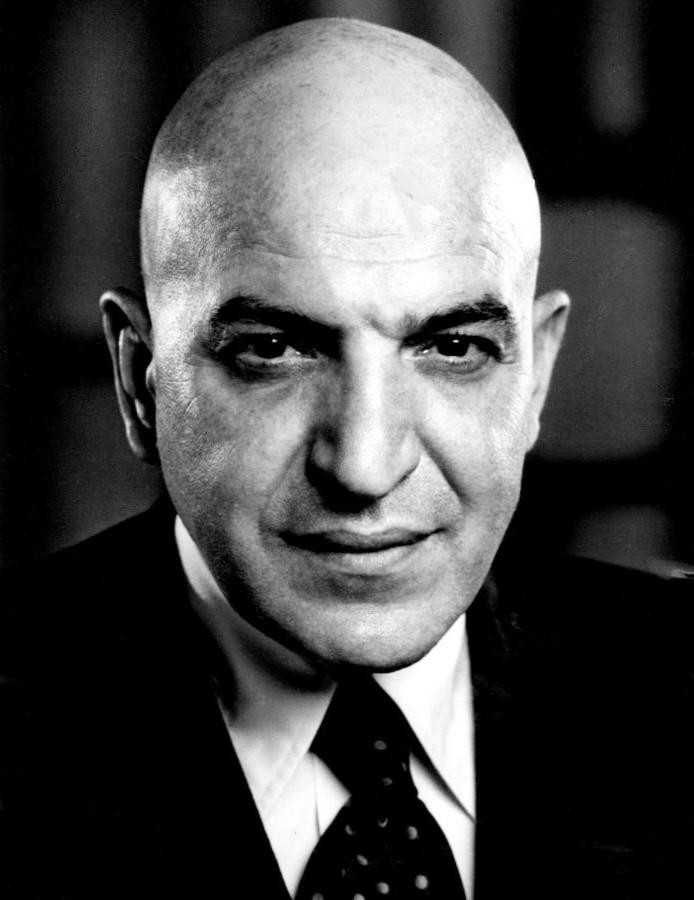
Some television detectives solve crimes. Kojak walks into the room and owns it before he says a word. That was the magic of Telly Savalas in the hit 1970s crime series: a gleaming bald head, a perfectly timed squint, a voice like gravel rolled in velvet, and enough charisma to light up a city block after dark.
For many viewers, Kojak was more than a police drama. It was a mood. Neon reflecting on wet streets. The hum of New York. Sharp suits, sharper dialogue, and a lead actor who turned every pause into an event. Decades later, it still feels fresh in that unmistakable classic television way — stylish, streetwise, and impossible to confuse with anything else.
A detective series with a signature all its own
When Kojak arrived in 1973, television already knew the police procedural. Audiences understood the basics: a crime, an investigation, a suspect list, a tense final act. What made this series stand out was not the structure. It was the flavour.
Set in New York City, Kojak had grit, but it also had style. The city was not just a backdrop; it was part of the rhythm of the show. Busy precinct rooms, anonymous apartment buildings, late-night diners, tense hallways, and rain-slicked streets all gave the series a lived-in pulse. It felt urban in the truest sense: crowded, fast-moving, and full of personalities.
At the centre was Lieutenant Theo Kojak, a detective who could be hard, funny, compassionate, and intimidating sometimes all within the same scene. That balance mattered. He was not a cold puzzle-solver. He was deeply human, and Savalas made sure you felt that.
Telly Savalas — the coolest man in the precinct
Telly Savalas did not merely play Kojak. He built him into one of television’s great character performances. With his measured delivery and natural authority, he made even the shortest line memorable. He understood something that many actors never quite master: stillness can be more powerful than shouting.
Of course, there were the famous details. The lollipops. The tailored clothes. The catchphrase,
Those touches could have become gimmicks in lesser hands. With Savalas, they became part of a complete character. The lollipop, often mentioned as a way to help him stop smoking, gave Kojak an offbeat trademark. The catchphrase, meanwhile, landed with a wink — charming one moment, disarming the next.“Who loves ya, baby?”
What really sold the performance, though, was the emotional intelligence underneath the swagger. Savalas played Kojak as a man who had seen plenty of darkness but had not let cynicism hollow him out. He could stare down a crook, comfort a witness, needle a colleague, and still carry a trace of sadness in his eyes. That complexity gave the series its staying power.
Why the performance still lands today
- Presence: Savalas had the rare ability to command attention without seeming to force it.
- Humour: Kojak could cut through tension with a dry line at exactly the right moment.
- Warmth: Beneath the tough exterior was genuine empathy.
- Style: He looked and sounded like no one else on television.
Behind the scenes of a television phenomenon
One of the pleasures of revisiting Kojak is seeing how confidently it was assembled. This was a show made by people who knew exactly what kind of energy they wanted. The series grew out of the television film The Marcus-Nelson Murders, which introduced the character and proved there was room for a tougher, more psychologically aware detective story on the small screen.
The weekly series that followed benefited from strong writing and a dependable supporting cast. Dan Frazer brought steady authority as Captain McNeil, Kevin Dobson gave us the eager and likeable Detective Crocker, and George Savalas — Telly’s brother — added memorable texture as Detective Stavros. Their chemistry helped the precinct feel believable. It was not just Kojak delivering monologues to a room full of extras. It felt like a working team, with loyalties, frustrations, and long days already behind them before each episode even began.
There is also something worth celebrating in the show’s visual language. Kojak did not aim for glossy perfection. It embraced the rough edges of the city and of the era. That gave it a documentary-like immediacy at times, while still leaving room for the dramatic punch of prime-time television. In other words, it looked cool because it was not trying too hard to look cool.
The New York atmosphere that made every episode sing
Classic hits radio listeners know this feeling well: some records do more than play, they create a place. Kojak does something similar. Put on an episode and suddenly you are in 1970s New York, where every doorway seems to hold a secret and every conversation sounds like it matters.
The city in Kojak is not romanticised into fantasy. It is busy, bruised, and unpredictable. Yet that is exactly why the series remains so compelling. The setting gives the stories weight. Crimes feel consequential because the world around them feels real. You can almost hear the traffic, the police radios, the footsteps in stairwells.
That atmosphere also made the show a perfect companion piece to the music of the decade. If 1970s soul, rock, and late-night radio had a television cousin, Kojak would be in the family. It carried the same mix of toughness, personality, and unmistakable urban cool.
A style file worth revisiting
Part of the nostalgia, naturally, is visual. Kojak is packed with period detail that now feels wonderfully evocative:
- Wide lapels and beautifully cut suits
- Office interiors with all the beige, brown, and brass the 1970s could offer
- Big city locations that give the series scale
- Cars, street scenes, and signage that now serve as a time capsule
But unlike some nostalgia pieces, this show is not enjoyable only because it is old. The style supports the drama rather than distracting from it.
More than a catchphrase
It is easy to reduce a famous television character to the things people imitate at parties. Kojak had the lollipop. He had the line. He had the look. Yet the reason the show endured is much deeper than that.
At its best, Kojak was interested in power, class, fear, corruption, and the emotional cost of violence. It could be brisk and entertaining, yes, but it was not lightweight. The scripts often gave Savalas room to show outrage, tenderness, and fatigue — all the shades that turn a popular character into a memorable one.
That mix is a big part of why the series still works for modern viewers. It offers the pleasures of a classic procedural while carrying a little more emotional weather than you might expect. You come for the cool factor. You stay because the lead performance has genuine soul.
Why Kojak belongs on a classic hits blog
Because some stars feel like songs you never tire of. Telly Savalas had that quality. He was instantly recognisable, full of character, and impossible to mistake for anyone else. Kojak fits the classic hits spirit because it delivers the same thrill as a great familiar record: the opening notes arrive, and you know exactly why you loved it in the first place.
There is also a shared confidence between the best music of the 1970s and this series. No rushing, no over-explaining, no desperate need to impress. Just craft, personality, and timing. Kojak trusts the audience to lean in, and that confidence gives it enduring appeal.
So if you have not visited the precinct in a while, this is your cue. Pour a late-night coffee, dim the lights, and spend an hour with one of television’s most magnetic detectives. You will get the crime story, certainly. But you will also get atmosphere, attitude, and a masterclass in star power.
And really, that is what makes Kojak special. Not just that it was a hit, but that it still feels alive — like a favourite record spinning after midnight, rich with personality and impossible to turn off.