Stevie Wonder Lights Up the Room
A teenage prodigy at the microphone, a grin in his voice, and a room suddenly alive with rhythm: Stevie Wonder has been creating moments like that for more than half a century. His songs still bring warmth, groove and real emotion to classic hits radio.
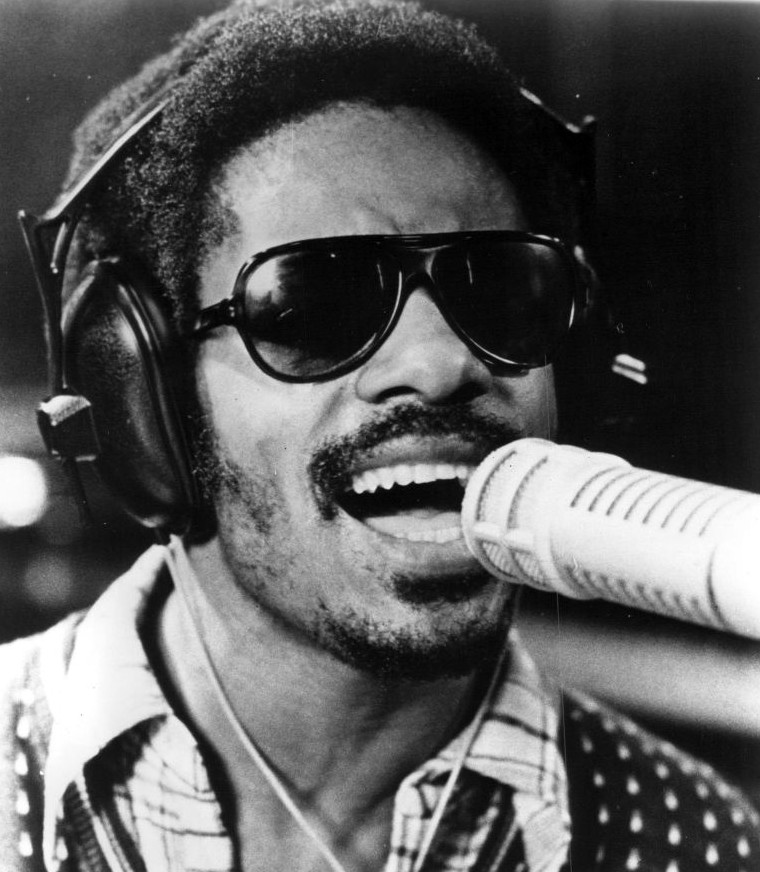
Picture a young musician at the piano, smiling as if he can already hear tomorrow. That image fits Stevie Wonder perfectly. Few artists have brought so much joy, invention, soul and sheer musical brilliance to popular music, and even fewer have done it across so many decades without losing their sense of wonder. For classic hits radio listeners, Stevie is not simply a hitmaker. He is one of those rare artists whose songs seem to brighten the air the moment they begin.
A child prodigy with a world of sound in his head
Stevie Wonder was born Stevland Hardaway Judkins in Saginaw, Michigan, on 13 May 1950, and later moved with his family to Detroit. Born prematurely, he lost his sight as an infant, but what might have been seen by others as a limitation never defined the scale of his imagination. Music became his language early on, and by childhood he was already teaching himself instruments with astonishing speed.
He sang in church, played harmonica, piano and drums, and showed the kind of instinct that cannot really be taught. There is something almost magical in the stories about the young Stevie: a child small in size but huge in sound, moving from one instrument to another as if he had been doing it for a lifetime. Detroit, of course, was a perfect place for talent like that to be discovered. The city was alive with rhythm and ambition, and Motown was becoming the beating heart of a new era in popular music.
Stevie was still a boy when he auditioned for Motown. Berry Gordy signed him to the label’s Tamla imprint, and he was given the name “Little Stevie Wonder.” The nickname captured the amazement people felt watching him perform. Here was a child with the energy of a born entertainer and the instincts of a seasoned musician. It did not take long for the wider world to hear it too.
The breakthrough that turned Little Stevie into a star
His first major explosion came with Fingertips, recorded live and released in 1963. It is still one of the great early moments in pop history: raw, exciting, full of crowd noise and youthful electricity. When Fingertips Pt. 2 reached number one in the United States, Stevie Wonder became the youngest artist ever to top the chart. He was just 13 years old.
That early success could have turned him into a novelty act, but Stevie Wonder had far bigger plans. As the 1960s moved on, he matured into a songwriter and recording artist of remarkable depth. Motown’s hit-making machine helped shape his early career, but he increasingly wanted creative control. That desire would become one of the most important turning points in his life.
By the early 1970s, he had negotiated a new contract that gave him more artistic freedom. What followed was one of the most extraordinary runs any artist has ever had. Albums such as Music of My Mind, Talking Book, Innervisions, Fulfillingness’ First Finale and Songs in the Key of Life did not just produce hits. They redefined what mainstream soul and pop could be.
This was Stevie Wonder in full command: writing, producing, arranging, singing and playing multiple instruments, while also embracing synthesizers in a way that felt warm and human rather than cold or mechanical. He made records that were adventurous yet instantly accessible, deeply personal yet hugely popular. That balance is a rare gift.
The songs that never seem to age
Stevie Wonder’s catalogue is full of songs that feel woven into everyday life. Some are celebratory, some romantic, some reflective, and some quietly revolutionary. All of them carry his unmistakable touch.
- Signed, Sealed, Delivered I’m Yours bursts out of the speakers with pure happiness. It is one of those songs that sounds like a grin set to music.
- Superstition is all groove, swagger and sharp-edged funk, driven by one of the most famous keyboard riffs in popular music.
- You Are the Sunshine of My Life remains one of the warmest love songs ever recorded, intimate and glowing.
- Higher Ground crackles with urgency, rhythm and spiritual energy.
- Living for the City shows Stevie as a storyteller with social vision, painting a vivid portrait of struggle and injustice.
- I Wish turns childhood memories into irresistible funk.
- Sir Duke is a joyous salute to the greats who shaped him, packed with brass and bounce.
- Isn’t She Lovely captures the delight of new fatherhood with infectious affection.
- Master Blaster (Jammin’) reflects his admiration for reggae and Bob Marley while sounding completely like Stevie.
- I Just Called to Say I Love You became a global smash, proving he could still dominate the charts in the 1980s with a simple, heartfelt melody.
That range is part of what makes him so essential to classic hits radio. One song can light up the room at a party; the next can stop listeners in their tracks with its honesty. Stevie Wonder records reward repeat listening because there is always something happening inside them: a rhythmic twist, a vocal flourish, a harmonic surprise, a line that suddenly lands harder than it did before.
Behind the scenes in the classic album years
The 1970s are often seen as Stevie Wonder’s imperial period, and for good reason. This was the era when he fused soul, pop, funk, jazz and electronic experimentation into a sound that was entirely his own. He worked closely with innovative collaborators, including Malcolm Cecil and Robert Margouleff, whose synthesizer expertise helped Stevie shape those rich, futuristic textures heard on records like Superstition and Living for the City.
Yet for all the technology involved, the records never lost their human heartbeat. Stevie could make a clavinet snap like a live wire, then turn around and deliver a vocal so tender it felt like a private conversation. That contrast is one reason his albums from this period still feel fresh.
Then came Songs in the Key of Life in 1976, often spoken of with real reverence by musicians and fans alike. It is a vast, generous double album that somehow feels both ambitious and welcoming. There are love songs, street scenes, celebrations, reflections and moments of pure fun. Many artists make a classic album. Stevie made one that feels like an entire musical universe.
“Music is a world within itself, with a language we all understand.”
That line from Sir Duke is more than a lyric. It is practically a mission statement. Stevie Wonder’s music crosses generations, borders and backgrounds because it speaks in emotion as much as melody.
A style all his own
Trying to place Stevie Wonder in a single category is almost impossible, and that is part of the thrill. He is rooted in soul, certainly, but he also belongs to funk, pop, rhythm and blues, gospel and jazz. His harmonica playing is instantly recognisable. His keyboard work can be playful, percussive, elegant or explosive. His singing moves easily from a whisper to a joyful cry.
He also has a composer’s ear for structure. Even his most radio-friendly hits often contain sophisticated chord changes and rhythmic ideas that other writers would never dare put into a mainstream pop song. Yet with Stevie, the complexity never feels like showing off. It feels natural, almost effortless.
There is also his emotional range. Some artists specialise in heartbreak, others in celebration. Stevie does both, and much more besides. He can sound mischievous, romantic, spiritually searching, politically engaged and deeply compassionate, sometimes all within the same album.
Stories, surprises and lesser-known touches
One of the most charming things about Stevie Wonder is that, despite his legendary status, he has always projected warmth and curiosity. Fellow musicians often talk about his generosity, his humour and his restless creativity.
A famous story behind Superstition involves guitarist Jeff Beck. The song emerged from a session where Beck and Stevie were working together, and the central riff grew out of that creative exchange. Stevie ended up recording and releasing his version first, and it became one of his signature songs. It is a reminder of how quickly inspiration could strike around him.
Another important part of his legacy goes beyond recording. Stevie played a major role in the campaign to make Martin Luther King Jr. Day a national holiday in the United States. His song Happy Birthday was not just a celebratory tune; it was part of a real civic effort. That blend of artistry and activism gave extra weight to his public voice.
He has also written for and collaborated with many other artists over the years, and his influence reaches far beyond those direct partnerships. Generations of musicians in soul, pop, R&B, funk and beyond have borrowed from his melodic instincts, keyboard textures, rhythmic drive and fearless blend of accessibility and innovation.
Why Stevie Wonder still means so much on classic hits radio
There are certain artists who fit radio beautifully because they understand how a song can create an instant mood. Stevie Wonder is one of the greatest examples. Within seconds, his records can sound festive, romantic, thoughtful or full of movement. They connect quickly, but they also linger.
For listeners, that means Stevie songs often carry memories with them. Signed, Sealed, Delivered I’m Yours might bring back a wedding dance floor. I Wish can feel like summer with the windows down. You Are the Sunshine of My Life may remind someone of a first love, while Sir Duke arrives like a burst of brass and sunshine on an ordinary afternoon.
Classic hits radio thrives on songs that are instantly recognisable but never worn out. Stevie Wonder’s music has that rare durability. It is familiar without becoming dull, sophisticated without becoming distant. His records still sound alive because they were built on real musicianship, emotional truth and rhythmic invention.
He also matters because his body of work reflects the full promise of popular music. It can entertain, comfort, challenge and unite people. On radio, that matters enormously. A Stevie Wonder song does more than fill a slot between records. It lifts the energy of the whole hour.
A legacy written in joy, craft and heart
Stevie Wonder’s place in music history is secure, but his songs do not feel like museum pieces. They still move, sparkle and breathe. That may be the most impressive thing of all. He created records with technical brilliance and deep feeling, yet they remain wonderfully open-hearted.
For classic hits listeners today, Stevie represents the very best kind of enduring artist: one whose music can soundtrack a celebration, deepen a quiet moment, or simply make the day feel brighter. His catalogue is not just a list of famous songs. It is a living reminder of how joyful, imaginative and generous popular music can be.
And that is why, every time Stevie Wonder comes on the radio, it still feels like an event. The groove arrives, the voice follows, and for the next few minutes the world sounds a little better.