
Debbie Harry Never Followed the Rules

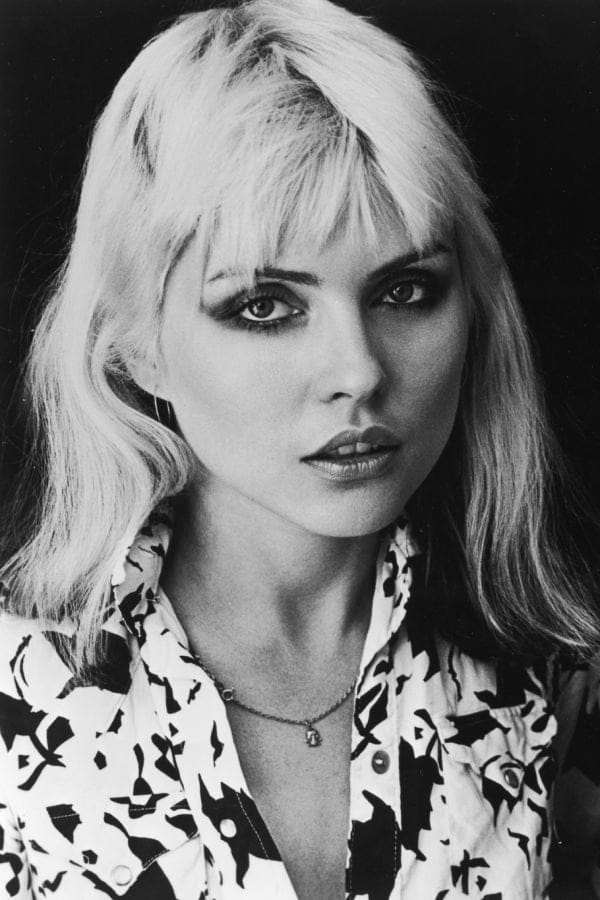
Some artists arrive like a carefully planned campaign. Debbie Harry felt more like a flash of city light: cool, unpredictable, glamorous, funny, and much tougher than the surface first suggested. As the magnetic frontwoman of Blondie, she helped turn the restless energy of New York’s downtown scene into global pop, carrying punk attitude into discos, car radios, television screens, and eventually the permanent memory bank of classic hits listeners everywhere.
What makes Harry such a lasting figure is not simply that she fronted a string of unforgettable songs. It is the way she balanced opposites so effortlessly: art-school edge and pop instinct, streetwise grit and movie-star poise, irony and sincerity. Few singers have sounded so detached and so emotionally present at the same time. Fewer still have made reinvention seem so natural.
From New Jersey beginnings to New York reinvention
Deborah Ann Harry was born in Miami in 1945 and adopted as an infant by Richard and Catherine Harry, growing up in Hawthorne, New Jersey. Her early life did not suggest a straightforward path to pop fame. She was bright, observant, and artistically inclined, but the road ahead was anything but polished. After studying at Centenary College, she moved into the wider world and eventually found her way to New York City, where possibility and chaos seemed to live side by side.
Before music took hold, Harry worked a remarkable string of jobs, each one adding a little to the legend. She was a secretary at the BBC’s New York office for a time, worked as a waitress, and even spent a period as a Playboy Bunny. Those experiences gave her a front-row seat to performance, presentation, and the many masks people wear. Long before she became famous, she was already studying image, mood, and survival.
Music drew her in gradually but decisively. In the late 1960s and early 1970s she sang with the folk-rock group the Wind in the Willows, then became part of the Stilettos, a glam-flavoured outfit on the New York club circuit. It was there that she met guitarist Chris Stein, her future creative partner in Blondie and one of the most important figures in her artistic life. Together, they began shaping something that did not fit neatly into one category. In a city full of scenes, they were building a sound that could move between several at once.
CBGB, Blondie, and the breakthrough that changed everything
Blondie formed in 1974, right in the middle of the downtown Manhattan explosion that also produced Television, the Ramones, Talking Heads, and Patti Smith. The club most closely linked with that world, CBGB, has become almost mythical now, but at the time it was a real working room: loud, cramped, exciting, and full of young artists trying to invent tomorrow on very little money.
Blondie stood out quickly. Some of that was Harry’s appearance, of course. With her platinum-blonde hair, direct gaze, and camera-ready cool, she was impossible to ignore. But to reduce her to image is to miss the point entirely. She had timing, wit, and a vocalist’s instinct for contrast. She could deliver a line with sweetness, sarcasm, danger, or dreamy distance, sometimes all in the same song.
The band’s early records built a cult following, especially in Australia and the United Kingdom, before the United States fully caught on. Then came the run that turned Blondie into one of the defining acts of the late 1970s and early 1980s. Parallel Lines in 1978 was the great commercial breakthrough, and it remains one of the era’s landmark albums. It had style, hooks, confidence, and range in abundance.
That record gave the world Heart of Glass, the song that changed the game. Its path to greatness was not entirely smooth. Some punk purists were horrified by Blondie embracing disco elements, but that was exactly what made the track so exciting. Harry and Blondie were not interested in staying inside somebody else’s rulebook. Heart of Glass shimmered with sleek rhythm, cool melancholy, and a vocal performance that floated while still sounding emotionally bruised. It became a major international hit and proved that Blondie could bridge underground credibility and mass appeal.
Just as importantly, they did not stop there. One Way or Another delivered attitude with a grin. Picture This brought romance and sparkle. Dreaming rushed forward with breathless energy. Call Me, created with Giorgio Moroder for the film American Gigolo, became another giant hit and one of Harry’s signature performances: bold, urgent, and impossible to forget. Then there was The Tide Is High, showing the band’s gift for reimagining reggae-inflected pop, and Rapture, the groundbreaking track that brought elements of rap into a mainstream pop hit with startling confidence.
That last achievement matters enormously. In 1981, hearing Harry deliver the spoken verses of Rapture on a hit record was a sign that pop music’s borders were shifting in real time. Blondie were listening to what was happening around them in New York, and they were willing to let those sounds into their own work. It was adventurous, playful, and historically significant.
The songs that still light up the radio
Classic hits radio listeners know Debbie Harry through songs that still feel alive the moment they begin. That is one of her great strengths: the records are tied to their era, yet they never seem trapped in it.
- Heart of Glass remains a marvel of tension and sheen, a dance track with a bruised heart beating underneath.
- Call Me is all velocity and confidence, one of those records that can make an ordinary drive feel cinematic.
- One Way or Another turns obsession into something spiky, witty, and wildly catchy.
- The Tide Is High reveals Harry’s gift for cool restraint, proving she did not need to over-sing to make a point.
- Rapture still sounds daring, a reminder that pop can absorb the street, the club, and the art world all at once.
- Dreaming, Atomic, Sunday Girl, and Maria continue to reward repeat plays, each showing a different shade of her appeal.
That range is a large part of why her catalogue works so well on radio today. A Debbie Harry or Blondie record can change the colour of an hour. One song brings sparkle, another edge, another a stylish kind of melancholy. The voice is the common thread: cool but human, elegant but never distant.
More than a frontwoman
It is easy to talk about Debbie Harry as an icon, because visually she certainly became one. But behind the famous photographs was a serious artist with sharp instincts and a willingness to take chances. She co-wrote many of Blondie’s songs with Chris Stein and others in the band, and her artistic personality shaped the group’s entire identity. She was not just standing at the microphone while things happened around her. She was central to the creation of the thing itself.
Harry also had a talent for making pop feel modern without making it cold. Blondie could borrow from girl-group melodies, punk attack, disco pulse, reggae sway, and early hip-hop curiosity, yet still sound unmistakably like Blondie. That kind of synthesis is much harder than it looks. Many bands experiment; fewer make those experiments feel effortless.
There is also her sense of humour, often overlooked because the image was so striking. Listen closely and you hear wit everywhere: in the phrasing, in the attitude, in the way she can undercut drama with a raised eyebrow you can almost hear through the speakers. That playful intelligence helped keep Blondie from becoming stiff or self-important.
Stories behind the cool image
One of the most revealing facts about Harry is how much resilience sits behind the glamour. The New York she came up in was not a postcard city. It was rough, financially battered, creatively electric, and sometimes dangerous. Harry and Stein lived through lean years while building Blondie, and success did not arrive overnight. That hard-earned quality gave her polish an edge; she looked like a star, but she had paid real dues.
Her partnership with Chris Stein was both romantic and creative, and for years the two were inseparable in the public imagination. When Stein became seriously ill in the early 1980s, Harry stepped back from some career momentum to care for him. It is a deeply human chapter in the story, one that reminds us that behind the magazine covers and hit singles were real loyalties and real sacrifices.
Harry also built an intriguing parallel career in film, appearing in productions including Videodrome and Hairspray. On screen, just as in music, she had that rare quality of making unusual choices seem natural. She could be glamorous, mysterious, funny, or unsettling, often all within the same performance.
Another lesser-known point is how widely respected she became among fellow musicians. Artists from punk, pop, new wave, alternative rock, and dance music have all acknowledged her influence. She opened doors simply by existing in the way she did: self-possessed, stylish, experimental, and commercially successful without sanding away the interesting parts.
Debbie Harry’s great trick was making innovation sound like fun.
That may be the key to her staying power. Plenty of important artists are admired. Debbie Harry is admired and enjoyed. The records still crackle with pleasure.
Style, influence, and the legacy she leaves on pop
Debbie Harry’s influence stretches far beyond her own chart run. You can see her in generations of frontwomen who learned that strength and glamour do not have to cancel each other out. She helped redefine what a female rock and pop star could look and sound like: not merely decorative, not forced into one emotional lane, and not afraid to be ironic, sensual, vulnerable, or confrontational as the song required.
Musically, Blondie’s catalogue predicted a future where genre barriers would matter less and less. Their willingness to blend punk, pop, disco, reggae, and rap now seems almost prophetic. In today’s musical landscape, where hybrid styles are common, it is worth remembering how bold that approach once was.
There is also the visual legacy. Harry became one of the most recognisable faces of her era, but unlike some style icons, she never seemed trapped by image alone. The look worked because there was substance behind it: intelligence, instinct, and a voice that could sell both cool detachment and emotional urgency.
Why Debbie Harry still matters on classic hits radio
For radio listeners, Debbie Harry represents one of the great pleasures of the format: rediscovering songs that still feel immediate. Her records do not sit politely in the past. They jump out of the speakers. They bring colour, movement, and personality to a playlist. Whether it is the gleam of Heart of Glass, the swagger of Call Me, or the playful menace of One Way or Another, the effect is instant.
She also matters because she connects several musical worlds at once. Listeners who love rock hear the attitude. Pop fans hear the hooks. Dance fans hear the pulse. Those drawn to music history hear a trailblazer who helped move mainstream radio toward a broader, bolder sound.
And perhaps that is the nicest way to think about Debbie Harry today. She is not only a symbol of a thrilling era in music; she is a living reminder that the best pop stars do more than entertain. They widen the frame. They make radio more exciting. They give us songs that still feel like little jolts of freedom.
Decades on, Debbie Harry remains exactly that kind of presence: stylish without being superficial, adventurous without losing the tune, and unforgettable the moment her voice arrives. For anyone who loves classic hits, she is not just part of the story. She helped rewrite it.