
Night Court — chaos, charm and a midnight kind of magic

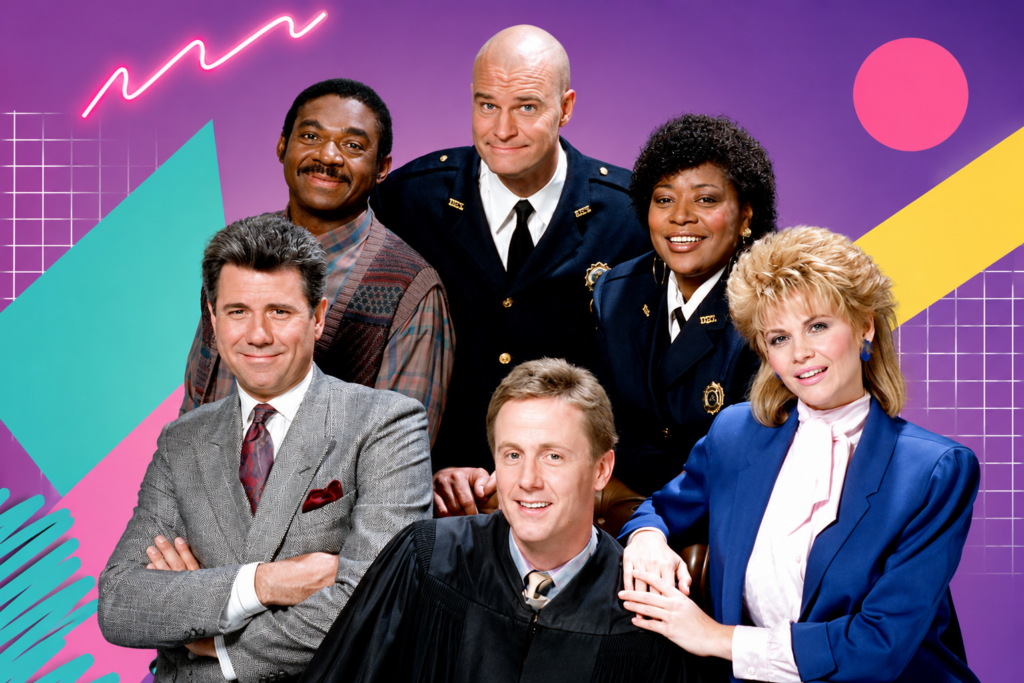
Some television comedies feel tied to their era. Night Court somehow does the opposite. Drop into an episode today and it still moves with that same bright, unruly energy: oddballs drifting through a Manhattan courtroom, jokes flying from every corner, and just enough heart beneath the mischief to keep it all glowing long after the laugh track fades.
For viewers who remember discovering it late at night, the series carries a special kind of warmth. It was scruffy, fast, a little unpredictable, and full of faces that seemed to belong to a secret club of comic brilliance. For newer audiences, it is a reminder that a sitcom does not need a glossy premise to become unforgettable. Sometimes all it takes is one strange room, a gifted cast, and the confidence to let the weirdness sing.
A courtroom after dark
The premise was wonderfully simple. Night Court, which premiered in 1984, followed the overnight shift of a Manhattan municipal court, where the cases were minor but the personalities were anything but. At the centre was Judge Harold T. Stone, played by Harry Anderson with a grin that could calm a room and start a joke at the same time.
That late-night setting did a lot of heavy lifting. Daytime courtrooms suggest order, routine and procedure. A courtroom after midnight suggests the city has slipped its tie loose. Into that space came street eccentrics, hustlers, dreamers, con artists, romantics and the gloriously confused. The show could be broad and silly one moment, then surprisingly gentle the next.
It also had one of television’s smartest comic engines: the contrast between official authority and complete absurdity. Everyone was meant to be maintaining law and order, yet half the time the staff looked only slightly more grounded than the people standing before the bench.
The cast was the real electricity
Harry Anderson’s quietly perfect centre
Harry Anderson gave the show its pulse. Before television fame, he had made his name as a magician and comic performer, and that background mattered. He understood timing in a way that felt almost musical. As Judge Stone, he never pushed too hard. He let the mayhem swirl around him, then landed a line with the ease of a man producing a card from thin air.
His character loved old movies, jazz and magic tricks, and those details made him more than a standard sitcom authority figure. He was whimsical without becoming weightless. That balance helped Night Court avoid turning into pure farce. However ridiculous the scene became, Anderson gave it a human anchor.
An ensemble built for comic collisions
Then there was the supporting cast, and this is where the series really found its sparkle. John Larroquette’s Dan Fielding was slick, vain, shameless and often hilariously appalling, yet Larroquette made him too funny to ignore. It was a performance of precision, all raised eyebrows, polished arrogance and expert line delivery. Dan could have been unbearable in lesser hands. Instead, he became one of the signature sitcom characters of the decade.
Markie Post brought warmth and steel as public defender Christine Sullivan, giving the show a grounded, appealing counterweight. Richard Moll’s towering bailiff Bull Shannon turned physical presence into comic poetry, while Marsha Warfield’s Roz Russell delivered dry, no-nonsense force with impeccable timing. Charles Robinson, as Mac Robinson, gave the court clerk a quiet steadiness that helped hold the whole mad enterprise together.
And that was part of the magic: everyone seemed to understand exactly what kind of rhythm the show needed. No one played it as if they were in a different series. The performances clicked like a great band finding the groove.
Why the jokes still land
Plenty of sitcoms from the 1980s now feel preserved behind glass. Night Court still feels alive because it was never just about topical references or neat domestic setups. Its humour came from character, speed and surprise.
- The dialogue snapped — lines arrived fast, often with a sideways twist just when you thought the scene had settled.
- The setting invited endless variety — every new defendant could bring a completely different comic world through the courtroom doors.
- The show embraced absurdity — not timidly, but with confidence. It trusted viewers to enjoy the strange detour.
- There was real affection underneath it — even when the characters bickered, the series liked people, especially the odd ones.
That last point matters. The show poked fun at human behaviour, but it rarely felt mean-spirited. In the best episodes, the joke was not that people were ridiculous. It was that life in a big city after midnight is ridiculous, and somehow we all keep going.
Behind the scenes, it was a sharp piece of television craft
Nostalgia can sometimes blur the work that goes into making a sitcom feel effortless. Night Court was carefully built. Reinhold Weege, who created the series after working on Barney Miller, understood how to turn institutional comedy into something character-rich and elastic. He took a procedural setting and opened the door to surrealism without losing structure.
The writing room had the difficult task of making each case feel fresh while preserving the personalities audiences came back for every week. That is harder than it sounds. Courtroom scenes can become repetitive very quickly. Night Court solved that problem by treating the legal process almost like a vaudeville frame: a reliable stage on which any variety of comic act could appear.
The production design helped too. The courtroom set was functional, but it had atmosphere. It felt slightly worn, lived-in and unmistakably urban. You believed this place had seen every kind of night. That visual texture gave the comedy a home.
Night Court understood a timeless sitcom truth: if the room feels real enough, the characters can be as eccentric as you like.
The emotional notes that kept it from floating away
For all its zaniness, the series knew when to pause. Judge Stone’s loneliness, Christine’s patience, Bull’s innocence, Mac’s decency, Roz’s toughness and even Dan’s flashes of vulnerability gave the show more depth than its wildest scenes might suggest.
It also endured real-life losses that affected both cast and audience. The deaths of original cast members Selma Diamond and Florence Halop, who played court bailiffs in the early years, brought a poignancy to the show’s history. Later, the passing of Richard Moll, Harry Anderson and Markie Post deepened the sense that Night Court belongs to a treasured television family remembered with genuine affection.
That feeling comes through when fans talk about it. They may quote the jokes first, but before long they are talking about comfort, companionship and the pleasure of spending time in that odd little world. That is usually the sign of a sitcom that did more than make people laugh.
A classic of its era, but never trapped by it
The 1980s fingerprints are part of the fun
Yes, the hairstyles, shoulder pads and studio-audience energy place the show firmly in its period. That is part of the pleasure now. Watching Night Court is like hearing a favourite hit on the radio and instantly being carried back to a certain room, a certain hour, a certain version of yourself.
But unlike some period pieces, it does not rely entirely on that recognition. The comic premise is still strong. The cast is still sharp. And the idea of decent people trying to maintain order in a world that refuses to behave is never going out of date.
Why it still deserves a fresh audience
If someone has never seen the show, this is an easy recommendation. Start with a handful of classic episodes and let the ensemble do the rest. The appeal becomes obvious very quickly. It is not polished in the modern single-camera style, and that is precisely why it feels refreshing. The jokes are allowed to breathe, the performers play to the room, and the whole thing has the loose confidence of entertainers who know they can win you over.
For longtime fans, returning to Night Court is a reunion with old friends who have not lost their timing. For first-time viewers, it is a chance to discover a sitcom that knew exactly how to turn eccentricity into comfort television.
Final verdict
Night Court remains one of those rare comedies that can be both delightfully of its time and surprisingly timeless. It is buoyant, mischievous and deeply likeable, powered by a cast that understood every beat of the material. Behind the scenes, it was smarter and more finely tuned than its easygoing style sometimes gets credit for.
Most of all, it is fun. Real fun. The kind that arrives with a raised eyebrow, a courtroom full of midnight oddballs and a judge who seems to know that the world is absurd, but worth meeting with kindness anyway. That is a lovely note for any comedy to leave ringing in the air.
If you want to revisit more moments from the series, you can also browse clips here: Night Court TV series clips.