
How Rock the Boat Became a Disco Landmark

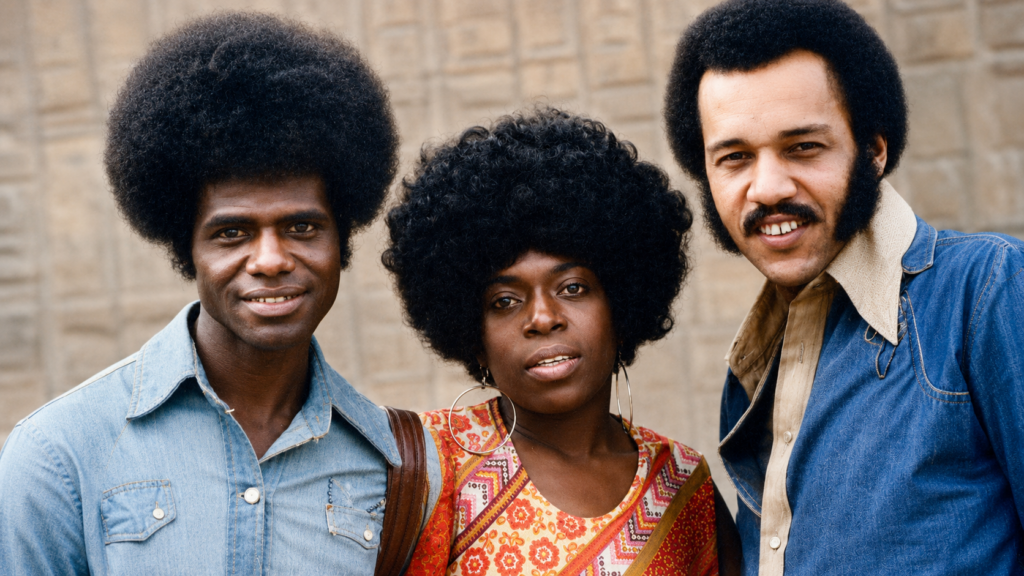
Some hits arrive with a bang. “Rock the Boat” seemed to glide in on a warm breeze, all rolling rhythm, bright harmonies and a chorus that felt impossible to resist. Yet behind that easy-going surface was a carefully built record, created by talented songwriters, sharp studio players and a group whose path to stardom was not nearly as effortless as the song itself sounded.
Released in 1974 by The Hues Corporation, “Rock the Boat” became one of the key records of its time: a bridge between polished early-1970s soul-pop and the dance-floor explosion that would soon be known everywhere as disco. It still sounds like sunshine on vinyl.
A group with a memorable name
The Hues Corporation were not, despite many assumptions over the years, a corporate studio invention. They were a vocal trio formed in California, and their name was a playful nod to the powerful Hughes Corporation associated with Howard Hughes. The original line-up included St. Clair Lee, Hubert Ann Kelley and Fleming Williams, whose lead vocal would become central to the magic of “Rock the Boat”.
Before their breakthrough, the group had been working hard in the familiar way of many early-1970s acts: recording, performing and trying to find the one song that could cut through crowded radio playlists. They had style, strong harmonies and a polished presentation, but they needed the right material and the right production to turn promise into a smash.
The writing of a deceptively simple classic
Waldo Holmes and a song built to move
“Rock the Boat” was written by Waldo Holmes, a songwriter and musician with a keen feel for groove and melody. On paper, the song is wonderfully direct. Its lyrics are flirtatious, rhythmic and full of motion: the sea, the boat, the rocking, the invitation to keep things steady but exciting. It is playful without being silly, suggestive without being heavy-handed.
That balance matters. A lot of dance records live or die by their hook, and “Rock the Boat” has one of the great hooks of the decade. But what gives it staying power is the way the writing marries that hook to a gently sophisticated arrangement. The melody rises and falls like water, while the rhythm section keeps everything buoyant and light on its feet.
The song also arrived at exactly the right cultural moment. Popular music in 1974 was full of cross-pollination. Soul was becoming sleeker, pop was becoming more rhythm-driven, and dance music was beginning to take on a distinct identity. “Rock the Boat” fit that moment beautifully, sounding modern without feeling mechanical.
In the studio: where the groove took shape
Producer John Florez and a polished approach
The record was produced by John Florez, who helped shape its smooth but energetic sound. Good production on a song like this is not about piling on effects. It is about control, pacing and texture. Every element in “Rock the Boat” feels carefully placed: the bass has a gentle spring to it, the percussion gives the track its rolling sway, and the vocal arrangement keeps the song airy even when the groove tightens.
One of the pleasures of hearing the record now is noticing how organic it is. This is dance music made by musicians playing together, not by machines assembling a beat. That gives it warmth. The track breathes.
The musicians behind the feel
As with many great 1970s recordings, the players in the studio were crucial to the final result. The arrangement relies on a tight rhythm section, crisp guitar, bright keyboard touches and layered backing vocals that answer the lead in just the right places. Even listeners who do not know the personnel by name can hear the craftsmanship immediately.
And then there is Fleming Williams. His lead vocal is one of the record’s secret weapons. He does not oversing. He rides the groove with confidence, giving the song charm and lift rather than drama. That restraint is part of why the record still feels fresh. It invites you in instead of shouting for your attention.
An often-repeated piece of trivia around the song is that it was not initially chosen as the obvious lead smash from the album. That only adds to its legend. Music history is full of songs that were underestimated before listeners made their own decision, and “Rock the Boat” is one of the happiest examples.
The climb up the charts
A slow start, then a tidal wave
Commercially, “Rock the Boat” did not explode overnight. It took time to build, but once it caught on, it moved with remarkable force. In the United States, the single rose all the way to number one on the Billboard Hot 100 in 1974. It also reached number one on the soul chart, showing just how effectively it crossed audiences and formats.
That crossover success was a major part of the song’s story. It was soulful enough for R&B listeners, catchy enough for pop radio and danceable enough for clubs and parties. In other words, it was exactly the kind of record the mid-1970s were ready to embrace.
Internationally, the song also made a strong impression, becoming one of those records that seemed to travel on pure good feeling. Even in places where chart positions varied, its reputation grew as a dance-floor favourite and radio staple.
Why radio loved it
For radio programmers, “Rock the Boat” had several advantages. It was instantly recognisable, upbeat without being abrasive and sophisticated enough to sit comfortably beside soul, pop and light dance records. For listeners, it simply felt good. That may sound obvious, but it is one of the hardest qualities to manufacture.
It also benefited from repeatability. Some novelty-leaning dance hits burn bright and fade quickly. “Rock the Boat” had enough musical finesse to reward repeat spins, which helped it stay in rotation and deepen its impact.
A defining record of the era
Early disco before disco became a phenomenon
One reason “Rock the Boat” remains so important is that it captures disco in an early, elegant form. Before the genre became associated with mirror balls, white suits and blockbuster films, there were records like this: soulful, rhythmic, lush and welcoming. It helped establish the idea that a dance record could be smooth, melodic and musically rich.
In that sense, The Hues Corporation were part of a larger shift in popular music. Artists and producers were increasingly building records around groove and motion, while still keeping strong songcraft at the centre. “Rock the Boat” sits comfortably alongside the era’s expanding dance vocabulary, but it also keeps one foot in classic vocal-group soul.
That combination is a big reason the record has endured. It is not trapped in one trend. It belongs to the disco story, but it also belongs to the long tradition of irresistible pop-soul singles.
The dance move it helped popularise
The song is often linked to a line dance also known as the “rock the boat” dance, where dancers sit or lean in a rowing-like formation and sway in time. While dance crazes can be hard to pin down to a single origin, the record certainly inspired communal movement wherever it played. Weddings, parties, holiday resorts, school dances and oldies nights all helped keep that tradition alive.
That kind of afterlife matters. Some songs survive because critics love them. Others survive because people keep choosing them for joyful moments. “Rock the Boat” very much belongs to the second category.
Behind-the-scenes details and lasting legacy
A bittersweet footnote
There is a poignant note in the song’s history. Lead singer Fleming Williams, whose voice is so closely identified with the hit, left the group not long after its success. That means one of the defining voices of the record was not part of the act’s later public life in the way many fans might expect. It is a reminder that the stories behind hit singles are often more complicated than the cheerful records themselves suggest.
Even so, the song’s identity remained secure. The Hues Corporation had delivered something special, and the record quickly became bigger than any one career twist.
Why it still sounds so good
Listen now and the song’s staying power is obvious. The arrangement is uncluttered. The rhythm is supple rather than heavy. The harmonies are sweet but not sugary. And the whole record moves with a confidence that never tips into excess.
It also captures a kind of optimism that listeners continue to crave. The mid-1970s produced plenty of emotionally complex music, but there was also room for records that offered pure uplift. “Rock the Boat” did that without sacrificing musicianship, which is why it still feels classy as well as fun.
Still floating through the decades
More than fifty years on, “Rock the Boat” remains one of those records that can instantly change the mood in a room. It carries the shimmer of summer, the polish of great studio craft and the communal joy of a packed dance floor. For The Hues Corporation, it was the breakthrough that defined them. For the wider history of popular music, it was an early signal that dance music was moving toward the centre of the culture.
And perhaps that is the real secret of its legacy. “Rock the Boat” is not just remembered because it was a hit. It is remembered because it still does exactly what a great hit should do: lift people, connect generations and make the world feel lighter for three and a half minutes.
- Written by: Waldo Holmes
- Produced by: John Florez
- Performed by: The Hues Corporation
- Lead vocal on the hit: Fleming Williams
- US chart peak: No. 1 on the Billboard Hot 100 in 1974