Bryan Ferry’s Slave to Love and the Sophisticated Sound of 1985
Bryan Ferry’s 1985 hit Slave to Love arrived with elegance, mystery, and unmistakable style. Here’s the story behind its creation, chart success, key collaborators, and why it still sounds like midnight glamour on the radio.
A Velvet-Draped Classic from the Mid-80s
When Bryan Ferry released Slave to Love in 1985, it arrived like a slow-motion entrance under nightclub lights: elegant, mysterious, and impossibly cool. At a time when pop music was often bright, punchy, and powered by big drums and synthesizers, Ferry offered something more seductive. Slave to Love did not rush to win you over. It glided in, wrapped in atmosphere, style, and that unmistakable Ferry voice — half croon, half whisper, all sophistication.
For listeners who first heard it on late-night radio, or saw its glamorous black-and-white video flicker across television screens, the song felt like a mood as much as a single. But behind that polished surface was a carefully crafted recording, shaped by Ferry’s perfectionism, a gifted team of collaborators, and the musical sensibilities of an era that prized both technology and texture.
How the Song Was Written and Shaped
From Avalon-era elegance to solo statement
Slave to Love emerged during a fascinating chapter in Bryan Ferry’s career. By the early 1980s, Ferry had already made his mark both as the suave frontman of Roxy Music and as a solo artist with a taste for reinvention. Roxy Music’s 1982 album Avalon had refined the band’s sound into something sleek, romantic, and dreamlike — a far cry from their art-rock beginnings. In many ways, Slave to Love feels like a natural continuation of that atmosphere, but with Ferry stepping even more firmly into his own world.
The song was written by Bryan Ferry alongside David Gilmour, the Pink Floyd guitarist whose melodic sensibility helped shape its emotional pull. That pairing alone tells you something important: this was not a throwaway pop tune, but a composition built on mood, restraint, and carefully chosen details. Ferry brought the lyrical concept and his signature sense of romantic drama; Gilmour contributed musical ideas that helped give the song its stately, yearning character.
A lyric of desire, danger, and devotion
Like many of Ferry’s best songs, Slave to Love works because it says just enough. The lyric is full of longing and surrender, but it never becomes overly literal. Instead, Ferry paints with suggestion: love as compulsion, love as glamour, love as a game you know you may lose but play anyway. That ambiguity was part of his gift. He could make a line sound intimate and cinematic at the same time.
Tell her I’ll be waiting / In the usual place…
Even a simple phrase in Ferry’s hands could sound like a scene from a beautifully lit film. That sense of narrative mystery helped the song stand apart in 1985, when many chart hits aimed for instant clarity. Slave to Love invited listeners to lean in.
Recording the Song and Building the Atmosphere
Produced with polish and patience
The recording of Slave to Love reflected Ferry’s reputation as a meticulous craftsman. He co-produced the track with Rhett Davies, a key figure in the Roxy Music story who had worked on several of the band’s most important records. Davies understood how to create space in a mix — how to let textures shimmer, how to make a rhythm feel luxurious rather than crowded. Together, he and Ferry built a soundscape that was lush without becoming overblown.
The song appeared on Ferry’s 1985 album Boys and Girls, his first solo studio album after Roxy Music’s initial run came to an end. There was real anticipation around that record, and Slave to Love became one of its defining moments. The production is a masterclass in controlled elegance: the drums pulse steadily, the keyboards glow, the guitar lines are understated but expressive, and Ferry’s vocal remains the magnetic center of the whole performance.
The musicians behind the magic
As with many Bryan Ferry recordings of the era, the personnel around him included highly respected players capable of subtle, sophisticated work. While lineups and contributions across sessions could be fluid, Ferry drew from a circle of musicians who understood his aesthetic: atmosphere first, flash second. That discipline is part of why the song has aged so gracefully.
David Gilmour’s role as co-writer is especially notable, and his influence can be felt in the song’s melodic architecture and emotional shading. Ferry was also surrounded during the Boys and Girls period by top-tier session talent and trusted collaborators from the wider Roxy orbit. Rather than crowding the arrangement with virtuoso displays, everyone plays for the song. The result is music that seems effortless, though it was anything but accidental.
One of the enduring pleasures of Slave to Love is how spacious it sounds. In an era when digital production could sometimes become brittle or busy, this track breathes. There is room around every instrument, and that gives the song its sensual, late-night quality.
Chart Performance and Commercial Reception
A major international hit
Slave to Love became one of Bryan Ferry’s signature solo successes. Released as a single in 1985, it performed strongly in several countries and helped establish Boys and Girls as a commercial and critical triumph. In the UK, the song reached the Top 10, confirming that Ferry’s refined style still had a wide audience in the MTV age.
The parent album did even more to underline the moment. Boys and Girls hit number one in the UK, a major achievement and a sign that Ferry had successfully bridged the transition from band leader to fully commanding solo star. For many listeners, Slave to Love was the emotional centerpiece: a song sophisticated enough for longtime Roxy devotees, but accessible enough to draw in a new generation.
Critical admiration
Critics responded warmly to the song’s poise and polish. Ferry had always inspired strong opinions — some heard him as the ultimate romantic stylist, others as pop’s most elegant ironist — but Slave to Love was difficult to dismiss. It was too well-made, too evocative, and too distinctive. In a crowded decade of memorable singles, it carved out its own lane.
What made the reception especially interesting was that the song succeeded without chasing obvious trends. Yes, it belonged to the 1980s in terms of production sheen, but it also felt timeless. That balance helped it endure long after many more aggressively fashionable records had faded.
Cultural Impact and Lasting Legacy
The sound of sophisticated pop
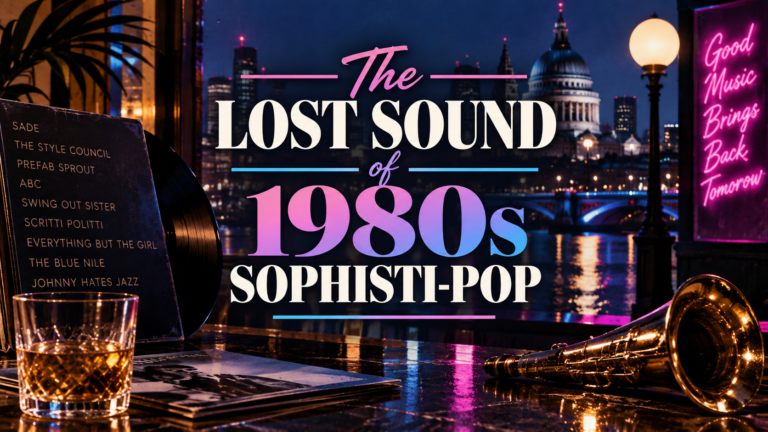
If you wanted to explain the idea of sophisti-pop to someone, Slave to Love would be a fine place to start. The song sits comfortably alongside the era’s most stylish records — music by acts like Sade, The Blue Nile, Talk Talk, and later Roxy-influenced artists who understood that emotional intensity did not require shouting. Ferry’s single helped define a space in 1980s music where elegance, melancholy, and pop craft could coexist beautifully.
Its influence has echoed through fashion photography, film soundtracks, lounge compilations, and countless playlists built around romance after dark. Slave to Love became more than a hit; it became shorthand for a certain kind of mood. Put it on, and the room changes.
Memorable screen life
The song’s cultural afterlife was strengthened by its striking visual identity. The music video, with its glamorous, stylized imagery, matched the song’s air of luxurious detachment. It felt less like a conventional promo clip and more like a fashion editorial set to music. That was perfect for Ferry, who had long understood the power of image in pop.
Over the years, Slave to Love has also appeared in film and television contexts, where directors have used it to instantly summon sensuality, nostalgia, or sophisticated cool. Few songs are as effective at setting a scene within seconds.
Behind-the-Scenes Details and Anecdotes
Ferry the perfectionist
One thing friends and collaborators often noted about Bryan Ferry was his attention to detail. He was not the kind of artist to toss off a vocal and move on. He cared deeply about tone, phrasing, and atmosphere, and that perfectionism is written all over Slave to Love. The track sounds smooth, but smoothness of that kind usually comes from painstaking work: adjusting arrangements, refining textures, and making sure every sound contributes to the spell.
That care extended to sequencing and presentation as well. By the time listeners encountered Slave to Love, it had been framed not just as a song, but as part of a complete aesthetic world — one that included the album artwork, the video, and Ferry’s enduring image as pop’s impeccably dressed romantic.
A meeting of musical worlds
The Ferry-Gilmour connection remains one of the song’s most intriguing elements. On paper, the pairing of the art-school sophisticate from Roxy Music and the expansive guitarist from Pink Floyd might seem unexpected. In practice, it makes perfect sense. Both artists understood mood, patience, and the emotional power of understatement. Their collaboration gave Slave to Love a depth that rewards repeat listening.
- Co-written by: Bryan Ferry and David Gilmour
- Produced by: Bryan Ferry and Rhett Davies
- Featured on: Boys and Girls (1985)
- UK chart result: Top 10 hit
- Legacy: One of Ferry’s best-known and most enduring solo songs
How the Song Fits the Broader Musical Era
An 80s hit that never felt trapped in the 80s
1985 was a year of big statements in pop. The charts were full of blockbuster singles, gated drums, glossy hooks, and larger-than-life personalities. Slave to Love shared some of the era’s sonic richness, but it moved at its own pace. It was confident enough to be restrained. That set it apart.
In many ways, the song represents the more refined side of the decade — the side that valued ambience, emotional nuance, and grown-up glamour. It helped prove that pop could be dramatic without being bombastic, sensual without being obvious, and contemporary without losing touch with classic songwriting values.
That is why the song still sounds so inviting today. It captures the essence of mid-80s sophistication while avoiding the clichés that date lesser records. It belongs to its time, certainly, but it also floats above it.
Still Under Its Spell
More than four decades on, Slave to Love remains one of Bryan Ferry’s crowning achievements — a song that distilled his artistry into four unforgettable minutes of poise, longing, and style. It was a hit, yes, but also a statement: that elegance could still command the airwaves, that mystery still had a place in pop, and that sometimes the most powerful songs are the ones that whisper rather than shout.
For anyone who remembers hearing it for the first time, the feeling is hard to forget. And for new listeners discovering it today, the magic is still there, waiting in the groove — cool, romantic, and utterly timeless.