Dial Set to Adventure: The Time Tunnel on the Late-Night Screen
The studio lights glow, the monitors flicker, and a giant spiral of colour opens across the screen. The Time Tunnel still feels like a thrilling late-night broadcast from television's most imaginative control room.
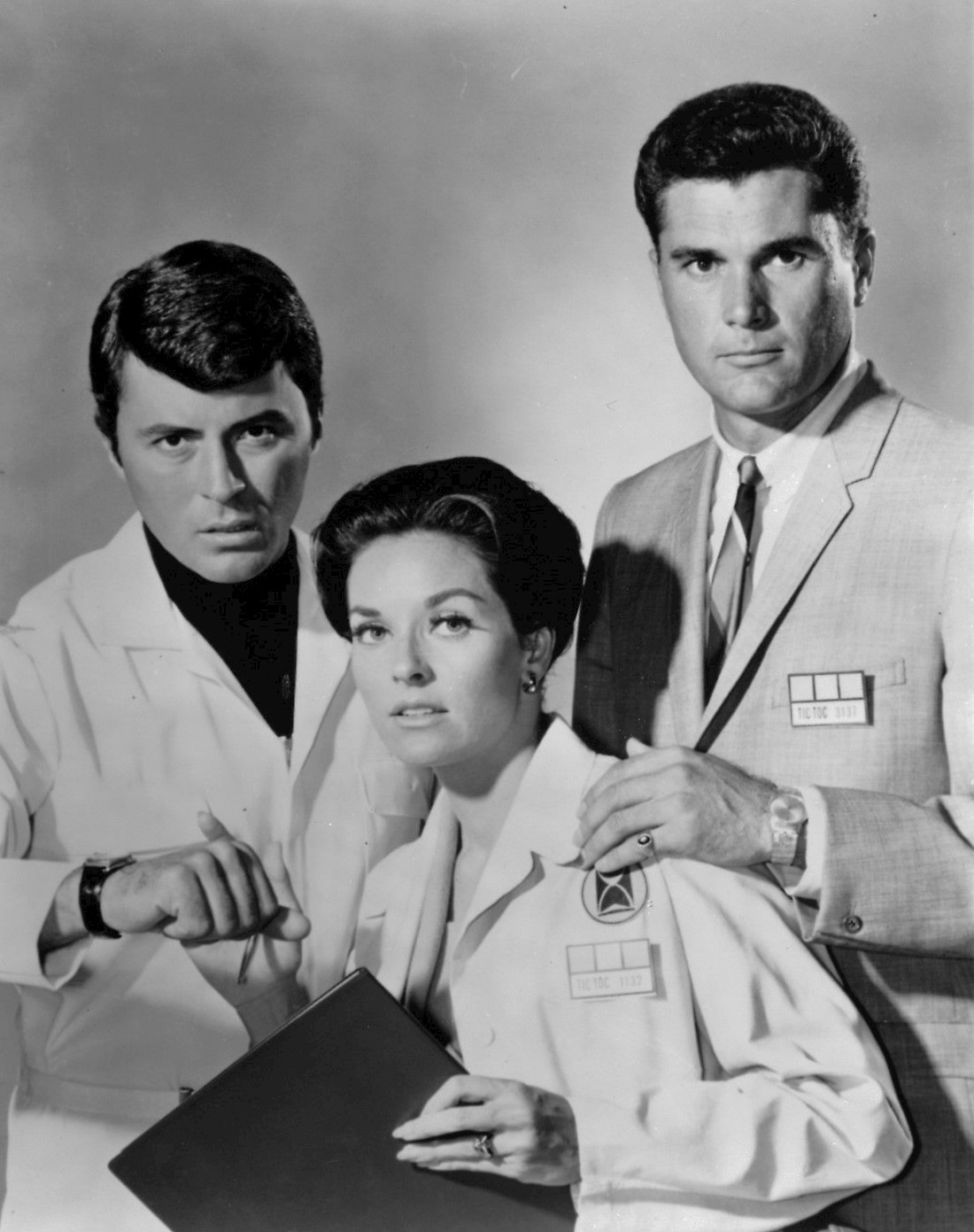
Picture the glow of a television set in a darkened living room, the kind of blue-white light that turned an ordinary evening into a small event. Then imagine that screen opening into a swirling corridor of colour, a spinning cosmic hallway promising danger, wonder, and history all at once. That was The Time Tunnel, the 1966–1967 science-fiction series that arrived with a wonderfully bold idea and the confidence to send it hurtling straight at viewers.
Created by Irwin Allen, the producer often called the master of televised spectacle, The Time Tunnel was built around a premise that still feels irresistible. Scientists Tony Newman and Doug Phillips become lost in time after an experiment goes dramatically wrong, tumbling from one historical crisis to another while their colleagues back in the present try desperately to bring them home. It is a concept with the clean, catchy hook of a great pop single: easy to grasp, exciting to revisit, and flexible enough to deliver something fresh each week.
Looking back now, there is a special pleasure in how cheerfully ambitious the series was. This was television that wanted to entertain on a grand scale. It wanted famous disasters, legendary battles, royal courts, pirate ships, and moments of high peril. And it delivered them with such sincerity that even its most extravagant swings feel charming rather than clumsy.
A weekly leap into history
One of the great joys of The Time Tunnel is the way it turns history into a lively adventure serial. One week, Tony and Doug might find themselves aboard the Titanic. The next, they are dropped into the chaos of Pearl Harbor, the American frontier, or the French Revolution. It gave audiences a passport to every corner of the past, and it did so with the kind of breathless energy that made television viewers lean forward in their seats.
The structure was simple but effective. The heroes arrive in a dangerous moment, struggle to survive, and try not to alter the course of history, all while the team back at Project Tic-Toc monitors their progress through the giant, glowing machinery of the Time Tunnel. That push and pull between past and present gave the show a rhythm that was easy to settle into. It also meant every episode had two kinds of suspense: the immediate danger facing the travellers, and the technical race to rescue them.
There is something deeply enjoyable about a series that believes so strongly in the magic of its own setup. The Time Tunnel never seems embarrassed by its premise. It embraces it. That confidence is a big part of why the show remains such fun.
The look of big, bold 1960s television
If you love the visual flair of 1960s science fiction, this series is a feast. The Time Tunnel itself is one of television’s great images: a rotating, luminous passageway filled with colour and motion, at once futuristic and dreamlike. It is the sort of design that sticks in the memory, like a distinctive station jingle or the opening riff of a favourite record.
Irwin Allen productions were known for making television feel larger than life, and that spirit is all over this show. The control room sets are packed with blinking lights, dramatic consoles, and serious-looking equipment that gives Project Tic-Toc a wonderfully tactile presence. This is old-school future technology at its most appealing, when every machine seemed to hum with possibility.
The series also made effective use of costumes, stock footage, and ambitious set pieces to create its historical worlds. Yes, modern viewers will spot the practical shortcuts, but that is part of the appeal. There is craftsmanship here, and a real determination to put on a show. The blend of studio-bound drama and cinematic footage gives many episodes a pulpy, high-energy style that suits the material perfectly.
When spectacle met imagination
One of the reasons The Time Tunnel leaves such a warm impression is that it reaches for scale. It wants storms, explosions, armies, and collapsing worlds. Even when television budgets imposed limits, the creative team found ways to suggest grandeur. The result is a show that feels enthusiastic rather than restrained, always eager to dazzle.
That eagerness matters. In an age when some programmes can feel carefully measured, there is something refreshing about a series willing to go big every single week.
James Darren, Robert Colbert, and a likeable central pair
At the centre of all the turmoil are James Darren as Tony Newman and Robert Colbert as Doug Phillips, and they make an appealing team. Darren brings a restless intensity and youthful drive, while Colbert gives Doug a steadier, reassuring presence. Together they have the dependable chemistry that adventure television needs. You believe they will argue, improvise, and keep moving forward no matter what century has swallowed them.
Their partnership gives the series its emotional anchor. Without that, a time-travel show can become merely a parade of costumes and crises. But Tony and Doug are easy company. They are intelligent, brave, and just vulnerable enough to keep the danger feeling real. Week after week, viewers had two heroes worth rooting for.
The supporting cast adds extra flavour. Whit Bissell, Lee Meriwether, and John Zaremba bring authority and urgency to the Project Tic-Toc team, grounding the more fantastical elements with performances that treat the material seriously. That straight-faced commitment is essential. No one plays this as a joke, and the series is stronger for it.
Behind the scenes: Irwin Allen’s adventure machine
Part of the fun of revisiting The Time Tunnel is knowing it came from one of television’s great showmen. Irwin Allen had a gift for packaging danger, fantasy, and family-friendly excitement into irresistible weekly entertainment. He understood that viewers wanted scale, suspense, and memorable images, and he knew how to deliver all three.
Behind the scenes, the production moved at a demanding pace, and the show often relied on a clever combination of standing sets, ambitious effects work, and stock footage drawn from earlier films and productions. In less capable hands, that might have felt patchy. Here, it becomes part of the texture. The series has the quick-change ingenuity of live entertainment, where imagination fills the gaps and momentum does the rest.
There is also a certain romance in the practical craftsmanship of 1960s television. Before digital effects could smooth everything into seamless perfection, productions had to solve problems with lighting, editing, design, and nerve. The Time Tunnel wears that handmade ingenuity proudly.
The charm is not just in what the series shows, but in how hard it tries to show the impossible.
A season that left viewers wanting more
Although the series ran for just one season, it made a strong impression. In some ways, that single-season run adds to its mystique. Like a beloved record with no weak side, The Time Tunnel remains compact, memorable, and easy to revisit. There is no long decline to navigate, only a concentrated burst of imagination.
Its cancellation has long been a point of regret for fans, and it is easy to understand why. The premise had endless possibilities. Ancient civilisations, future eras, famous turning points in history: the tunnel could have taken audiences anywhere. That open-ended promise still hums around the show today.
Why it still plays so well
What makes The Time Tunnel endure is not realism. It is spirit. This is television made with gusto, delivered with conviction, and powered by a sense of wonder that remains infectious. It trusts viewers to enjoy the ride, and that trust pays off.
For nostalgic audiences, the series offers a lovely return to a time when television adventure could be both earnest and extravagant. For first-time viewers, it is a reminder that a strong concept, a pair of engaging leads, and some visual imagination can carry a show a very long way. There is no need to apologise for its period effects or heightened style. Those qualities are part of the package, and part of the pleasure.
It also captures something timeless about the appeal of science fiction. Beneath the machinery and historical peril is a simple human dream: to step beyond the limits of the present and see what lies elsewhere. That dream has powered everything from classic serials to modern prestige dramas, and The Time Tunnel taps into it with bright-eyed enthusiasm.
Final thoughts
The Time Tunnel is a thoroughly enjoyable piece of 1960s television: fast-moving, imaginative, handsome in its own retro-futurist way, and full of the kind of ambitious storytelling that makes classic genre fans smile. It may not have lasted long, but it burned brightly. Every episode carries that sense of a production reaching for something thrilling, and often getting there through sheer determination and style.
If you have never taken the trip, this is a wonderful time to climb aboard. And if you already know that swirling corridor by heart, a return visit is richly rewarding. Some shows age into museum pieces. The Time Tunnel still feels like an invitation.
- Best for: viewers who love classic science fiction, historical adventure, and bold 1960s television design
- What stands out: the unforgettable visual concept, the likeable lead duo, and Irwin Allen’s flair for spectacle
- Overall verdict: a lively, affectionate, and highly entertaining time-travel adventure that remains easy to enjoy