How Dancing Machine Took Over
Here's what made "Dancing Machine" such a jolt of joy on the radio: a futuristic funk groove, a perfectly timed Motown reinvention, and a young Michael Jackson turning rhythm into theatre. This is the story behind the hit that kept The Jackson Five moving with the times.
Some records do not simply arrive on the radio — they seem to leap out of the speakers. “Dancing Machine”, released by The Jackson Five in 1974 and a major force well into 1975, was one of those records. It was bright, mechanical, funky, and thrillingly alive all at once, a track that captured a changing pop landscape while giving the Jackson brothers one of their most irresistible grooves.
By the time “Dancing Machine” became a hit, The Jackson Five were already established stars. But this song marked something important: it showed how gracefully the group could move with the times. The bubblegum soul of their earliest Motown smashes was giving way to something sleeker and tougher, shaped by funk rhythms, studio experimentation, and a growing fascination with the dance floor. If you want to hear the moment the Jacksons stepped into that world with total confidence, this is it.
A song built for movement
The writing team behind the groove
“Dancing Machine” was written by a formidable team: Hal Davis, Don Fletcher, and Dean Parks. Davis was one of Motown’s key producers and a steady hand behind many polished, radio-ready recordings. Fletcher was a songwriter with a feel for catchy, contemporary material, while Dean Parks — better known to many music fans as an elite session guitarist — brought a musician’s sense of rhythm and texture to the writing.
The title itself says a great deal about the era. In the early to mid-1970s, American popular music was becoming more rhythm-driven, more dance-oriented, and more fascinated by futuristic imagery. The phrase dancing machine sounded modern, playful, and slightly robotic — perfect for a decade that loved both funk’s human pulse and pop culture’s shiny visions of the future.
Lyrically, the song is simple and direct, almost like a celebration chant. Rather than telling a complicated story, it focuses on admiration, energy, and motion. That simplicity was part of its power. It gave the rhythm room to do the heavy lifting, and it invited listeners to join in immediately.
Recording a new kind of Jackson Five record
The recording was produced by Hal Davis, who helped shape the record into something crisp and contemporary. By this point, Motown was adapting to a new musical climate. Soul music was evolving, funk was everywhere, and records needed strong rhythm tracks to compete on radio and in clubs. “Dancing Machine” answered that challenge beautifully.
One of the song’s most memorable features is its use of the synthesizer, which gives the track its signature electronic sparkle. That sound helped make the record feel fresh and futuristic. It was not cold or clinical, though — the brilliance of the arrangement lies in how it blends machine-like touches with a deeply human groove.
The musicians behind Motown sessions rarely got the headline treatment they deserved, but their contribution was enormous. Alongside the Jacksons’ vocals, the track depended on first-rate studio players who could lock into a tight funk pulse while still keeping the song pop-friendly. Dean Parks, as part of the creative story, is especially notable because his musical instincts helped connect the songwriting and instrumental feel.
At the centre of it all was Michael Jackson, still very young but already a magnetic vocalist. His performance on “Dancing Machine” is one of the reasons the record remains so exciting. He sounds playful, sharp, and completely engaged with the beat, pushing the song forward without ever overwhelming its groove.
The people who made it work
Hal Davis and the Motown machine
Hal Davis deserves special credit for understanding where The Jackson Five could go next. He had a gift for balancing polish with momentum. On “Dancing Machine,” he did not bury the group in heavy production. Instead, he gave them a strong rhythmic framework and let the record breathe.
That was a crucial decision. Too much sweetness and the song might have felt dated. Too much hardness and it could have lost the broad appeal that made the Jackson Five such major stars. Davis found the middle ground, and that balance is a big part of why the record crossed so effectively between pop and soul audiences.
Michael’s moment, with the group locked in behind him
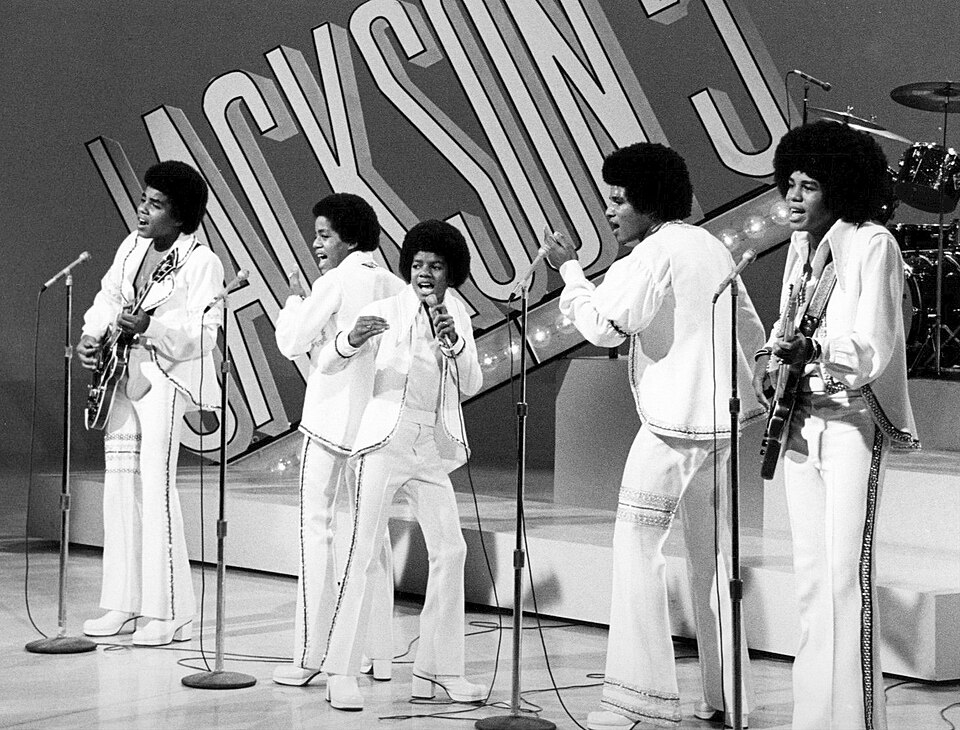
Although Michael naturally draws attention, “Dancing Machine” works because it still feels like a group performance. The harmonies, responses, and collective energy of Jackie, Tito, Jermaine, Marlon, and Michael Jackson all matter. The record carries that classic Jackson Five sense of family interplay, even as the musical setting becomes more funk-driven.
It is also worth remembering that audiences were not just hearing the song — they were seeing it. The Jackson Five’s television appearances helped turn “Dancing Machine” into an event. Michael’s dancing, especially his precise, robot-like movements, gave the record an extra layer of identity that listeners instantly remembered.
Chart success and commercial reception
A major hit on both pop and soul charts
“Dancing Machine” became one of The Jackson Five’s biggest later-era Motown hits. In the United States, it reached No. 2 on the Billboard Hot 100 and climbed to No. 1 on the Billboard R&B chart. That was a powerful showing, especially at a time when competition on radio was intense and musical styles were shifting quickly.
The song also sold strongly, earning gold certification and confirming that the Jacksons could still command a huge audience beyond their earliest run of chart-toppers. For many listeners, it was proof that the group had not simply survived changing tastes — they had adapted and thrived.
Why audiences responded so strongly
Part of the song’s appeal was its versatility. It sounded great on Top 40 radio, but it also had enough rhythmic bite for soul stations and dance floors. That crossover strength was gold in the 1970s music business. The record was catchy enough for younger fans, cool enough for older listeners, and stylish enough to feel current.
It also arrived at a moment when people wanted records that moved. Before disco fully dominated the second half of the decade, songs like “Dancing Machine” were helping prepare the ground. They placed rhythm and dance at the centre of the experience, and audiences responded with enthusiasm.
The dance, the television moments, the legend
Michael Jackson’s robot helped define the song
One of the most famous pieces of “Dancing Machine” history is the way Michael Jackson performed it live. During television appearances and concerts, he incorporated robot-style dance movements that became strongly associated with the song. To many viewers, that visual was unforgettable: a young Michael moving with uncanny precision, matching the record’s mechanical theme while still radiating joy.
That mattered because it turned the song into more than a hit single. It became a performance piece. Long before music videos became the main engine of pop mythology, television appearances could stamp a song into public memory. “Dancing Machine” benefited enormously from that visual impact.
Behind-the-scenes appeal
There is a wonderful irony at the heart of the record. For a song called “Dancing Machine,” it never feels stiff. Its brilliance lies in the contrast between the futuristic idea and the warmth of the performance. The arrangement hints at machinery, but the groove is loose and alive. That tension is part of what makes the song so replayable.
Another interesting detail is how neatly it captured Motown in transition. The label had built its empire on elegant, tightly crafted pop-soul, but by the mid-1970s it needed records that could compete with the tougher rhythms of funk and the growing pull of dance music. “Dancing Machine” sounds like Motown learning a new step without losing its old grace.
How it fits the wider sound of the 1970s
Funk, pop, and the road toward disco
Listen closely and you can hear several strands of 1970s music meeting in one place. There is the precision of pop, the pulse of funk, the sheen of studio soul, and a clear nod toward the dance-oriented records that would soon dominate clubs and charts. “Dancing Machine” sits right in that fascinating overlap.
It also reflects a broader cultural shift. Popular music in the 1970s was increasingly physical. Bass lines became more prominent, grooves stretched out, and audiences wanted songs they could feel as much as sing. The Jackson Five, who had begun as youthful hitmakers in the late 1960s, were now participating in a more rhythm-centred era. “Dancing Machine” was one of their strongest statements in that environment.
A bridge to Michael Jackson’s future
For many fans listening back now, the song feels like a preview. Not of everything Michael Jackson would later become, of course, but of certain key qualities: rhythmic intelligence, visual imagination, and a fascination with precision in performance. You can hear a line stretching from “Dancing Machine” to later moments in his solo career where movement, sound, and persona fused into one complete package.
That does not diminish the group achievement. If anything, it makes the record more valuable. It captures a family act evolving in real time, with one extraordinary young lead singer beginning to reveal the next stage of his artistry.
Why the record still feels alive
“Dancing Machine” endures because it delivers exactly what its title promises. It moves. It sparkles. It smiles. More than fifty years later, it still sounds like a room suddenly getting brighter.
For radio listeners, that is the magic. The opening groove arrives, the beat settles in, and for a few minutes the world feels lighter on its feet. Plenty of songs from the 1970s are nostalgic. “Dancing Machine” does something better: it still feels active, still ready to jump into the present tense. That is the mark of a genuine classic.
Quick facts about “Dancing Machine”
- Writers: Hal Davis, Don Fletcher, Dean Parks
- Producer: Hal Davis
- Artist: The Jackson Five
- US Billboard Hot 100 peak: No. 2
- US Billboard R&B peak: No. 1
- Known for: its funk groove, synthesizer touches, and Michael Jackson’s robot-style dance performances