How Did Whitney Houston Make It Sound So Effortless?
Why we still play this is easy to hear within seconds: Whitney Houston could turn a pop song into a shared emotional memory. What most people miss is how much craft, gospel grounding, and musical intelligence sat behind that seemingly effortless voice.
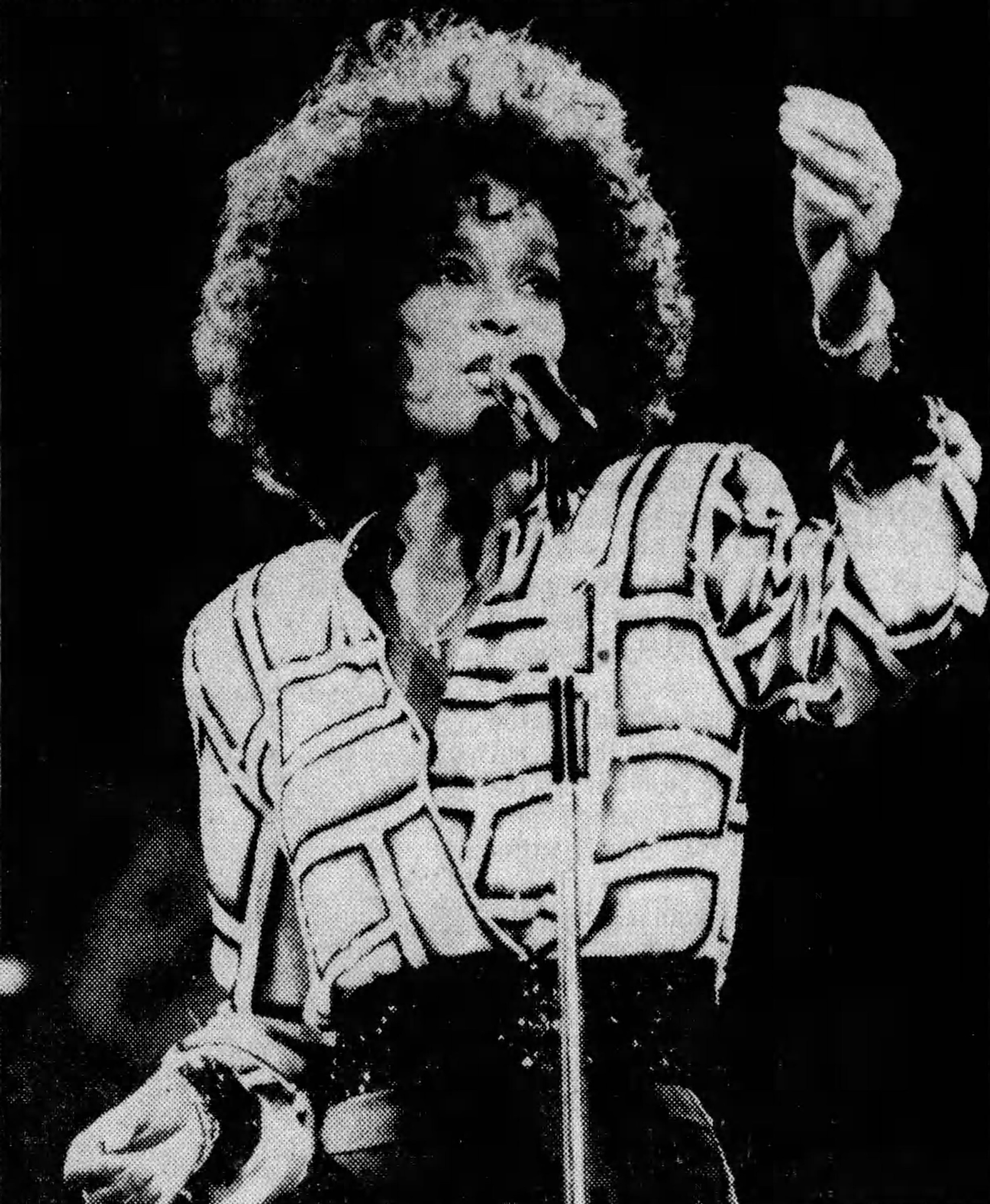
Some voices do more than carry a tune — they seem to stop time. Whitney Houston had that kind of voice. On the radio, she could sound intimate and enormous at once, gliding through a love song with velvet warmth one moment and then lifting the roof with a chorus that felt almost superhuman the next. Decades on, her records still have that same effect: a few opening notes, and the room changes.
For classic hits listeners, Whitney is not simply a major star from the 1980s and 1990s. She is one of those rare artists whose songs feel woven into everyday life — wedding dances, car journeys, family parties, quiet heartbreaks, and triumphant singalongs. Behind that polished brilliance was a story shaped by gospel roots, extraordinary discipline, and a musical instinct that made the difficult seem natural.
A childhood surrounded by music
Whitney Elizabeth Houston was born on August 9, 1963, in Newark, New Jersey, into a family where music was not a hobby but a way of life. Her mother, Cissy Houston, was a highly respected gospel and soul singer who performed with the Sweet Inspirations and worked with major stars. Her cousin was Dionne Warwick. Aretha Franklin was a family friend. For most people, that would sound like a dazzling list of names. For Whitney, it was simply the world around her.
She grew up in the church, and that mattered enormously. Long before the global fame, the magazine covers, and the huge arena performances, she was learning how to sing in a setting where emotion, phrasing, and conviction counted for everything. Gospel taught her how to build a song, how to testify through a lyric, and how to reach listeners not just technically but spiritually. That foundation stayed with her throughout her career, even when she was singing sleek pop productions.
As a girl, Whitney sang in the junior gospel choir at New Hope Baptist Church in Newark. People who heard her early on often spoke about the same thing: the purity of the tone and the maturity of the delivery. She was not just hitting notes. She understood what a song needed. That is a rare gift in any performer, let alone a teenager.
Before becoming a recording star, she also worked as a model, appearing in magazines and advertisements. In fact, she was one of the first Black women to receive major exposure in mainstream fashion publications. It is an interesting early clue to her crossover appeal: she had poise, camera presence, and unmistakable star quality even before the world heard her biggest hits.
The breakthrough that changed pop
Whitney Houston signed with Arista Records, led by the legendary Clive Davis, who immediately recognised that her voice could connect with a vast audience. The key was finding material that would showcase her gospel power while placing her in the centre of contemporary pop. It was a careful balancing act, and when it worked, it changed the shape of 1980s radio.
Her self-titled debut album, Whitney Houston, arrived in 1985. It did not explode overnight, but once it caught fire, it became unstoppable. Songs like Saving All My Love for You, How Will I Know, Greatest Love of All, and You Give Good Love turned her into a global sensation. Each single revealed a different side of her artistry: romantic and tender, playful and bright, inspirational and commanding.
How Will I Know in particular remains one of the great radio rushes of the decade — sparkling production, youthful energy, and a vocal that dances rather than merely rides the beat. Then there was Greatest Love of All, a song she elevated into a full emotional event. In Whitney’s hands, self-belief sounded noble rather than preachy.
Her second album, Whitney, released in 1987, made history by debuting at number one on the Billboard 200, the first album by a female artist to do so. It produced more huge hits, including I Wanna Dance with Somebody (Who Loves Me), Didn’t We Almost Have It All, So Emotional, and Where Do Broken Hearts Go. By this point, Whitney was not just successful. She was dominant.
One remarkable statistic still says a lot about her impact: she became the first artist to score seven consecutive number one singles in the United States, breaking a record previously held by the Beatles and the Bee Gees. That is extraordinary company, and it underlines how completely she captured the public imagination.
The songs that made the world sing
If you ask ten listeners for their favourite Whitney Houston song, you may get ten different answers. That is one sign of a truly deep catalogue. Her biggest hits were not interchangeable. Each had its own emotional colour.
- I Wanna Dance with Somebody (Who Loves Me) — joyous, sparkling, and almost impossible to resist. It remains one of the great feel-good records in pop history.
- How Will I Know — bright, youthful, and rhythmically sharp, with a vocal full of curiosity and excitement.
- Greatest Love of All — a towering ballad that became an anthem of self-worth for millions.
- One Moment in Time — grand, uplifting, and perfectly suited to Whitney’s ability to make aspiration sound thrilling.
- I Have Nothing — dramatic and heartfelt, with one of her most admired vocal performances.
- Run to You — elegant and aching, proof that restraint could be just as powerful as vocal fireworks.
- My Love Is Your Love — warm, rhythmic, and modern, showing how gracefully she adapted to changing musical styles.
- It’s Not Right but It’s Okay — tough, stylish, and defiant, giving her a late-career reinvention with real attitude.
- I Will Always Love You — the giant among giants, a performance so iconic it can overshadow almost everything else.
That last song deserves special mention. Originally written and recorded by Dolly Parton, I Will Always Love You became something else entirely in Whitney’s hands for the 1992 film The Bodyguard. The now-famous a cappella opening was a masterstroke. It created suspense, vulnerability, and then release. When the full arrangement arrives, Whitney does not just sing the song — she seems to inhabit every word.
Dolly Parton herself has spoken warmly about Houston’s version, and with good reason. It introduced the song to a vast new audience and turned it into one of the defining recordings of its era. The single became a worldwide phenomenon and remains one of the best-selling singles of all time.
Behind the scenes: discipline, instinct, and star power
Because Whitney’s singing sounded so natural, it can be easy to miss how technically accomplished she was. Her control, breath support, phrasing, and sense of dynamics were exceptional. She could move from a soft, conversational line to a soaring climax without sounding strained or theatrical for the sake of it. Everything served the song.
Musicians and producers often admired her precision. She was known for coming into the studio astonishingly prepared, able to hear exactly where a melody should sit and how a phrase should land. Yet she also retained spontaneity. That combination — discipline plus emotional freedom — is part of what made her recordings feel so alive.
There is also a lesser-known detail that says a lot about her generosity as a singer: Whitney was an outstanding background vocalist before she became a superstar. She sang on sessions for other artists and learned how records were built from the inside. That experience sharpened her musical intelligence. She understood arrangement, texture, and the importance of blending as well as leading.
“I’m not the born Miss Right-There, I’m not the born Miss Perfect. I’m just a person who sings.”
That quote captures something appealing about her. For all the glamour and acclaim, there was often a grounded quality in the way she talked about her gift. She knew she had a rare voice, but she also treated singing as work, craft, and calling.
More than a singer: film, television, and cultural presence
Whitney’s fame expanded beyond music in the early 1990s when she starred in The Bodyguard opposite Kevin Costner. The film was a major success, and its soundtrack became a phenomenon in its own right. Suddenly, Whitney was not just one of the biggest singers in the world — she was a full-scale cultural presence.
She followed that with film roles in Waiting to Exhale and The Preacher’s Wife, both of which added more memorable music to her catalogue. Exhale (Shoop Shoop) showed another side of her artistry: smooth, understated, and deeply expressive. I Believe in You and Me and Step by Step kept her at the centre of adult contemporary and pop radio through the 1990s.
One of the most celebrated moments of her career came in 1991, when she performed The Star-Spangled Banner at the Super Bowl. It was a difficult song made to sound both majestic and human. Even listeners far beyond the United States recognised it as a stunning vocal event. The performance became especially meaningful in the tense atmosphere of the time and is still widely regarded as one of the finest live renditions of any national anthem.
Her style, her influence, her legacy
Whitney Houston helped define what a modern pop vocalist could be. She brought gospel technique into the mainstream without losing accessibility. She could sing with immense power, but she never relied on power alone. Her tone was clean and luminous. Her diction was clear. Her emotional communication was direct. Even at her most spectacular, there was elegance.
Her influence on later singers is enormous. You can hear traces of Whitney in artists across pop, R&B, soul, and gospel-influenced ballad singing. Countless performers have studied her runs, her key changes, her climactic builds, and her ability to shape a phrase so that it lands with maximum feeling. But the deepest lesson she left may be this: technical brilliance means more when it is tied to sincerity.
She also played a major role in expanding what global pop stardom looked like for Black female artists. Whitney crossed formats and audiences with remarkable success, all while remaining unmistakably herself. She was glamorous, polished, and commercially huge, but her voice always carried the church with it. That blend of sophistication and soul was central to her appeal.
Why classic hits radio still needs Whitney
There are some artists who fit classic hits radio because they had big records. Whitney Houston belongs there for a bigger reason: her songs still create moments. They lift moods, trigger memories, and invite people to sing along whether they are alone in the car or surrounded by friends. A great Whitney record does not sit quietly in the background. It arrives.
Listeners return to her because the songs are beautifully made, but also because they feel generous. I Wanna Dance with Somebody gives pure release. How Will I Know still sparkles. Greatest Love of All still inspires. I Will Always Love You still stops people in their tracks. That is not nostalgia alone. That is enduring craft meeting genuine emotion.
And perhaps that is the real secret of Whitney Houston. For all the awards, sales, records, and headlines, the lasting connection comes down to something simpler. When she sang, people believed her. The joy felt joyful. The heartbreak felt real. The hope felt earned.
That is why we still play Whitney Houston. Not merely because she was one of the biggest stars of her time, but because few artists have ever made listeners feel so much, so quickly, and with such breathtaking ease.