How Music Moved Into Our Lives
Why does old-school music style still feel so irresistible? Because even in the age of streaming, we still crave the warmth, ritual, and personality that made listening feel special in the first place.
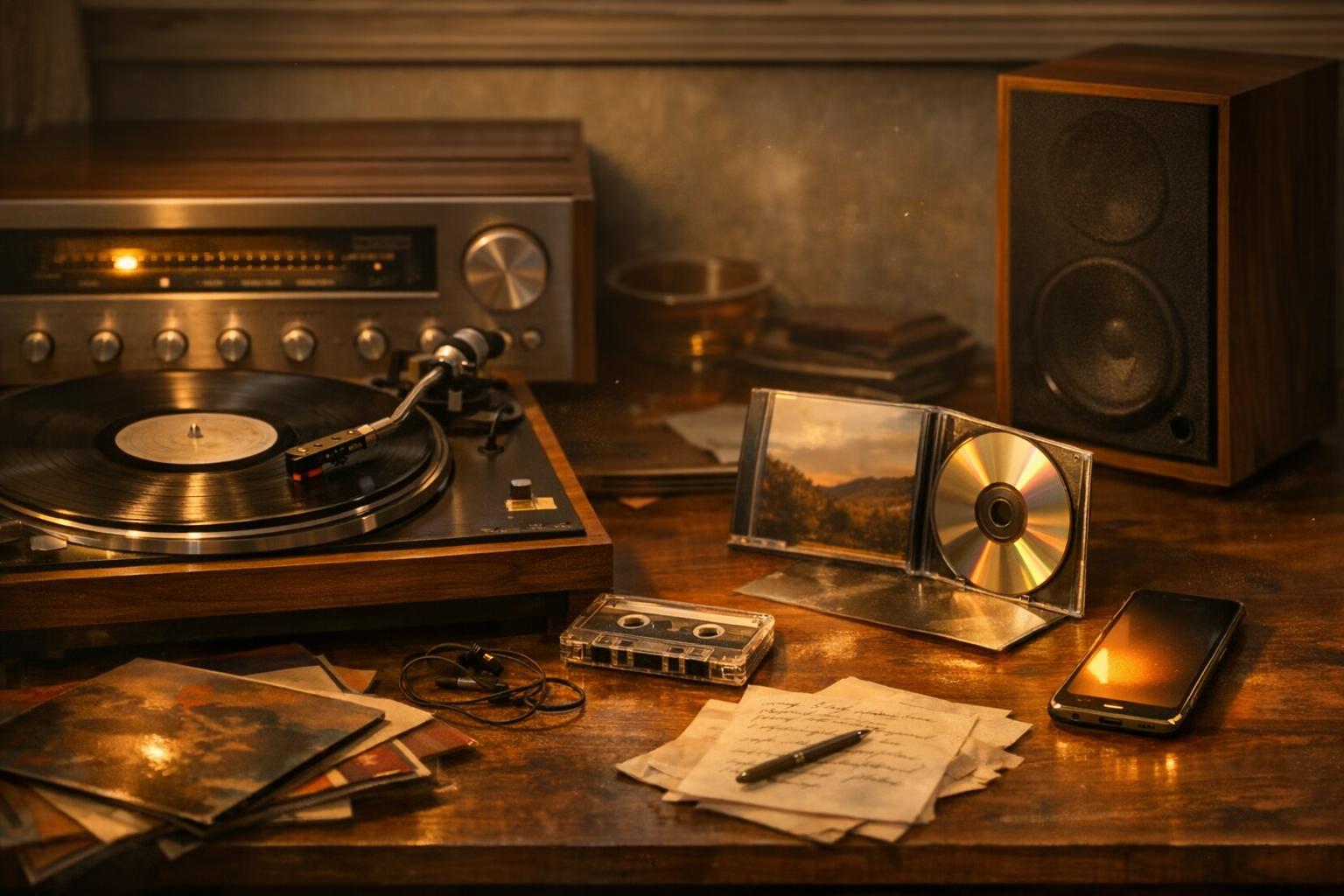
There was a time when playing music felt like an event. You lifted a record from its sleeve with a little care, set it on the turntable, and waited for that soft crackle before the first note arrived. Later came the clunk of the cassette deck, the satisfying snap of a CD case, and eventually the almost magical tap of a screen that could summon nearly any song in seconds. Music did not just change formats over the years; it changed the way we live with it.
And yet, for all the convenience of streaming, something fascinating has happened: the old ways are back in style. Vinyl is thriving, cassette designs are inspiring fashion, retro stereos are appearing in stylish living rooms, and younger listeners are discovering the joy of listening with intention. It is a lovely reminder that music is never only about sound. It is also about memory, ritual, identity, and the objects that carry our favourite songs through life.
When listening was a ritual
Ask anyone who grew up with vinyl, and they will often remember the whole experience as vividly as the music itself. There was the artwork, large enough to study like a poster. There were liner notes to read, musician credits to learn by heart, and lyrics that turned an album into a little world of its own. Putting on a record demanded a bit of commitment. You did not casually skip through twenty songs in five minutes. You listened, side one to side two, and the album unfolded the way the artist intended.
Cassettes made music more portable and personal. Suddenly you could build a mixtape for a road trip, a party, or someone you hoped might notice the care behind your song choices. There was romance in that. A handwritten track list could say as much as a letter. Then CDs arrived with their bright, clean promise of the future. For many people, they felt sleek and modern, and there was real excitement in hearing familiar songs with a crispness that seemed almost cinematic at the time.
Streaming, of course, changed everything again. It made discovery easier than ever. A teenager in one country could fall in love with soul, punk, disco, jazz, or classic rock from another era in seconds. For listeners, it opened an enormous musical library. For radio fans, it also created a new relationship with familiar songs. You might hear a beloved classic on air, then instantly dive into the album, the live version, the B-side, and the artist’s influences before the kettle has even boiled.
Why retro style feels so good right now
So why are so many people looking back, even while carrying the entire history of recorded music in their pocket? Part of the answer is simple: retro aesthetics feel human. In a world of invisible files and endless scrolling, physical music offers texture, colour, and presence.
A vinyl record is not just a storage format. It is an object with weight and personality. A brushed-metal stereo receiver, a wood-finish speaker, a glowing dial, a stack of records leaning against a wall: these things create atmosphere. They bring warmth to a room before a single note is played. It is no surprise that retro design has returned in furniture, fashion, photography, and home technology. Mid-century chairs, vintage band T-shirts, old-school headphones, Polaroid-style cameras, and neon-inspired graphics all tap into the same feeling. They suggest authenticity, comfort, and a little glamour too.
There is also the appeal of limits. Modern life offers too much choice, all the time. Streaming can be wonderful, but it can also turn listening into background noise. A record collection, even a small one, asks you to slow down and choose. That act feels meaningful. It is rather like cooking a favourite family recipe instead of ordering takeaway: not always faster, but often more satisfying.
Sometimes the joy of music is not in having everything. It is in loving a few things deeply.
Classic hits radio has always understood that. A great song is not valuable because it is rare or new. It matters because it connects. The opening piano of a familiar ballad, the punch of a Motown rhythm section, the shimmer of a 1980s chorus: these sounds carry stories. They remind us where we were, who we were with, and sometimes who we wanted to become.
The revival is bigger than records
The retro comeback reaches far beyond the record shop. Fashion has embraced flared silhouettes, leather jackets, oversized sunglasses, vintage trainers, and denim styles that would look right at home in old concert photographs. Interior design has welcomed turntable corners, retro lamps, patterned rugs, and bold colour palettes inspired by the 1960s, 1970s, and 1980s. Even modern technology is borrowing old visual language, with Bluetooth speakers dressed up like classic radios and apps using grainy filters to mimic analogue charm.
Popular culture has helped fuel the revival too. Television series set in past decades have rekindled interest in old songs and styles, while biographical films about legendary artists have sent audiences back to original recordings. One memorable sync in a film or drama can send a decades-old song racing up streaming charts overnight. It is one of the most delightful twists of modern music life: old songs finding brand-new listeners through new media.
Many of us have our own small version of that story. Perhaps it was hearing a parent sing along to a kitchen radio. Perhaps it was spotting an older sibling’s album sleeve and being captivated by the image before you knew the music. Maybe it was a song at a school dance, a summer drive, or a wedding where three generations all knew the chorus. Music travels through families and friendships in wonderfully ordinary ways, and that is part of why nostalgia remains so powerful.
Why younger listeners are joining in
One of the nicest things about today’s retro wave is that it is not only driven by people reliving their youth. Plenty of younger listeners are embracing older music and vintage style with real enthusiasm. For them, the appeal is discovery. The past can feel fresh when you did not live through it the first time.
There is also a sense of curation and identity in retro culture. Anyone can press play on a playlist, but building a shelf of favourite albums, wearing a classic tour shirt, or learning the history behind a beloved artist feels more personal. It says something about taste and curiosity. In that sense, retro living is not about pretending to live in another decade. It is about choosing the best pieces of it and making them part of modern life.
And perhaps that is the real bridge between vinyl and streaming. They are not enemies. They serve different moods. Streaming is brilliant for exploration, convenience, and sharing. Vinyl is wonderful for immersion, display, and ritual. Many music lovers happily do both: stream during the week, spin records on a Sunday afternoon, and listen to classic hits radio whenever they want that trusted companion who always seems to play the right song at the right time.
Easy ways to bring retro music style home
If you love the idea of a more nostalgic music lifestyle, you do not need a rare record collection or a perfectly styled home. A few thoughtful touches can make a big difference.
- Start with one meaningful album. Choose a record or CD you truly love, not one you think you are supposed to own. The emotional connection matters more than showing off.
- Create a listening corner. A comfortable chair, a small speaker or turntable, and a lamp with warm light can turn casual listening into a lovely daily ritual.
- Display music visually. Frame an album sleeve, stack a few favourite records on a shelf, or use vintage concert posters to add character to a room.
- Make themed playlists with a retro spirit. Try “late-night soul,” “Sunday vinyl mood,” or “driving with the windows down.” Even on streaming, the old art of curation still shines.
- Visit local record shops or flea markets. Half the fun is the browsing. You never know when you will find a forgotten favourite or a sleeve that sparks a memory.
- Ask family and friends about their music memories. Some of the best recommendations come with stories attached.
If you are curious about vinyl, begin simply. You do not need the most expensive equipment. A reliable entry-level turntable, a pair of decent speakers, and a few albums you already know and love are enough to get started. If space or budget is tight, even collecting CDs can be a satisfying retro hobby. They are affordable, tactile, and often full of wonderful booklet notes that streaming rarely replicates.
The old magic, still playing
Music has changed dramatically, but the feelings at its heart have not. We still chase the thrill of a song that understands us. We still build memories around choruses, dance floors, road trips, and quiet evenings at home. We still hear a familiar intro and feel time fold in on itself for a moment.
That is why the journey from vinyl to streaming is not really a story of loss. It is a story of expansion. We gained convenience, access, and discovery, while rediscovering the beauty of ritual, design, and deliberate listening. The best part is that we do not have to choose one era over another. We can enjoy the ease of modern technology and still treasure the crackle, colour, and character of the past.
So the next time a classic song comes through the radio, let it linger a little. Turn it up. Think of the sleeve, the stereo, the first time you heard it, or the person who introduced you to it. However music reaches us now, its real power remains gloriously unchanged: it makes life feel fuller, warmer, and wonderfully shared.