
Static, Stars, Action
The biggest sci-fi classics get the applause, but these 1960s American shows still know how to light up a screen.
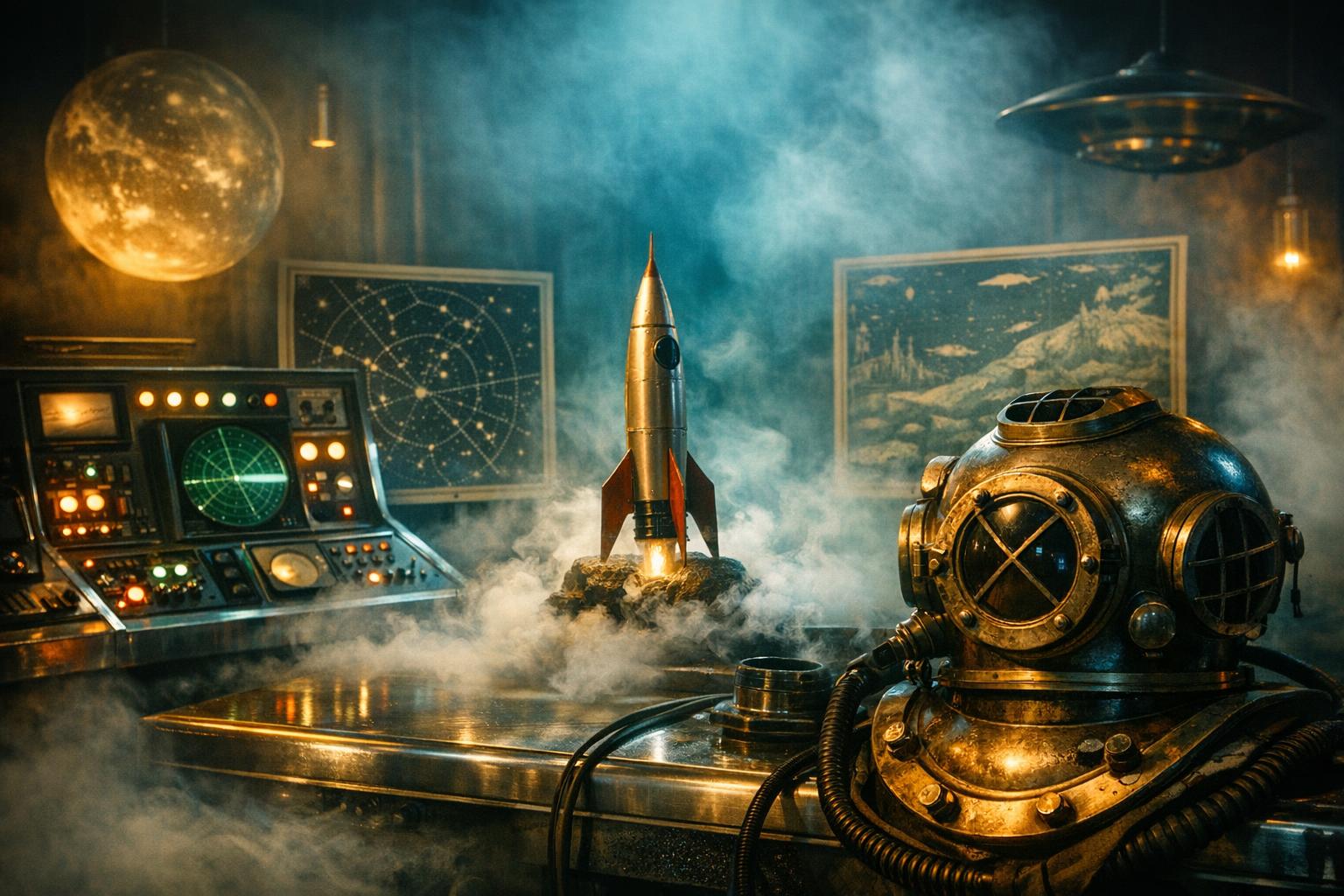
Before space sagas became blockbuster events and futuristic worlds arrived with dazzling special effects, television science fiction in 1960s America often ran on imagination, eerie lighting, bold ideas, and just enough studio fog to suggest another galaxy. That is part of the charm today. These shows may not always be the first titles people mention, but they still carry that thrilling spark of discovery—the feeling that anything could happen once the screen flickered to life.
For fans of classic television, and for anyone who loves the adventurous spirit of old radio and early TV, these forgotten sci-fi series are worth a fresh look. Some were strange, some were stylish, some lasted only briefly, but all of them offered viewers a ticket to somewhere unusual.
The magic of 1960s science fiction on American television
The 1960s were a remarkable time for science fiction. The Space Race was filling headlines, technology was changing daily life, and popular culture was becoming more adventurous. Television reflected all of that excitement. Producers were eager to explore outer space, time travel, alien encounters, secret laboratories, and parallel worlds.
Of course, budgets were often modest. A spaceship might tremble a little too obviously. A futuristic control panel might look suspiciously like painted household equipment. But that handmade quality is part of what makes these programmes so lovable. They leaned heavily on atmosphere, storytelling, and performance. When they worked, they really worked.
And while a few giants from the era still dominate the conversation, several lesser-known American shows deserve their moment back in the spotlight.
Shows that slipped through the cosmic cracks
Men Into Space (1959–1960)
Strictly speaking, this one began just before the 1960s, but its influence and feel belong right at the dawn of the decade. Men Into Space took a more serious, almost documentary-style approach to space travel. Rather than leaning into monsters or fantasy, it focused on the practical challenges of getting human beings into orbit and beyond.
That realism gave it a distinctive identity. There is something fascinating about watching a series imagine near-future space exploration before the moon landing had even happened. The hardware, the procedures, the sense of risk—it all feels like a dramatic companion piece to the real-world space ambitions of the era.
If you enjoy science fiction with a sober, thoughtful tone, this is a rewarding watch. It is less about flashy spectacle and more about the quiet tension of human ingenuity facing the unknown.
The Aquanauts (1960–1961)
Not every great 1960s science fiction idea was set among the stars. The Aquanauts explored the mysteries beneath the ocean, a frontier that felt nearly as exotic as deep space. The series followed a team of undersea adventurers working on dangerous assignments below the surface.
There is a wonderful period flavour here. The diving gear, the underwater photography, the sense of technological optimism—it all captures a time when the sea itself seemed full of futuristic promise. It sits somewhere between adventure drama and speculative fiction, which gives it a unique place in the genre.
For modern viewers, the appeal lies in that spirit of exploration. The ocean becomes another world, and every dive feels like the opening of a sealed door.
The Sixth Sense (1972) is often remembered, but One Step Beyond paved the mood
While not pure science fiction in the spaceship sense, American television in this period also embraced the uncanny, and that matters when talking about forgotten genre viewing. One show that carried that eerie, speculative energy into living rooms was One Step Beyond (1959–1961). It blurred the line between science fiction, supernatural mystery, and psychological suspense.
Hosted with grave seriousness by John Newland, the series presented stories of premonitions, strange coincidences, and unexplained phenomena. It had the sort of late-night atmosphere that lingers in the memory—dim rooms, tense faces, and the suggestion that reality might be thinner than we think.
Why include it here? Because science fiction in that era was often broader than robots and rockets. It was about possibility, mystery, and the edges of human understanding. One Step Beyond delivered that in abundance.
The Time Tunnel (1966–1967)
This one has a loyal following, but it still feels oddly under-celebrated compared with bigger names of the decade. Produced by Irwin Allen, The Time Tunnel followed scientists Tony Newman and Doug Phillips as they became lost in time, tumbling from one historical crisis to another.
It is a marvellous premise for episodic television. One week you are on the Titanic, the next you are in ancient history, then suddenly in the middle of a future disaster. The show moved quickly, looked ambitious, and had that breathless serial energy that keeps you leaning forward.
There is also something endearing about its vision of time travel. The giant swirling tunnel, the blinking controls, the urgent voices in the control room—it all feels gloriously of its moment. If you like your science fiction fast, colourful, and full of cliff-edge peril, this is a fine choice.
Voyage to the Bottom of the Sea (1964–1968)
Another Irwin Allen creation, Voyage to the Bottom of the Sea is sometimes remembered as an adventure series first and a sci-fi show second, but that blend is exactly why it deserves fresh appreciation. The Seaview submarine faced sea monsters, rogue science, hostile powers, and bizarre undersea threats in stories that often felt as dramatic as any outer-space mission.
Richard Basehart brought authority to Admiral Nelson, while David Hedison added youthful energy as Captain Crane. Together they gave the series a strong centre, even when the plots became wildly imaginative.
This is one of those shows that understands television as event entertainment. Sirens blare, instruments flash, crew members brace for impact, and some impossible danger rises out of the deep. It is easy to imagine viewers in the 1960s gathering around the TV, completely hooked.
The Invaders (1967–1968)
If you want paranoia with style, The Invaders is a gem. Roy Thinnes stars as architect David Vincent, who accidentally discovers that aliens have infiltrated Earth. The twist, of course, is that almost nobody believes him.
That setup gave the series a terrific emotional engine. Vincent is always chasing proof, always one step behind, always trying to warn a sceptical world. The show turns ordinary American settings—highways, motels, office buildings, suburbs—into places of hidden menace. That is one reason it still feels effective.
It also tapped into a larger 1960s mood: distrust, uncertainty, the fear that familiar institutions might not be what they seem. Beneath the science fiction surface, there is a sharp little chill running through it.
The best forgotten sci-fi shows often do one thing beautifully: they make the everyday world feel strange.
Land of the Giants (1968–1970)
Here is a show with a wonderfully simple hook. A spacecraft is thrown off course and crashes on a planet where everything is gigantic. Suddenly, a teacup becomes a bathtub, a cat becomes a monster, and a telephone is the size of a wall.
Land of the Giants made marvellous use of scale. Oversized props turned every episode into a visual playground. There is a childlike delight in the concept, but the series also knew how to build suspense and survival drama around it.
It is one of those programmes that reminds you how inventive television could be before digital effects. If the set designers could build it big enough, the audience would believe it. That practical creativity gives the show lasting appeal.
Why these shows still work today
Watching these series now is not just an exercise in nostalgia, although nostalgia certainly plays a part. They remain enjoyable because they are packed with strong ideas. In many cases, the concepts are so good that they still feel fresh.
- They trust the viewer’s imagination. Not everything is shown, which often makes the mystery stronger.
- They move with confidence. Episodes tend to get to the point quickly and keep the story rolling.
- They reflect their era. The hopes, fears, and visual style of 1960s America are woven into every frame.
- They are full of atmosphere. Strange music cues, dramatic shadows, blinking machines, and urgent dialogue create a memorable mood.
There is also a special pleasure in discovering a series that feels like a hidden track on a favourite album. You may know the biggest hits, but then suddenly you hear something less famous and realise it has its own magic. These shows are a bit like that—deep cuts from television’s great age of futuristic dreaming.
Where to begin
If you are new to these titles, start with the one that matches your mood. Want suspense? Try The Invaders. In the mood for pulpy adventure? Queue up Voyage to the Bottom of the Sea. Fancy historical chaos with a science fiction twist? The Time Tunnel is ready to whisk you away.
And if you are already a seasoned fan of classic genre television, these shows offer the joy of revisiting a time when imagination often mattered more than polish. That is not a weakness. It is the very thing that gives them character.
One more trip into the archive
There is something wonderfully comforting about 1960s American science fiction television. It carries the excitement of possibility. It believes tomorrow might be stranger, bigger, and more adventurous than today. Even the forgotten series share that belief.
So the next time you are searching for something different to watch, skip past the obvious choices for an evening and head into the archive. You may find a submarine under siege, a time traveller in trouble, an alien hiding in plain sight, or a crew running for cover beneath a giant coffee cup. That is the pleasure of these old shows: they still know how to surprise you.
And really, what could be more fun than that?