Neon High Scores on a Late-Night Dial
Why we still play this comes down to more than pixel nostalgia. The best arcade games of the 80s were social, stylish, and brilliantly designed, with the same instant pull as a classic hit on the radio.
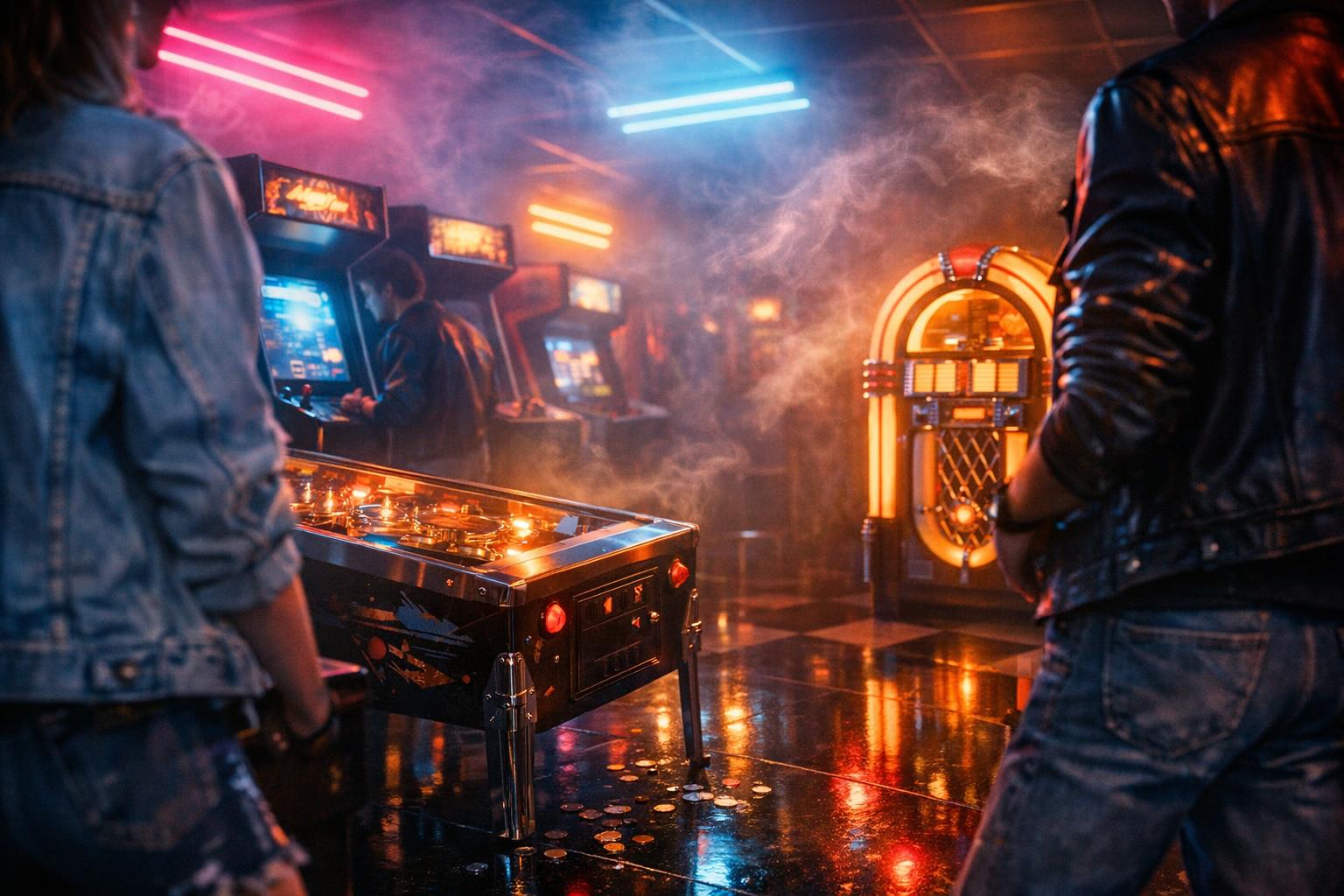
Step into a darkened arcade in the 1980s and you can almost hear it before you see it: the electronic chirp of Pac-Man, the laser-fire pulse of Galaga, the metallic thump of pinball nearby, and somewhere in the background, a chart hit spilling out of a radio or jukebox. It was not just a place to play games. It was a social club, a fashion parade, a test of nerve, and for many of us, a small glowing theatre of the future.
That is part of the reason the best arcade games of the 80s still hold such power today. They remind us of a moment when technology felt exciting and physical. You did not download an update or sit through a loading screen. You stepped up, dropped in a coin, wrapped your hand around a joystick, and hoped your initials would stay on the machine until closing time.
The arcade as a cultural crossroads
The 1980s arcade sat right at the meeting point of music, design, youth culture, and new technology. Bright cabinets flashed with bold artwork. Floors glowed under neon signs. Denim jackets, trainers, leather, big hair, and bright colours all seemed perfectly at home under those lights. If the shopping mall was the stage, the arcade was often the heartbeat.
And the music mattered. Even when the machines made their own unforgettable sounds, arcades were soaked in the energy of the era. Synth-pop, new wave, rock anthems, dance tracks, and radio favourites all fed the same appetite for speed, style, and spectacle. It is no surprise that when people talk about the 80s revival now, they often picture the same ingredients together: chrome, neon grids, cassette players, electronic beats, and a room full of glowing screens.
That revival has been strong for years. Television series, films, fashion shoots, and interior design have all borrowed from the arcade look. There is a reason for that. The era offered a visual language that still feels playful and optimistic. It imagined the future in bright colours.
The machines we still talk about
Ask ten people for the best arcade games of the 80s and you will get ten passionate answers, usually delivered with the certainty of a chart countdown. But a few names always rise to the top, and each one tells us something about why arcades mattered.
Pac-Man
Simple, cheerful, and immediately addictive, Pac-Man became a phenomenon because anyone could understand it in seconds. Maze, dots, ghosts, go. Yet beneath that friendly yellow face was a game of rhythm, strategy, and panic. It crossed generations in a way few games had before. It was also a branding giant, appearing on lunchboxes, television, records, and just about everything else.
Space Invaders
Though it began in the late 70s, Space Invaders truly helped define the arcade boom that carried into the 80s. There is something timeless about those descending rows of aliens. The tension builds with every beat, like a drummer speeding up before the chorus. It taught players that repetition could be thrilling when the pressure kept rising.
Donkey Kong
Donkey Kong gave us one of gaming’s great early stars in Mario, then known to many as Jumpman. It also brought personality and story into the arcade space. This was not just survival. This was a rescue mission, a cartoon come to life, full of barrels, ladders, and split-second timing.
Galaga
If you know, you know. Galaga remains one of the most satisfying arcade shooters ever made. The movement is crisp, the enemy patterns are elegant, and the risk-reward of allowing your ship to be captured for a stronger dual-fighter setup still feels clever. It is the sort of game that can make a person say, “Just one more go,” for half an hour.
Out Run
Out Run was pure 80s cool on wheels. A red sports car, branching routes, blue skies, palm trees, and a radio-style soundtrack built into the game itself. It felt glamorous and cinematic, like driving through a pop video. If any arcade machine captured the freedom fantasy of the decade, this was a serious contender.
Street Fighter and Double Dragon
By the later 80s, arcades became louder, tougher, and more competitive. Double Dragon turned side-scrolling action into a social event, especially with two players shoulder to shoulder. Street Fighter, before its massive sequel changed everything in the 90s, hinted at the versus drama that would soon dominate arcade culture. These games made the arcade feel like a live arena.
What made these machines special was not just the code. It was the crowd around them.
Why retro aesthetics still pull us in
There is a deeper reason people still love the look and feel of 80s arcade culture. In a digital world where so much happens invisibly in the cloud, retro objects feel reassuringly real. Arcade cabinets have weight. Buttons click. Screens glow. Sound effects crackle with character. Even the imperfections feel human.
Retro aesthetics also offer something modern design sometimes avoids: boldness. The 80s loved contrast. Hot pink next to electric blue. Sharp angles beside chrome curves. Fonts that looked like they had arrived from outer space. It was dramatic, unashamed, and a little theatrical. Today, in homes, bars, fashion, and album artwork, that same spirit still feels refreshing.
Then there is the emotional side. For some, arcades bring back teenage weekends, friendly rivalries, and pockets full of coins. For others, especially younger fans, the appeal is almost archaeological. They are discovering a version of the future imagined by the past. That mix of memory and curiosity is powerful.
Music, memory, and the arcade mood
Retro gaming nostalgia rarely travels alone. It often arrives with a song. Hear a synth bass line, a drum machine snap, or a glossy guitar intro, and suddenly the whole picture returns: fluorescent lights, fizzy drinks, and the hum of machines waiting for the next player.
That link between games and music is one reason arcade culture fits so naturally on a classic hits radio station blog. Both are built around instant recognition. A great song and a great arcade game share the same gift: they hook you fast, reward repeat visits, and become woven into your personal history.
I still remember watching an older player dominate Defender while a big pop anthem played somewhere behind us in the shopping centre. I was far too intimidated to try the machine myself. It looked impossibly fast, all flashing chaos and expert hand movement. But that is part of the memory too: not just what we played, but what we watched, what we heard, and who seemed impossibly cool in that moment.
How to bring arcade magic into modern life
The good news is you do not need a full row of original cabinets to enjoy the best of this world today. A little imagination goes a long way.
- Visit a retro arcade or barcade: If there is one near you, go in with friends and make a night of it. The social side is half the fun.
- Try a mini home setup: Plug-and-play consoles, arcade sticks, and classic game collections can recreate some of the feel without taking over the house.
- Build a playlist to match: Pair your gaming session with synth-pop, rock, funk, and dance tracks from the era. The right music transforms the mood instantly.
- Decorate with restraint: A neon sign, framed arcade art, or a chrome-and-black side table can nod to the style without turning your living room into a film set.
- Dress for the mood: Retro trainers, a vintage tee, or a bomber jacket can be a fun wink to the era, especially for themed parties or gaming nights.
- Learn the games properly: Many classic arcade titles reward pattern recognition and patience. Read up on a few strategies and you will enjoy them even more.
What most people miss about arcade greatness
It is easy to think the best arcade games of the 80s were simply primitive versions of what came later. In truth, they were masters of focus. They had to catch your eye from across the room, teach you quickly, challenge you fairly, and make you want another turn before your coin had even settled. That is brilliant design.
They were also communal in a way many modern games are not. You stood beside strangers. You watched techniques. You celebrated impossible recoveries. You groaned when someone beat your score by a tiny margin. Arcades turned play into performance, and everyone in the room became part of the atmosphere.
That is why we still play this. Not only for the nostalgia, though that is certainly part of the charm. We return because these games still work. They still sparkle. They still create stories.
And perhaps that is the most 80s thing about them. They believed excitement should be seen and heard. Bright lights. Big sounds. Fast reflexes. A little drama. A lot of style. Just like the best records on the late-night dial, the finest arcade games of the 80s knew exactly how to grab your attention and never quite let go.