Why The Outer Limits Still Thrills
The night that eerie control voice first rolled out of the television speaker, viewers knew they were in for something different. These ten unforgettable episodes of The Outer Limits still deliver chills, style, and a perfect dose of early-1960s retro magic.
Static, shadows, and the mood of the age
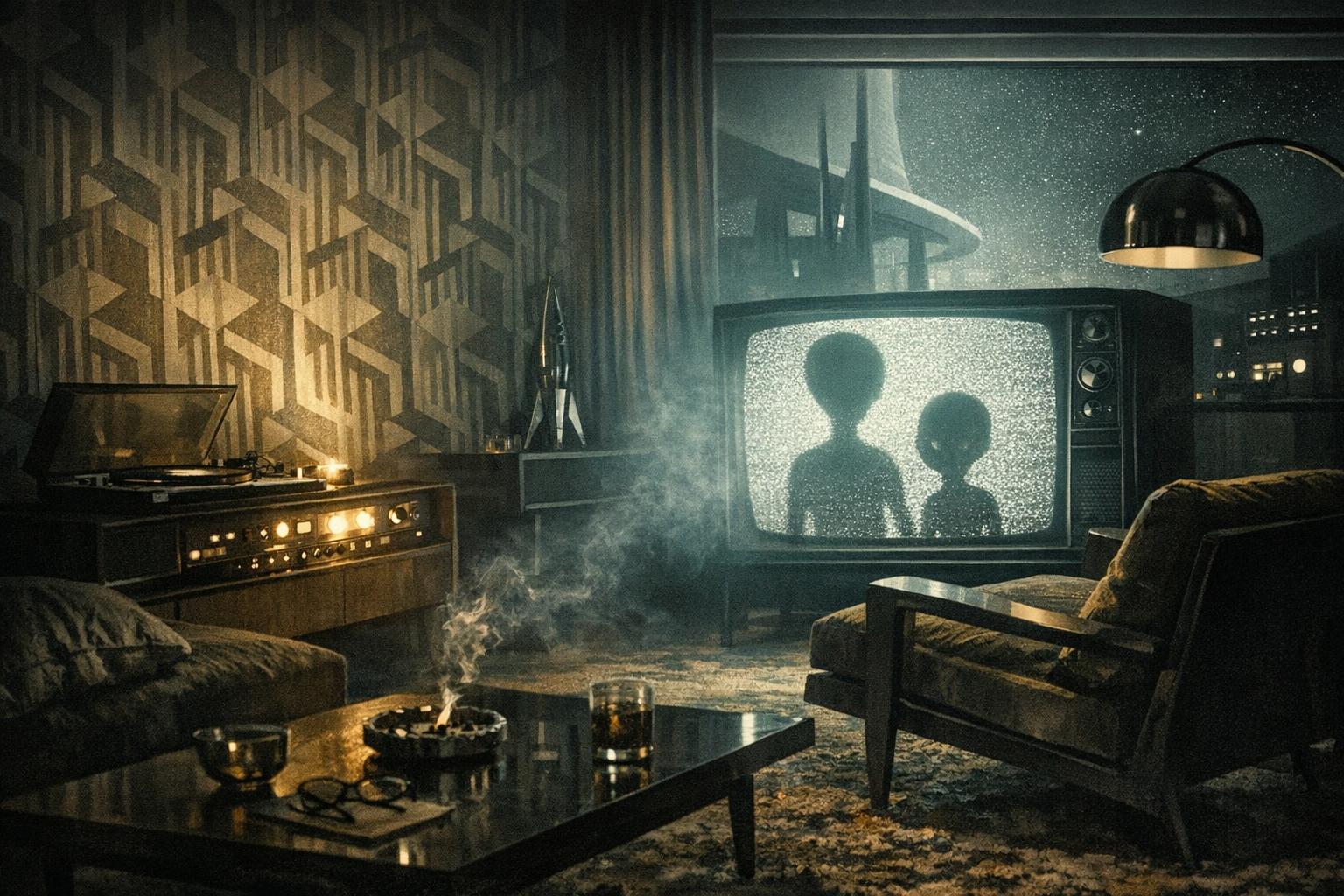
Before we count down the episodes, it is worth remembering just how perfectly The Outer Limits fit its era. The early 1960s were full of contrast. On one hand, there was optimism: modern furniture, bold geometric prints, chrome lamps, hi-fi consoles, and the thrill of the Space Race. On the other, there was anxiety about technology, power, and what might be waiting beyond the stars.
That tension is all over the series. The sets look like a dream of the future drawn in sharp black ink. Lab coats, blinking control panels, severe architecture, and eerie electronic sounds gave the show a style that still feels fresh. If you love mid-century design, this series is practically a moving gallery.
And then there is the music connection. While The Outer Limits was not a pop music show, it belongs to the same cultural world that gave us surf guitar, girl groups, early Motown, and the first wave of British beat music crossing the Atlantic. It was an age when people gathered around radios and televisions with equal devotion. You can almost imagine an evening that began with a favourite record spinning on the turntable and ended with a family leaning forward as some alien creature appeared on screen.
Classic television and classic hits come from the same place in memory: a room, a mood, a voice, and the feeling that something unforgettable is about to happen.
10 episodes that still deserve the spotlight
1. The Zanti Misfits
If you ask longtime fans to name one episode, this title often comes up first. It is tense, strange, and wonderfully imaginative. The story follows a remote desert used as a dumping ground for alien criminals, and the creatures themselves are unforgettable: insect-like, menacing, and created with the kind of practical effects that still have real charm.
It captures what the series did best: taking a bizarre premise and grounding it in fear, secrecy, and moral unease. There is also a faint Cold War chill running through it, which makes it feel very much of its time.
2. The Architects of Fear
One of the show’s smartest and saddest episodes, this story follows scientists who decide to create a fake alien threat in order to unite humanity. It is a bold concept, and it still feels surprisingly modern. Questions about media panic, manipulation, and political fear have not gone away.
The emotional power comes from the central sacrifice. Beneath the science-fiction idea is a very human tragedy, and that is exactly why The Outer Limits remains so memorable.
3. Demon with a Glass Hand
Written by Harlan Ellison and starring Robert Culp, this is one of the series’ crown jewels. A man with a mysterious electronic hand is pursued through an empty office building by strange enemies, and the story unfolds like a noir puzzle from the future.
It is stylish, clever, and packed with atmosphere. Even now, the visual minimalism gives it a dreamlike quality. If you enjoy retro-futurism in fashion and interiors, this episode is a feast of angular spaces and cool menace.
4. It Crawled Out of the Woodwork
There is something wonderfully pulpy about this one. An energy-based life form escapes from a laboratory and starts feeding on electricity, growing stronger by the minute. The premise is simple, but the execution is gripping.
This is a perfect example of the era’s fascination with technology. In the 1960s, electricity and electronics still felt a little magical to many people. A story about power literally coming alive tapped into both excitement and fear.
5. The Man Who Was Never Born
Time travel, romance, and apocalypse all meet in one haunting hour. Martin Landau gives a moving performance in a story about a man from a devastated future trying to prevent disaster in the past.
It is thoughtful science fiction with a strong emotional core. There is also a melancholy beauty to it that lingers after the credits. This is one for viewers who like their retro television with a touch of heartbreak.
6. Nightmare
This episode is lean, intense, and deeply unsettling. A group of soldiers finds itself trapped in a bizarre interrogation scenario, and the psychological pressure keeps building. It feels almost like a stage play crossed with a military thriller.
What makes it stand out is the way it reflects the anxieties of the era without becoming heavy-handed. It is suspenseful television, but it also says something about fear, control, and the fragility of certainty.
7. The Sixth Finger
David McCallum stars in a story about accelerated evolution, and he is terrific. A laboratory experiment transforms a man intellectually and physically, but the gains come at a cost. The makeup effects are memorable, but the real appeal is the eerie idea at the centre: what if human progress moved too fast for human wisdom?
This episode has that ideal Outer Limits blend of ambition and unease. It also has a touch of the mad-science glamour that made vintage sci-fi so irresistible.
8. The Bellero Shield
Here the show delivers domestic drama, alien encounter, and moral conflict in one tight package. An alien seeks refuge, a scientist sees opportunity, and his wife becomes the emotional centre of the story.
There is a theatrical intensity to this episode that works beautifully. It also gives us one of the series’ recurring strengths: science fiction used not just for spectacle, but for character.
9. Soldier
Another Harlan Ellison script, this episode imagines a warrior from the future thrown into the present day. It is compact, powerful, and influential, with ideas that would echo through later science-fiction films and television.
The contrast between brutal future conflict and ordinary domestic life gives the story its punch. It asks what happens when violence has nowhere to go, and the answer is not comforting.
10. The Inheritors Part I and II
Strictly speaking, this is a two-part story, but it earns its place. A mysterious beam from space affects a group of soldiers, granting them extraordinary intelligence and a shared purpose. What follows is thoughtful, eerie, and unexpectedly moving.
If you enjoy the more philosophical side of the series, this is essential viewing. It has scale, mystery, and a sense of wonder that balances the show’s darker elements.
Why retro aesthetics feel so good right now
The renewed love for shows like The Outer Limits is about more than monsters and plot twists. People are drawn to retro aesthetics because they offer texture. Old television has visible craft: painted sets, practical effects, dramatic lighting, expressive performances. You can feel the hands that made it.
In a world of endless scrolling and polished digital sameness, that handcrafted quality is deeply appealing. The same is true in music nostalgia. Listeners still love the warm crackle of vinyl, the glow of old radios, and the rich personality of recordings made before everything became too clean.
There is also comfort in the ritual. Watching a vintage series can feel like slowing down to the rhythm of another age. It is not unlike putting on a classic hits station and letting familiar songs carry you into a different mood. One minute you are answering emails, the next you are mentally redecorating your living room in teak and mustard yellow.
Bring the mood home
If this article has you ready for a retro night in, the good news is that it does not take much to create the atmosphere.
- Dim the lights: Black-and-white television looks best with a little shadow in the room. A table lamp beats overhead lighting every time.
- Lean into mid-century touches: A geometric cushion, a chrome tray, or a vintage-style clock can instantly shift the mood.
- Build a matching playlist: Try instrumentals, early rock and roll, jazz, surf sounds, or moody orchestral tracks before the episode starts.
- Serve era-friendly snacks: Popcorn, olives, fizzy drinks in glassware, or simple canapés make it feel like an event.
- Watch with friends: Vintage science fiction is especially fun when people react together. Half the pleasure is hearing someone gasp, laugh, or say, “How did they do that?”
I still remember watching an old episode at a friend’s house during a rainy weekend marathon, with a stack of records nearby and the room lit by one stubborn lamp. Between episodes, someone put on The Beach Boys, then Roy Orbison, and somehow it all fit. That is the magic of this era. The music, the design, the television, the optimism, the unease — it all belongs to the same wonderful cultural weather.
A signal worth tuning into
The Outer Limits only ran for two seasons, but it left behind a world far bigger than its episode count suggests. Its best stories still surprise, still provoke, and still look magnificent in that stark monochrome style. More than that, the series opens a door to the wider pleasures of the early 1960s: the fashions, the furniture, the futuristic dreams, and the music humming through the background of everyday life.
So if you are in the mood for a retro escape, start with one of these ten episodes. Put on a classic record before or after, let the room go a little dark, and enjoy the sensation of travelling back to a time when the future looked strange, stylish, and just a little bit dangerous.