Neon on the Dial
The night they recorded songs off the radio, everyone knew not to speak during the intro. That little Friday ritual says a lot about why the 1980s still glow so brightly in our homes, wardrobes, and playlists today.
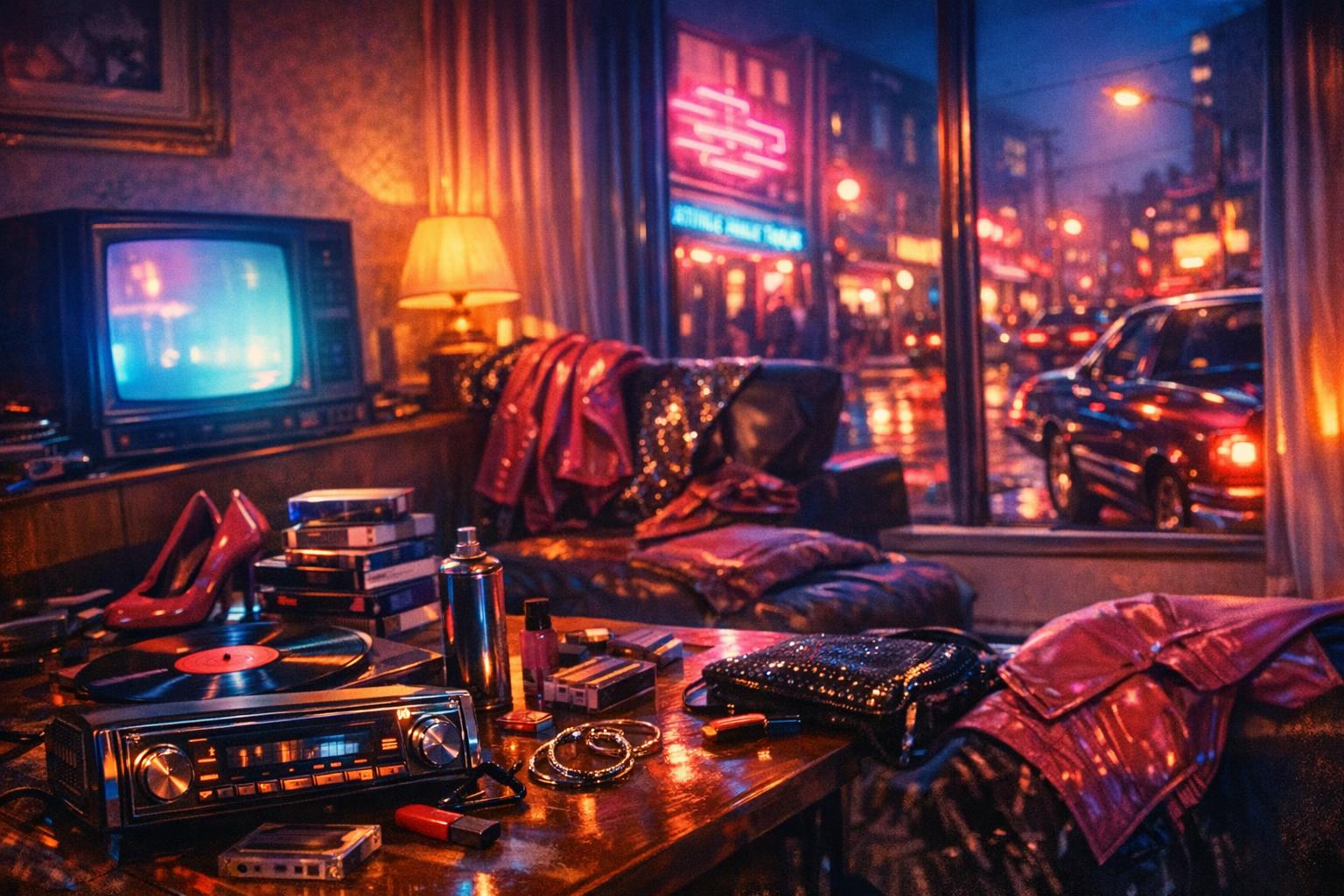
There was a particular kind of electricity to a Friday night in the 1980s. You could feel it before the sun had fully gone down: the quick change out of school or work clothes, the hiss of hairspray in the bathroom, the click of a cassette pushed into a car stereo, the glow of a television in the corner promising music videos, sitcoms, and big movie premieres. Even if you stayed home, Friday felt like an event.
Today, our evenings look different. We scroll, stream, message, order food with a tap, and build playlists in seconds. Yet for all that convenience, people keep circling back to the look, sound, and mood of the 1980s. Not just in themed parties or costume nights, but in interior design, fashion, photography, technology, and of course music. Something about that era still flickers brightly on the cultural radar.
So what was special about Friday nights then, and why do they still echo now? Let us put the needle down and take a warm, bright trip through it.
When Friday night felt like a shared broadcast
In the 1980s, Friday night entertainment often happened on a schedule set by someone else. That may sound limiting now, but it created a kind of communal excitement that is harder to find in an on-demand world. If a favourite song came on the radio, you listened right then. If a big television episode aired, you were there for it or you asked someone to tell you what happened on Monday.
That shared timing gave the evening a rhythm. Music television changed how people got ready to go out. Radio countdowns turned bedrooms and kitchens into little party spaces. A local club DJ could make a room erupt with just the opening drumbeat of a familiar hit. Think of the punch of Wake Me Up Before You Go-Go, the sleek cool of Duran Duran, the sparkle of Madonna, the dramatic lift of Whitney Houston, or the impossible-to-resist bounce of Prince. Friday nights had songs that announced themselves like guests arriving in style.
There is a reason so many people still tell stories that begin with a song. One listener remembers waiting by the radio with a blank tape, finger hovering over the record button, hoping the presenter would not talk over the intro. Another recalls a packed living room where everyone stopped chatting the moment the opening synth line of Take On Me came on. Those moments were small, but they felt huge.
Friday in the 1980s was not just leisure time. It was appointment excitement.
The look of the night: bold colours, shiny surfaces, big personality
If today leans toward curated minimalism, the 1980s often embraced joyful excess. Friday night style was a performance in itself. Denim jackets, oversized blazers, shoulder pads, statement earrings, white trainers, leather skirts, graphic prints, bright lipstick, and enough neon to light a dance floor from across the street. Even casual clothes seemed to have a little more confidence.
That visual language has come roaring back. Walk through shops now and you will see retro trainers, high-waisted jeans, bomber jackets, tinted sunglasses, and colour palettes that would have looked right at home in a 1985 music video. Interior design has followed too: chrome details, glass blocks, pastel accents, checkerboard floors, lacquered surfaces, and warm mood lighting that feels halfway between a diner and a late-night record store.
Why does it still appeal? Because retro aesthetics do something many modern styles avoid: they commit. They are playful, expressive, and unafraid. In a world that can sometimes feel polished to the point of sameness, the 1980s offer texture and attitude. A little visual drama can make an ordinary Friday feel like an occasion.
Why retro keeps calling us back
The revival of the era is not only about nostalgia for people who lived through it. Plenty of younger fans love the 1980s without having experienced a single original Friday night from the decade. That says something important: this is bigger than memory. It is about mood.
Retro culture gives people a sense of connection. Vinyl records ask you to slow down. Film cameras make a moment feel more intentional. Arcade games are simple, social, and satisfyingly physical. Cassette players, Polaroids, old posters, and vintage radios all carry a visible sense of use and history. They feel human.
There is also comfort in recognisable pop culture. A line from The Breakfast Club, the opening bars of Girls Just Want to Have Fun, the glow of a jukebox, the chrome edge of a boombox, the title sequence of an old television show: these things are emotional shortcuts. They remind us of sleepovers, first crushes, family living rooms, shopping malls, roller rinks, and road trips. Even second-hand nostalgia can feel real when culture has repeated those images so often.
And then there is the music. Classic hits have a remarkable power to make time collapse. A Friday evening today can suddenly feel richer when a familiar chorus comes on and everyone in the room knows it. That is one reason classic radio still matters. It does not just play songs; it reopens rooms in the mind.
Friday nights now: more choice, less ceremony
Modern Friday nights are full of possibility. We can stream a concert film, join friends on a video call, book a table online, share playlists instantly, or discover a forgotten album in seconds. There is freedom in that. But there is also a trade-off. When everything is available all the time, fewer things feel special simply because they are happening now.
That may be why so many people intentionally recreate older rituals. Record nights. Retro dress codes. Movie marathons on physical media. Home bars stocked with bright, unapologetic cocktails. Board games instead of endless scrolling. A speaker in the kitchen playing classic hits while dinner is cooked. These are not attempts to reject the present. They are ways of putting shape back into our leisure time.
One of the nicest things about today’s retro revival is that it lets us take the best of both worlds. We can enjoy the convenience of modern life while borrowing the ceremony of the past.
How to bring a little 1980s magic into your own Friday
You do not need a smoke machine, a wall of cassettes, or a perfect vintage wardrobe to capture the feeling. A few thoughtful touches can change the whole atmosphere.
Build a proper evening playlist
Start with anticipation, not just the biggest hits. Open with something sleek and inviting, then lift the energy. Think synth-pop, dance-floor favourites, power ballads, and one or two songs everyone can sing. A good Friday sequence might move from Phil Collins to Cyndi Lauper, then into Prince, Tina Turner, Eurythmics, and a big closing burst of Bon Jovi or Whitney Houston.
Dress with intention
Even at home, put on something that signals the week is over. It could be a vintage band T-shirt, a bright jacket, bold earrings, or trainers with retro flair. The goal is not costume. It is mood.
Make one thing gloriously analog
Play a vinyl record. Use printed photographs as table decor. Write your evening plans on a notepad instead of in an app. Put snacks in real bowls. Light the room warmly. Tiny physical details make the night feel less disposable.
Choose one shared moment
Watch a classic music performance together. Queue up an old television episode. Do a mini countdown of favourite songs from a particular year. Shared attention is what gave older Friday nights their sparkle.
Lean into the visuals
- Use coloured lighting or a small lamp instead of harsh overhead lights
- Serve simple retro snacks like popcorn, crisps, fizzy drinks, or mocktails with bright fruit garnish
- Print out a few old album covers or concert images for instant atmosphere
- Try a playlist break for a quick round of charades based on films, songs, or celebrities from the era
The stories we still tell
Ask almost anyone about their ideal Friday night memory and the answer is rarely complicated. It is a friend arriving early while the radio is already on. It is the excitement of hearing your song in a shop before heading out. It is a living room dance with siblings. It is someone trying to copy a music video outfit and almost getting away with it. It is the smell of takeaway food, the sound of laughter from another room, the final chorus turned up just a little louder than necessary.
That is the real reason the 1980s still matter in lifestyle culture. They remind us that style is not only about what we wear or buy. It is about how a moment feels. Friday nights in that era seemed to understand that instinctively. They were bright, social, slightly theatrical, and built around anticipation.
Today, we may have better screens, faster connections, and endless entertainment. But many of us still want what those older evenings offered so naturally: a sense that the night has begun, that something fun is about to happen, and that music will carry us there.
So this Friday, turn on a classic hits station, lower the lights, and let the room glow a little. The decade may be gone, but the feeling is still very much on the air.