Why Deacon Blues Still Glows
Why we still play this: “Deacon Blues” turns studio perfection into something warm, wistful, and deeply human. Beneath its polished surface is one of Steely Dan’s smartest stories — and one of the late 1970s’ most enduring records.
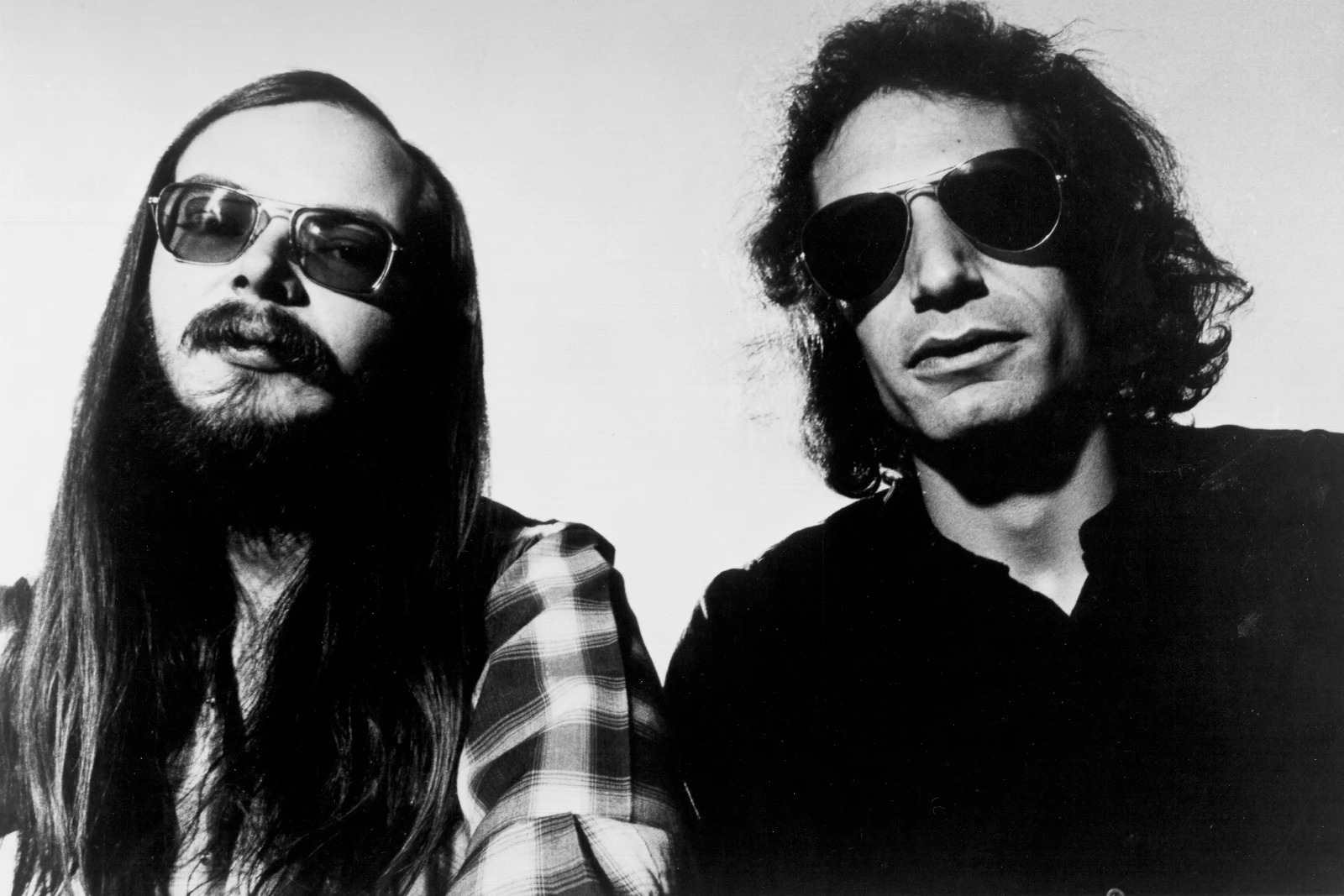
There is something quietly magnetic about “Deacon Blues”. It does not rush to grab you. It settles in, pours a late-night drink, and lets its details unfold: the weary pride in the vocal, the elegant piano chords, the saxophone that seems to drift in from another room. Released on Steely Dan’s 1977 album Aja and continuing its chart life into 1978, the song became one of the group’s most loved recordings — not because it was flashy, but because it felt lived-in, witty, and strangely moving.
For radio listeners, it remains one of those records that changes the atmosphere the moment it starts. You hear that opening and suddenly the room feels dimmer, warmer, more reflective. That is part of Steely Dan’s magic, and “Deacon Blues” may be one of the clearest windows into how Donald Fagen and Walter Becker created it.
The idea behind the song
An outsider’s anthem in a silk suit
“Deacon Blues” was written by Steely Dan’s core creative team, Walter Becker and Donald Fagen, who also produced the track together under the Steely Dan name. Like many of their best songs, it mixes sharp humour, emotional ambiguity, and a deep love of American music. On the surface, the lyric follows a dreamer who embraces a romantic image of failure: a man who may never be a winner in conventional terms, but who still wants to live dramatically, make music, and become someone memorable in his own mind.
The title itself was inspired by American college football culture. Becker and Fagen were said to have noticed the grandeur of football nicknames and fight-song identities, and they were amused by the idea of inventing one for a person with no obvious glory at all. If universities could have heroic names and legends, why could not an ordinary, slightly defeated soul claim one too? Deacon Blues sounds noble, but also faintly worn-out — exactly the balance the song captures.
That blend of aspiration and resignation is what gives the lyric its staying power. Lines about learning to work the saxophone, drinking Scotch whisky all night long, and dying behind the wheel are dramatic, even dark, but they are delivered with such elegance that the song feels less like self-destruction and more like a private mythology. It is about the people who stand outside the bright spotlight and still imagine a life worth singing about.
Building the record in the studio
The perfectionists at work
By the time Aja was being made, Steely Dan had evolved from a touring band into a studio-focused operation obsessed with detail. Becker and Fagen were famous — and sometimes feared — for their exacting standards. They worked with elite session musicians, recorded multiple takes with different players, and chased subtle differences in feel, tone, and phrasing that many listeners might never consciously notice but would certainly feel.
“Deacon Blues” was recorded during the Aja sessions, with Becker and Fagen shaping the arrangement as both writers and producers. Engineer Roger Nichols, a crucial figure in the Steely Dan story, helped translate their demanding ideas into the pristine, spacious sound that became one of the album’s signatures. Nichols was not just a technician; he was an audio craftsman whose work helped make Steely Dan records sound impossibly clean without losing warmth.
The musicians who gave it life
As with much of Aja, the song drew on top-tier session talent. Donald Fagen handled the lead vocal and keyboards, delivering one of his finest performances: dry, vulnerable, intelligent, and deeply human. Walter Becker contributed bass work to the Steely Dan world more broadly and, more importantly here, his compositional voice and production judgment were central to the final shape of the track.
Among the notable players on “Deacon Blues” were guitarist Larry Carlton, whose tasteful, polished style fit Steely Dan perfectly, and drummer Bernard Purdie, a groove master whose subtle touch helped the song move with unforced confidence. The saxophone solo came from Pete Christlieb, a jazz player whose rich, assured tone gives the record one of its defining moments. Rather than sounding like a showy interruption, his solo feels like the song’s inner voice finally stepping forward.
Backing vocals also play a huge role in the record’s atmosphere. The harmonies soften the song’s cynicism and add a kind of glowing melancholy, especially in the chorus. Steely Dan often used vocal arrangements as emotional shading, and here they help turn a sardonic lyric into something almost tender.
Why the recording feels so luxurious
One reason “Deacon Blues” still sounds extraordinary is its balance. Nothing is crowded. The electric piano, drums, guitar, saxophone, and vocals all sit in the mix with remarkable clarity. That was no accident. Becker, Fagen, and Nichols were known for painstaking studio methods, and Aja became a landmark in high-end album production partly because of that relentless pursuit of sonic precision.
Yet for all the technical care, the song never feels cold. That is the trick. Steely Dan could be immaculate without becoming sterile. “Deacon Blues” breathes, sways, and glows in a way that keeps it emotionally open.
Commercial reception and chart success
A standout from a major album
“Deacon Blues” was released as a single from Aja, the album that many fans and critics regard as Steely Dan’s masterpiece. In the United States, the song reached the Billboard Hot 100, peaking in the top 20, and it also performed well on adult-oriented radio formats where its sophistication and smooth surface found a natural home.
That chart run mattered because “Deacon Blues” is not an obvious hit in the conventional sense. It is long, reflective, and lyrically unusual. There is no simple singalong hook designed for instant impact. Its success showed that, in the late 1970s, there was still room on popular radio for songs that were musically rich, narratively strange, and patient in their rewards.
Aja itself was a commercial triumph, and the success of the album helped lift the song’s profile even further. For many listeners, this was the track that revealed Steely Dan were not just clever songwriters but architects of an entire atmosphere.
Behind the scenes moments worth knowing
The title came from football, not jazz clubs
One of the most charming details about the song is that its title did not come from some smoky nightclub legend. It came from Becker and Fagen’s fascination with the theatricality of college football names and identities. There is something very Steely Dan about that: taking a seemingly unrelated piece of American culture and transforming it into a character study full of longing and irony.
A song polished through Steely Dan’s famous process
Steely Dan’s sessions in this period were known for multiple takes, changing personnel, and endless fine-tuning. Musicians would sometimes arrive, play brilliantly, and still not know whether their part would survive to the final mix. That demanding process could be exhausting, but it also produced records with unusual depth and refinement.
On “Deacon Blues”, that care paid off in the details: the relaxed but exact rhythm, the smooth transitions, the way the arrangement gently expands without ever losing focus. It sounds effortless because an enormous amount of effort went into making it so.
A saxophone solo that became part of the song’s identity
Pete Christlieb’s solo is one of the great Steely Dan guest appearances. It does not simply decorate the track; it completes it. The song’s narrator dreams of learning to work the saxophone, and then the record answers that dream with a solo full of authority and soul. It is a beautiful bit of musical storytelling, almost like the fantasy becoming real for a few bars.
Its place in the late 1970s
Where jazz, rock, and adult pop met
The late 1970s were a fascinating moment in popular music. Disco was huge, punk was shaking up old assumptions, singer-songwriters were still strong, and album-oriented rock was becoming more sophisticated in production and ambition. Steely Dan sat in a category almost entirely their own, but “Deacon Blues” reflects that era’s appetite for blending styles.
The track draws from jazz harmony, rock structure, soul phrasing, and studio craftsmanship. It belongs to the same broad musical world that valued finesse, musicianship, and headphone listening. At the same time, its lyrical point of view is more complex than much mainstream pop of the day. It is adult music in the best sense: not dull or polite, but emotionally layered.
That also helps explain why the song endured while many slick late-1970s productions faded. Beneath the immaculate surface is a real character, a real ache, and a very human contradiction. The narrator wants dignity, glamour, escape, and oblivion all at once. That tension never goes out of date.
Legacy and lasting appeal
Why listeners keep coming back
Over the decades, “Deacon Blues” has become more than a successful single. It is now one of Steely Dan’s signature songs, cherished by devoted fans and admired by musicians, producers, and songwriters. It regularly appears in discussions of the band’s finest work and of the most beautifully produced recordings of its era.
Its cultural impact comes partly from how hard it is to pin down. Is it sad? Funny? Defiant? Self-mocking? Romantic? The answer is yes to all of them. That complexity gives listeners room to grow with it. A teenager may hear sophistication and mystery; an older listener may hear compromise, fantasy, and resilience.
It also remains a favourite on classic hits and album-oriented radio because it creates such a strong mood. Some songs fill the air. “Deacon Blues” changes it. Even now, decades after its release, it feels like a late-night conversation with someone clever, bruised, and determined to make poetry out of disappointment.
That is why it still glows. Not because it shouts the loudest, but because it knows exactly who it is. In the Steely Dan catalogue, that is saying something. In the wider story of 1970s music, it is a reminder that elegance and emotional depth can live in the same song — and that sometimes the records that linger longest are the ones that move with a little mystery.