Inside the Hit Factory on Borough High Street
Here's what made Stock Aitken Waterman and PWL such a force on the radio: they turned pop precision into pure excitement. Behind the glossy hooks was a fast-moving, fiercely focused operation that knew exactly how to make listeners stay tuned.
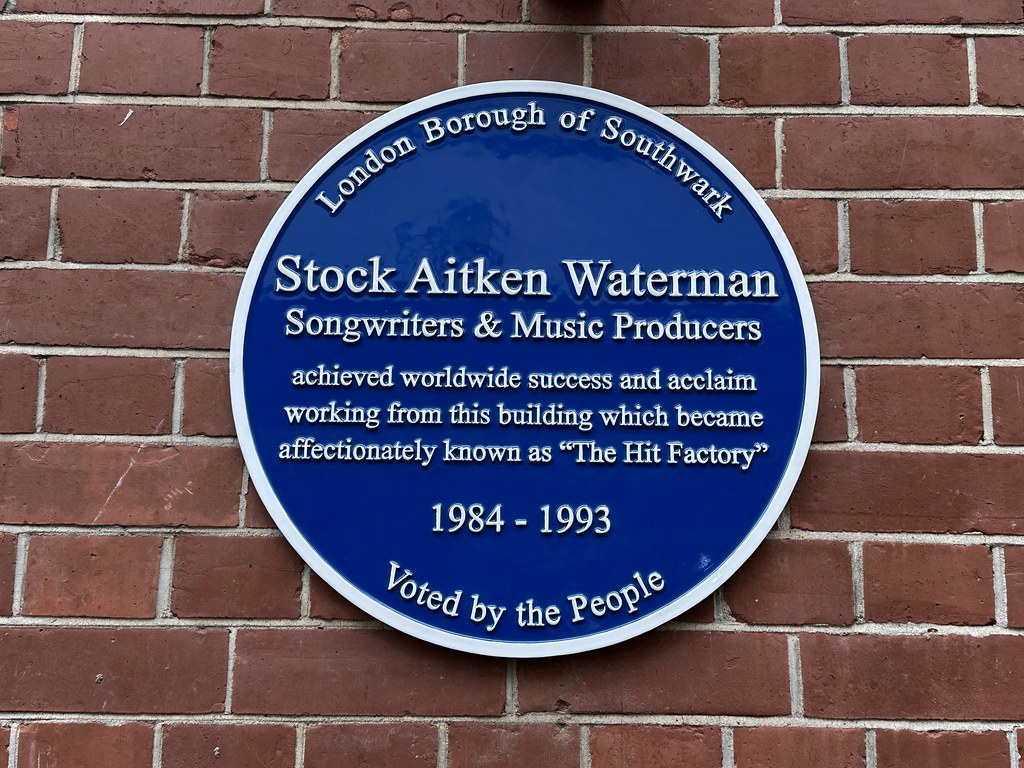
There are music partnerships that feel carefully planned, and then there are the ones that seem to arrive with a flash of timing, instinct, and sheer momentum. Stock Aitken Waterman belonged firmly in the second group. For a remarkable stretch in the 1980s and early 1990s, Mike Stock, Matt Aitken, and Pete Waterman turned a South London studio base into one of pop music’s most efficient and exciting production lines, while their label, PWL, became a calling card for bright hooks, polished beats, and chart certainty.
If you were listening to the radio in that era, you did not need to read the record sleeve to know when a PWL production had come on. The drums snapped into place, the keyboards shimmered, the chorus arrived with absolute confidence, and somewhere in the middle of it all was that unmistakable feeling that this record knew exactly what it was doing.
Three very different talents, one unmistakable formula
The story begins with three men whose skills fitted together almost perfectly. Pete Waterman was the energetic industry figure with a sharp ear for what could connect with a mass audience. Mike Stock and Matt Aitken were the songwriting and studio engine room, building melodies, arrangements, and productions with a level of speed that became almost legendary.
Together, they formed Stock Aitken Waterman, often shortened to SAW, and created records that were unapologetically pop. That mattered. In some corners of the music press, pop was still treated as lightweight, as if craft and commercial appeal could not exist in the same room. SAW ignored that entirely. They embraced the single, the hook, the dance floor pulse, and the idea that a great chorus could be as powerful as any guitar solo or poetic lyric.
What made them special was not only that they wrote catchy songs. Plenty of people wrote catchy songs. SAW built a system. They understood tempo, key changes, vocal phrasing, and arrangement in a way that made records feel instantly radio-ready. Their songs often had a bright urgency to them, as though every second had a job to do.
The hit-making method
There was a practical, behind-the-scenes discipline to their work that added to the myth of the “Hit Factory.” Sessions moved quickly. Songs were shaped with chart impact in mind. Singers were encouraged to deliver performances that could cut through on radio speakers, in clubs, and on television appearances.
That efficiency sometimes led critics to dismiss the operation as mechanical, but that misses the point. Plenty of records are made quickly and never connect. SAW’s success came from judgement. They knew when a chorus needed one more lift, when a rhythm track needed extra sparkle, and when a singer’s personality should be pushed right to the front.
PWL becomes a pop landmark
PWL, short for Pete Waterman Limited, became the home base for much of this activity. More than just a label imprint, it represented a whole way of making and presenting pop records. If Motown had once stood for a polished house style in Detroit, then PWL, in its own very 1980s way, became a London counterpart for the age of drum machines, sequencers, and high-gloss chart ambition.
The label’s rise mirrored the changing shape of pop itself. Dance-pop was growing bigger, clubs were influencing the charts more directly, and television gave artists a powerful platform to turn a single into an event. PWL records arrived perfectly suited to that world. They sounded modern, looked modern, and moved with the energy of a format that rewarded instant impact.
There was also a recognisable visual identity around the label and its artists. Sleeves, logos, styling, and promotional appearances all helped create a sense that PWL was not just releasing records, but building a universe. For listeners, that mattered. You could trust the brand. If you liked one PWL hit, chances were good the next one would deliver a similar rush.
A roster built for radio
The list of acts associated with SAW and PWL reads like a roll call of late-1980s pop: Kylie Minogue, Jason Donovan, Rick Astley, Bananarama, Dead or Alive, Sinitta, Sonia, Mel and Kim, Brother Beyond, and many more. Some were established names refreshed by the team’s approach. Others were new faces launched into the charts with remarkable force.
Each artist brought something different, and SAW were often better at tailoring material than they are given credit for. Rick Astley’s deep, resonant voice gave “Never Gonna Give You Up” a commanding warmth. Kylie Minogue’s early records captured a bright, youthful sparkle that suited her image perfectly. Bananarama’s work with the team kept their cool edge while plugging them into the era’s most commercial production style.
That balance was not always simple. One of the central tensions in the SAW story is the question of artist identity versus house style. At times, critics argued that the productions were so recognisable they could overpower the singer. Yet for millions of listeners, that recognisable style was exactly the attraction. It was not a flaw. It was the signature.
When the charts seemed to belong to PWL
There were weeks in the late 1980s when PWL felt almost inescapable, in the best possible way. Turn on the radio, and there was every chance you would hear one of their records within minutes. Watch a music television programme, and the same names would appear again. Walk into a record shop, and the singles section glittered with familiar titles and faces.
This was the age of the 7-inch single, the 12-inch remix, the cassette single, and the carefully timed chart campaign. SAW and PWL understood all of it. They knew pop was not only about writing a song. It was about creating a moment around that song.
That is one reason their success felt so complete. The records were built for repeat plays, but they were also built for anticipation. A new release from the PWL world carried expectation with it. Fans wanted to know who was next, what the chorus would sound like, and whether the team could do it again. Very often, they could.
PWL did not just produce hits. It created a feeling of momentum, where the next chart entry always seemed just around the corner.
The critics versus the audience
No story about Stock Aitken Waterman is complete without mentioning the split between critical opinion and public enthusiasm. For years, some reviewers treated the trio as symbols of mass-produced pop, too glossy and too calculated for comfort. But audiences heard something else: joy, immediacy, confidence, and songs that made ordinary days feel brighter.
That divide now looks especially interesting in hindsight. Many records once dismissed as disposable have lasted far longer than expected. They still fill dance floors, still trigger instant singalongs, and still sound thrilling when they come bursting out of the speakers. Time has been kind to SAW because time tends to reward records that people genuinely love.
Behind the polish, real craft
It is easy to hear the gleam in SAW productions and assume the work was effortless. In reality, the polish came from intense attention to detail. Song structures were tightly controlled. Intros were designed to grab attention quickly. Choruses were engineered to land hard and stay in the memory. Even the spaces between vocal lines often felt carefully measured.
There was also a technical confidence to the PWL approach that captured its era beautifully. The programmed rhythms, synthesizer textures, and layered backing vocals reflected the tools of the time, but they were used with a pop writer’s discipline. Technology was never the point on its own. It was there to serve the hook.
- Memorable choruses that arrived fast and stayed with the listener
- Danceable production built for radio, clubs, and television
- Strong artist branding that made each release feel like an event
- Relentless work rate that kept the charts supplied with new material
The legacy of the Hit Factory
The commercial peak of Stock Aitken Waterman could not last forever. Music changed, tastes shifted, and the trio itself eventually moved in different directions. That is the natural rhythm of pop. But the legacy of SAW and PWL remains enormous.
They helped define what mainstream pop could be in the late 1980s: bright, danceable, disciplined, and proudly accessible. They launched careers, revived others, and proved that pop craftsmanship deserves to be taken seriously. Their records also set a pattern that later producers would follow, where songwriting, branding, production, and release strategy all worked together as one machine.
Most of all, they left behind songs that still feel alive. That may be the simplest and strongest measure of all. Long after debates about credibility have faded, the records remain. A familiar drum pattern starts, a synth line flashes into view, and suddenly you are right back there: car radio on, volume up, chorus incoming.
That is the real story of Stock Aitken Waterman and the PWL label. Not just a tale of chart statistics or industry efficiency, but of a team that understood the electricity of pop at its most immediate. They built a factory, yes, but it ran on melody, instinct, and the thrill of making people want to hear a song one more time.