A Flock of Seagulls and the Hair That Framed the Future
The casual fan remembers the hair; classic hits listeners know the real story is those shimmering, emotionally charged records that still sound like tomorrow.
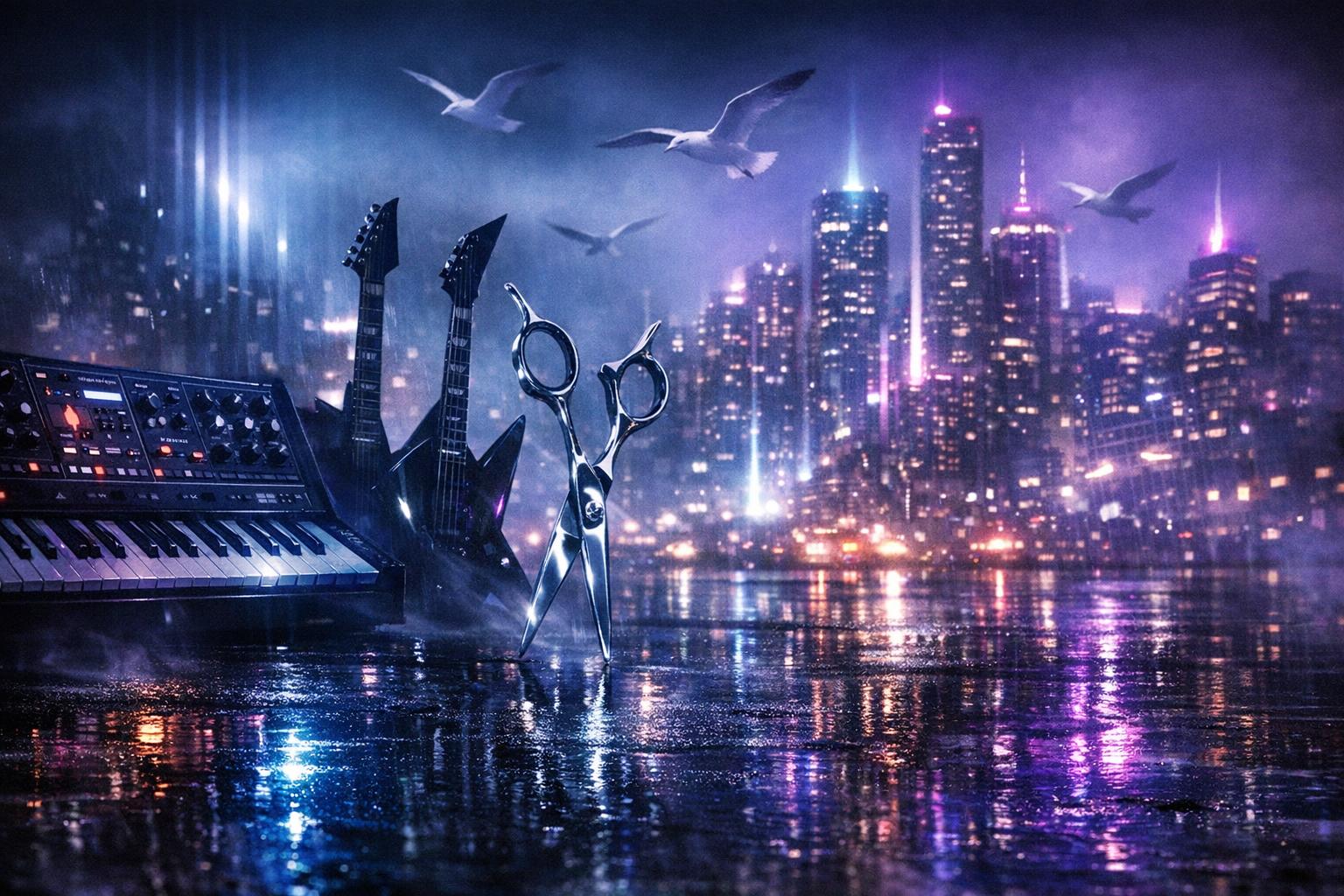
Before the jokes, before the cartoons, before that instantly recognisable silhouette became a shorthand for the 1980s, A Flock of Seagulls were something more intriguing: a group of working musicians from Liverpool who helped give synth-pop a sense of drama, distance and wonder. Their records sounded like city lights reflected on wet pavement, like neon meeting the night sky. For radio listeners, they were never just a hairstyle. They were atmosphere, melody and a very specific kind of modern romance.
From Liverpool salons to synthesizers
A Flock of Seagulls began in Liverpool, a city with music in its bloodstream. At the centre of the story was Mike Score, who did not arrive through the usual rock-and-roll route. Before fronting the band, he worked as a hairdresser. That detail has followed him for decades, partly because it is irresistible and partly because it genuinely says something about the group: image mattered, shape mattered, and presentation was part of the art.
Mike formed the band with his brother Ali Score on drums, joined by Frank Maudsley on bass and guitarist Paul Reynolds. They came together at a moment when British pop was changing quickly. Punk had blown the doors open, but what came next was wide open. Some bands leaned toward stripped-down aggression, others toward glossy electronics. A Flock of Seagulls found a thrilling middle ground, mixing synthesizers with sharp guitar lines and a sense of cinematic scale.
Their name came from the title of a song by the Stranglers, which already hinted that this would not be a conventional pub-rock outfit. Even early on, they seemed drawn to the futuristic. They were part of that early-1980s generation who looked at technology not as something cold, but as something expressive. Synths could shimmer, drum machines could pulse like a heartbeat, and guitars could cut through the mist like beams of light.
And yes, there was the hair. Mike Score’s sculpted style became one of the defining visual signatures of the decade. It made the band instantly recognisable, but it also had an unfortunate side effect: it gave lazy observers an easy punchline. The deeper truth is that the image worked because the music was strong enough to carry it.
The breakthrough that lifted them into the pop stratosphere
The band built momentum in the early 1980s with singles that caught the ear of listeners who wanted pop music with a little mystery in it. Their self-titled debut album, released in 1982, delivered the breakthrough. Suddenly A Flock of Seagulls were not just a stylish Liverpool group with an unusual look. They were international chart contenders.
The song that changed everything was I Ran (So Far Away). It remains their signature hit, but it still deserves to be heard as more than a nostalgic favourite. The record is a marvel of tension and movement. The rhythm drives forward, the synthesizers create a glowing horizon, and Paul Reynolds’ guitar adds a restless, almost futuristic edge. Mike Score’s vocal does not overpower the arrangement; it glides through it, giving the song that slightly detached, dreamlike quality that made it stand out.
In the United States, I Ran became a major hit and a staple of the new music television era. Its video, with reflective surfaces and cool visual effects, fit perfectly with the moment. For many listeners, seeing and hearing A Flock of Seagulls on television felt like a glimpse of tomorrow. That mattered. The early MTV generation was not just hearing new pop; it was seeing a whole new vocabulary of style and mood.
They followed with more success. Space Age Love Song became another beloved classic, and for many fans it is the emotional heart of the band’s catalogue. If I Ran is the chase through the city at midnight, Space Age Love Song is the moment the camera pulls back and the stars come into view. It is tender, elegant and surprisingly romantic. Then came Wishing (If I Had a Photograph of You), a song that wrapped longing and loss inside a sleek electronic frame. That one showed another side of the band: beneath the stylish surfaces, they could be deeply wistful.
Their success was not limited to one market. A Flock of Seagulls became part of the wider international wave of acts proving that synthesizer-based pop could be adventurous, emotional and commercially powerful at the same time.
The songs that still light up the radio
Ask classic hits listeners about A Flock of Seagulls and three titles usually rise first, each one revealing a different strength.
- I Ran (So Far Away) – the defining hit, full of movement, mystery and pure early-1980s energy.
- Space Age Love Song – a fan favourite that has grown even more cherished over time for its warmth and emotional pull.
- Wishing (If I Had a Photograph of You) – sleek, yearning and beautifully melodic, with one of the most memorable titles of the era.
There is more worth exploring, too. Modern Love Is Automatic has that cool, mechanical pulse that captures the band’s fascination with technology and desire. Telecommunication sounds like the future arriving through a bank of flashing lights. The More You Live, the More You Love, from a later line-up period, showed that the band could still craft polished, emotionally direct pop beyond their first burst of fame.
One reason these records remain effective on radio is that they instantly create a world. Within seconds, you know where you are: in a sleek, echoing sonic landscape where romance, alienation and excitement all seem to exist at once. That is not easy to do in a three- or four-minute song. A Flock of Seagulls did it repeatedly.
A style built on atmosphere, motion and contrast
Part of the band’s enduring appeal comes from the way they balanced opposites. Their music was electronic, but rarely cold. It was polished, but still urgent. It was catchy enough for pop radio, yet textured enough to reward repeated listening.
Paul Reynolds deserves special mention here. His guitar work gave A Flock of Seagulls a distinct identity within the synth-pop field. Rather than simply decorating the songs, he created lines that felt like part of the architecture. Those bright, slicing, echo-laden parts are a major reason the records still sound fresh. Put simply, this was not a synthesizer band with guitar added as an afterthought. It was a genuine blend.
There were influences in the air, of course: glam’s theatricality, punk’s permission to reinvent the rules, electronic pioneers opening new doors. But A Flock of Seagulls turned those ingredients into something recognisably their own. Their best songs feel airborne. They move. They shimmer. They suggest distance, speed and possibility.
At their best, A Flock of Seagulls made pop music that felt both intimate and enormous, like a private feeling projected onto a city skyline.
That combination has helped them age well. Modern listeners can hear their fingerprints in later synth-pop, new wave revival acts, film soundtracks and electronic rock that aims for atmosphere rather than brute force. Their sound belongs to the 1980s, certainly, but it also reaches beyond it.
Stories behind the image
The most famous story, naturally, is the hair. Mike Score’s background as a hairdresser gave him the skills to create one of pop’s most unforgettable looks. It became so iconic that it sometimes overshadowed the group’s musicianship. That is the strange bargain of pop fame: the thing that makes you visible can also simplify you.
But there are other details worth remembering. This was a band that emerged from a highly competitive and creatively charged scene. Liverpool audiences knew music, and bands had to earn attention. A Flock of Seagulls did not succeed by accident. They had a clear visual identity, yes, but they also had discipline, hooks and a sound that producers and audiences could immediately recognise.
Another lesser-known point is how strongly musicians often respond to the band, even when casual listeners remember only the image. Players hear the arrangement choices, the layering, the interaction between synths, bass, drums and guitar. Fans of production notice the space in the records: nothing feels cluttered, even when the songs are rich with texture.
There is also something admirable about the emotional tone of their biggest songs. A lot of futuristic pop can feel detached in a way that keeps the listener at arm’s length. A Flock of Seagulls often did the opposite. Their songs might be dressed in chrome and neon, but at the centre there was longing, excitement, uncertainty and hope.
Why they still matter on classic hits radio
Classic hits radio thrives on songs that do more than trigger memory. The best records also bring a feeling back to life in the present tense. A Flock of Seagulls do that beautifully. Their music can instantly transport longtime listeners to first cars, late-night drives, dance floors, shopping malls, summer evenings and that electric sense that pop music was changing shape in real time.
But nostalgia is only part of the story. These songs still work because they are built well. The choruses land. The arrangements sparkle. The mood is distinctive. Even younger listeners who discover the band through films, streaming playlists or family road trips often respond to that same magic. The records feel both vintage and strangely timeless.
For a radio station, that is gold. A Flock of Seagulls offer instant recognition, strong emotional recall and a sound that adds colour to any hour. They also represent a crucial chapter in pop history: the point where style, technology and songwriting fused into something sleek and unforgettable.
So yes, the hair remains legendary. It probably always will. But the real reason A Flock of Seagulls endure is in the grooves themselves: the rush of I Ran, the ache of Wishing, the glow of Space Age Love Song. Listen closely and you hear a band that captured the future as people once imagined it — romantic, restless and lit by neon.
That is why they still belong on the air. Not as a novelty, not as a punchline, but as one of the defining voices of the era when pop learned how to dream in electronic colour.