Minneapolis in Purple Light
Prince endures because his records still do what great radio should do: surprise you, move you, and light up the room within seconds.
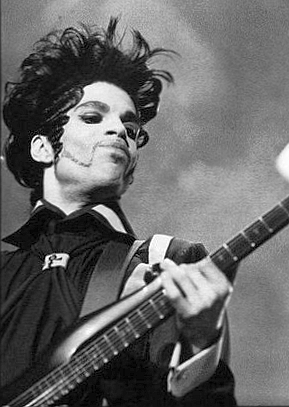
Prince did not arrive like anyone else, and that is part of why he still feels so alive on the radio. He came out of Minneapolis with the skill of a studio obsessive, the swagger of a born star, the instincts of a bandleader, and the nerve to ignore every neat category the music business tried to hand him. Pop, funk, rock, soul, new wave, psychedelia, gospel fire, late-night balladry—he moved through all of it as if the borders were never there in the first place.
For classic hits listeners, that makes Prince a rare kind of artist: one whose records still crackle with surprise even when you know every beat. A Prince song can feel sleek, playful, intimate, mysterious, and explosive all at once. Decades later, those records still sound like events.
A gifted kid with a piano, a guitar, and a city behind him
Prince Rogers Nelson was born in Minneapolis, Minnesota, in 1958, into a musical household. His father, John Nelson, was a pianist and songwriter, and his mother, Mattie Shaw, was a singer. Music was not some distant dream in the family home; it was part of the atmosphere. Prince wrote his first song as a child, and the story has become part of his legend: he was very young, but already determined, already listening closely, already building a private world through sound.
He was also famously self-driven. Friends and collaborators from his early years often described someone who seemed to absorb instruments almost by instinct. Piano, guitar, drums, bass, keyboards—Prince did not simply want to perform music, he wanted to understand how every part of it worked. That hunger would later define his recordings, where he often played most or all of the instruments himself.
Minneapolis mattered too. It was not one of the music industry capitals, which may have helped Prince develop his own language. He pulled from James Brown, Sly and the Family Stone, Joni Mitchell, Stevie Wonder, Parliament-Funkadelic, rock guitar heroes, and gospel feeling, then filtered it through a cool northern city energy that became known as the Minneapolis Sound: tight rhythms, bright synths, wiry funk guitar, and a sense that something electric was always about to happen.
By his late teens, he had secured a record deal with Warner Bros., and that alone says a great deal. Executives were impressed not only by his songs, but by his insistence on creative control. On his 1978 debut album For You, Prince played nearly everything himself. For a young artist making a first impression, it was a bold statement: this was not a singer waiting for a team to shape him. The team would have to keep up.
Breaking through: when Prince became impossible to ignore
The first major signs were there with songs like I Wanna Be Your Lover, a breakthrough hit that introduced his falsetto, his groove, and his gift for making a record feel both polished and slightly dangerous. Then came the albums that built his reputation at speed: Prince, Dirty Mind, Controversy, and 1999. Each one pushed further. Each one widened the frame.
1999 was the moment many listeners realized Prince was operating on a different level. The title track turned anxiety about the future into a party anthem. Little Red Corvette brought him major crossover success, with sleek pop hooks wrapped around suggestive imagery and that unmistakable mix of vulnerability and cool. Delirious added another burst of eccentric charm. Suddenly he was not just a rising artist. He was a force.
Then came Purple Rain in 1984, and with it one of the great leaps in popular music history. The album, the film, the image, the songs—everything landed. Prince and the Revolution created a record that managed to be huge and intimate at the same time. When Doves Cry sounded unlike anything else on the charts, stripped of a bass line yet full of tension and drama. Let’s Go Crazy opened like a sermon and exploded into a celebration. Purple Rain itself became an anthem of longing, release, and grandeur, built around one of the most unforgettable guitar performances of its era.
It is hard to overstate what that period meant. Prince was suddenly everywhere, but he never felt ordinary. Even at peak fame, he remained elusive, funny, stylish, and slightly ahead of the room.
“Despite everything, no one can dictate who you are to other people.”
That line from Prince captures something essential about his career. He was always resisting simplification.
The songs that keep finding new listeners
Prince’s catalogue is so rich that any shortlist feels incomplete, but some songs have become permanent fixtures because they reveal different sides of his genius.
- 1999 – a futuristic party record with a nervous pulse underneath the celebration.
- Little Red Corvette – melodic, cinematic, and one of his defining crossover hits.
- When Doves Cry – daring, spare, emotional, and still startlingly modern.
- Let’s Go Crazy – part sermon, part rock explosion, all adrenaline.
- Purple Rain – the towering ballad that became one of his signature statements.
- Kiss – proof that minimalism can be every bit as funky as a full arrangement.
- Raspberry Beret – colorful, romantic, and filled with playful detail.
- Sign o’ the Times – sharp-eyed songwriting from an artist who could scan the world and turn it into poetry.
- U Got the Look – flamboyant pop with irresistible chemistry.
- Cream – effortless confidence pressed into a groove.
And there are more that radio listeners treasure: I Would Die 4 U, Pop Life, Alphabet St., Diamonds and Pearls, and Nothing Compares 2 U, which Prince wrote and which became a massive hit for Sinéad O’Connor before listeners circled back to his own versions and demos with fresh appreciation.
That is one of the marvels of Prince: the famous songs are only the front rooms of a very large house. Behind them sits a vast archive of album cuts, side projects, vault recordings, productions for other artists, and songs that reveal just how relentlessly he created.
Inside the studio: restless, exacting, and always chasing the next idea
One of the best behind-the-scenes Prince stories is also one of the simplest: he worked constantly. He was famous for late-night sessions, sudden bursts of inspiration, and calling musicians in at unusual hours because a song had arrived and had to be captured immediately. There was discipline inside the mystery. Prince may have seemed otherworldly on stage, but in the studio he was a craftsman of the highest order.
He was also astonishingly precise. Musicians who worked with him often spoke about his standards. He could be demanding, but that intensity came from total commitment. He heard arrangements in full. He knew where the accents should land, how the groove should breathe, when a guitar line needed to bite, and when a vocal should pull back to a whisper.
Then there is the famous fact that still impresses people: Prince routinely played multiple instruments on his records, and played them brilliantly. That level of control helped give his music such a distinctive fingerprint. Even when he moved between styles, it still sounded like Prince because the architecture, the pulse, and the emotional temperature were his.
He also had a gift for creating worlds around him. The Revolution, The New Power Generation, side projects like The Time and Sheila E.’s breakthrough work, the film Purple Rain, the Paisley Park complex—Prince was not just making records. He was building an ecosystem.
A lesser-known but revealing detail is how much he valued ownership and artistic independence. His public disputes over control of his master recordings and his willingness to challenge industry norms made headlines, but they also helped shape later conversations about artists’ rights. He was not simply fighting for himself; he was exposing a larger issue in the business.
More than genre: the style that made Prince unmistakable
Try describing Prince in one musical label and the label falls apart in your hands. He could write a pop single sharp enough for top-40 radio, then turn around and deliver a funk workout, a rock guitar showcase, a spiritual meditation, or a fragile piano ballad. What held it all together was his personality as a songwriter and performer.
His music often balanced opposites:
- Machine-tight rhythm and raw emotion
- Playful wit and genuine vulnerability
- Erotic charge and spiritual searching
- Pop accessibility and experimental nerve
As a guitarist, Prince could be underrated simply because he did so many other things well. But listeners who know tracks like Purple Rain, Let’s Go Crazy, or his celebrated live appearances know how expressive and fearless his playing could be. He could slash through a song, sing through the instrument, or lift a performance into another dimension.
Vocally, he was just as versatile. He could purr, plead, preach, tease, soar into falsetto, or anchor a song with a conversational cool. That flexibility let him inhabit many characters without ever sounding fake.
His visual style mattered too. Prince understood image as part of the performance: lace, ruffles, heels, sharp tailoring, purple symbolism, and a stage presence that could switch from intimate to regal in a heartbeat. He challenged expectations about masculinity, sexuality, and celebrity long before many mainstream artists would dare to do so.
The legacy on the radio dial
Prince matters to classic hits radio because he represents a thrilling kind of permanence: records that are rooted in their time but never trapped by it. His biggest songs instantly evoke packed dance floors, car radios, neon-lit evenings, and MTV-era excitement, yet they still sound adventurous. That is not easy to do. Many hits age into nostalgia alone. Prince’s best records still feel active.
He also matters because he widened what mainstream radio could hold. He brought funk back into the pop center, smuggled daring arrangements into hit singles, made guitar heroics part of dance records, and delivered songs that could be huge without becoming generic. For listeners who grew up with these tracks, hearing Prince is a memory rush. For younger listeners discovering him through radio, the reaction is often simpler: How does this still sound so fresh?
His influence stretches across generations. You can hear Prince in artists who blur genre lines, produce themselves, build strong visual identities, and refuse to choose between commercial appeal and individuality. But imitation only goes so far. Prince remains one of those artists who truly seems singular.
Even the sheer depth of his catalogue adds to his radio legacy. A station can play the giant hits and satisfy a broad audience, yet devoted fans will always have another favorite waiting in the wings. That balance—familiarity for everyone, discovery for the enthusiasts—is a gift.
One more unforgettable thing: the sense of possibility
Perhaps the most lasting thing about Prince is the feeling he leaves behind. Put on a run of his classics and you hear more than a sequence of hit records. You hear permission: to be bolder, stranger, sharper, sexier, more emotional, more yourself. He made individuality feel glamorous, but he also backed it up with discipline and craft.
There are artists who define a moment, and there are artists who keep opening doors long after the moment has passed. Prince did both. He gave classic hits radio some of its most exciting records, some of its most unforgettable hooks, and some of its most electrifying performances. He also left behind a body of work that still invites listeners deeper.
That is why Prince endures. Not just because the songs were hits. Because they still feel like sparks.