Phil Collins and the Soundtrack of a Generation
From Genesis drummer to one of the defining hitmakers of the 1980s, Phil Collins built a career full of unforgettable songs, studio innovation, and emotional honesty. His music still sounds like the heartbeat of classic hits radio.
From West London Kid to Future Hitmaker
Long before Phil Collins became one of the most recognizable voices on radio, he was a music-mad youngster growing up in Chiswick, West London. Born in 1951, Collins was drawn to performance early on, and not just music. As a child, he was fascinated by rhythm, and family stories often point to a toy drum kit he received at the age of five as the spark that lit the fuse. While other kids were simply making noise, Phil was already studying beats, timing, and the way a song could move people.
He also spent time in the world of acting, attending drama school and even landing a small role as an extra in A Hard Day’s Night, the Beatles film. That little brush with pop history feels almost poetic now. Here was a boy catching a glimpse of Beatlemania from the sidelines, years before stepping into his own place in music history.
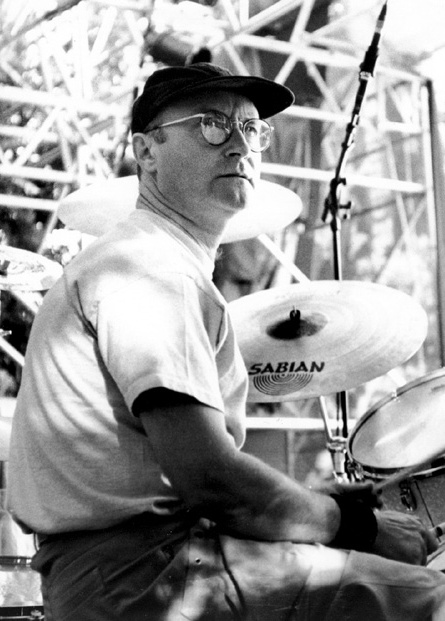
By his teens, Collins was playing in bands and sharpening his skills as a drummer. He had that rare combination of technical precision and emotional instinct. He could play with power, but he also knew when to hold back and let a song breathe. That gift would become one of his trademarks, whether he was behind the drum kit or standing at center stage with a microphone.
The Genesis Years and a Remarkable Turning Point
Phil Collins first entered the wider music world when he joined Genesis in 1970 as the band’s drummer. At the time, Genesis was carving out a name in progressive rock, known for ambitious songs, theatrical live shows, and the charismatic presence of frontman Peter Gabriel. Collins was initially the man behind the kit, but even then, fellow musicians and fans noticed his strong backing vocals and natural musicality.
Everything changed in 1975 when Gabriel left the band. Finding a new lead singer was no easy task. Genesis auditioned hundreds of hopefuls, but in one of rock’s great behind-the-scenes twists, the answer had been sitting at the drums all along. Collins stepped up to lead vocals, and rather than losing momentum, the band entered a bold new chapter.
That transition could have gone badly. Instead, it became one of the great reinventions in popular music. Collins helped steer Genesis toward a more accessible sound without abandoning the band’s musical sophistication. Albums like A Trick of the Tail, Duke, Abacab, and later Invisible Touch brought Genesis to a huge global audience. Songs such as “Follow You Follow Me,” “Turn It On Again,” “Mama,” and “Invisible Touch” showed that the band could blend intelligence, atmosphere, and pop appeal in a way few others could manage.
For many listeners, Genesis was their first introduction to Phil Collins the singer. And what a voice it was: warm, wounded, soulful, and unmistakably human. He didn’t sound like a distant rock god. He sounded like someone who meant every word.
Breaking Through as a Solo Star
If Collins had only succeeded with Genesis, he would still be a major figure in classic hits history. But his solo career took things to another level entirely. In the early 1980s, he stepped out on his own and quickly proved that he wasn’t just a drummer who could sing. He was a world-class songwriter with an uncanny ability to turn personal emotion into songs that millions wanted to hear again and again.
His 1981 solo debut, Face Value, was a revelation. The album was deeply personal, shaped in part by the breakdown of his first marriage, and it gave listeners a raw, intimate side of Collins they hadn’t fully heard before. At the center of it all was “In the Air Tonight,” a song that remains one of the most dramatic and instantly recognizable tracks of the era.
Let’s be honest, few moments in classic hits radio create anticipation quite like that famous drum break. It arrives like a thunderclap, but what makes it so effective is the slow burn that comes before it. The tension, the mystery, the restrained vocal delivery, then suddenly that explosive release. It’s one of the great payoffs in pop music.
And there’s a technical story behind that sound too. Collins helped popularize the gated reverb drum effect, a punchy, booming style that became a defining sound of the 1980s. The effect was discovered somewhat by accident during recording sessions with producer Hugh Padgham and Peter Gabriel, then used to unforgettable effect on Collins’s own work. It’s one of those behind-the-scenes studio moments that ended up reshaping an entire decade of music.
From there, the hits came steadily. “You Can’t Hurry Love” paid loving tribute to the Motown classic while introducing Collins to an even broader audience. “Against All Odds,” “Easy Lover,” “One More Night,” “Sussudio,” “Take Me Home,” and “Another Day in Paradise” each revealed a different side of his artistry. Some were tender and aching, others bright and playful, others socially conscious and reflective. Through it all, Collins had an extraordinary knack for melody.
The Songs That Still Light Up the Radio
Phil Collins has one of those catalogues that seems woven into everyday life. His songs turn up on road trips, wedding playlists, late-night radio shows, movie soundtracks, and singalongs between friends who know every word without realizing they do.
Among his most beloved songs, a few stand especially tall:
- “In the Air Tonight” – moody, cinematic, and unforgettable, with that legendary drum fill still sending a jolt through listeners.
- “Against All Odds” – one of his finest ballads, full of heartbreak and longing.
- “Easy Lover” – a sparkling, high-energy duet with Philip Bailey that remains pure radio joy.
- “One More Night” – soft, intimate, and emotionally direct.
- “Sussudio” – catchy, brassy, and unapologetically fun, even if Collins himself admitted the word was essentially improvised nonsense that just sounded right.
- “Take Me Home” – atmospheric and expansive, with a chorus that feels both personal and universal.
- “Another Day in Paradise” – a chart-topping hit with a social message, urging listeners to see the human reality of homelessness.
- “You’ll Be in My Heart” – from Tarzan, proof that Collins could connect with a whole new generation while keeping his signature warmth intact.
And that’s before you even return to Genesis favorites that remain staples of classic hits programming. Few artists can claim such a deep bench of songs that instantly trigger memories.
A Style All His Own
What made Phil Collins stand out was not flashy mystique or rock-star swagger. It was something more durable: emotional honesty, musical craftsmanship, and versatility. He could move between pop, rock, soul, and adult contemporary without sounding like he was chasing trends. Instead, he brought his own personality into every style he touched.
As a vocalist, Collins had a gift for sounding vulnerable without losing strength. He could deliver heartbreak in a whisper or push into a chorus with real urgency. As a drummer, he was admired by fellow musicians for his feel, precision, and creativity. His work with Genesis, his solo records, and his sessions with artists such as Eric Clapton and Robert Plant showed just how respected he was behind the scenes.
He was also an artist who understood arrangement. Listen closely to a Phil Collins hit and you’ll hear careful layering, smart use of space, memorable hooks, and rhythmic details that keep the song moving. Even his most radio-friendly tracks are built with real skill.
“I’m not trying to be trendy. I just write what I feel.”
That straightforward approach is part of why his music has lasted. Collins didn’t hide behind cool detachment. He leaned into feeling, and listeners responded.
Lesser-Known Stories and Memorable Moments
One of the more charming things about Phil Collins is that for all his enormous success, there has always been something approachable about him. He often came across less like an untouchable superstar and more like the talented bloke next door who happened to write global hits.
There are plenty of fascinating stories in his career. He performed at both Live Aid concerts in 1985, appearing in London and then flying by Concorde to Philadelphia to play there too. It was one of the most talked-about musical feats of the day and perfectly captured the sheer momentum Collins had in the mid-1980s. He seemed to be everywhere, and somehow he delivered every time.
Then there is the enduring myth surrounding “In the Air Tonight”, with wild rumors about the lyrics being based on a specific real-life incident Collins supposedly witnessed. He repeatedly denied those stories. The truth is both simpler and more relatable: the song emerged from emotional turmoil and personal pain, which may be exactly why listeners have projected so many meanings onto it over the years.
Another lesser-known fact is just how broad his musicianship really was. Collins had deep affection for soul and R&B, which shaped much of his songwriting and vocal style. His love for Motown especially shines through in “You Can’t Hurry Love,” a cover that feels reverent rather than recycled.
And while some critics took shots at his ubiquity during his chart-dominating years, time has been kind to Collins. Many of the songs that were once so familiar people almost took them for granted now feel like beautifully made time capsules, rich with melody and atmosphere.
Influence, Legacy, and Why He Still Matters
Phil Collins matters because he helped define the sound of an era while remaining deeply human at the center of it. His influence can be heard in the work of pop singers, rock drummers, producers, and songwriters who learned from his sense of dynamics, his emotional directness, and his studio innovation. That famous drum sound alone left fingerprints all over the 1980s and beyond.
But legacy is about more than technique. It is about connection. Collins wrote songs that people carried with them through breakups, celebrations, quiet nights, and long drives. He made records that sounded huge on the radio but still felt personal. That is no small trick.
For classic hits radio listeners today, Phil Collins remains essential because his music brings both nostalgia and craftsmanship. These songs do more than remind us of a time and place. They hold up. The hooks are still strong, the performances still compelling, and the emotions still ring true. Whether it is the slow-build drama of “In the Air Tonight,” the joyous rush of “Easy Lover,” or the tender ache of “Against All Odds,” his songs still know how to stop us in our tracks.
There is also something wonderfully behind-the-scenes about his story. Here was a drummer who became a frontman, a band member who became a solo giant, a technically gifted musician who never lost his feel for ordinary human emotion. He understood both the machinery of making records and the magic of making people feel something.
That is why Phil Collins continues to belong on the airwaves. He is not just part of the classic hits format. He helped build its emotional vocabulary. His music can be dramatic, tender, playful, polished, and powerful, sometimes all within the same song. And when one of his records comes on, it still feels like an event.
For listeners who grew up with him, Phil Collins is a familiar voice in the soundtrack of their lives. For newer fans discovering him, he is a reminder that great pop music is never just about fashion or charts. It is about songs that stay with you. By that measure, his place is secure.